The Unending Quest: Understanding the Vanity of Life
“There is no end of all the people, even of all that have been before them: they also that come after shall not rejoice in him. Surely this also is vanity and vexation of spirit.” — Ecclesiastes 4:16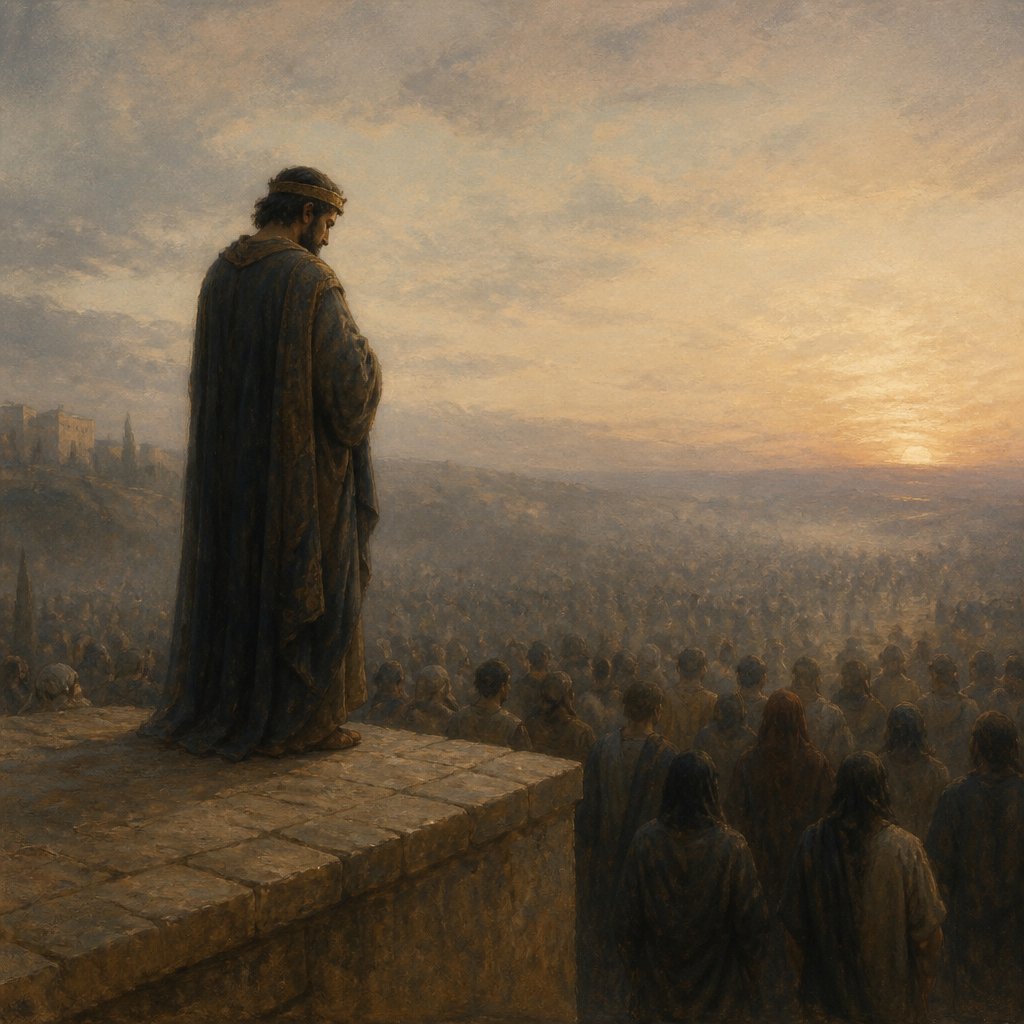
As we delve into the poignant words of Ecclesiastes 4:16 from the King James Version, we find ourselves confronted with the reality of existence and the transient nature of human achievements and lives. The verse reads: "There is no end of all the people, even of all that have been before them: they also that come after shall not rejoice in him. Surely this also is vanity and vexation of spirit."
The teacher of Ecclesiastes, traditionally attributed to King Solomon, invites us into a world of reflection on the futility and inconsistency of life’s pursuits. At the heart of this passage is a powerful truth: human endeavors, while seemingly significant in the moment, often fade into the vastness of time, leaving little mark on the eternal narrative.
Firstly, the phrase "There is no end of all the people" reminds us of the sheer number of individuals who have traversed this earthly plane. History is filled with titans of industry, leaders of nations, great thinkers, and revolutionaries—each leaving their indelible marks for future generations. However, as we consider their legacies, we are led to an uncomfortable yet enlightened perspective on how fleeting human recognition can be. Our desire for applause and acknowledgment often drives us to pursue paths that may serve our egos yet contribute little to the true essence of life.
In a world that constantly pushes us to accumulate achievements and accolades, the subsequent realization that "they also that come after shall not rejoice in him" becomes a sobering admonition. This line speaks to the fleeting nature of fame, glory, and even friendships. How many individuals, despite their monumental contributions, find themselves forgotten or unappreciated by those who came after them? This is a reminder that while we may strive for greatness, the joy derived from worldly accomplishments is short-lived at best.
We often place our hopes in the esteem of others, imagining a legacy that will be honored for generations. Yet, Solomon points out that these hopes are akin to chasing after the wind—a fleeting endeavor. The "vanity and vexation of spirit" mentioned are the emotional turmoil and confusion arising from chasing illusions instead of grounding oneself in what truly matters. This offers us a chance to reflect on our motivations and the foundations upon which we build our lives. Are we seeking validation, or are we pursuing purpose?
With this understanding, we are beckoned to pivot our focus from the ephemeral accolades to a more profound pursuit. What if, instead of seeking human applause, we directed our efforts towards serving others and glorifying God? What if we built lasting relationships, focused on love and kindness, and contributed to the wellbeing of our communities? In doing so, we cultivate a legacy steeped in compassion and humility—a stark contrast to the despair Solomon reflects upon.
In lieu of the maddening quest for worldly recognition, let us anchor our spirits in a higher calling, one that bears the fruits of the Spirit (Galatians 5:22-23). By investing our time and energies into relationships that uplift, into endeavors that promote justice and peace, our lives resonate with a significance that surpasses mere human approval. Thus, while we acknowledge the futility in chasing after personal glory, we simultaneously embrace a path illuminated by love, service, and faith.
Ultimately, Ecclesiastes 4:16 is not solely a lamentation of life’s vanity but an invitation to a more profound way of living. It challenges us to discern between the passing fancies of life and those enduring principles that truly bring joy and fulfillment not just to ourselves but to those around us. In this recognition, we can liberate ourselves from the bondage of societal expectations and find purpose in service, peace in humility, and joy in the journey of a life well-lived.
Get our apps


Artwork for Ecclesiastes 4:16

Ecclesiastes 4:16 - "There is no end of all the people, even of all that have been before them: they also that come after shall not rejoice in him. Surely this also is vanity and vexation of spirit."
"There is no end of all the people, even of all that have been before them: they also that come after shall not rejoice in him. Surely this also is vanity and vexation of spirit." - Ecclesiastes 4:16

Ecclesiastes 3:16 - "¶ And moreover I saw under the sun the place of judgment, that wickedness was there; and the place of righteousness, that iniquity was there."

Ecclesiastes 4:7 - "Then I returned, and I saw vanity under the sun."

Ecclesiastes 3:4 - "A time to weep, and a time to laugh; a time to mourn, and a time to dance;"

Ecclesiastes 10:16 - "¶ Woe to thee, O land, when thy king is a child, and thy princes eat in the morning!"

Ecclesiastes 4:4 - "¶ Again, I considered all travail, and every right work, that for this a man is envied of his neighbour. This is also vanity and vexation of spirit."

Ecclesiastes 4:5 - "The fool foldeth his hands together, and eateth his own flesh."

Ecclesiastes 7:4 - "The heart of the wise is in the house of mourning; but the heart of fools is in the house of mirth."

Ecclesiastes 7:16 - "Be not righteous over much; neither make thyself over wise: why shouldest thou destroy thyself?"

Ecclesiastes 6:4 - "For he cometh in with vanity, and departeth in darkness, and his name shall be covered with darkness."

Ecclesiastes 1:4 - "One generation passeth away, and another generation cometh: but the earth abideth for ever."

Ecclesiastes 4:9 - "¶ Two are better than one; because they have a good reward for their labour."

Ecclesiastes 9:16 - "Then said I, Wisdom is better than strength: nevertheless the poor man's wisdom is despised, and his words are not heard."

Ecclesiastes 9:4 - "¶ For to him that is joined to all the living there is hope: for a living dog is better than a dead lion."

Ecclesiastes 4:6 - "Better is an handful with quietness, than both the hands full with travail and vexation of spirit."

Ecclesiastes 11:4 - "He that observeth the wind shall not sow; and he that regardeth the clouds shall not reap."

Ecclesiastes 8:4 - "Where the word of a king is, there is power: and who may say unto him, What doest thou?"

Ecclesiastes 4:12 - "And if one prevail against him, two shall withstand him; and a threefold cord is not quickly broken."

Ecclesiastes 4:13 - "¶ Better is a poor and a wise child than an old and foolish king, who will no more be admonished."

Ecclesiastes 4:11 - "Again, if two lie together, then they have heat: but how can one be warm alone?"

Ecclesiastes 2:4 - "I made me great works; I builded me houses; I planted me vineyards:"

Ecclesiastes 4:14 - "For out of prison he cometh to reign; whereas also he that is born in his kingdom becometh poor."

Ecclesiastes 4:2 - "Wherefore I praised the dead which are already dead more than the living which are yet alive."

Ecclesiastes 5:16 - "And this also is a sore evil, that in all points as he came, so shall he go: and what profit hath he that hath laboured for the wind?"

Ecclesiastes 10:4 - "If the spirit of the ruler rise up against thee, leave not thy place; for yielding pacifieth great offences."

Ecclesiastes 2:16 - "For there is no remembrance of the wise more than of the fool for ever; seeing that which now is in the days to come shall all be forgotten. And how dieth the wise man? as the fool."

Ecclesiastes 4:15 - "I considered all the living which walk under the sun, with the second child that shall stand up in his stead."
Ecclesiastes 8:16 - "¶ When I applied mine heart to know wisdom, and to see the business that is done upon the earth: (for also there is that neither day nor night seeth sleep with his eyes:)"

Ecclesiastes 4:3 - "Yea, better is he than both they, which hath not yet been, who hath not seen the evil work that is done under the sun."