What does Ecclesiastes 4:16 mean?
“There is no end of all the people, even of all that have been before them: they also that come after shall not rejoice in him. Surely this also is vanity and vexation of spirit.” — Ecclesiastes 4:16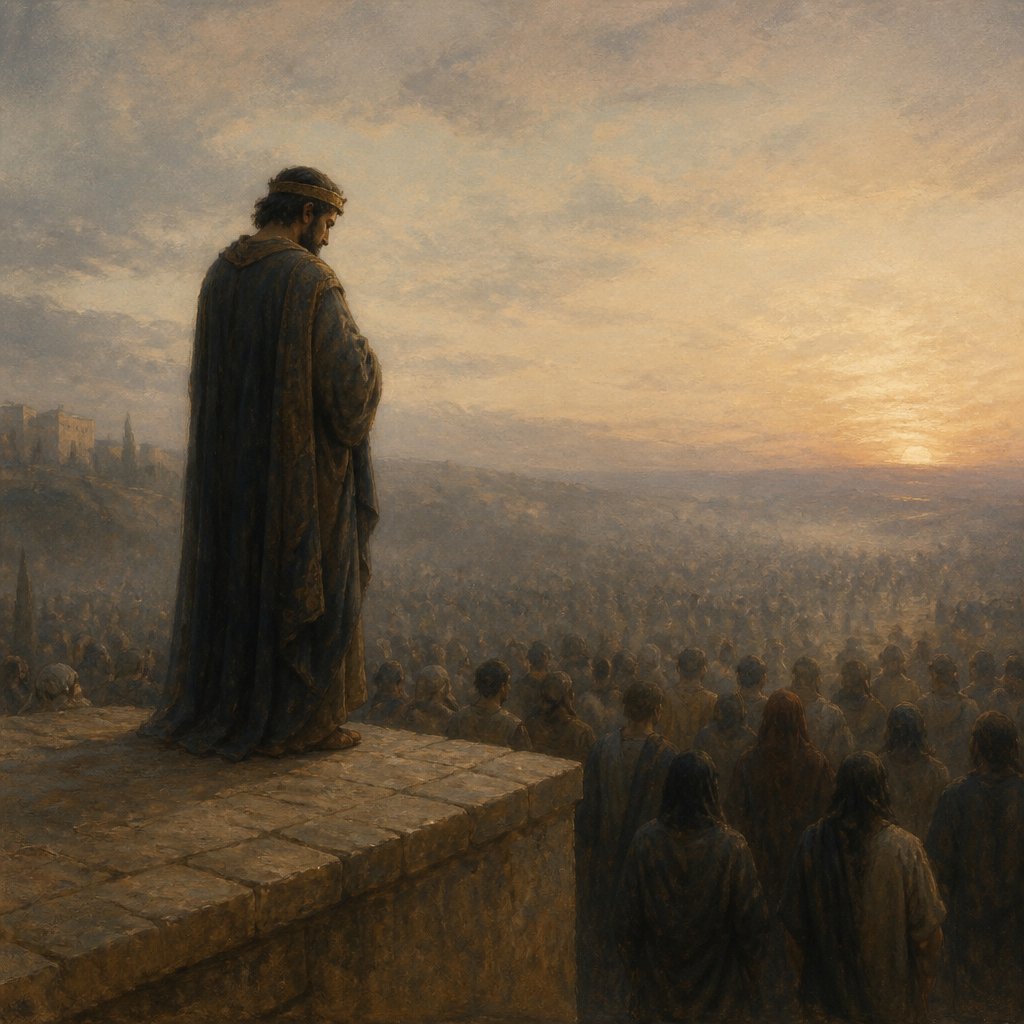
Ecclesiastes 4:16 in the King James Version reads, "There is no end of all the people, even of all that have been before them: they also that come after shall not rejoice in him. Surely this also is vanity and vexation of spirit." This verse is found in the book of Ecclesiastes, which is attributed to King Solomon, the son of David. It is a wisdom book that reflects on the meaning of life, the futility of human toil, and the seeking of wisdom.
The verse speaks to the brevity and futility of life and the fleeting nature of human accomplishments. The phrase "There is no end of all the people, even of all that have been before them" suggests that no matter how many people have lived and died before us, humanity continues to exist in an endless cycle. This can be seen as a reflection on the generational nature of humanity, with each generation giving way to the next in an unending stream of life and death.
The second part of the verse, "they also that come after shall not rejoice in him," highlights the idea that despite one's accomplishments or influence, future generations will not necessarily hold that person in high regard or remember them. This can be interpreted as a reflection on the transient nature of human fame and the ultimate insignificance of individual achievements in the grand scheme of things.
The verse concludes with the statement, "Surely this also is vanity and vexation of spirit." This echoes a recurring theme throughout the book of Ecclesiastes, the concept of vanity or meaninglessness. The phrase "vexation of spirit" speaks to the frustration and inner turmoil that can come from grappling with the fleeting nature of life and the pursuit of worldly success and recognition.
In the broader context of the book of Ecclesiastes, this verse is part of the larger theme of the book, which is a reflection on the meaning of life and the pursuit of wisdom and understanding. The author, traditionally believed to be King Solomon, is often depicted as a wise and wealthy ruler who is disillusioned with the emptiness of earthly pursuits and the temporality of human existence. The overarching message of the book is one of seeking meaning and fulfillment beyond the fleeting pleasures and accomplishments of the world.
The verse also reflects the overarching theme of the book, which is the idea that true meaning and satisfaction cannot be found in the pursuits of the world alone. Instead, the author encourages the reader to seek a deeper understanding of life and to find contentment in the goodness of God. This sentiment aligns with other passages in Ecclesiastes that emphasize the importance of fearing God and keeping his commandments as the ultimate purpose and fulfillment of human existence.
In terms of symbolism, the verse can be seen as a commentary on the transient nature of human life and the futility of pursuing worldly success and recognition. It serves as a reminder that no matter how much we achieve or accomplish in this life, it ultimately pales in comparison to the greater spiritual truths and the eternal significance of our relationship with God.
In conclusion, Ecclesiastes 4:16 from the King James Version offers a profound reflection on the brevity of human life and the fleeting nature of worldly accomplishments. It is a sobering reminder of the ultimate insignificance of individual achievements in the grand scheme of things, and it encourages the reader to seek deeper meaning and fulfillment through a relationship with God. The verse serves as a timeless reflection on the transient nature of human existence and the importance of seeking lasting value and significance beyond the pursuits of the world.
Get our apps


Artwork for Ecclesiastes 4:16

Ecclesiastes 4:16 - "There is no end of all the people, even of all that have been before them: they also that come after shall not rejoice in him. Surely this also is vanity and vexation of spirit."
"There is no end of all the people, even of all that have been before them: they also that come after shall not rejoice in him. Surely this also is vanity and vexation of spirit." - Ecclesiastes 4:16

Ecclesiastes 3:16 - "¶ And moreover I saw under the sun the place of judgment, that wickedness was there; and the place of righteousness, that iniquity was there."

Ecclesiastes 4:7 - "Then I returned, and I saw vanity under the sun."

Ecclesiastes 3:4 - "A time to weep, and a time to laugh; a time to mourn, and a time to dance;"

Ecclesiastes 10:16 - "¶ Woe to thee, O land, when thy king is a child, and thy princes eat in the morning!"

Ecclesiastes 4:4 - "¶ Again, I considered all travail, and every right work, that for this a man is envied of his neighbour. This is also vanity and vexation of spirit."

Ecclesiastes 4:5 - "The fool foldeth his hands together, and eateth his own flesh."

Ecclesiastes 7:4 - "The heart of the wise is in the house of mourning; but the heart of fools is in the house of mirth."

Ecclesiastes 7:16 - "Be not righteous over much; neither make thyself over wise: why shouldest thou destroy thyself?"

Ecclesiastes 6:4 - "For he cometh in with vanity, and departeth in darkness, and his name shall be covered with darkness."

Ecclesiastes 1:4 - "One generation passeth away, and another generation cometh: but the earth abideth for ever."

Ecclesiastes 4:9 - "¶ Two are better than one; because they have a good reward for their labour."

Ecclesiastes 9:16 - "Then said I, Wisdom is better than strength: nevertheless the poor man's wisdom is despised, and his words are not heard."

Ecclesiastes 9:4 - "¶ For to him that is joined to all the living there is hope: for a living dog is better than a dead lion."

Ecclesiastes 4:6 - "Better is an handful with quietness, than both the hands full with travail and vexation of spirit."

Ecclesiastes 11:4 - "He that observeth the wind shall not sow; and he that regardeth the clouds shall not reap."

Ecclesiastes 8:4 - "Where the word of a king is, there is power: and who may say unto him, What doest thou?"

Ecclesiastes 4:12 - "And if one prevail against him, two shall withstand him; and a threefold cord is not quickly broken."

Ecclesiastes 4:13 - "¶ Better is a poor and a wise child than an old and foolish king, who will no more be admonished."

Ecclesiastes 4:11 - "Again, if two lie together, then they have heat: but how can one be warm alone?"

Ecclesiastes 2:4 - "I made me great works; I builded me houses; I planted me vineyards:"

Ecclesiastes 4:14 - "For out of prison he cometh to reign; whereas also he that is born in his kingdom becometh poor."

Ecclesiastes 4:2 - "Wherefore I praised the dead which are already dead more than the living which are yet alive."

Ecclesiastes 5:16 - "And this also is a sore evil, that in all points as he came, so shall he go: and what profit hath he that hath laboured for the wind?"

Ecclesiastes 10:4 - "If the spirit of the ruler rise up against thee, leave not thy place; for yielding pacifieth great offences."

Ecclesiastes 2:16 - "For there is no remembrance of the wise more than of the fool for ever; seeing that which now is in the days to come shall all be forgotten. And how dieth the wise man? as the fool."

Ecclesiastes 4:15 - "I considered all the living which walk under the sun, with the second child that shall stand up in his stead."
Ecclesiastes 8:16 - "¶ When I applied mine heart to know wisdom, and to see the business that is done upon the earth: (for also there is that neither day nor night seeth sleep with his eyes:)"

Ecclesiastes 4:3 - "Yea, better is he than both they, which hath not yet been, who hath not seen the evil work that is done under the sun."