Guarding the Gate of Our Words: A Reflection on Ecclesiastes 5:6
“Suffer not thy mouth to cause thy flesh to sin; neither say thou before the angel, that it was an error: wherefore should God be angry at thy voice, and destroy the work of thine hands?” — Ecclesiastes 5:6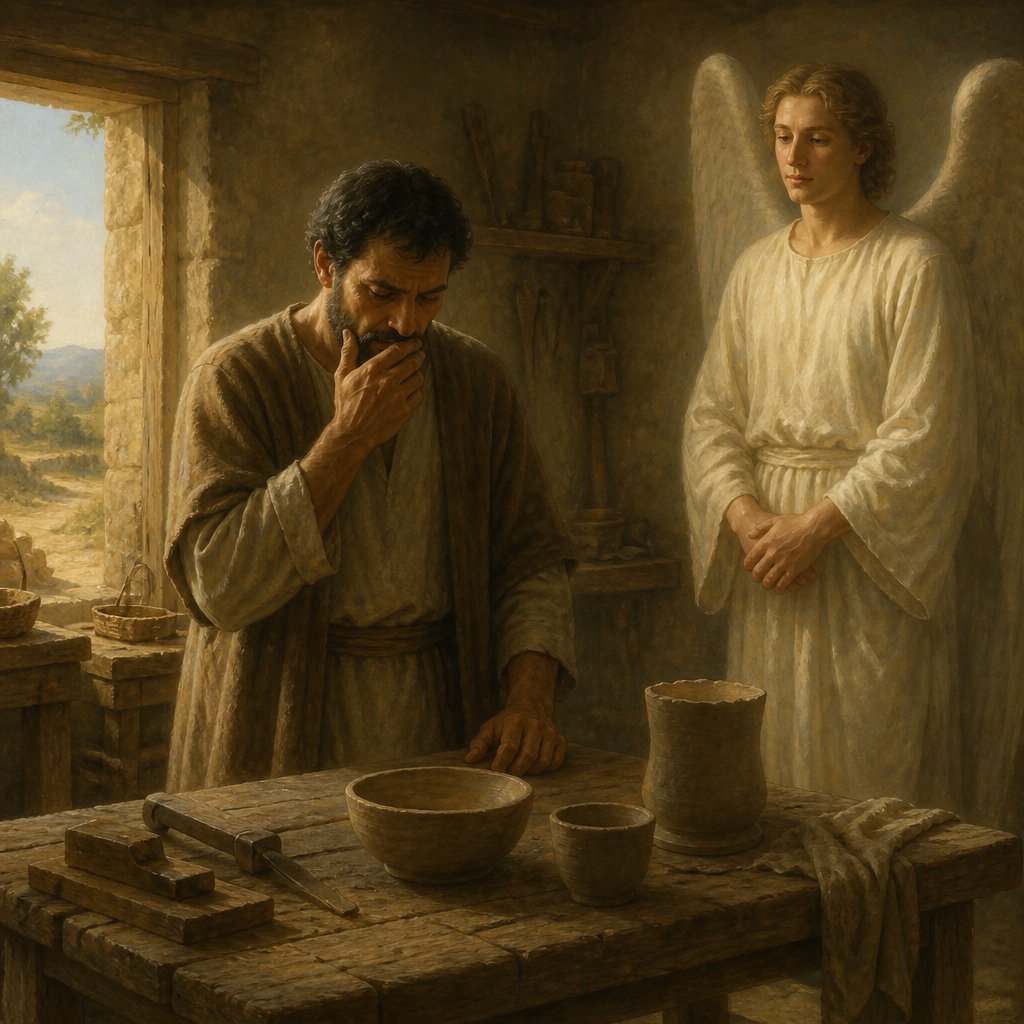
The verse Ecclesiastes 5:6 states, "Suffer not thy mouth to cause thy flesh to sin; neither say thou before the angel, that it was an error: wherefore should God be angry at thy voice, and destroy the work of thine hands?" In this verse, we are granted a profound insight into the relationship between our speech and our spiritual integrity. As believers, we must acknowledge that our words possess an incredible power, and how we wield that power can lead us toward either spiritual growth or moral folly.
The phrase "Suffer not thy mouth to cause thy flesh to sin" serves as a stern reminder of the influence of our speech. Words can either build up or tear down. They can be vehicles of truth, bringing light into the darkness, or instruments of deception, luring us into the pitfalls of sin. James 3:6 tells us that "the tongue is a fire, a world of iniquity"—indicating the destructive potential of careless speech. Thus, we are called to guard our mouths diligently. Let's reflect on why we often allow our tongues to stray. Sometimes, it stems from impatience, anger, or a fleeting desire for recognition. In moments of frustration, we might express words that hurt others or even ourselves.
The second part of the passage, "neither say thou before the angel, that it was an error," hints at the accountability we bear not only to ourselves but also to God and the heavenly realms. This is not merely a caution against public speaking blunders but a call to recognize the seriousness of our commitments and promises before God. When we approach Him in prayer or during worship, our declarations matter. To claim an error casually minimizes our sincere intentions and makes light of our relationship with the Divine. God, who hears our vows, understands our intentions and knows the frailty of our human nature; yet, He desires that we honor our commitments sincerely.
The latter part of the verse warns of a significant consequence: "wherefore should God be angry at thy voice, and destroy the work of thine hands?" This is a somber and compelling thought. It points to the relationship between our words and the outcomes of our actions. The work of our hands—our efforts, creations, and life pursuits—can be directly impacted by our spoken words. If we allow our mouths to lead us into sin, we risk the anger of God turning toward our endeavors, threatening the very fruits of our labor. It reveals that our language has a way of circling back into the tangible things we create and strive for. If our speech is filled with negativity or insincerity, it can poison our actions, whether in our relationships, jobs, or ministry.
In light of this, how can we cultivate a more disciplined mouth? Begin with self-reflection and prayer. Ask God to reveal the areas in which your speech might lead you astray. The psalmist exclaims, "Set a watch, O Lord, before my mouth; keep the door of my lips" (Psalm 141:3), a prayer we should embody. Create a habit of thinking before you speak, considering the weight of your words. Will they bring life? Are they truthful? Do they honor God?
Furthermore, immerse yourself in Scripture. Let the Word redefine your speech, replacing careless words with affirmations of faith and encouragement. Surround yourself with mentors who exemplify gracious speech, learn from them, and model your communication after their example. Spend time in silence and solitude, learning to listen before responding. This practice provides more thoughtful engagement with others and lessens the chance of reckless words spilling forth.
In conclusion, Ecclesiastes 5:6 challenges us to evaluate the weight of our words. They are not merely expressions but manifestations of the heart's condition. May we strive to ensure our mouths serve as gateways of blessing rather than stumbling blocks, protecting ourselves and the works of our hands from destruction. As we align our tongues to God's righteousness, we will see His favor upon our actions and lives. Amen.
Get our apps


Artwork for Ecclesiastes 5:6

Ecclesiastes 5:6 - "Suffer not thy mouth to cause thy flesh to sin; neither say thou before the angel, that it was an error: wherefore should God be angry at thy voice, and destroy the work of thine hands?"
"Suffer not thy mouth to cause thy flesh to sin; neither say thou before the angel, that it was an error: wherefore should God be angry at thy voice, and destroy the work of thine hands?" - Ecclesiastes 5:6

Ecclesiastes 6:5 - "Moreover he hath not seen the sun, nor known any thing: this hath more rest than the other."

Ecclesiastes 5:5 - "Better is it that thou shouldest not vow, than that thou shouldest vow and not pay."

ecclesiastes 12:2-6

"Moreover he hath not seen the sun, nor known any thing: this hath more rest than the other." - Ecclesiastes 6:5

Ecclesiastes 10:6 - "Folly is set in great dignity, and the rich sit in low place."

Ecclesiastes 6:7 - "All the labour of man is for his mouth, and yet the appetite is not filled."

Ecclesiastes 5:9 - "¶ Moreover the profit of the earth is for all: the king himself is served by the field."

Ecclesiastes 3:6 - "A time to get, and a time to lose; a time to keep, and a time to cast away;"

Ecclesiastes 4:5 - "The fool foldeth his hands together, and eateth his own flesh."

Ecclesiastes 6:11 - "¶ Seeing there be many things that increase vanity, what is man the better?"

Ecclesiastes 7:5 - "It is better to hear the rebuke of the wise, than for a man to hear the song of fools."

Ecclesiastes 6:9 - "¶ Better is the sight of the eyes than the wandering of the desire: this is also vanity and vexation of spirit."

Ecclesiastes 6:1 - "There is an evil which I have seen under the sun, and it is common among men:"

Ecclesiastes 6:4 - "For he cometh in with vanity, and departeth in darkness, and his name shall be covered with darkness."

Ecclesiastes 5:7 - "For in the multitude of dreams and many words there are also divers vanities: but fear thou God."

Ecclesiastes 7:6 - "For as the crackling of thorns under a pot, so is the laughter of the fool: this also is vanity."

Ecclesiastes 5:3 - "For a dream cometh through the multitude of business; and a fool's voice is known by multitude of words."

Ecclesiastes 8:6 - "¶ Because to every purpose there is time and judgment, therefore the misery of man is great upon him."

Ecclesiastes 4:6 - "Better is an handful with quietness, than both the hands full with travail and vexation of spirit."

Ecclesiastes 6:6 - "¶ Yea, though he live a thousand years twice told, yet hath he seen no good: do not all go to one place?"

Ecclesiastes 5:14 - "But those riches perish by evil travail: and he begetteth a son, and there is nothing in his hand."

Ecclesiastes 10:5 - "There is an evil which I have seen under the sun, as an error which proceedeth from the ruler:"

Ecclesiastes 2:5 - "I made me gardens and orchards, and I planted trees in them of all kind of fruits:"

Ecclesiastes 2:6 - "I made me pools of water, to water therewith the wood that bringeth forth trees:"

"Better is it that thou shouldest not vow, than that thou shouldest vow and not pay." - Ecclesiastes 5:5

Ecclesiastes 1:5 - "The sun also ariseth, and the sun goeth down, and hasteth to his place where he arose."

Ecclesiastes 5:10 - "He that loveth silver shall not be satisfied with silver; nor he that loveth abundance with increase: this is also vanity."

Ecclesiastes 5:13 - "There is a sore evil which I have seen under the sun, namely, riches kept for the owners thereof to their hurt."