The Vanity of Wealth Without Fulfillment
“A man to whom God hath given riches, wealth, and honour, so that he wanteth nothing for his soul of all that he desireth, yet God giveth him not power to eat thereof, but a stranger eateth it: this is vanity, and it is an evil disease.” — Ecclesiastes 6:2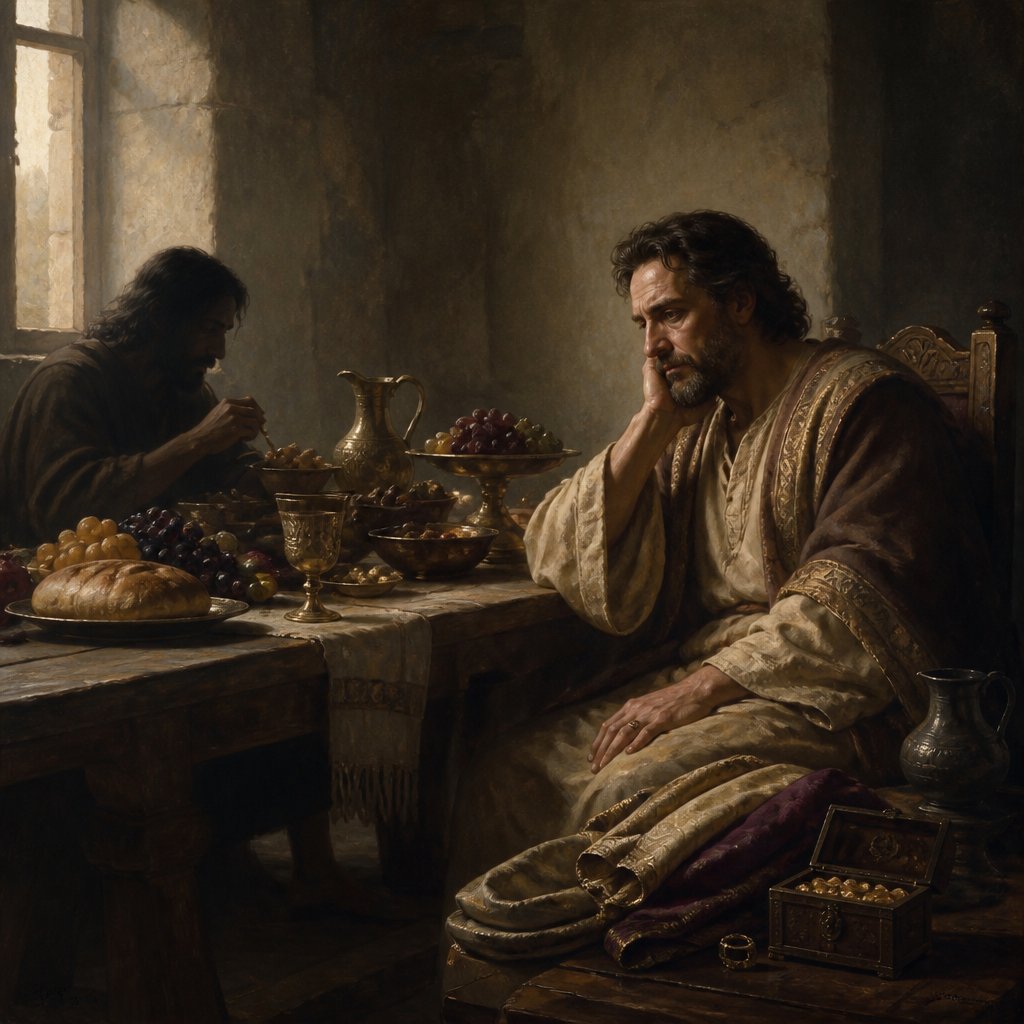
The book of Ecclesiastes is often considered a reflection on the nature of life and the human condition. In Ecclesiastes 6:2, it poignantly states, “A man to whom God hath given riches, wealth, and honour, so that he wanteth nothing for his soul of all that he desireth, yet God giveth him not power to eat thereof, but a stranger eateth it: this is vanity, and it is an evil disease.” This powerful verse beckons us to contemplate the deeper meanings of prosperity, fulfillment, and the fleeting nature of life.
At first glance, this scripture seems to lay out a scenario of unfortunate irony. A man is granted all the riches and honors one could desire, yet he is denied the ability to enjoy them himself. He possesses everything—wealth, health, status—yet finds himself empty. The imagery crafted by the author is striking; it evokes a sense of tragedy in having abundance but lacking the capacity or opportunities to partake in it. This disconnect between possession and enjoyment reveals the vanity—the futility—in living a life focused solely on material accumulation.
This brings us to the heart of sin and discontentment. In our society today, where the accumulation of wealth and status is often heralded as a measure of success, we must pause and reflect on what true fulfillment means. The man described in Ecclesiastes is a person who achieves societal benchmarks of success, yet is ultimately left wanting. How many of us chase after ambitions that society praises without recognizing the possibility that spiritual poverty could accompany material gain? It is a grim reminder that wealth is not synonymous with happiness.
The ultimate reality portrayed in this verse is that all the riches in the world cannot grant satisfaction or empowerment over one’s own destiny. “God giveth him not power to eat thereof.” This divine decree suggests that enjoyment of wealth comes not only from obtaining riches but also from God’s graciousness. Enjoying the fruits of our labor is a gift, an act of grace that is often overlooked. Therein lies an essential truth: human effort does not guarantee satisfaction. It is God alone who blesses the labor of our hands with enjoyment (Ecclesiastes 3:13).
Additionally, the term “stranger” implies an outsider reaping the benefits of what the man cannot. This serves as a profound metaphor. It points to the reality that while one may toil and gather riches, they may ultimately leave the enjoyment and benefits of their labor to someone else—someone perhaps who did not work for or earn these possessions. In essence, what the man labored for may result in fruitfulness for someone unconnected to him. Such circumstances can leave one feeling empty, deceived, and asking why they are unable to reap the rewards of their hard work. This reality resonates with many, reminding us that life can often feel like a cycle of striving, grabbing, and then releasing.
Thus, the verse encapsulates what the author ultimately deems ‘vanity’—the longing and striving for something so elusive and the realization that life itself can sometimes feel unjust. It is a stark warning against the illusion that abundance in this life equates to a satisfied spirit. Heaven and earth often throw veil over the realities of life that make it appear as if wealth brings happiness. In times of prosperity, let us be cautious not to mistake having for possessing, for without the grace of God allowing us to enjoy those riches, we are left with emptiness.
In conclusion, Ecclesiastes 6:2 confronts each of us with profound truths about wealth, honor, and existence. As we seek our own paths, may we not forget that true riches come from a deep relationship with God and not simply from material accumulation. Let us invite Him into our endeavors so that we might find true power to enjoy every good gift He bestows upon us, thus embracing His abundance and grace.
Get our apps


Artwork for Ecclesiastes 6:2

Ecclesiastes 6:2 - "A man to whom God hath given riches, wealth, and honour, so that he wanteth nothing for his soul of all that he desireth, yet God giveth him not power to eat thereof, but a stranger eateth it: this is vanity, and it is an evil disease."
"A man to whom God hath given riches, wealth, and honour, so that he wanteth nothing for his soul of all that he desireth, yet God giveth him not power to eat thereof, but a stranger eateth it: this is vanity, and it is an evil disease." - Ecclesiastes 6:2

ecclesiastes 12:2-6

Ecclesiastes 2:6 - "I made me pools of water, to water therewith the wood that bringeth forth trees:"

"I made me pools of water, to water therewith the wood that bringeth forth trees:" - Ecclesiastes 2:6

Ecclesiastes 10:6 - "Folly is set in great dignity, and the rich sit in low place."

Ecclesiastes 6:7 - "All the labour of man is for his mouth, and yet the appetite is not filled."

Ecclesiastes 3:6 - "A time to get, and a time to lose; a time to keep, and a time to cast away;"

Ecclesiastes 6:11 - "¶ Seeing there be many things that increase vanity, what is man the better?"

Ecclesiastes 6:9 - "¶ Better is the sight of the eyes than the wandering of the desire: this is also vanity and vexation of spirit."

Ecclesiastes 6:1 - "There is an evil which I have seen under the sun, and it is common among men:"

Ecclesiastes 6:4 - "For he cometh in with vanity, and departeth in darkness, and his name shall be covered with darkness."

Ecclesiastes 7:6 - "For as the crackling of thorns under a pot, so is the laughter of the fool: this also is vanity."

Ecclesiastes 8:6 - "¶ Because to every purpose there is time and judgment, therefore the misery of man is great upon him."

Ecclesiastes 4:6 - "Better is an handful with quietness, than both the hands full with travail and vexation of spirit."

Ecclesiastes 2:2 - "I said of laughter, It is mad: and of mirth, What doeth it?"

Ecclesiastes 6:6 - "¶ Yea, though he live a thousand years twice told, yet hath he seen no good: do not all go to one place?"

Ecclesiastes 12:6 - "Or ever the silver cord be loosed, or the golden bowl be broken, or the pitcher be broken at the fountain, or the wheel broken at the cistern."

Ecclesiastes 6:8 - "For what hath the wise more than the fool? what hath the poor, that knoweth to walk before the living?"

Ecclesiastes 6:5 - "Moreover he hath not seen the sun, nor known any thing: this hath more rest than the other."

Ecclesiastes 1:2 - "Vanity of vanities, saith the Preacher, vanity of vanities; all is vanity."

Ecclesiastes 6:10 - "That which hath been is named already, and it is known that it is man: neither may he contend with him that is mightier than he."

Ecclesiastes 1:6 - "The wind goeth toward the south, and turneth about unto the north; it whirleth about continually, and the wind returneth again according to his circuits."

Ecclesiastes 2:13 - "Then I saw that wisdom excelleth folly, as far as light excelleth darkness."

Ecclesiastes 8:2 - "I counsel thee to keep the king's commandment, and that in regard of the oath of God."

"Folly is set in great dignity, and the rich sit in low place." - Ecclesiastes 10:6

Ecclesiastes 9:6 - "Also their love, and their hatred, and their envy, is now perished; neither have they any more a portion for ever in any thing that is done under the sun."

Ecclesiastes 11:6 - "In the morning sow thy seed, and in the evening withhold not thine hand: for thou knowest not whether shall prosper, either this or that, or whether they both shall be alike good."

Ecclesiastes 3:2 - "A time to be born, and a time to die; a time to plant, and a time to pluck up that which is planted;"

Ecclesiastes 2:25 - "For who can eat, or who else can hasten hereunto, more than I?"