What does Ecclesiastes 6:2 mean?
“A man to whom God hath given riches, wealth, and honour, so that he wanteth nothing for his soul of all that he desireth, yet God giveth him not power to eat thereof, but a stranger eateth it: this is vanity, and it is an evil disease.” — Ecclesiastes 6:2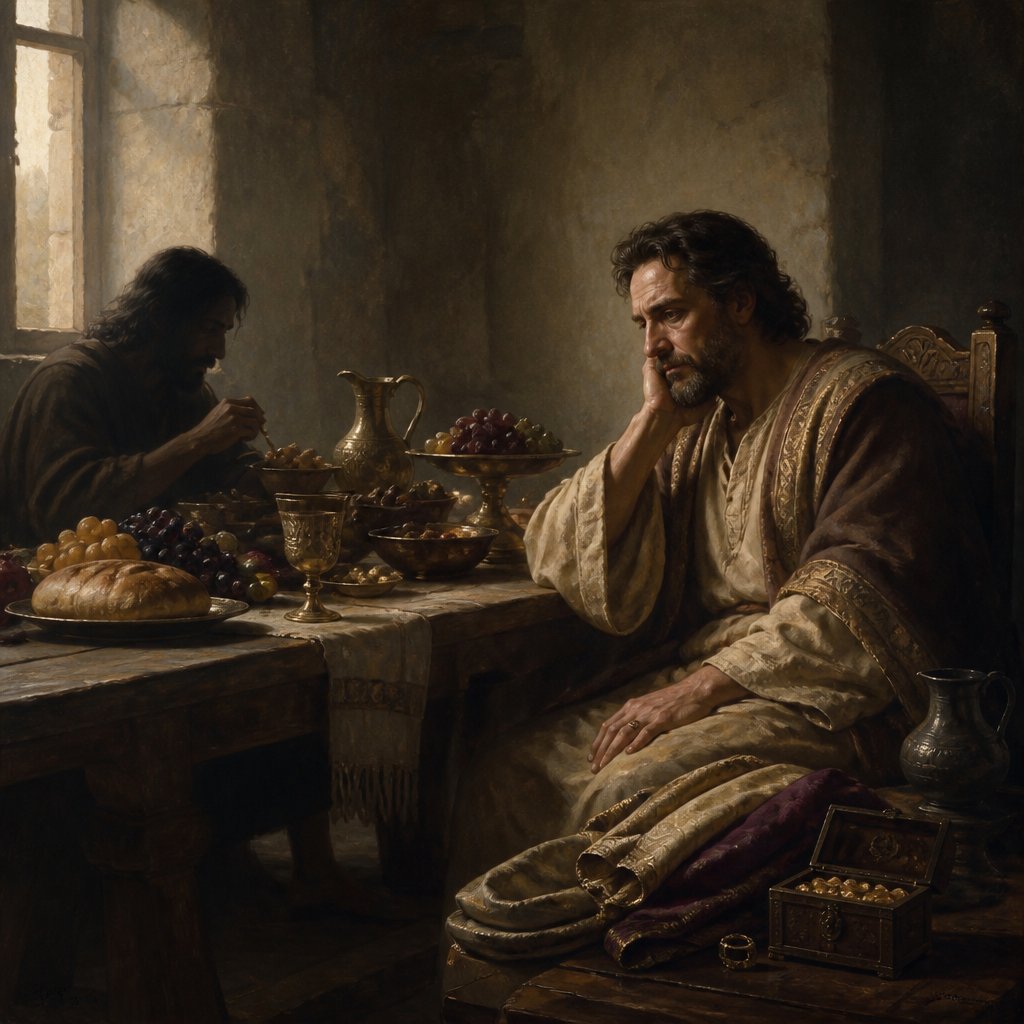
Ecclesiastes 6:2 (KJV) is a verse that addresses the futility of life and the lack of control humans have over their destinies. The verse reads: "A man to whom God hath given riches, wealth, and honour, so that he wanteth nothing for his soul of all that he desireth, yet God giveth him not power to eat thereof, but a stranger eateth it: this is vanity, and it is an evil disease."
The book of Ecclesiastes, traditionally attributed to King Solomon, explores the meaning of life and the futility of human pursuits. This particular verse speaks to the paradox of wealth and power, and its ultimate inability to bring satisfaction or fulfillment. The verse presents the scenario of a man who has been given wealth, honor, and everything his heart desires, but lacks the ability to enjoy it, as a stranger ultimately benefits from his hard work and riches. This portrayal of powerlessness in the face of fortune reveals the fleeting and capricious nature of human existence.
As with much of Ecclesiastes, this verse highlights the transient and ultimately unsatisfying nature of worldly riches and power. Despite being endowed with all the trappings of success, the man in question is ultimately unable to derive any benefit from his fortune. The stranger who ultimately benefits from the man's wealth serves as a symbol of the unpredictability and unfairness of life. This theme is echoed throughout the book, as the author grapples with the limitations and frustrations of earthly pursuits.
The verse also touches on the concept of vanity, a recurring theme in Ecclesiastes. The notion of vanity speaks to the emptiness and insubstantial nature of human endeavors, particularly in the face of mortality and the inevitability of death. The author uses the scenario of the wealthy man and the stranger to illustrate the emptiness of worldly pursuits and the fleeting nature of success. This concept of vanity is a key theme in Ecclesiastes, serving as a reminder of the limitations and impermanence of human achievements.
The verse also alludes to the idea of powerlessness in the face of divine will. The man's inability to enjoy his wealth is attributed to God's withholding of the power to do so. This idea of divine intervention in human affairs serves as a reminder of the ultimate authority and sovereignty of God over human destinies. The inability of the man to benefit from his riches despite his best efforts underscores the overarching theme of the book, which emphasizes the ultimate futility of human strivings in the face of God's will.
Overall, Ecclesiastes 6:2 (KJV) presents a stark and sobering reflection on the limitations and frustrations of worldly pursuits. The verse serves as a reminder of the fleeting and ultimately unsatisfying nature of human achievements, highlighting the transient nature of wealth and power. It also underscores the overarching theme of divine sovereignty and the limitations of human agency in the grand scheme of things. The verse's emphasis on vanity and the capriciousness of life serves as a poignant and thought-provoking meditation on the ephemeral and ultimately insubstantial nature of human existence.
Get our apps


Artwork for Ecclesiastes 6:2

Ecclesiastes 6:2 - "A man to whom God hath given riches, wealth, and honour, so that he wanteth nothing for his soul of all that he desireth, yet God giveth him not power to eat thereof, but a stranger eateth it: this is vanity, and it is an evil disease."
"A man to whom God hath given riches, wealth, and honour, so that he wanteth nothing for his soul of all that he desireth, yet God giveth him not power to eat thereof, but a stranger eateth it: this is vanity, and it is an evil disease." - Ecclesiastes 6:2

ecclesiastes 12:2-6

Ecclesiastes 2:6 - "I made me pools of water, to water therewith the wood that bringeth forth trees:"

"I made me pools of water, to water therewith the wood that bringeth forth trees:" - Ecclesiastes 2:6

Ecclesiastes 10:6 - "Folly is set in great dignity, and the rich sit in low place."

Ecclesiastes 6:7 - "All the labour of man is for his mouth, and yet the appetite is not filled."

Ecclesiastes 3:6 - "A time to get, and a time to lose; a time to keep, and a time to cast away;"

Ecclesiastes 6:11 - "¶ Seeing there be many things that increase vanity, what is man the better?"

Ecclesiastes 6:9 - "¶ Better is the sight of the eyes than the wandering of the desire: this is also vanity and vexation of spirit."

Ecclesiastes 6:1 - "There is an evil which I have seen under the sun, and it is common among men:"

Ecclesiastes 6:4 - "For he cometh in with vanity, and departeth in darkness, and his name shall be covered with darkness."

Ecclesiastes 7:6 - "For as the crackling of thorns under a pot, so is the laughter of the fool: this also is vanity."

Ecclesiastes 8:6 - "¶ Because to every purpose there is time and judgment, therefore the misery of man is great upon him."

Ecclesiastes 4:6 - "Better is an handful with quietness, than both the hands full with travail and vexation of spirit."

Ecclesiastes 2:2 - "I said of laughter, It is mad: and of mirth, What doeth it?"

Ecclesiastes 6:6 - "¶ Yea, though he live a thousand years twice told, yet hath he seen no good: do not all go to one place?"

Ecclesiastes 12:6 - "Or ever the silver cord be loosed, or the golden bowl be broken, or the pitcher be broken at the fountain, or the wheel broken at the cistern."

Ecclesiastes 6:8 - "For what hath the wise more than the fool? what hath the poor, that knoweth to walk before the living?"

Ecclesiastes 6:5 - "Moreover he hath not seen the sun, nor known any thing: this hath more rest than the other."

Ecclesiastes 1:2 - "Vanity of vanities, saith the Preacher, vanity of vanities; all is vanity."

Ecclesiastes 6:10 - "That which hath been is named already, and it is known that it is man: neither may he contend with him that is mightier than he."

Ecclesiastes 1:6 - "The wind goeth toward the south, and turneth about unto the north; it whirleth about continually, and the wind returneth again according to his circuits."

Ecclesiastes 2:13 - "Then I saw that wisdom excelleth folly, as far as light excelleth darkness."

Ecclesiastes 8:2 - "I counsel thee to keep the king's commandment, and that in regard of the oath of God."

"Folly is set in great dignity, and the rich sit in low place." - Ecclesiastes 10:6

Ecclesiastes 9:6 - "Also their love, and their hatred, and their envy, is now perished; neither have they any more a portion for ever in any thing that is done under the sun."

Ecclesiastes 11:6 - "In the morning sow thy seed, and in the evening withhold not thine hand: for thou knowest not whether shall prosper, either this or that, or whether they both shall be alike good."

Ecclesiastes 3:2 - "A time to be born, and a time to die; a time to plant, and a time to pluck up that which is planted;"

Ecclesiastes 2:25 - "For who can eat, or who else can hasten hereunto, more than I?"