The Counsel of the Seven: Wisdom and Influence in Our Lives
“And the next unto him was Carshena, Shethar, Admatha, Tarshish, Meres, Marsena, and Memucan, the seven princes of Persia and Media, which saw the king’s face, and which sat the first in the kingdom;)” — Esther 1:14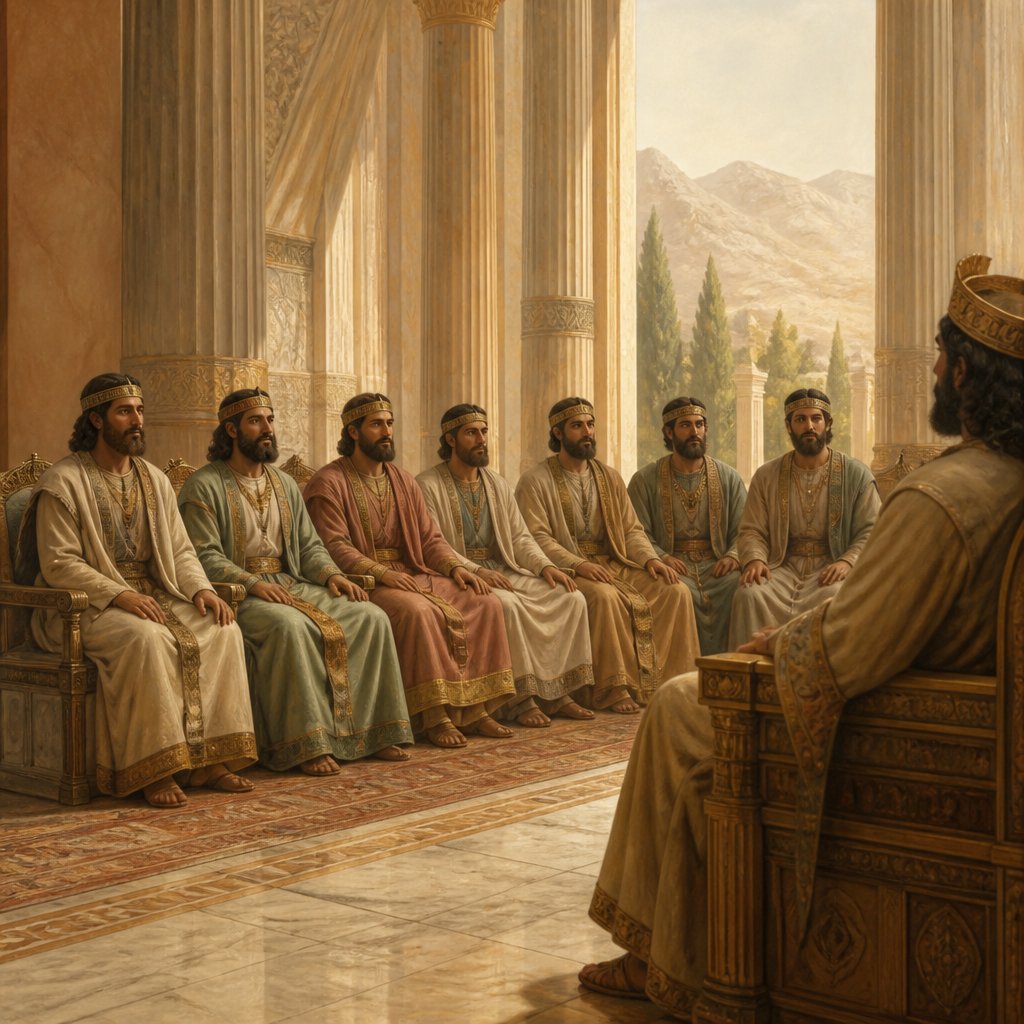
In the rich tapestry of Scripture, Esther 1:14 draws our attention to a seemingly simple assembly of names: "And the next unto him was Carshena, Shethar, Admatha, Tarshish, Meres, Marsena, and Memucan, the seven princes of Persia and Media, which saw the king's face, and which sat the first in the kingdom." At first glance, the significance of these seven princes and their proximity to the king may escape us, yet within this verse lies profound lessons on wisdom, influence, and the counsel we choose to surround ourselves with.
The context of Esther 1 reveals a kingdom in need of direction. King Ahasuerus (Xerxes I) found himself in a moment of crisis and needed the input of those closest to him, a trusted council of seven princes. Their presence at the king’s side illustrates the importance of wise counsel in leadership, a theme so prevalent throughout Scripture. Those who have been called to govern, whether in homes, businesses, or communities, often find themselves facing challenges that require insight beyond their own. These seven men were not just advisors; they were the eyes and ears of the king, capable of providing the guidance that could shape the trajectory of the entire empire.
Reflecting on the nature of these princes, we consider the power of association. The Hebrew culture deeply valued companionship and fellowship, often highlighting that a person’s influence can significantly affect their decisions and life path. Proverbs 13:20 teaches, "He that walketh with wise men shall be wise: but a companion of fools shall be destroyed." The counsel you mirror, the voices you invite into your decision-making process, will ultimately reflect who you are and whom you will become. Carshena, Shethar, Admatha, Tarshish, Meres, Marsena, and Memucan, each with their wisdom, provided Ahasuerus the leadership he required as they ‘saw the king’s face’ and gained insight into both the ruler’s heart and the needs of the citizens.
As we navigate through our own lives, it’s crucial that we evaluate our inner circles. Do we have wise counselors who bring godly perspective to our lives? Do we surround ourselves with the voices that steer us toward righteousness or those that might lead us astray? The decisions faced today—whether personal, spiritual, or communal—deserve the heft of sound advice. Much like Ahasuerus, when we require direction, we should seek out those who reflect Christ’s wisdom in their conversations and decisions.
Furthermore, we notice that these princes were privileged to "see the king's face,” an invitation reserved for the most trusted servants. This metaphor resonates in our relationship with our Heavenly Father. God desires intimate communion with us; He longs to share His wisdom, His heart, with those who earnestly seek His face. This pursuit mirrors the depth of our spirituality and signifies how beloved we are in His eyes. The same way the sages provided counsel to the king, so might we draw near to the Lord in our times of need, inviting His presence into our lives.
To conclude, Esther 1:14 encompasses an entire realm of meaning within these titles and ranks, reflecting the significance of wise counsel and the implications of our associations. As you move through today, contemplate your advisors, the voices that shape your world. Seek out those who not only stand closest to you in proximity but also those whose counsel brings you closer to God’s essence. Let their wisdom guide your heart and decisions, paving the way forward through the ever-so-important decisions that lie ahead. In this way, we can embody the righteousness of His kingdom and fulfill our purposes with clarity and conviction.
Get our apps


Artwork for Esther 1:14

Esther 1:14 - "And the next unto him was Carshena, Shethar, Admatha, Tarshish, Meres, Marsena, and Memucan, the seven princes of Persia and Media, which saw the king's face, and which sat the first in the kingdom;)"
"And the next unto him was Carshena, Shethar, Admatha, Tarshish, Meres, Marsena, and Memucan, the seven princes of Persia and Media, which saw the king's face, and which sat the first in the kingdom;)" - Esther 1:14

Esther 6:14 - "And while they were yet talking with him, came the king's chamberlains, and hasted to bring Haman unto the banquet that Esther had prepared."

Esther 7:1 - "So the king and Haman came to banquet with Esther the queen."

Esther 1:4 - "When he shewed the riches of his glorious kingdom and the honour of his excellent majesty many days, even an hundred and fourscore days."

Esther 1:17

Esther 8:1 - "On that day did the king Ahasuerus give the house of Haman the Jews' enemy unto Esther the queen. And Mordecai came before the king; for Esther had told what he was unto her."

Esther 9:14 - "And the king commanded it so to be done: and the decree was given at Shushan; and they hanged Haman's ten sons."

Esther, the courageous queen

"So the king and Haman came to banquet with Esther the queen." - Esther 7:1

Esther 1:6

Esther 3:14 - "The copy of the writing for a commandment to be given in every province was published unto all people, that they should be ready against that day."

"And while they were yet talking with him, came the king's chamberlains, and hasted to bring Haman unto the banquet that Esther had prepared." - Esther 6:14

Esther 8:14 - "So the posts that rode upon mules and camels went out, being hastened and pressed on by the king's commandment. And the decree was given at Shushan the palace."
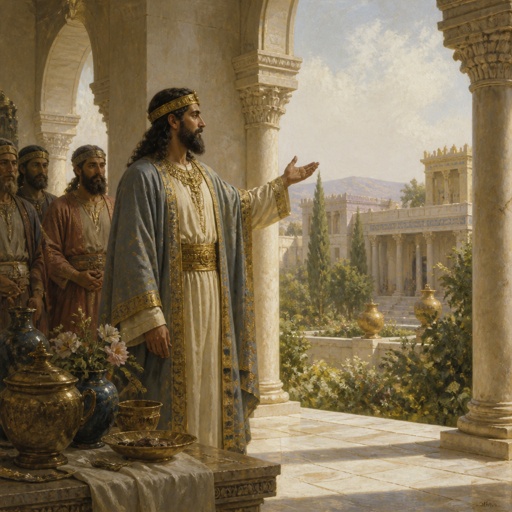
"When he shewed the riches of his glorious kingdom and the honour of his excellent majesty many days, even an hundred and fourscore days." - Esther 1:4

Esther 10:1 - "And the king Ahasuerus laid a tribute upon the land, and upon the isles of the sea."

"On that day did the king Ahasuerus give the house of Haman the Jews' enemy unto Esther the queen. And Mordecai came before the king; for Esther had told what he was unto her." - Esther 8:1

Esther 1:21 - "And the saying pleased the king and the princes; and the king did according to the word of Memucan:"

Esther 5:1 - "Now it came to pass on the third day, that Esther put on her royal apparel, and stood in the inner court of the king's house, over against the king's house: and the king sat upon his royal throne in the royal house, over against the gate of the house."

Esther 1:2 - "That in those days, when the king Ahasuerus sat on the throne of his kingdom, which was in Shushan the palace,"

Esther 1:9 - "Also Vashti the queen made a feast for the women in the royal house which belonged to king Ahasuerus."
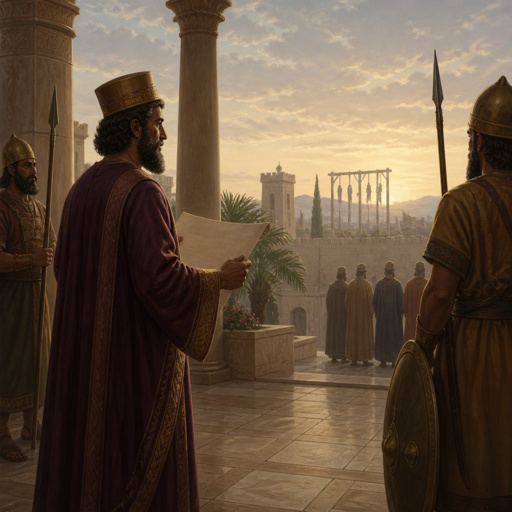
"And the king commanded it so to be done: and the decree was given at Shushan; and they hanged Haman's ten sons." - Esther 9:14

Esther 1:1 - "Now it came to pass in the days of Ahasuerus, (this is Ahasuerus which reigned, from India even unto Ethiopia, over an hundred and seven and twenty provinces:)"

Esther 6:1 - "On that night could not the king sleep, and he commanded to bring the book of records of the chronicles; and they were read before the king."

Esther 1:11 - "To bring Vashti the queen before the king with the crown royal, to shew the people and the princes her beauty: for she was fair to look on."

Esther 4:14 - "For if thou altogether holdest thy peace at this time, then shall there enlargement and deliverance arise to the Jews from another place; but thou and thy father's house shall be destroyed: and who knoweth whether thou art come to the kingdom for such a time as this?"
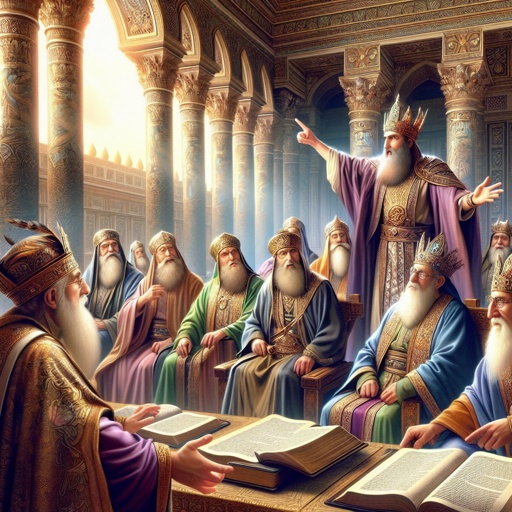
Esther 1:13 - "¶ Then the king said to the wise men, which knew the times, (for so was the king's manner toward all that knew law and judgment:"

Esther 2:14 - "In the evening she went, and on the morrow she returned into the second house of the women, to the custody of Shaashgaz, the king's chamberlain, which kept the concubines: she came in unto the king no more, except the king delighted in her, and that she were called by name."

Esther 1:7 - "And they gave them drink in vessels of gold, (the vessels being diverse one from another,) and royal wine in abundance, according to the state of the king."

Esther 1:12 - "But the queen Vashti refused to come at the king's commandment by his chamberlains: therefore was the king very wroth, and his anger burned in him."