Courage in Defiance: Lessons from Vashti
“For this deed of the queen shall come abroad unto all women, so that they shall despise their husbands in their eyes, when it shall be reported, The king Ahasuerus commanded Vashti the queen to be brought in before him, but she came not.” — Esther 1:17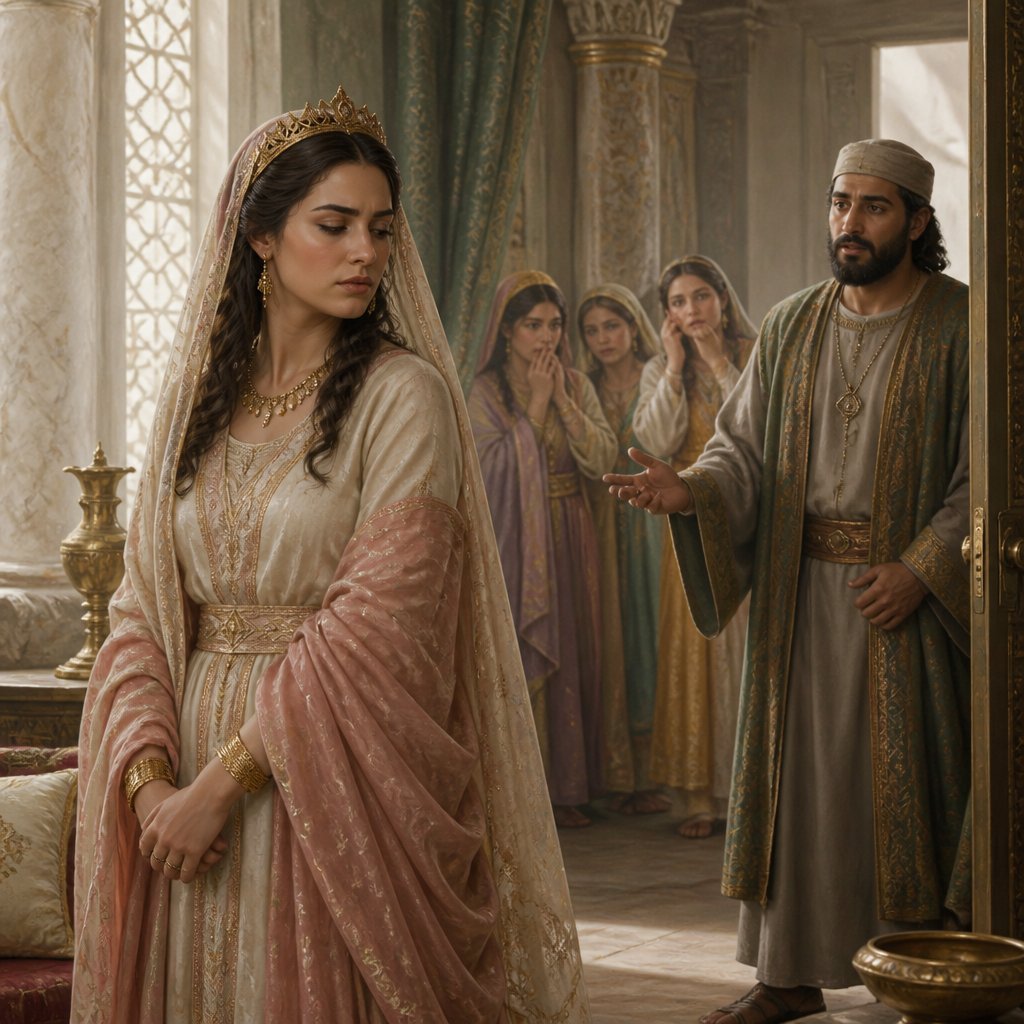
The story of Queen Vashti in the Book of Esther reveals a powerful narrative about courage, boundaries, and the implications of our actions. Esther 1:17 reads, "For this deed of the queen shall come abroad unto all women, so that they shall despise their husbands in their eyes, when it shall be reported, The king Ahasuerus commanded Vashti the queen to be brought in before him, but she came not." This verse captures a critical moment that not only challenges the status quo of Vashti's day but also speaks to the broader themes of dignity, respect, and the moral courage required to stand firm against societal expectations.
To understand the weight of this verse, we need to unpack the context of Vashti’s refusal. King Ahasuerus, intoxicated with power and possibly with wine, commanded Vashti to display her beauty before his guests. This command wasn’t merely a request; it was an act deeply set in the prevailing patriarchal view of women during that time. Vashti's refusal to comply with the king's demand was not just about disobedience; it symbolized a stand against the objectification and dehumanization of women.
In today’s society, the implications of Vashti’s decision resonate deeply. Women, like Vashti, often find themselves in situations where they must choose between societal demands and their personal integrity and dignity. Vashti’s story becomes a harbinger for women to recognize their worth and stand up against cultural norms that seek to demean them. Her courage to say ‘no’ in a moment of potential embarrassment propagates a powerful message—loyalty to oneself and one’s values is paramount, even in the face of overwhelming authority or normative pressures.
Moreover, the repercussions of Vashti's act mirror the fears many have when breaking away from tradition. The verse highlights the concern that her disobedience would lead other women to despise their husbands. This fear reflects a common defensive mechanism within societal structures—those in power often manipulate narratives to maintain control. However, Vashti’s defiance ultimately became a catalyst for a greater conversation about the roles of women and the expectations imposed upon them.
As believers, we can draw a profound lesson from Vashti's stand. In a world that often measures significance by conforming to authority, Vashti illustrates the importance of knowing when to exercise our voice. It raises the question of how we might respond when we find ourselves in situations that challenge our values or morals. Christ calls us not to conform but to renew our minds (Romans 12:2). We can gather courage from this renewal, empowering us to take a righteous stand when called upon.
Furthermore, Vashti’s actions remind us that standing firm can have ramifications beyond personal experiences—it can ripple into wider movements of social change. In our interactions within our communities, or perhaps in workplaces, we may encounter scenarios where our decisions can either perpetuate problematic norms or instigate progress towards righteousness.
As we reflect on Esther 1:17, we should contemplate the courage that lies in trusting God to uphold us in our decisions to stand firm for what is right. We must acknowledge that sometimes, doing the right thing can lead to isolation or criticism, akin to Vashti’s fate of being dethroned. Yet, this boldness to prioritize integrity over acceptance is an essential tenet of a life of faith.
In conclusion, Vashti embodies the complexity of courage—the strength to refuse a command that undermines one’s self-respect and the foresight to understand the broader implications of her actions. Let us be inspired by her bravery! May we endeavor to cultivate our own hearts, seeking to remain steadfast and true to our calling, even when faced with societal pressures that demand otherwise. In doing so, we honor not only our individuality but also contribute to a legacy where the worth of every person, regardless of gender, is recognized and valued.
Get our apps


Artwork for Esther 1:17

Esther 1:17

Esther 1:17 - "For this deed of the queen shall come abroad unto all women, so that they shall despise their husbands in their eyes, when it shall be reported, The king Ahasuerus commanded Vashti the queen to be brought in before him, but she came not."
"For this deed of the queen shall come abroad unto all women, so that they shall despise their husbands in their eyes, when it shall be reported, The king Ahasuerus commanded Vashti the queen to be brought in before him, but she came not." - Esther 1:17

Esther 4:17 - "So Mordecai went his way, and did according to all that Esther had commanded him."

Esther 7:1 - "So the king and Haman came to banquet with Esther the queen."

"So Mordecai went his way, and did according to all that Esther had commanded him." - Esther 4:17

Esther 9:17 - "On the thirteenth day of the month Adar; and on the fourteenth day of the same rested they, and made it a day of feasting and gladness."

Esther 8:1 - "On that day did the king Ahasuerus give the house of Haman the Jews' enemy unto Esther the queen. And Mordecai came before the king; for Esther had told what he was unto her."

Esther 2:17 - "And the king loved Esther above all the women, and she obtained grace and favour in his sight more than all the virgins; so that he set the royal crown upon her head, and made her queen instead of Vashti."

Esther 1:7 - "And they gave them drink in vessels of gold, (the vessels being diverse one from another,) and royal wine in abundance, according to the state of the king."

Esther, the courageous queen

"So the king and Haman came to banquet with Esther the queen." - Esther 7:1

Esther 1:6

Esther 10:1 - "And the king Ahasuerus laid a tribute upon the land, and upon the isles of the sea."

"On that day did the king Ahasuerus give the house of Haman the Jews' enemy unto Esther the queen. And Mordecai came before the king; for Esther had told what he was unto her." - Esther 8:1

Esther 1:21 - "And the saying pleased the king and the princes; and the king did according to the word of Memucan:"

Esther 5:1 - "Now it came to pass on the third day, that Esther put on her royal apparel, and stood in the inner court of the king's house, over against the king's house: and the king sat upon his royal throne in the royal house, over against the gate of the house."
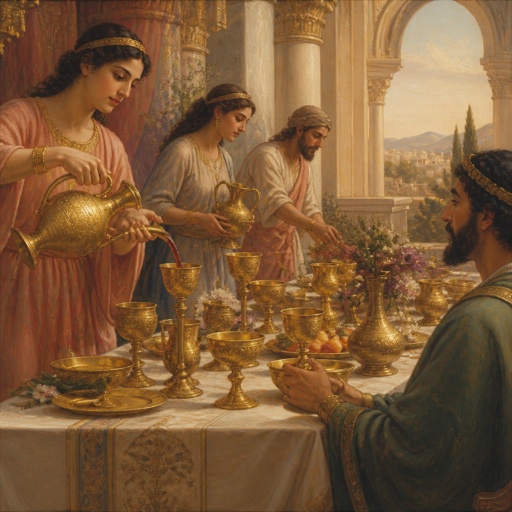
"And they gave them drink in vessels of gold, (the vessels being diverse one from another,) and royal wine in abundance, according to the state of the king." - Esther 1:7

Esther 1:2 - "That in those days, when the king Ahasuerus sat on the throne of his kingdom, which was in Shushan the palace,"

Esther 1:9 - "Also Vashti the queen made a feast for the women in the royal house which belonged to king Ahasuerus."
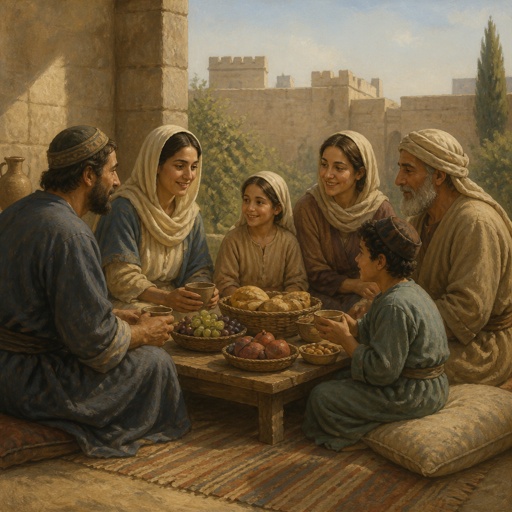
"On the thirteenth day of the month Adar; and on the fourteenth day of the same rested they, and made it a day of feasting and gladness." - Esther 9:17

Esther 8:17 - "And in every province, and in every city, whithersoever the king's commandment and his decree came, the Jews had joy and gladness, a feast and a good day. And many of the people of the land became Jews; for the fear of the Jews fell upon them."

Esther 1:1 - "Now it came to pass in the days of Ahasuerus, (this is Ahasuerus which reigned, from India even unto Ethiopia, over an hundred and seven and twenty provinces:)"

Esther 6:1 - "On that night could not the king sleep, and he commanded to bring the book of records of the chronicles; and they were read before the king."

Esther 1:11 - "To bring Vashti the queen before the king with the crown royal, to shew the people and the princes her beauty: for she was fair to look on."

Esther 1:13 - "¶ Then the king said to the wise men, which knew the times, (for so was the king's manner toward all that knew law and judgment:"

"And the king loved Esther above all the women, and she obtained grace and favour in his sight more than all the virgins; so that he set the royal crown upon her head, and made her queen instead of Vashti." - Esther 2:17

Esther 1:4 - "When he shewed the riches of his glorious kingdom and the honour of his excellent majesty many days, even an hundred and fourscore days."

Esther 1:12 - "But the queen Vashti refused to come at the king's commandment by his chamberlains: therefore was the king very wroth, and his anger burned in him."

Esther 2:1 - "After these things, when the wrath of king Ahasuerus was appeased, he remembered Vashti, and what she had done, and what was decreed against her."