The Power of Governance in the Home: Lessons from Esther 1:22
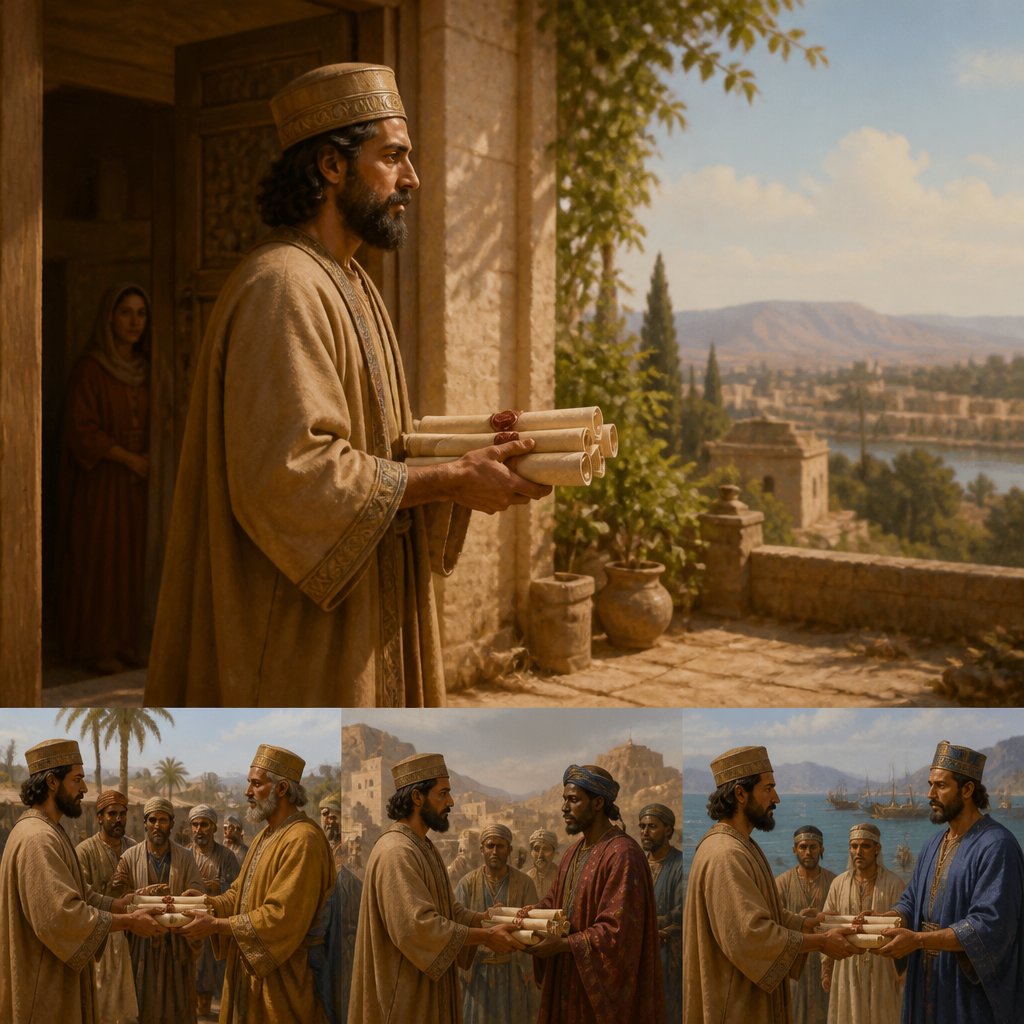
"For he sent letters into all the king's provinces, into every province according to the writing thereof, and to every people after their language, that every man should bear rule in his own house, and that it should be published according to the language of every people." - Esther 1:22

In the book of Esther, we find a narrative that intertwines royalty, intrigue, and providence, culminating in a profound understanding of authority and leadership. Esther 1:22 states: "For he sent letters into all the king's provinces, into every province according to the writing thereof, and to every people after their language, that every man should bear rule in his own house, and that it should be published according to the language of every people" (KJV). This verse encapsulates the essence of governance — both in the palace and in the private sphere of the home.
To understand the gravity of this verse, we must appreciate the context in which it was written. King Ahasuerus, now known as Xerxes, had just dismissed his queen, Vashti, for disobedience. In an attempt to establish order and demonstrate his authority, he issues a decree that underlines the hierarchical structure of the society in which he governs. Yet, this decree carries a timeless message about personal responsibility and the governance of our households.
At first glance, the king's call for every man to rule over his own house might seem like a command steeped in patriarchy. However, when viewed through a biblical lens, we see that such governance is not an excuse for tyranny but instead, an invitation to take ownership and nurture the well-being of our loved ones. Ironically, the most crucial aspect of ruling one's household entails caring for and leading with love and respect.
The phrase "that every man should bear rule in his own house" implies a structured yet compassionate leadership where each member feels valued. In God’s design, families are not just units of administration but sacred spaces where love, support, and spiritual growth occur. The Scriptures encourage fathers, husbands, and leaders to adopt a servant’s heart; Ephesians 5:25 commands, "Husbands, love your wives, even as Christ also loved the church, and gave himself for it." A true ruler in the home is one who serves, inspires, and uplifts his family.
Esther 1:22 also highlights the importance of language and communication. King Ahasuerus understood the diverse cultures within his empire. By sending letters in their languages, he ensured that every man understood the directive clearly. In our own homes, communication is key to effective governance. We must strive to listen actively and express ourselves in ways that resonate with each family member. This means being sensitive to their needs, promoting open dialogue, and being willing to meet them where they are — emotionally, physically, and spiritually.
Furthermore, this verse prompts us to reflect on how we implement authority and governance. Are we allowing fear and intimidation to govern our homes, or are we creating environments where love, respect, and faith abound? True leadership mirrors the character of God, who leads with grace, mercy, and justice. We are called to reflect His image in our homes, leading by example, and fostering unity and forgiveness even during conflicts.
Lastly, it is essential to recognize how this decree impacts the community at large. When a household operates under divine principles of governance, the effects radiate outward, influencing friends, neighbors, and ultimately society. A family that embodies Christ’s love and righteousness can serve as a beacon of hope in a world craving guidance and stability. As Proverbs 24:3-4 says, "Through wisdom is a house builded; and by understanding it is established: And by knowledge shall the chambers be filled with all precious and pleasant riches."
In conclusion, Esther 1:22 provides an invaluable lesson about the sacred responsibility of leading our homes guided by God’s principles. Just as ancient kings sent letters to establish order, let us be diligent in our own governance. Let us ensure that our homes are places where every member understands their value, encourages open dialogue, and reflects Christ’s love. In doing so, we not only honor our families but also glorify God, the ultimate King.
Want to reflect more on Esther 1:22?
Continue your spiritual journey with Bible Chat — an AI-powered tool for exploring God's Word through conversation. Ask questions, discover connections, and deepen your understanding.
Get Our Apps
Esther 1:22 Artwork
Esther 1:22 - "For he sent letters into all the king's provinces, into every province according to the writing thereof, and to every people after their language, that every man should bear rule in his own house, and that it should be published according to the language of every people."
"For he sent letters into all the king's provinces, into every province according to the writing thereof, and to every people after their language, that every man should bear rule in his own house, and that it should be published according to the language of every people." - Esther 1:22
Esther 2:22 - "And the thing was known to Mordecai, who told it unto Esther the queen; and Esther certified the king thereof in Mordecai's name."
"And the thing was known to Mordecai, who told it unto Esther the queen; and Esther certified the king thereof in Mordecai's name." - Esther 2:22
Esther 7:1 - "So the king and Haman came to banquet with Esther the queen."
Esther 1:17
Esther 8:1 - "On that day did the king Ahasuerus give the house of Haman the Jews' enemy unto Esther the queen. And Mordecai came before the king; for Esther had told what he was unto her."
Esther 1:6
Esther, the courageous queen
"So the king and Haman came to banquet with Esther the queen." - Esther 7:1
Esther 10:1 - "And the king Ahasuerus laid a tribute upon the land, and upon the isles of the sea."
Esther 1:21 - "And the saying pleased the king and the princes; and the king did according to the word of Memucan:"
"On that day did the king Ahasuerus give the house of Haman the Jews' enemy unto Esther the queen. And Mordecai came before the king; for Esther had told what he was unto her." - Esther 8:1
Esther 5:1 - "Now it came to pass on the third day, that Esther put on her royal apparel, and stood in the inner court of the king's house, over against the king's house: and the king sat upon his royal throne in the royal house, over against the gate of the house."
Esther 1:2 - "That in those days, when the king Ahasuerus sat on the throne of his kingdom, which was in Shushan the palace,"
Esther 1:9 - "Also Vashti the queen made a feast for the women in the royal house which belonged to king Ahasuerus."
Esther 1:1 - "Now it came to pass in the days of Ahasuerus, (this is Ahasuerus which reigned, from India even unto Ethiopia, over an hundred and seven and twenty provinces:)"
Esther 9:22 - "As the days wherein the Jews rested from their enemies, and the month which was turned unto them from sorrow to joy, and from mourning into a good day: that they should make them days of feasting and joy, and of sending portions one to another, and gifts to the poor."
Esther 6:1 - "On that night could not the king sleep, and he commanded to bring the book of records of the chronicles; and they were read before the king."
Esther 1:11 - "To bring Vashti the queen before the king with the crown royal, to shew the people and the princes her beauty: for she was fair to look on."
Esther 1:13 - "¶ Then the king said to the wise men, which knew the times, (for so was the king's manner toward all that knew law and judgment:"
Esther 1:7 - "And they gave them drink in vessels of gold, (the vessels being diverse one from another,) and royal wine in abundance, according to the state of the king."
Esther 1:4 - "When he shewed the riches of his glorious kingdom and the honour of his excellent majesty many days, even an hundred and fourscore days."
Esther 1:12 - "But the queen Vashti refused to come at the king's commandment by his chamberlains: therefore was the king very wroth, and his anger burned in him."
Esther 2:1 - "After these things, when the wrath of king Ahasuerus was appeased, he remembered Vashti, and what she had done, and what was decreed against her."
Esther 1:15 - "What shall we do unto the queen Vashti according to law, because she hath not performed the commandment of the king Ahasuerus by the chamberlains?"
Esther 1:8 - "And the drinking was according to the law; none did compel: for so the king had appointed to all the officers of his house, that they should do according to every man's pleasure."
Esther 4:1 - "When Mordecai perceived all that was done, Mordecai rent his clothes, and put on sackcloth with ashes, and went out into the midst of the city, and cried with a loud and a bitter cry;"
Esther 3:1 - "After these things did king Ahasuerus promote Haman the son of Hammedatha the Agagite, and advanced him, and set his seat above all the princes that were with him."
"And the king Ahasuerus laid a tribute upon the land, and upon the isles of the sea." - Esther 10:1