The Legacy of Faithfulness: Lessons from Mordecai's Rise
“And all the acts of his power and of his might, and the declaration of the greatness of Mordecai, whereunto the king advanced him, are they not written in the book of the chronicles of the kings of Media and Persia?” — Esther 10:2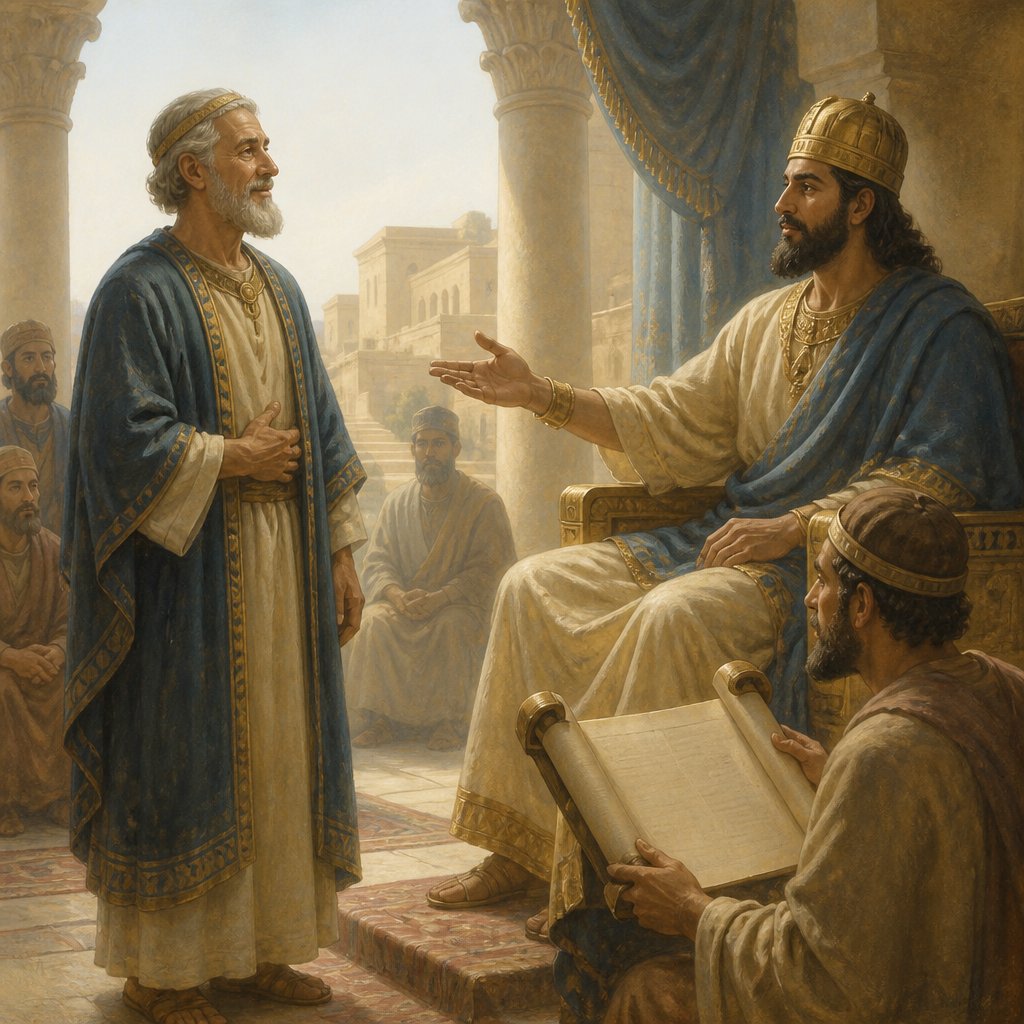
In the grand tapestry of the Bible, we often discover that the smallest threads can yield the most profound imagery. One of these threads is the life of Mordecai, whose remarkable story culminates in Esther 10:2: "And all the acts of his power and of his might, and the declaration of the greatness of Mordecai, whereunto the king advanced him, are they not written in the book of the chronicles of the kings of Media and Persia?" (KJV). This verse serves as a powerful reminder of faithfulness, divine sovereignty, and legacy, inviting us to reflect on how our actions resonate through time.
Mordecai, the Jewish man who became a significant figure in the Persian court, exemplifies what it means to be a faithful servant both to God and to those around him. When we first encounter Mordecai in the Book of Esther, he is portrayed not as a man of great influence but as one who quietly advocates for his people. His unwavering faith in God and steadfast commitment to Esther’s safety culminate in a series of events that ultimately sees God’s divine plan unfold. We must recognize that his willingness to stand up for what is right, even when it put him at risk, became the cornerstone of his eventual elevation.
The phrase "all the acts of his power and of his might" in Esther 10:2 acknowledges Mordecai's impact; he did not act alone. His strength and authority were derived from his uncowed faith and trust in God. As believers, we often question whether our small acts of faith will make a difference during tumultuous times. Yet, Mordecai’s story illustrates that God honors those who are steadfast in their commitment to righteousness—even when they remain unseen for a season.
Mordecai’s rise to prominence in Persia was not simply an ascent for the sake of recognition; it was a victory for his people. The passage reminds us that God often positions us in places of influence for the purpose of advocating for others. How many opportunities have we let slip by to act with courage and grace in our workplaces, friendships, or communities? Each encounter is a chance to reflect God's glory and character. Mordecai utilized his newfound authority to protect the Jewish people, showcasing to us that rightful influence is not self-serving but rather community-focused.
Moreover, the question posed in the latter part of our scripted verse—"are they not written in the book of the chronicles of the kings of Media and Persia?"—invites us to consider the legacy we leave behind. Historical records are often filled with the names and exploits of kings, warriors, and influencers. Yet amid grandeur, it is the faithful acts of individuals like Mordecai that are preserved, reminding us that true greatness is not measured solely by outward prominence but by our fidelity to God’s calling.
In our pursuit of legacy, we might find ourselves overwhelmed by the notion that our daily faithful acts go unnoticed. Just as the chronicles of the kings documented significant events, God holds a record of every moment we choose righteousness. It encourages us to engage in our responsibilities with the knowledge that all acts, however small, build into a historical frame that echoes through eternity. Revelations 20:12 reminds us, "And I saw the dead, small and great, stand before God; and the books were opened..." The legacy we establish through faithful living profoundly impacts future generations.
As believers, we can find empowerment in Mordecai’s story to endure trials, champion justice, and embody integrity. The might of our actions, when rooted in humility and loyalty to God, impacts the world around us, encouraging faith in others. In every choice we make, let us remember that our actions, influenced by God’s guidance and strength, can reflect His character and ultimately contribute to a legacy that glorifies Him.
So today, as we reflect on the life of Mordecai, let us commit ourselves to faithful action, understanding that God is at work, transforming even our seemingly inconspicuous moments into monumental legacies for His glory.
Get our apps


Artwork for Esther 10:2

Esther 10:2 - "And all the acts of his power and of his might, and the declaration of the greatness of Mordecai, whereunto the king advanced him, are they not written in the book of the chronicles of the kings of Media and Persia?"
"And all the acts of his power and of his might, and the declaration of the greatness of Mordecai, whereunto the king advanced him, are they not written in the book of the chronicles of the kings of Media and Persia?" - Esther 10:2

Esther 2:10 - "Esther had not shewed her people nor her kindred: for Mordecai had charged her that she should not shew it."

Esther 4:10 - "¶ Again Esther spake unto Hatach, and gave him commandment unto Mordecai;"
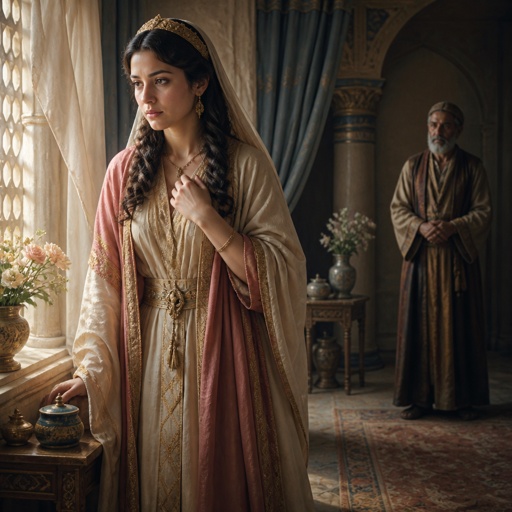
"Esther had not shewed her people nor her kindred: for Mordecai had charged her that she should not shew it." - Esther 2:10

Esther 2:22 - "And the thing was known to Mordecai, who told it unto Esther the queen; and Esther certified the king thereof in Mordecai's name."
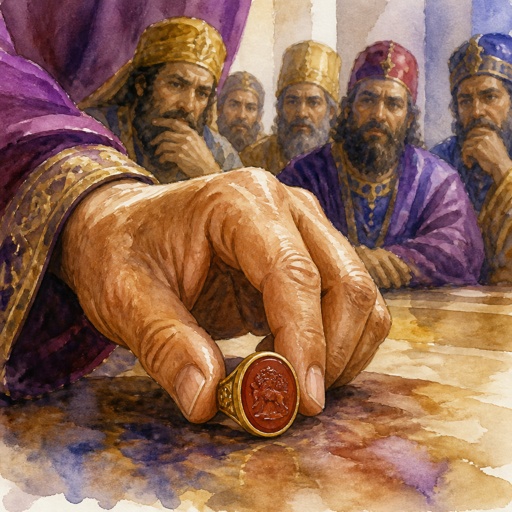
Esther 3:10 focus on ring

Esther 5:2 - "And it was so, when the king saw Esther the queen standing in the court, that she obtained favour in his sight: and the king held out to Esther the golden sceptre that was in his hand. So Esther drew near, and touched the top of the sceptre."
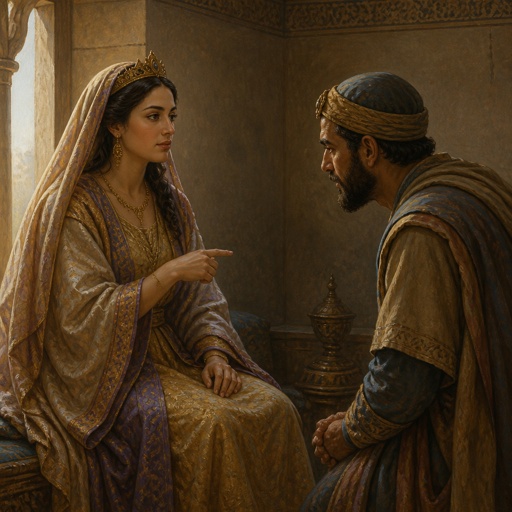
"¶ Again Esther spake unto Hatach, and gave him commandment unto Mordecai;" - Esther 4:10

Esther 7:2 - "And the king said again unto Esther on the second day at the banquet of wine, What is thy petition, queen Esther? and it shall be granted thee: and what is thy request? and it shall be performed, even to the half of the kingdom."

Esther 2:20 - "Esther had not yet shewed her kindred nor her people; as Mordecai had charged her: for Esther did the commandment of Mordecai, like as when she was brought up with him."

Esther 5:2

Esther 10:1 - "And the king Ahasuerus laid a tribute upon the land, and upon the isles of the sea."

Esther 5:2

Esther 5:2

Esther 2:11 - "And Mordecai walked every day before the court of the women's house, to know how Esther did, and what should become of her."

Esther 5:2 - "And it was so, when the king saw Esther the queen standing in the court, that she obtained favour in his sight: and the king held out to Esther the golden sceptre that was in his hand. So Esther drew near, and touched the top of the sceptre."

Esther 9:10 - "The ten sons of Haman the son of Hammedatha, the enemy of the Jews, slew they; but on the spoil laid they not their hand."

"And the thing was known to Mordecai, who told it unto Esther the queen; and Esther certified the king thereof in Mordecai's name." - Esther 2:22

Esther 2:16 - "So Esther was taken unto king Ahasuerus into his house royal in the tenth month, which is the month Tebeth, in the seventh year of his reign."

Esther 7:10 - "So they hanged Haman on the gallows that he had prepared for Mordecai. Then was the king's wrath pacified."

Esther 8:2 - "And the king took off his ring, which he had taken from Haman, and gave it unto Mordecai. And Esther set Mordecai over the house of Haman."
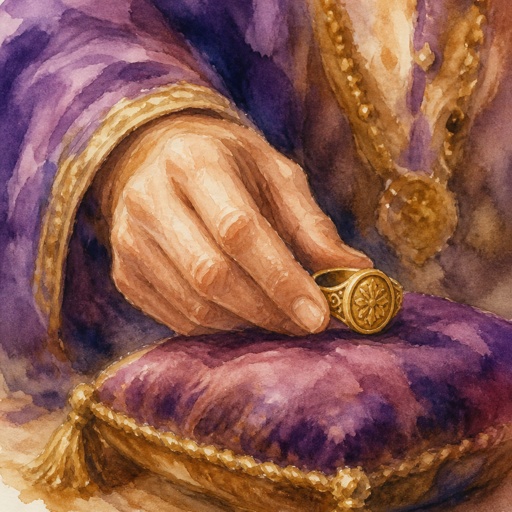
Esther 8:2 focus on the ring

Esther 2:15 - "¶ Now when the turn of Esther, the daughter of Abihail the uncle of Mordecai, who had taken her for his daughter, was come to go in unto the king, she required nothing but what Hegai the king's chamberlain, the keeper of the women, appointed. And Esther obtained favour in the sight of all them that looked upon her."

Esther 2:2 - "Then said the king's servants that ministered unto him, Let there be fair young virgins sought for the king:"

Esther 5:10 - "Nevertheless Haman refrained himself: and when he came home, he sent and called for his friends, and Zeresh his wife."

Esther 3:10 - "And the king took his ring from his hand, and gave it unto Haman the son of Hammedatha the Agagite, the Jews' enemy."

Esther 8:10 - "And he wrote in the king Ahasuerus' name, and sealed it with the king's ring, and sent letters by posts on horseback, and riders on mules, camels, and young dromedaries:"

Esther 2:17 - "And the king loved Esther above all the women, and she obtained grace and favour in his sight more than all the virgins; so that he set the royal crown upon her head, and made her queen instead of Vashti."

Esther 2:7 - "And he brought up Hadassah, that is, Esther, his uncle's daughter: for she had neither father nor mother, and the maid was fair and beautiful; whom Mordecai, when her father and mother were dead, took for his own daughter."