The Remembrance of the Righteous: Lessons from Esther 2:1
“After these things, when the wrath of king Ahasuerus was appeased, he remembered Vashti, and what she had done, and what was decreed against her.” — Esther 2:1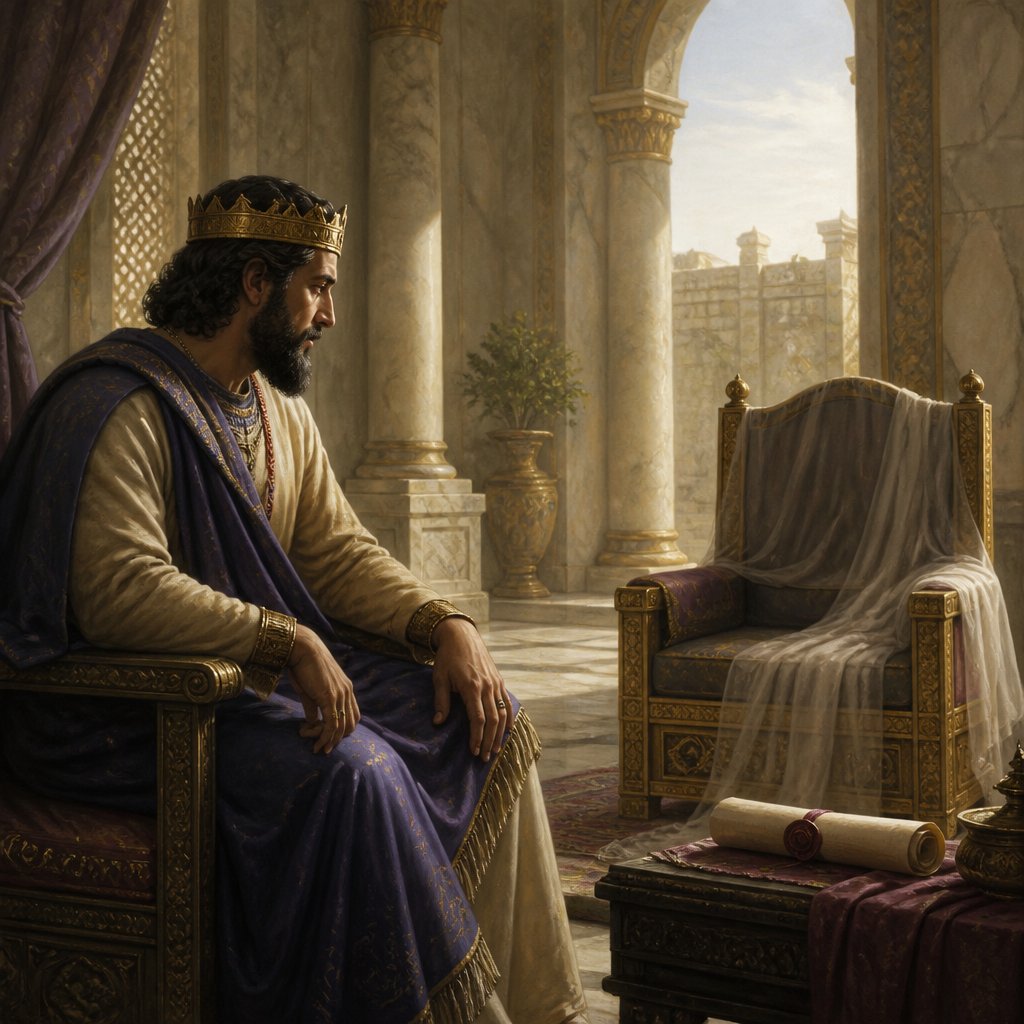
The Book of Esther captivates readers with its rich narrative and profound themes of providence, identity, and redemption. In Esther 2:1, we find a pivotal moment: "After these things, when the wrath of king Ahasuerus was appeased, he remembered Vashti, and what she had done, and what was decreed against her." Here, we encounter a king grappling with the consequences of his decisions, the memory of a queen he deposed, and the unfolding of God’s sovereign plan amidst human affairs.
To truly appreciate this verse, we must revisit the backdrop of Vashti's story. Vashti, the queen of Ahasuerus, was known for her beauty and strength. However, she was also remembered for her defiance in a moment of royal command—a refusal that led to her banishment. King Ahasuerus, in his pride and anger, called for Vashti to display her beauty at a banquet, but she stood her ground, asserting her dignity against an exploitative demand. The king's response was to strip her of her crown, a decision that initiated a series of events leading to Esther becoming queen.
In this moment of remembrance, we discern several layers of meaning. First, it is critical to acknowledge the significance of memory within the Biblical context. The act of remembering is both a divine and human endeavor. Our God is intentional about remembrance—He frequently calls us to recall His deeds, His promises, and even our past failures. In Isaiah 46:9, He says, "Remember the former things of old: for I am God, and there is none else; I am God, and there is none like me." This remembrance shapes our identity and informs our future, serving as a reminder of God’s faithfulness through history.
When Ahasuerus remembers Vashti, it signals something deeper. His anger has subsided, yet his recollection reveals an unresolved tension; a recognition of the dignity that Vashti bore. Despite being cast aside, her spirit of principled defiance was a testament to her strength as a woman of courage. In a world that often overlooks the contributions of women, Vashti's story challenges societal norms, inspiring us to reflect on the value of standing firm in our convictions, even in the face of adversity. God often uses those who appear weak in human eyes to bring about His purposes.
Moreover, this verse serves as a poignant reminder for us as individuals. Like Ahasuerus, we may find ourselves in positions of authority or leadership, yet we must remain cautious not to act impulsively or allow our emotions to guide us. Anger can create decisions that are irreversible. And just like Ahasuerus, we too might look back on those decisions with regret or longing. It is essential to cultivate a spirit of humility and reflection, questioning whether our actions align with our values and the example set by Christ.
Additionally, Ahasuerus' memory foreshadows the beautiful providence at work in Esther's rise. God's hand is invisibly guiding events; from Vashti's dismissal to Esther's selection, it all plays a part in a larger narrative of salvation for the Jewish people. This truth resonates profoundly within our lives—He is working behind the scenes, weaving our stories together in ways that we may not immediately discern.
Finally, the call to remember should draw us closer to those we've impacted and those who've impacted us. Are there relationships we need to mend, people we need to acknowledge, or lessons we need to learn? Vashti’s vilification and Ahasuerus' later reminiscence serve as a reminder that how we treat each other matters deeply. Let us choose to remember in ways that honor God and reflect His grace.
As we meditate on Esther 2:1, let us pray for open hearts to receive God’s call to remember—to honor the Vashtis in our lives and to seek His guidance in our leadership. May we embrace the power of remembrance that not only acknowledges past wrongs but also opens us to future grace.
Get our apps


Artwork for Esther 2:1

Esther 2:1 - "After these things, when the wrath of king Ahasuerus was appeased, he remembered Vashti, and what she had done, and what was decreed against her."
"After these things, when the wrath of king Ahasuerus was appeased, he remembered Vashti, and what she had done, and what was decreed against her." - Esther 2:1

Esther 2:22 - "And the thing was known to Mordecai, who told it unto Esther the queen; and Esther certified the king thereof in Mordecai's name."

Esther 1:2 - "That in those days, when the king Ahasuerus sat on the throne of his kingdom, which was in Shushan the palace,"

Esther 7:1 - "So the king and Haman came to banquet with Esther the queen."

Esther 5:2 - "And it was so, when the king saw Esther the queen standing in the court, that she obtained favour in his sight: and the king held out to Esther the golden sceptre that was in his hand. So Esther drew near, and touched the top of the sceptre."

Esther 7:2 - "And the king said again unto Esther on the second day at the banquet of wine, What is thy petition, queen Esther? and it shall be granted thee: and what is thy request? and it shall be performed, even to the half of the kingdom."

Esther 2:20 - "Esther had not yet shewed her kindred nor her people; as Mordecai had charged her: for Esther did the commandment of Mordecai, like as when she was brought up with him."

Esther 5:2

Esther 1:17

Esther 8:1 - "On that day did the king Ahasuerus give the house of Haman the Jews' enemy unto Esther the queen. And Mordecai came before the king; for Esther had told what he was unto her."

Esther 5:2

Esther 5:2

Esther 2:11 - "And Mordecai walked every day before the court of the women's house, to know how Esther did, and what should become of her."

Esther 2:10 - "Esther had not shewed her people nor her kindred: for Mordecai had charged her that she should not shew it."

Esther 5:2 - "And it was so, when the king saw Esther the queen standing in the court, that she obtained favour in his sight: and the king held out to Esther the golden sceptre that was in his hand. So Esther drew near, and touched the top of the sceptre."

"And the thing was known to Mordecai, who told it unto Esther the queen; and Esther certified the king thereof in Mordecai's name." - Esther 2:22

Esther, the courageous queen

"So the king and Haman came to banquet with Esther the queen." - Esther 7:1

Esther 1:6

Esther 2:16 - "So Esther was taken unto king Ahasuerus into his house royal in the tenth month, which is the month Tebeth, in the seventh year of his reign."

Esther 8:2 - "And the king took off his ring, which he had taken from Haman, and gave it unto Mordecai. And Esther set Mordecai over the house of Haman."
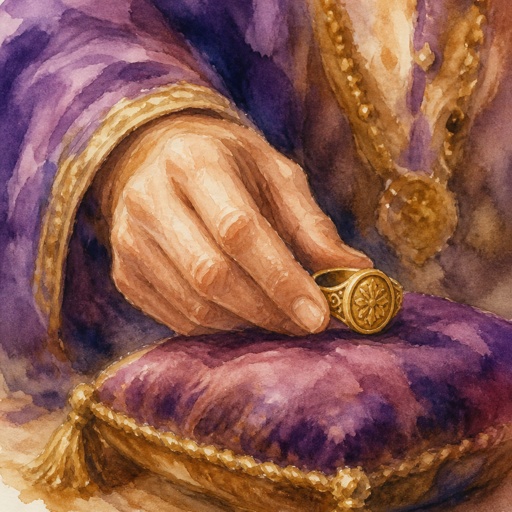
Esther 8:2 focus on the ring

Esther 2:15 - "¶ Now when the turn of Esther, the daughter of Abihail the uncle of Mordecai, who had taken her for his daughter, was come to go in unto the king, she required nothing but what Hegai the king's chamberlain, the keeper of the women, appointed. And Esther obtained favour in the sight of all them that looked upon her."

Esther 2:2 - "Then said the king's servants that ministered unto him, Let there be fair young virgins sought for the king:"
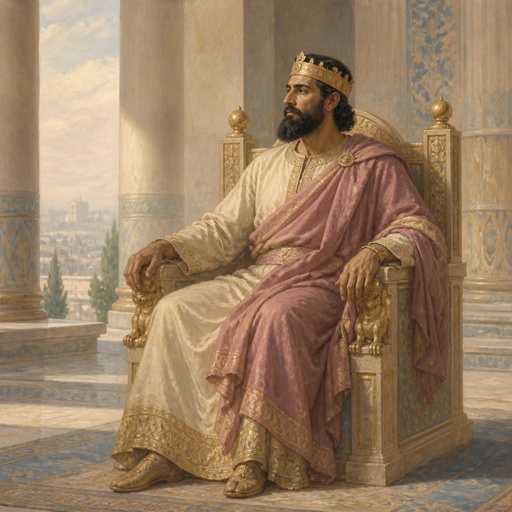
"That in those days, when the king Ahasuerus sat on the throne of his kingdom, which was in Shushan the palace," - Esther 1:2

Esther 2:17 - "And the king loved Esther above all the women, and she obtained grace and favour in his sight more than all the virgins; so that he set the royal crown upon her head, and made her queen instead of Vashti."

Esther 2:7 - "And he brought up Hadassah, that is, Esther, his uncle's daughter: for she had neither father nor mother, and the maid was fair and beautiful; whom Mordecai, when her father and mother were dead, took for his own daughter."
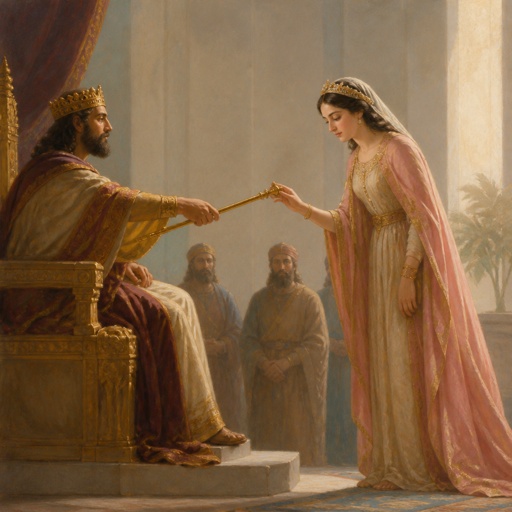
"And it was so, when the king saw Esther the queen standing in the court, that she obtained favour in his sight: and the king held out to Esther the golden sceptre that was in his hand. So Esther drew near, and touched the top of the sceptre." - Esther 5:2

Esther 10:1 - "And the king Ahasuerus laid a tribute upon the land, and upon the isles of the sea."