The Hidden Strength of Obedience
“Esther had not yet shewed her kindred nor her people; as Mordecai had charged her: for Esther did the commandment of Mordecai, like as when she was brought up with him.” — Esther 2:20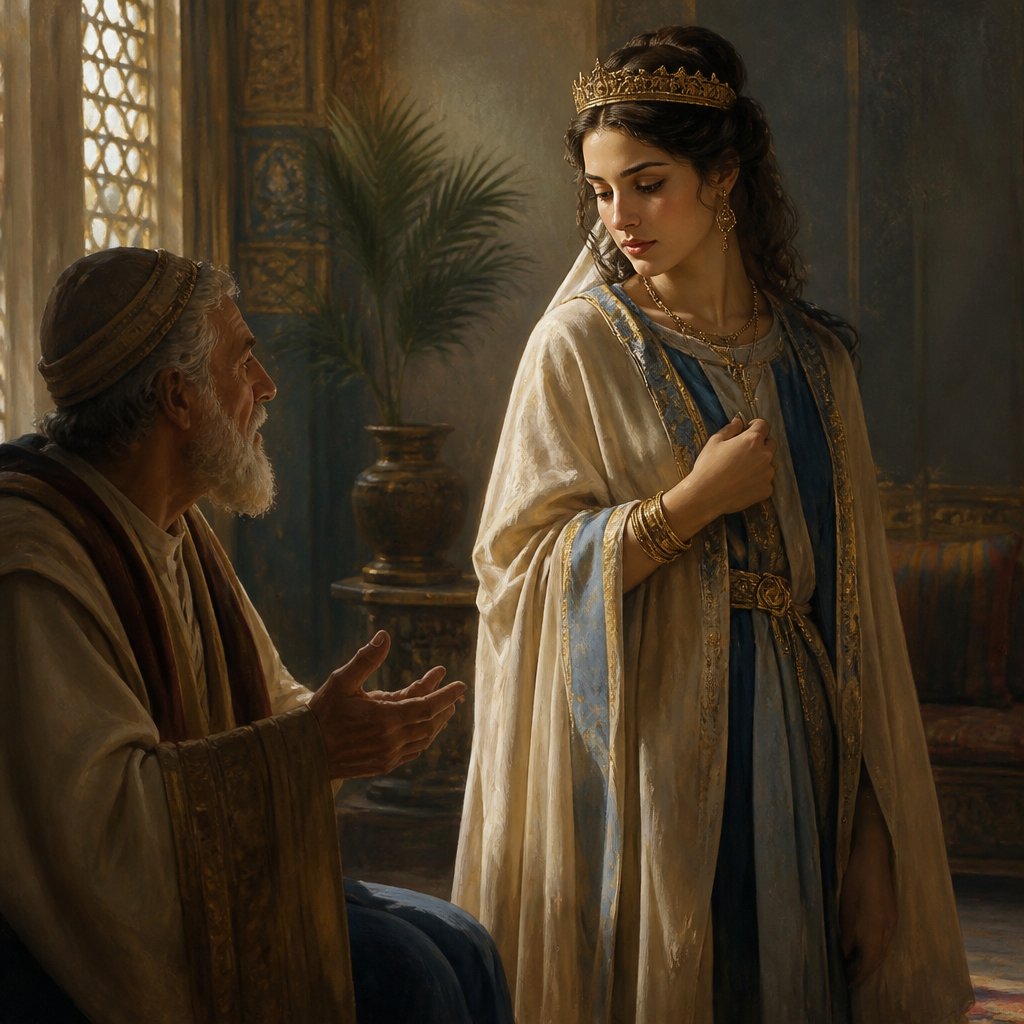
In the story of Esther, we discover a powerful narrative that resonates through the ages — a narrative wrapped in courage, faith, and divine purpose. The verse from Esther 2:20 (KJV) reads, "Esther had not yet shewed her kindred nor her people; as Mordecai had charged her: for Esther did the commandment of Mordecai, like as when she was brought up with him." This verse encapsulates Esther’s quiet strength, her obedient spirit, and the profound influence of her upbringing.
Esther, a young Jewish woman, found herself in an extraordinary situation. Orphaned as a child, she was raised by her cousin Mordecai in exile, in the Persian Empire. Despite her elevation to queen, Esther remained acutely aware of her heritage and the potential dangers associated with revealing her identity. Her choice to follow Mordecai’s instruction was pivotal. This obedience was born not merely out of fear or submission but was deeply rooted in the love and respect she held for Mordecai — a man who had woven her very identity into his own fabric of care and protection.
Mordecai, in urging Esther to conceal her identity, was not demonstrating distrust in God's plan; rather, he was exercising prudent wisdom in light of the dangerous political climate they were navigating. This brings us to the first important lesson in Esther's response: obedience often involves trusting God's timing and plans, even when the path is unclear.
Esther’s decision to keep her lineage a secret teaches us about the nature of obscurity and humility. In today's world, we often associate identity with outward appearances and public recognition. Esther chose a path of hiddenness, setting a powerful example for us. In our walk of faith, we may find ourselves in situations where we must choose humility over acclaim, or obedience over popularity. The waiting periods in God’s plan are not wasted times; they are crucial moments of preparation. Just as Esther was being prepared for a greater role, we are often being shaped and molded through seasons of obscurity and obedience.
Moreover, Esther’s commitment to follow Mordecai’s command reflects a deep layer of loyalty, a characteristic that is increasingly rare in our society today. In a culture that promotes self-promotion and individualism, Esther’s story reminds us of the beauty of submitting to authority out of love, trust, and respect. This type of obedience is rooted in the knowledge that those who guide us often hold wisdom and insight that we may not yet understand. In our spiritual journey, the role of mentors and spiritual leaders is fundamental — they are often instruments of God’s guidance in our lives, just as Mordecai was for Esther.
Furthermore, Esther’s action of keeping her identity hidden did not mean that she was compromising her faith or her people. Instead, it demonstrated strategic wisdom and discernment in critical times. There are times in our lives when silence can speak louder than words, and when restraint can pave the way for future action. God was orchestrating events behind the scenes for Esther — He was positioning her for her moment of divine calling. In our lives, we must remember that sometimes it is in the waiting and watching that God is preparing our victory.
Ultimately, Esther’s story beckons us to reflect on the significance of faith and obedience in our own lives. Are we prepared to follow God’s direction, even when it goes against our natural inclination to assert our identity or to seek immediate recognition? Like Esther, may we find strength in humility and courage in submission, trusting that God has a grand narrative for us to fulfill, often in ways we might not yet imagine. In obedience, we, too, become instruments for His purpose, impacting our world in ways that echo beyond our understanding. Let us seek to embrace our calling with the same grace and faith that Esther exhibited throughout her journey.
Get our apps


Artwork for Esther 2:20

Esther 2:20 - "Esther had not yet shewed her kindred nor her people; as Mordecai had charged her: for Esther did the commandment of Mordecai, like as when she was brought up with him."
"Esther had not yet shewed her kindred nor her people; as Mordecai had charged her: for Esther did the commandment of Mordecai, like as when she was brought up with him." - Esther 2:20

Esther 2:22 - "And the thing was known to Mordecai, who told it unto Esther the queen; and Esther certified the king thereof in Mordecai's name."

Esther 5:2 - "And it was so, when the king saw Esther the queen standing in the court, that she obtained favour in his sight: and the king held out to Esther the golden sceptre that was in his hand. So Esther drew near, and touched the top of the sceptre."

Esther 7:2 - "And the king said again unto Esther on the second day at the banquet of wine, What is thy petition, queen Esther? and it shall be granted thee: and what is thy request? and it shall be performed, even to the half of the kingdom."

Esther 5:2

Esther 5:2

Esther 5:2

Esther 2:11 - "And Mordecai walked every day before the court of the women's house, to know how Esther did, and what should become of her."

Esther 2:10 - "Esther had not shewed her people nor her kindred: for Mordecai had charged her that she should not shew it."

Esther 5:2 - "And it was so, when the king saw Esther the queen standing in the court, that she obtained favour in his sight: and the king held out to Esther the golden sceptre that was in his hand. So Esther drew near, and touched the top of the sceptre."

"And the thing was known to Mordecai, who told it unto Esther the queen; and Esther certified the king thereof in Mordecai's name." - Esther 2:22

Esther 2:16 - "So Esther was taken unto king Ahasuerus into his house royal in the tenth month, which is the month Tebeth, in the seventh year of his reign."

Esther 8:2 - "And the king took off his ring, which he had taken from Haman, and gave it unto Mordecai. And Esther set Mordecai over the house of Haman."

Esther 9:20 - "¶ And Mordecai wrote these things, and sent letters unto all the Jews that were in all the provinces of the king Ahasuerus, both nigh and far,"
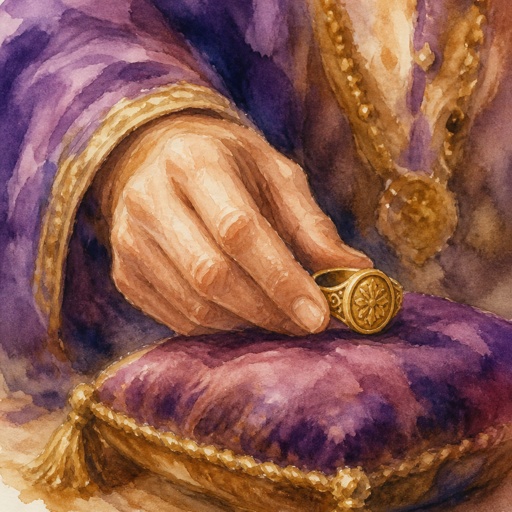
Esther 8:2 focus on the ring

Esther 2:15 - "¶ Now when the turn of Esther, the daughter of Abihail the uncle of Mordecai, who had taken her for his daughter, was come to go in unto the king, she required nothing but what Hegai the king's chamberlain, the keeper of the women, appointed. And Esther obtained favour in the sight of all them that looked upon her."

Esther 2:2 - "Then said the king's servants that ministered unto him, Let there be fair young virgins sought for the king:"

Esther 1:20 - "And when the king's decree which he shall make shall be published throughout all his empire, (for it is great,) all the wives shall give to their husbands honour, both to great and small."

Esther 2:17 - "And the king loved Esther above all the women, and she obtained grace and favour in his sight more than all the virgins; so that he set the royal crown upon her head, and made her queen instead of Vashti."

Esther 2:7 - "And he brought up Hadassah, that is, Esther, his uncle's daughter: for she had neither father nor mother, and the maid was fair and beautiful; whom Mordecai, when her father and mother were dead, took for his own daughter."
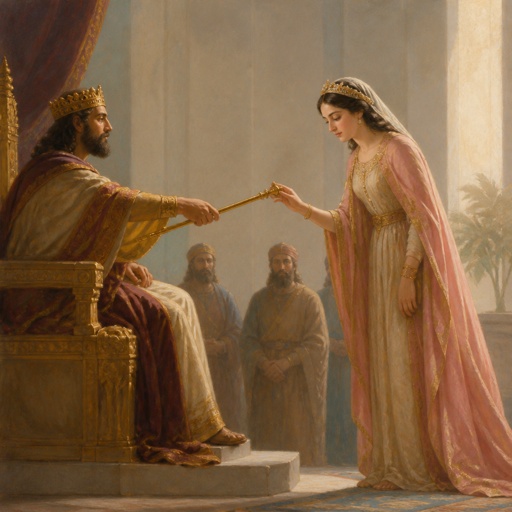
"And it was so, when the king saw Esther the queen standing in the court, that she obtained favour in his sight: and the king held out to Esther the golden sceptre that was in his hand. So Esther drew near, and touched the top of the sceptre." - Esther 5:2

Esther 2:8 - "¶ So it came to pass, when the king's commandment and his decree was heard, and when many maidens were gathered together unto Shushan the palace, to the custody of Hegai, that Esther was brought also unto the king's house, to the custody of Hegai, keeper of the women."

Esther 2:19 - "And when the virgins were gathered together the second time, then Mordecai sat in the king's gate."

Esther 1:2 - "That in those days, when the king Ahasuerus sat on the throne of his kingdom, which was in Shushan the palace,"

Esther 4:2 - "And came even before the king's gate: for none might enter into the king's gate clothed with sackcloth."

"Esther had not shewed her people nor her kindred: for Mordecai had charged her that she should not shew it." - Esther 2:10
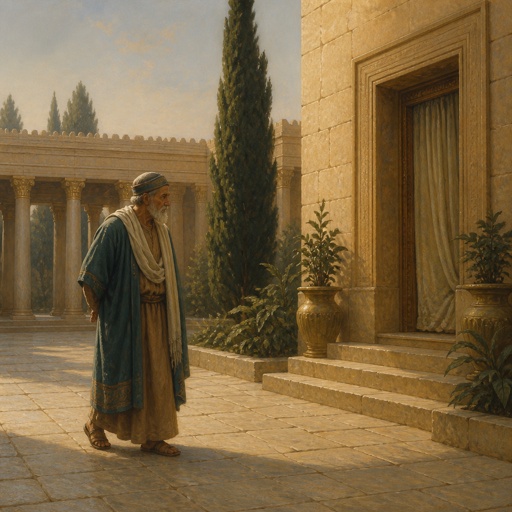
"And Mordecai walked every day before the court of the women's house, to know how Esther did, and what should become of her." - Esther 2:11
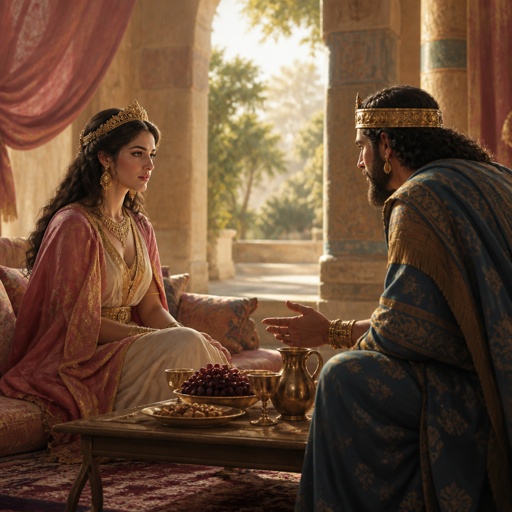
"And the king said again unto Esther on the second day at the banquet of wine, What is thy petition, queen Esther? and it shall be granted thee: and what is thy request? and it shall be performed, even to the half of the kingdom." - Esther 7:2

Esther 2:4 - "And let the maiden which pleaseth the king be queen instead of Vashti. And the thing pleased the king; and he did so."