The Courage of Connection: Esther's Resolve in the Face of Danger
“And the thing was known to Mordecai, who told it unto Esther the queen; and Esther certified the king thereof in Mordecai’s name.” — Esther 2:22
The narrative of Esther is a profound testament to courage, faith, and the intricate weave of divine providence. When we look closely at Esther 2:22, where it is written, "And the thing was known to Mordecai, who told it unto Esther the queen; and Esther certified the king thereof in Mordecai's name," we discover layers of meaning that resonate with our own lives today.
This verse occurs at a pivotal moment in the story where Mordecai, Esther's guardian and cousin, uncovers a plot to assassinate King Ahasuerus. His immediate response is not rooted in personal vendetta or ambition; instead, he acts with a sense of duty and integrity. Mordecai’s courage to inform Esther signifies a profound instance of loyalty and the responsibility inherent in relationships. Here, we see the first thread in our tapestry of understanding: our connections with others must be nurtured for us to be effective instruments of God’s will.
Esther’s response is equally remarkable. When Mordecai shares the knowledge of the assassination plot, Esther does not ignore or diminish Mordecai’s warning. She recognizes her position as queen, understanding the weight of her actions and the implications they bear. By informing the king, she shows her bravery in navigating the complexities of court politics, aware that this could also put her at risk. Esther exemplifies a critical lesson about the power of choice. She chooses to act upon the information that has been shared with her, amplifying Mordecai’s voice by certifying the matter in his name. This act signifies unity and reinforces that truth—especially dangerous truths—need to be communicated and elevated, even at great personal risk.
Mordecai’s act of revelation reminds us of our call to be vigilant, not only for ourselves but also for those around us. Acts of bravery often begin in quiet, everyday moments. In our contemporary world, we may encounter situations where we witness injustice or hear dangerous rumors. The model set by Mordecai urges us not to remain silent but to engage actively and wisely in our communities. He exemplifies the biblical command found in Proverbs 31:8, which encourages us to "Open thy mouth for the dumb in the cause of all such as are appointed to destruction."
Perhaps one of the most poignant elements in this verse is the theme of confidentiality and trust. Esther does not take the information received lightly; she honors the source—Mordecai—by acting in his name. So often, we are eager to take credit for achievements or insights that are not ours. Esther’s humility teaches us a valuable lesson about sharing recognition with those who contribute to our successes. In our spiritual journey, it is important to remember to give honor where it is due. How often do we forget the mentors and guides, the friends who remind us of truth and support us in times of trial?
As we meditate on Esther 2:22, we are called to act like Esther—to stand up, speak out, and use our positions and voices to affect change. We must remember that courage isn’t the absence of fear but the resolve to act in the face of it. With our actions, we might very well alter the course of someone’s narrative, just as Esther changed the tide of history for her people.
Moreover, let us acknowledge the divine providence evident in this moment. It is striking that Mordecai learned of the scheme and had the relationship with Esther to bring it to light. God is aware of the intricate details of our lives, and He often arranges our intersections with others for His purposes. Every relationship, every interaction serves a purpose in the larger narrative of our lives. Let us remain open to the divinely orchestrated people and moments that He places in our paths.
In conclusion, Esther 2:22 calls us to be attentive to the needs around us, brave enough to act, and humble enough to recognize others’ contributions. May we embody Esther’s spirit of acting in faith and Mordecai’s example of vigilance, always trusting that God is at work behind the scenes, weaving our stories into His grand design.
Get our apps


Artwork for Esther 2:22

Esther 2:22 - "And the thing was known to Mordecai, who told it unto Esther the queen; and Esther certified the king thereof in Mordecai's name."

"And the thing was known to Mordecai, who told it unto Esther the queen; and Esther certified the king thereof in Mordecai's name." - Esther 2:22

Esther 2:2 - "Then said the king's servants that ministered unto him, Let there be fair young virgins sought for the king:"

Esther 5:2 - "And it was so, when the king saw Esther the queen standing in the court, that she obtained favour in his sight: and the king held out to Esther the golden sceptre that was in his hand. So Esther drew near, and touched the top of the sceptre."

Esther 7:2 - "And the king said again unto Esther on the second day at the banquet of wine, What is thy petition, queen Esther? and it shall be granted thee: and what is thy request? and it shall be performed, even to the half of the kingdom."

Esther 2:20 - "Esther had not yet shewed her kindred nor her people; as Mordecai had charged her: for Esther did the commandment of Mordecai, like as when she was brought up with him."

Esther 5:2

Esther 5:2

Esther 5:2

Esther 2:11 - "And Mordecai walked every day before the court of the women's house, to know how Esther did, and what should become of her."

Esther 2:10 - "Esther had not shewed her people nor her kindred: for Mordecai had charged her that she should not shew it."
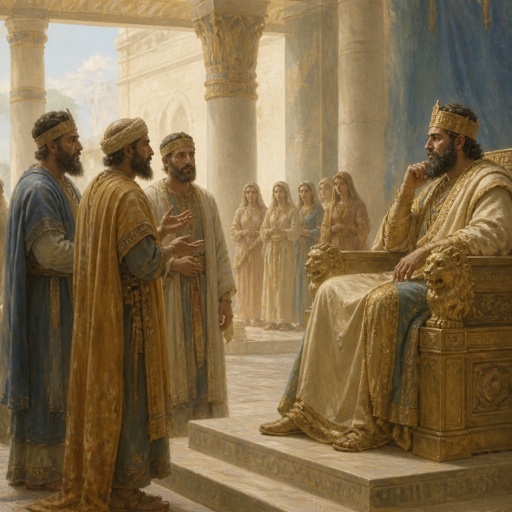
"Then said the king's servants that ministered unto him, Let there be fair young virgins sought for the king:" - Esther 2:2

Esther 5:2 - "And it was so, when the king saw Esther the queen standing in the court, that she obtained favour in his sight: and the king held out to Esther the golden sceptre that was in his hand. So Esther drew near, and touched the top of the sceptre."

Esther 2:16 - "So Esther was taken unto king Ahasuerus into his house royal in the tenth month, which is the month Tebeth, in the seventh year of his reign."

Esther 8:2 - "And the king took off his ring, which he had taken from Haman, and gave it unto Mordecai. And Esther set Mordecai over the house of Haman."
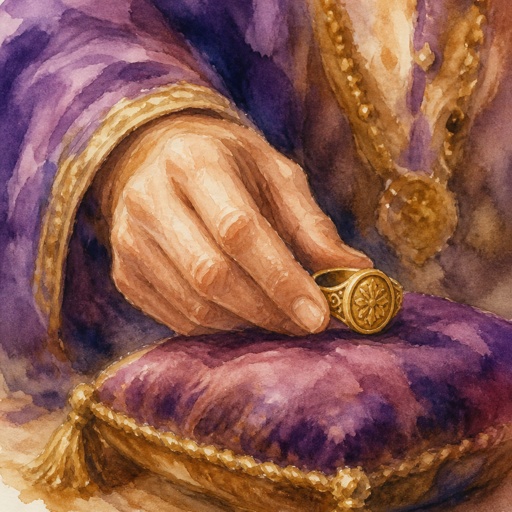
Esther 8:2 focus on the ring

Esther 2:15 - "¶ Now when the turn of Esther, the daughter of Abihail the uncle of Mordecai, who had taken her for his daughter, was come to go in unto the king, she required nothing but what Hegai the king's chamberlain, the keeper of the women, appointed. And Esther obtained favour in the sight of all them that looked upon her."

Esther 2:17 - "And the king loved Esther above all the women, and she obtained grace and favour in his sight more than all the virgins; so that he set the royal crown upon her head, and made her queen instead of Vashti."

Esther 2:7 - "And he brought up Hadassah, that is, Esther, his uncle's daughter: for she had neither father nor mother, and the maid was fair and beautiful; whom Mordecai, when her father and mother were dead, took for his own daughter."
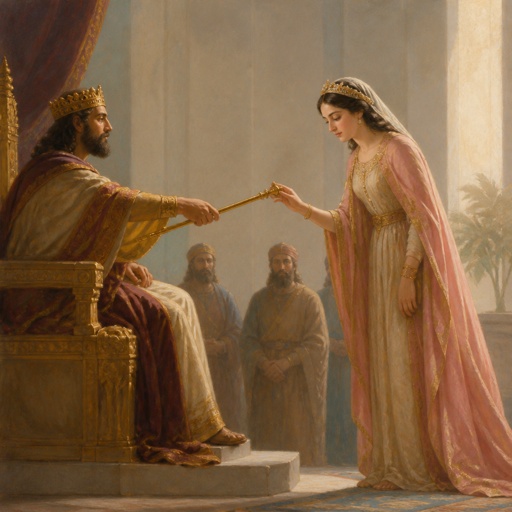
"And it was so, when the king saw Esther the queen standing in the court, that she obtained favour in his sight: and the king held out to Esther the golden sceptre that was in his hand. So Esther drew near, and touched the top of the sceptre." - Esther 5:2

Esther 2:8 - "¶ So it came to pass, when the king's commandment and his decree was heard, and when many maidens were gathered together unto Shushan the palace, to the custody of Hegai, that Esther was brought also unto the king's house, to the custody of Hegai, keeper of the women."

Esther 2:19 - "And when the virgins were gathered together the second time, then Mordecai sat in the king's gate."

Esther 1:2 - "That in those days, when the king Ahasuerus sat on the throne of his kingdom, which was in Shushan the palace,"
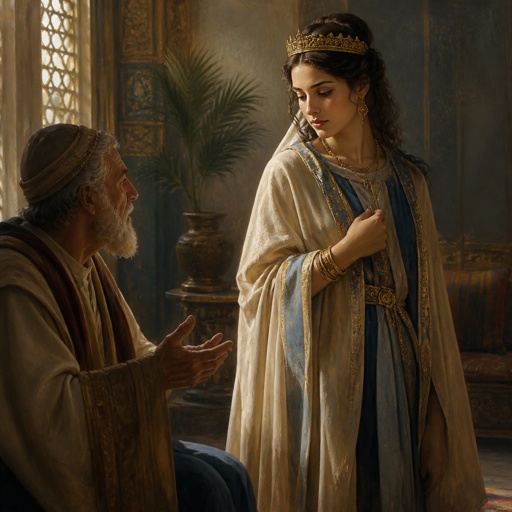
"Esther had not yet shewed her kindred nor her people; as Mordecai had charged her: for Esther did the commandment of Mordecai, like as when she was brought up with him." - Esther 2:20

Esther 4:2 - "And came even before the king's gate: for none might enter into the king's gate clothed with sackcloth."

"Esther had not shewed her people nor her kindred: for Mordecai had charged her that she should not shew it." - Esther 2:10
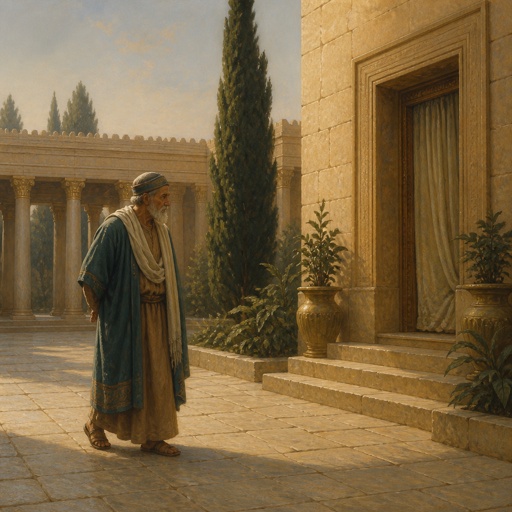
"And Mordecai walked every day before the court of the women's house, to know how Esther did, and what should become of her." - Esther 2:11
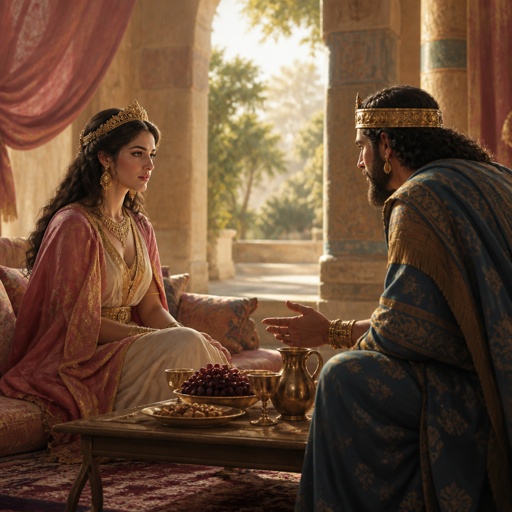
"And the king said again unto Esther on the second day at the banquet of wine, What is thy petition, queen Esther? and it shall be granted thee: and what is thy request? and it shall be performed, even to the half of the kingdom." - Esther 7:2

Esther 2:4 - "And let the maiden which pleaseth the king be queen instead of Vashti. And the thing pleased the king; and he did so."

Esther 1:22 - "For he sent letters into all the king's provinces, into every province according to the writing thereof, and to every people after their language, that every man should bear rule in his own house, and that it should be published according to the language of every people."