From Captivity to Purpose: The Story of Esther
“Who had been carried away from Jerusalem with the captivity which had been carried away with Jeconiah king of Judah, whom Nebuchadnezzar the king of Babylon had carried away.” — Esther 2:6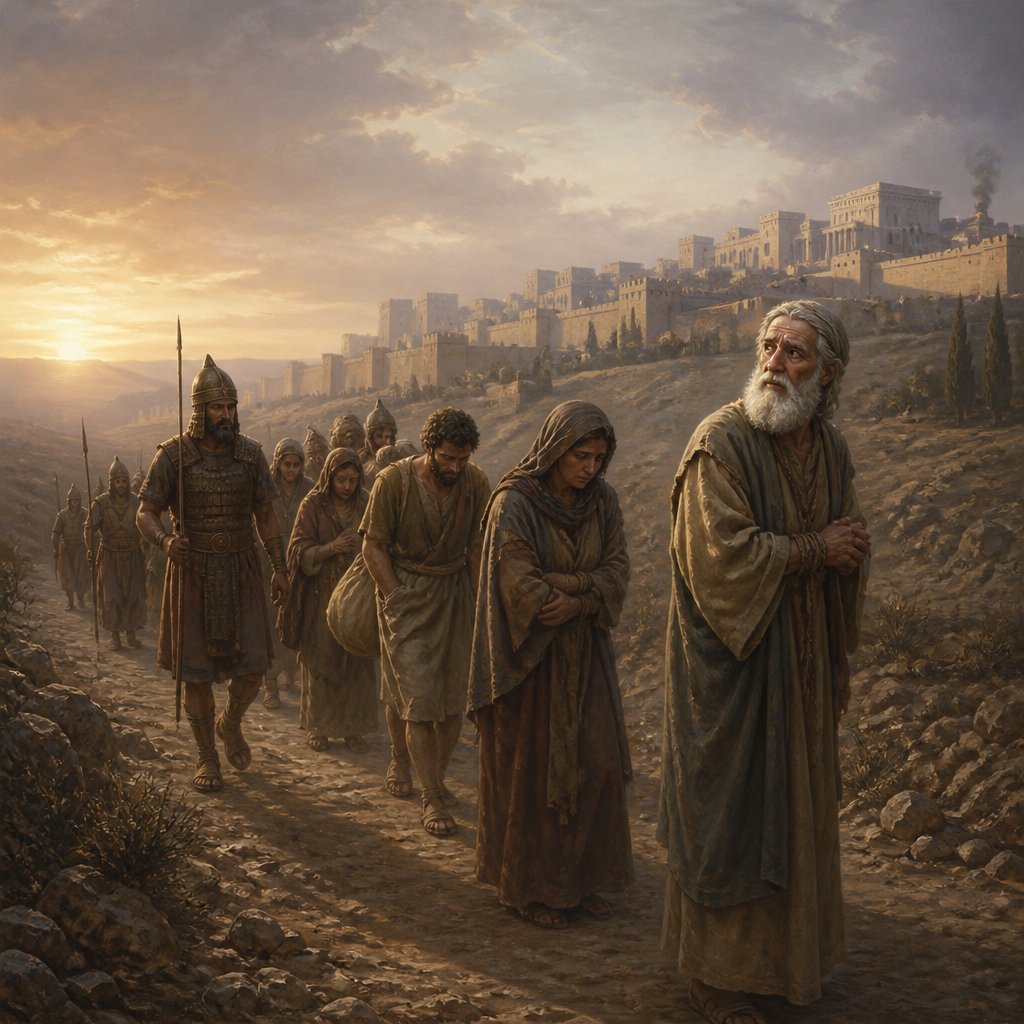
In the unfolding narrative of the Old Testament, the story of Esther stands out not just as a tale of a queen but as a reflection of God’s sovereignty, providence, and the transformative power of faith. Esther 2:6 reads, "Who had been carried away from Jerusalem with the captivity which had been carried away with Jeconiah king of Judah, whom Nebuchadnezzar the king of Babylon had carried away." This verse is foundational for understanding Esther’s background, yet it invites us to ponder deeply the implications of being carried away and what that means for our own lives.
When we think of Esther, we often focus on her rise to the position of queen and her brave actions to save her people. However, the initial sentence in this verse acts as a poignant reminder of her origins, her identity rooted in captivity. She, like so many others, had been forcibly uprooted from her homeland, carried away by the tide of circumstances beyond her control. This resonates with the reality of many today—how often do we find ourselves in situations where we feel disconnected from our roots, wrested from our comforts, or even exiled from our dreams?
The captivity of Jerusalem and the experience of Jeconiah’s people highlight the harsh realities faced by the Jewish nation at that time. They had been conquered, oppressed, and taken to a foreign land, where the riches of their cultural identity clashed with the stark realities of Babylonian life. Such experiences evoke feelings of despair, loss, and hopelessness. Yet, in their suffering, God’s hand was still at work, orchestrating a divine plan designed for Esther’s eventual rise to influence.
The story of Esther is a beautiful reflection of divine providence. Esther wasn’t merely a passive character in this grand narrative; she was a crucial part of God’s plan for salvation and deliverance. Her very presence in the king's palace was intentional—the culmination of a series of events both foreseen and allowed by God. It is in this truth that we find comfort and encouragement: that our lives, regardless of how chaotic or disordered they may seem, are weaved into God's beautiful tapestry.
In our own lives, we often encounter circumstances that feel like captivity. Perhaps we deal with illness, loss, or the weight of sin that seems overwhelming. Yet, like Esther, we must remember that being in a place of captivity doesn’t define us; it is rather our faith and actions within those situations that reveal our true identity. Esther took her challenging situation and, through faith and courage, transformed it into an avenue for God’s glory.
Moreover, Esther 2:6 reminds us that God can take the remnants of our past—our pain, our displacement, our captivity—and redeem them for His purpose. In recognizing the hardships Esther faced, we can draw a direct line to our own experiences of hardship and displacement. Our past does not limit our future. Instead, it can serve as a catalyst for empowerment, enabling us to manifest courage where we see injustice, to speak truth in the face of oppression, and to foster hope when darkness seems pervasive.
As you reflect on Esther’s journey from captivity to queen, consider the places of confinement in your own life. How can you invite God into those spaces to transform them? How can you leverage your experiences to invoke change and enact God’s will? Let us step into our ‘kingdoms’ with the boldness that Esther exhibited, realizing that God has uniquely positioned us in such a time as this.
Allow the memory of Esther—someone who emerged from captivity to lead with wisdom and bravery—be a guiding light. In Christ, we are not merely survivors of our circumstances but empowered agents of His purpose, ready to shine bright even when the darkness tries to overwhelm.
Get our apps


Artwork for Esther 2:6
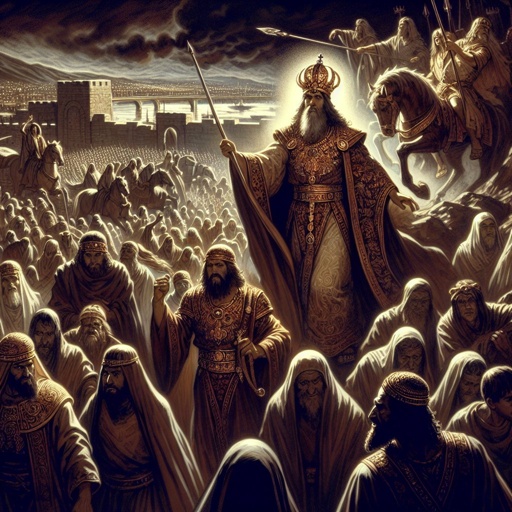
Esther 2:6 - "Who had been carried away from Jerusalem with the captivity which had been carried away with Jeconiah king of Judah, whom Nebuchadnezzar the king of Babylon had carried away."
"Who had been carried away from Jerusalem with the captivity which had been carried away with Jeconiah king of Judah, whom Nebuchadnezzar the king of Babylon had carried away." - Esther 2:6

Esther 7:6 - "And Esther said, The adversary and enemy is this wicked Haman. Then Haman was afraid before the king and the queen."

Esther 1:6

Esther 6:2 - "And it was found written, that Mordecai had told of Bigthana and Teresh, two of the king's chamberlains, the keepers of the door, who sought to lay hand on the king Ahasuerus."

Esther 6:14 - "And while they were yet talking with him, came the king's chamberlains, and hasted to bring Haman unto the banquet that Esther had prepared."

Esther 2:22 - "And the thing was known to Mordecai, who told it unto Esther the queen; and Esther certified the king thereof in Mordecai's name."

Esther 5:2 - "And it was so, when the king saw Esther the queen standing in the court, that she obtained favour in his sight: and the king held out to Esther the golden sceptre that was in his hand. So Esther drew near, and touched the top of the sceptre."

Esther 5:6 - "¶ And the king said unto Esther at the banquet of wine, What is thy petition? and it shall be granted thee: and what is thy request? even to the half of the kingdom it shall be performed."

Esther 7:2 - "And the king said again unto Esther on the second day at the banquet of wine, What is thy petition, queen Esther? and it shall be granted thee: and what is thy request? and it shall be performed, even to the half of the kingdom."

Esther 2:20 - "Esther had not yet shewed her kindred nor her people; as Mordecai had charged her: for Esther did the commandment of Mordecai, like as when she was brought up with him."

Esther 5:2

Esther 5:2

Esther 5:2

Esther 2:11 - "And Mordecai walked every day before the court of the women's house, to know how Esther did, and what should become of her."

Esther 6:7 - "And Haman answered the king, For the man whom the king delighteth to honour,"

Esther 9:6 - "And in Shushan the palace the Jews slew and destroyed five hundred men."

Esther 2:10 - "Esther had not shewed her people nor her kindred: for Mordecai had charged her that she should not shew it."

"And Esther said, The adversary and enemy is this wicked Haman. Then Haman was afraid before the king and the queen." - Esther 7:6

Esther 5:2 - "And it was so, when the king saw Esther the queen standing in the court, that she obtained favour in his sight: and the king held out to Esther the golden sceptre that was in his hand. So Esther drew near, and touched the top of the sceptre."

"And the thing was known to Mordecai, who told it unto Esther the queen; and Esther certified the king thereof in Mordecai's name." - Esther 2:22

Esther 2:16 - "So Esther was taken unto king Ahasuerus into his house royal in the tenth month, which is the month Tebeth, in the seventh year of his reign."

Esther 8:2 - "And the king took off his ring, which he had taken from Haman, and gave it unto Mordecai. And Esther set Mordecai over the house of Haman."

Esther 4:6 - "So Hatach went forth to Mordecai unto the street of the city, which was before the king's gate."
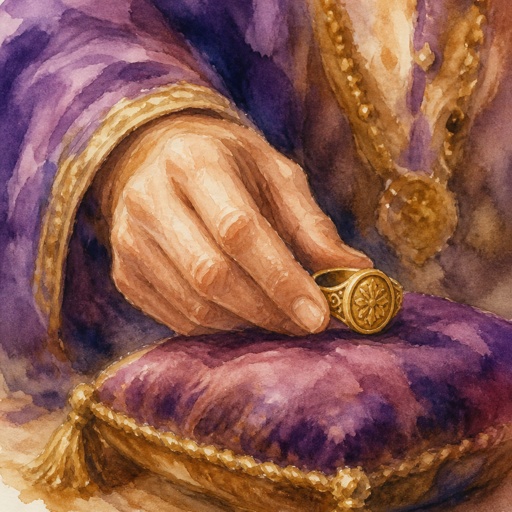
Esther 8:2 focus on the ring

Esther 2:15 - "¶ Now when the turn of Esther, the daughter of Abihail the uncle of Mordecai, who had taken her for his daughter, was come to go in unto the king, she required nothing but what Hegai the king's chamberlain, the keeper of the women, appointed. And Esther obtained favour in the sight of all them that looked upon her."

Esther 6:1 - "On that night could not the king sleep, and he commanded to bring the book of records of the chronicles; and they were read before the king."

Esther 6:5 - "And the king's servants said unto him, Behold, Haman standeth in the court. And the king said, Let him come in."

Esther 6:12 - "¶ And Mordecai came again to the king's gate. But Haman hasted to his house mourning, and having his head covered."

Esther 2:2 - "Then said the king's servants that ministered unto him, Let there be fair young virgins sought for the king:"