The Weight of Sorrow and the Power of Action
“So Esther’s maids and her chamberlains came and told it her. Then was the queen exceedingly grieved; and she sent raiment to clothe Mordecai, and to take away his sackcloth from him: but he received it not.” — Esther 4:4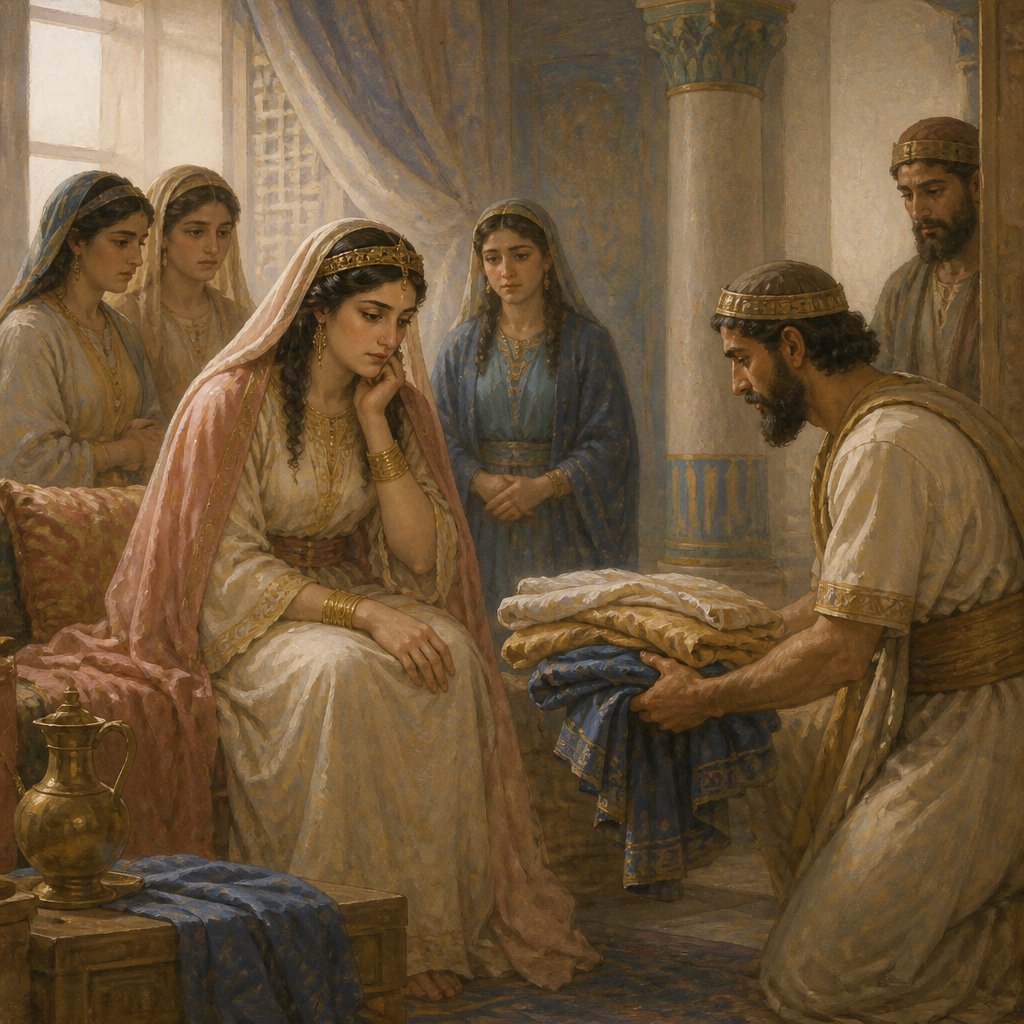
In the Book of Esther, chapter 4, we find a pivotal moment in the life of Queen Esther. The weight of her responsibilities and her connection to her people become overwhelmingly clear in Esther 4:4: "So Esther's maids and her chamberlains came and told it her. Then was the queen exceedingly grieved; and she sent raiment to clothe Mordecai, and to take away his sackcloth from him: but he received it not." This scene encapsulates not only the struggles of Esther but also the profound emotional journey of humans faced with crisis. Let’s delve deeply into this rich narrative and reflect on its implications for our own lives.
Esther, a Jewish woman hidden in the royal palace of Persia, stands as a symbol of bravery and responsibility. Her ascent to queenship is remarkable, yet with the crown came a heavy burden, especially when Mordecai, her guardian and relative, faces persecution for his refusal to bow to Haman, the king’s chief minister. When Esther learns of Mordecai's grief, marked by his donning of sackcloth and ashes—a traditional sign of mourning—her heart sinks. The text reveals her profound connection to her cousin: she is "exceedingly grieved."
This term ‘exceedingly grieved’ speaks volumes. It is a reminder that our feelings are valid when those we love encounter hardship. In a world where emotional expression can often be sidelined, Esther's reaction is both human and divine. She embodies empathy, a powerful trait that moves us to action. Her initial response is to send garments to Mordecai—an attempt to cover and comfort his sorrow. However, Mordecai's refusal of her offered raiment indicates something deeper. He is not merely mourning but is likely rallying for a cause, longing for a display of resistance. The garments, while intended for comfort, cannot mask the agony of their situation.
This moment compels us to consider our own responses to the suffering around us. How many times do we attempt to comfort those who are grieving with superficial gestures rather than truly understanding their plight? Esther’s desire to alleviate Mordecai’s sorrow is commendable, yet it reflects a common tendency: to offer quick fixes instead of engaging with the root of the problem.
As believers, we must struggle with balancing compassion and action. Esther’s grief serves as a catalyst for her role in the bigger narrative of deliverance for her people. Her emotions lead her to reconsider her position as queen—not simply as an observer of the plight of her people, but as a potential defender.
As we reflect upon this passage, we are reminded that sorrow is not meant to paralyze us. Rather, it should drive us into action, prompting us to seek deeper solutions that reflect God’s heart for justice and mercy. When faced with grave injustices, we cannot merely send raiment. We must also bear the weight of intercession, as Esther eventually did when she stood before King Xerxes to advocate for her people, risking her own life for their safety.
In your life today, consider the areas where you feel grieved by the sorrow of those around you. Are you merely sending ‘raiment’—offering superficial comforts—or are you taking the time to engage with their struggles at a deeper level? Are there moments God is calling you to step up and act, to risk your own comfort for the sake of others?
Let Esther's story inspire you to not only feel the burdens of others but to take courageous steps towards solutions. The world is full of Mordecais in sackcloth—those whose sorrows weigh heavily upon their hearts. And like Esther, we are all called to respond with neither indifference nor mere gestures of sympathy, but with a holy determination to make a standout difference in the lives of those suffering. Let us remember that grief, when embraced, can become a powerful motivator for action.
Get our apps


Artwork for Esther 4:4

Esther 4:4 - "¶ So Esther's maids and her chamberlains came and told it her. Then was the queen exceedingly grieved; and she sent raiment to clothe Mordecai, and to take away his sackcloth from him: but he received it not."
"¶ So Esther's maids and her chamberlains came and told it her. Then was the queen exceedingly grieved; and she sent raiment to clothe Mordecai, and to take away his sackcloth from him: but he received it not." - Esther 4:4

Esther 4:15 - "¶ Then Esther bade them return Mordecai this answer,"

Esther 4:9 - "And Hatach came and told Esther the words of Mordecai."

Esther 8:4 - "Then the king held out the golden sceptre toward Esther. So Esther arose, and stood before the king,"

Esther 4:10 - "¶ Again Esther spake unto Hatach, and gave him commandment unto Mordecai;"

Esther 8:4

Esther 4:12 - "And they told to Mordecai Esther's words."

Esther 4:17 - "So Mordecai went his way, and did according to all that Esther had commanded him."

"And Hatach came and told Esther the words of Mordecai." - Esther 4:9

"¶ Then Esther bade them return Mordecai this answer," - Esther 4:15

Esther 4:13 - "Then Mordecai commanded to answer Esther, Think not with thyself that thou shalt escape in the king's house, more than all the Jews."

Esther 5:4 - "And Esther answered, If it seem good unto the king, let the king and Haman come this day unto the banquet that I have prepared for him."
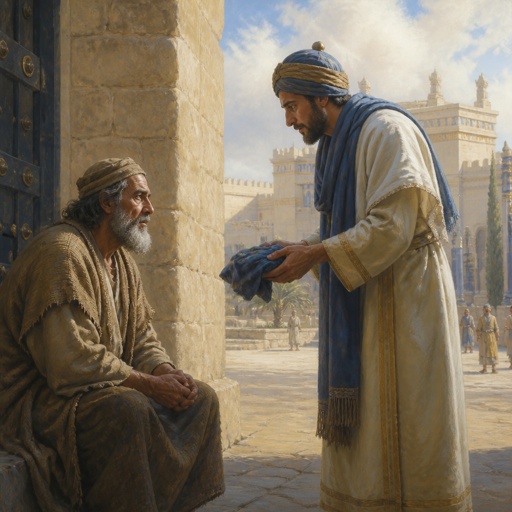
"And they told to Mordecai Esther's words." - Esther 4:12

Esther 4:5 - "Then called Esther for Hatach, one of the king's chamberlains, whom he had appointed to attend upon her, and gave him a commandment to Mordecai, to know what it was, and why it was."

"Then the king held out the golden sceptre toward Esther. So Esther arose, and stood before the king," - Esther 8:4

"¶ Again Esther spake unto Hatach, and gave him commandment unto Mordecai;" - Esther 4:10

Esther 4:6 - "So Hatach went forth to Mordecai unto the street of the city, which was before the king's gate."

Esther 4:2 - "And came even before the king's gate: for none might enter into the king's gate clothed with sackcloth."

"So Mordecai went his way, and did according to all that Esther had commanded him." - Esther 4:17

Esther 2:4 - "And let the maiden which pleaseth the king be queen instead of Vashti. And the thing pleased the king; and he did so."

Esther 9:4 - "For Mordecai was great in the king's house, and his fame went out throughout all the provinces: for this man Mordecai waxed greater and greater."

Esther 1:4 - "When he shewed the riches of his glorious kingdom and the honour of his excellent majesty many days, even an hundred and fourscore days."

Esther 4:8 - "Also he gave him the copy of the writing of the decree that was given at Shushan to destroy them, to shew it unto Esther, and to declare it unto her, and to charge her that she should go in unto the king, to make supplication unto him, and to make request before him for her people."

"Then Mordecai commanded to answer Esther, Think not with thyself that thou shalt escape in the king's house, more than all the Jews." - Esther 4:13

Esther 4:3 - "And in every province, whithersoever the king's commandment and his decree came, there was great mourning among the Jews, and fasting, and weeping, and wailing; and many lay in sackcloth and ashes."

Esther 4:7 - "And Mordecai told him of all that had happened unto him, and of the sum of the money that Haman had promised to pay to the king's treasuries for the Jews, to destroy them."

Esther 4:1 - "When Mordecai perceived all that was done, Mordecai rent his clothes, and put on sackcloth with ashes, and went out into the midst of the city, and cried with a loud and a bitter cry;"

Esther 6:4 - "¶ And the king said, Who is in the court? Now Haman was come into the outward court of the king's house, to speak unto the king to hang Mordecai on the gallows that he had prepared for him."
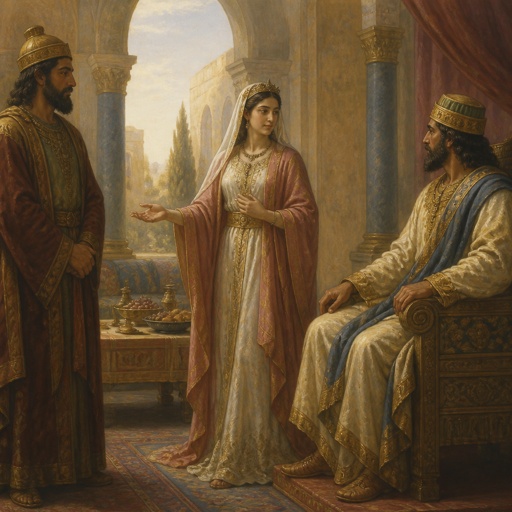
"And Esther answered, If it seem good unto the king, let the king and Haman come this day unto the banquet that I have prepared for him." - Esther 5:4