In the Shadows of Royalty: The Power of Inquiry and Understanding
“Then called Esther for Hatach, one of the king’s chamberlains, whom he had appointed to attend upon her, and gave him a commandment to Mordecai, to know what it was, and why it was.” — Esther 4:5
Queen Esther is a character that embodies courage, faith, and strategic wisdom. In Esther 4:5 (KJV), it is written, "Then called Esther for Hatach, one of the king's chamberlains, whom he had appointed to attend upon her, and gave him a commandment to Mordecai, to know what it was, and why it was." This verse captures a pivotal moment in Esther’s life, where her inquiry sets the stage for a greater understanding of the crises her people were facing.
In this moment, Esther demonstrates the importance of communication and the need for clarity in the midst of perilous circumstances. At this point in the narrative, her cousin Mordecai has just learned of Haman's plot to annihilate the Jews, and his distress is palpable. Rather than acting impulsively out of fear or confusion, Esther takes a step back to seek understanding. This act of inquiry is crucial; it exemplifies the principle that knowledge and wisdom often come hand-in-hand, and that understanding the 'what' and the 'why' behind situations can lead to more informed and effective action.
Esther's request for Hatach highlights another important aspect: the value of intermediaries in times of crisis. Hatach, a royal attendant appointed to support Esther in her role as queen, serves as her messenger and facilitator. In our lives, we often need someone to help us bridge the gaps between ourselves and difficult situations, particularly when faced with crises beyond our immediate control. The body of Christ reflects this dynamic; we are called to bear one another’s burdens, to stand in the gap for each other, and to act as conduits of information and support.
Furthermore, Esther’s approach to Mordecai reveals her understanding of the importance of allies in times of change. She does not assume that she knows all; instead, she seeks the insight of a trusted friend and family member who bears the same worries and fears. When faced with overwhelming challenges, it can be tempting to isolate oneself, driven by the belief that we must handle our problems alone. However, Esther shows us that reaching out to those we trust can offer not only clarity but strength.
The act of inquiry in Esther 4:5 is significant not just in its immediacy, but also in its implications for leadership and influence. Esther, poised in a position of royalty, had the potential to change the course of history with her decisions. Yet, she seeks to understand the situation fully before acting. This teaches us that wisdom is born not just from authority, but from the willingness to ask questions and listen deeply to the answers that come forth. We are reminded that leadership, whether in the workplace or in our communities, is less about making unilateral decisions and more about fostering dialogue.
Moving deeper, we observe that Esther’s inquiry was not merely a strategic move in a time of crisis; it was an act of faith. She placed her trust not only in Hatach to carry her message but ultimately in God, who was orchestrating events beyond human understanding. Esther’s quiet confidence illustrates that faith and action must coexist in faith-filled works. When we ask questions and seek guidance, we are, in effect, engaging in a relationship with God where He speaks encouragement and direction into our lives.
So, as we reflect on Esther 4:5, let us dare to ask questions, seek understanding, and engage with those who carry wisdom. Let us open ourselves to the guidance of trusted allies and remind ourselves that inquiry is not a sign of doubt but rather a step toward faith-filled action. In the grand tapestry of our lives, every question asked in faith can be a thread that will weave into a story of profound impact and divine purpose.
Get our apps


Artwork for Esther 4:5

Esther 4:5 - "Then called Esther for Hatach, one of the king's chamberlains, whom he had appointed to attend upon her, and gave him a commandment to Mordecai, to know what it was, and why it was."

"Then called Esther for Hatach, one of the king's chamberlains, whom he had appointed to attend upon her, and gave him a commandment to Mordecai, to know what it was, and why it was." - Esther 4:5

Esther 5:4 - "And Esther answered, If it seem good unto the king, let the king and Haman come this day unto the banquet that I have prepared for him."

Esther 5:5 - "Then the king said, Cause Haman to make haste, that he may do as Esther hath said. So the king and Haman came to the banquet that Esther had prepared."

Esther 8:4 - "Then the king held out the golden sceptre toward Esther. So Esther arose, and stood before the king,"

Esther 5:7 - "Then answered Esther, and said, My petition and my request is;"

Esther 4:15 - "¶ Then Esther bade them return Mordecai this answer,"

Esther 4:9 - "And Hatach came and told Esther the words of Mordecai."
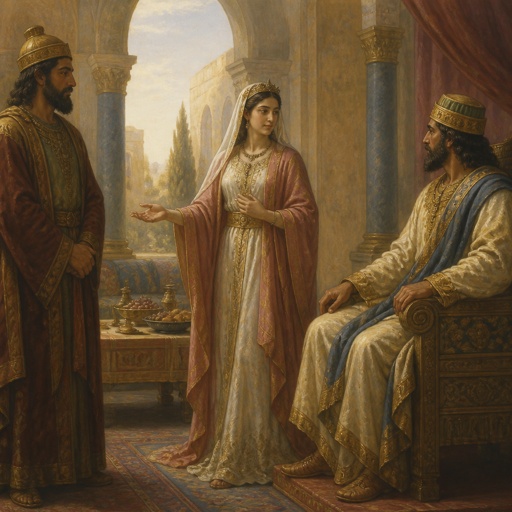
"And Esther answered, If it seem good unto the king, let the king and Haman come this day unto the banquet that I have prepared for him." - Esther 5:4

Esther 4:10 - "¶ Again Esther spake unto Hatach, and gave him commandment unto Mordecai;"

Esther 5:2

Esther 5:2 - "And it was so, when the king saw Esther the queen standing in the court, that she obtained favour in his sight: and the king held out to Esther the golden sceptre that was in his hand. So Esther drew near, and touched the top of the sceptre."

Esther 5:2

Esther 5:2

Esther 4:17 - "So Mordecai went his way, and did according to all that Esther had commanded him."

Esther 8:4

Esther 4:12 - "And they told to Mordecai Esther's words."

"And Hatach came and told Esther the words of Mordecai." - Esther 4:9

"¶ Then Esther bade them return Mordecai this answer," - Esther 4:15
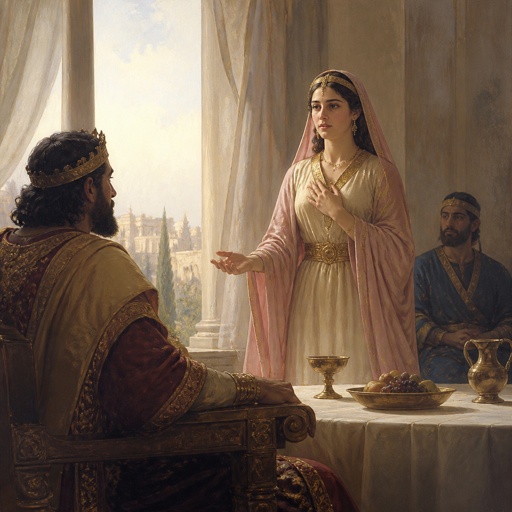
"Then answered Esther, and said, My petition and my request is;" - Esther 5:7

Esther 5:3 - "Then said the king unto her, What wilt thou, queen Esther? and what is thy request? it shall be even given thee to the half of the kingdom."

Esther 7:5 - "¶ Then the king Ahasuerus answered and said unto Esther the queen, Who is he, and where is he, that durst presume in his heart to do so?"

Esther 4:13 - "Then Mordecai commanded to answer Esther, Think not with thyself that thou shalt escape in the king's house, more than all the Jews."

Esther 5:2 - "And it was so, when the king saw Esther the queen standing in the court, that she obtained favour in his sight: and the king held out to Esther the golden sceptre that was in his hand. So Esther drew near, and touched the top of the sceptre."
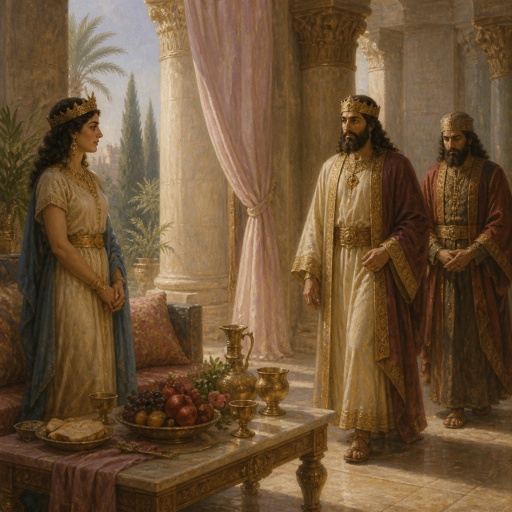
"Then the king said, Cause Haman to make haste, that he may do as Esther hath said. So the king and Haman came to the banquet that Esther had prepared." - Esther 5:5

Esther 5:6 - "¶ And the king said unto Esther at the banquet of wine, What is thy petition? and it shall be granted thee: and what is thy request? even to the half of the kingdom it shall be performed."

"Then the king held out the golden sceptre toward Esther. So Esther arose, and stood before the king," - Esther 8:4

"¶ Again Esther spake unto Hatach, and gave him commandment unto Mordecai;" - Esther 4:10
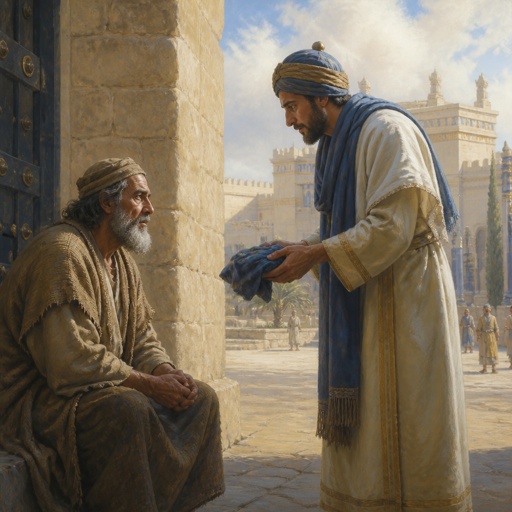
"And they told to Mordecai Esther's words." - Esther 4:12

Esther 5:12 - "Haman said moreover, Yea, Esther the queen did let no man come in with the king unto the banquet that she had prepared but myself; and to morrow am I invited unto her also with the king."