Divine Communication: The Unseen Hands Guiding Us
“And Hatach came and told Esther the words of Mordecai.” — Esther 4:9
The story of Esther is one of the most captivating narratives found in the Scripture, beautifully encapsulating themes of courage, faith, and divine intervention. The verse Esther 4:9 states, "And Hatach came and told Esther the words of Mordecai." This simple yet profound statement opens a window into how God orchestrates events in our lives to fulfill His divine purposes.
To fully appreciate the weight of this verse, we must first grasp the context. Esther finds herself in a perilous situation; as the queen of Persia, she is in a position of influence, yet she is also at the heart of a plot that threatens her people, the Jews. Mordecai, her cousin, informs her of the imminent danger: a decree has been issued for the annihilation of all Jews. Hatach, the eunuch sent to attend to Esther, becomes more than just a messenger; he represents the channels through which God communicates urgency and divine plans.
In many ways, Hatach is a metaphor for the Holy Spirit, who guides us into all truth (John 16:13) and brings vital messages from the Lord to our hearts. This verse reminds us of the significance of listening to the right voices in our lives. God often speaks to us through others – friends, family, mentors, or even strangers. In our walk of faith, we must remain sensitive to these divine communications, for they carry significant implications for our decisions and actions.
Moreover, the name "Hatach" means "to cut" or "a connector." This notion is richly symbolic; just as he connects Esther and Mordecai, the Holy Spirit connects us with God's will and purpose. God is not silent or distant; He is actively involved, orchestrating events and conversations to deliver His messages to us. Are we attuned to those messages? Are we receptive to the channels God uses to communicate with us?
Mordecai’s message was urgent. In verse 14 of the same chapter, he implores Esther to recognize that her position may be divinely appointed for such a time as this. Esther's response is a powerful testament to her courage and faith. She chooses to act in faith, demonstrating that though she was deeply afraid, she knew that her God was bigger than the king’s decree. Hatach’s role was pivotal; thereby, he was used by God to ignite Esther's courage into action.
As we reflect on Esther 4:9, let’s remember the times when God has sent His messengers to us. Perhaps it was through a sermon that struck a chord, a conversation at just the right moment, or even a word of encouragement that shifted our perspective. These communicators are God’s instruments, echoing His heartbeat and imparting wisdom or encouragement we desperately need.
Furthermore, we are reminded that our response to God’s message can change the course of events. Esther's decision to risk her life for her people demonstrated profound faith, and in doing so, she saved the Jews from destruction. Our obedience to God's calling, however daunting, can lead to transformative outcomes in our lives and the lives of those around us.
Let us then seek divine connection in our daily lives, remaining vigilant to the Hatachs God sends our way. Pray for discernment to recognize the voices speaking to you and for courage to act according to His will. Whatever situation we find ourselves in, remember that like Esther, we may be placed in our roles "for such a time as this," ready to fulfill God's plans upon our lives. May we remain open, ready to respond, and eager to act for His glory.
Get our apps


Artwork for Esther 4:9

Esther 4:9 - "And Hatach came and told Esther the words of Mordecai."

"And Hatach came and told Esther the words of Mordecai." - Esther 4:9

Esther 9:4 - "For Mordecai was great in the king's house, and his fame went out throughout all the provinces: for this man Mordecai waxed greater and greater."

Esther 9:32 - "And the decree of Esther confirmed these matters of Purim; and it was written in the book."

Esther 8:4 - "Then the king held out the golden sceptre toward Esther. So Esther arose, and stood before the king,"

Esther 4:15 - "¶ Then Esther bade them return Mordecai this answer,"

Esther 9:9 - "And Parmashta, and Arisai, and Aridai, and Vajezatha,"

Esther 4:10 - "¶ Again Esther spake unto Hatach, and gave him commandment unto Mordecai;"

Esther 9:29 - "Then Esther the queen, the daughter of Abihail, and Mordecai the Jew, wrote with all authority, to confirm this second letter of Purim."

Esther 9:8 - "And Poratha, and Adalia, and Aridatha,"

Esther 9:7 - "And Parshandatha, and Dalphon, and Aspatha,"

"And the decree of Esther confirmed these matters of Purim; and it was written in the book." - Esther 9:32

Esther 4:17 - "So Mordecai went his way, and did according to all that Esther had commanded him."

Esther 8:4
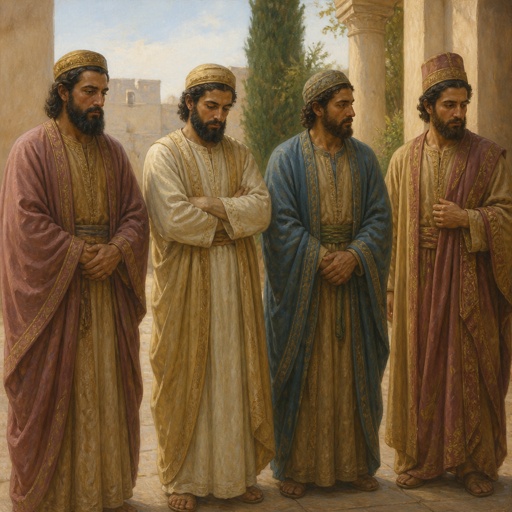
"And Parmashta, and Arisai, and Aridai, and Vajezatha," - Esther 9:9

Esther 4:12 - "And they told to Mordecai Esther's words."

"¶ Then Esther bade them return Mordecai this answer," - Esther 4:15

Esther 4:13 - "Then Mordecai commanded to answer Esther, Think not with thyself that thou shalt escape in the king's house, more than all the Jews."

Esther 5:4 - "And Esther answered, If it seem good unto the king, let the king and Haman come this day unto the banquet that I have prepared for him."

Esther 9:31 - "To confirm these days of Purim in their times appointed, according as Mordecai the Jew and Esther the queen had enjoined them, and as they had decreed for themselves and for their seed, the matters of the fastings and their cry."

Esther 9:13 - "Then said Esther, If it please the king, let it be granted to the Jews which are in Shushan to do to morrow also according unto this day's decree, and let Haman's ten sons be hanged upon the gallows."

"Then the king held out the golden sceptre toward Esther. So Esther arose, and stood before the king," - Esther 8:4

"And Parshandatha, and Dalphon, and Aspatha," - Esther 9:7

Esther 4:5 - "Then called Esther for Hatach, one of the king's chamberlains, whom he had appointed to attend upon her, and gave him a commandment to Mordecai, to know what it was, and why it was."
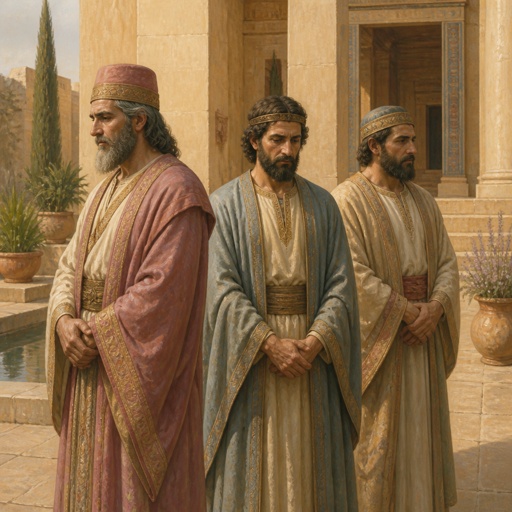
"And Poratha, and Adalia, and Aridatha," - Esther 9:8

Esther 9:6 - "And in Shushan the palace the Jews slew and destroyed five hundred men."

"¶ Again Esther spake unto Hatach, and gave him commandment unto Mordecai;" - Esther 4:10
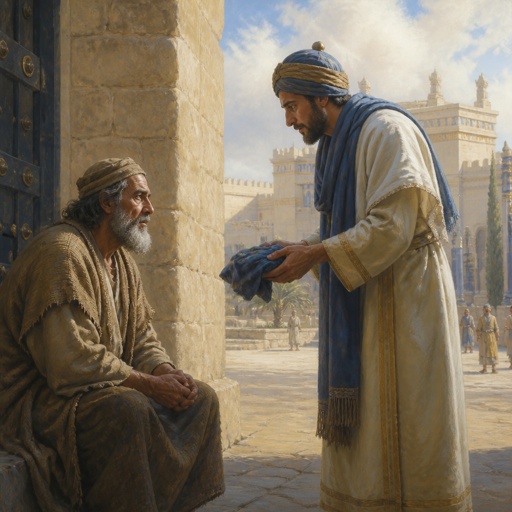
"And they told to Mordecai Esther's words." - Esther 4:12

Esther 9:25 - "But when Esther came before the king, he commanded by letters that his wicked device, which he devised against the Jews, should return upon his own head, and that he and his sons should be hanged on the gallows."

Esther 9:10 - "The ten sons of Haman the son of Hammedatha, the enemy of the Jews, slew they; but on the spoil laid they not their hand."