Courageous Advocacy: Lessons from Esther and Mordecai
“And Mordecai told him of all that had happened unto him, and of the sum of the money that Haman had promised to pay to the king’s treasuries for the Jews, to destroy them.” — Esther 4:7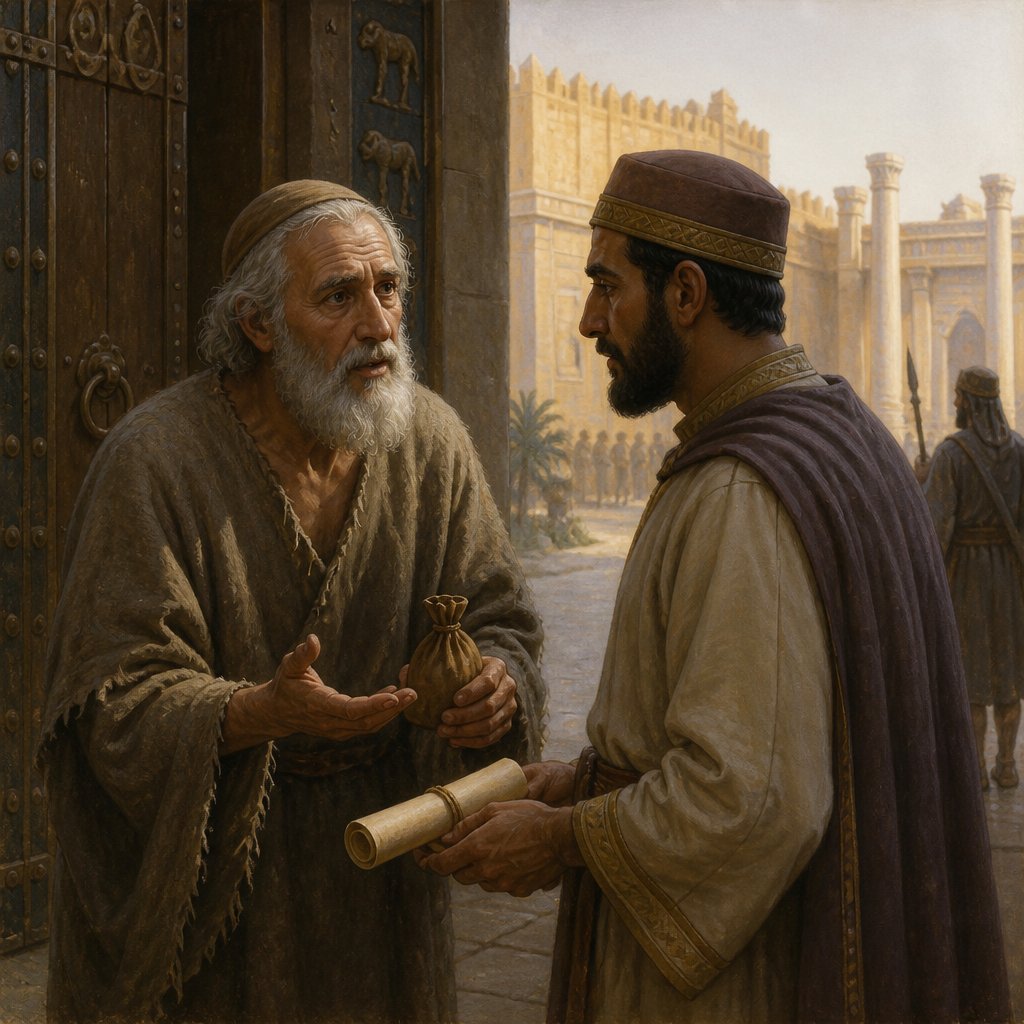
The book of Esther unfolds a profound narrative of courage, faith, and divine providence in the face of perilous circumstances. Esther 4:7 states, "And Mordecai told him of all that had happened unto him, and of the sum of the money that Haman had promised to pay to the king's treasuries for the Jews, to destroy them." This pivotal moment captures the weight of oppression hovering over the Jewish people and the critical role Mordecai plays in urging Esther to act.
Mordecai's communication to Esther is a testament to the power of truth and the importance of revealing the realities of our situation. In the modern context, we experience moments when the truth is overshadowed by fear or apathy. Just as Mordecai informed Esther of the looming threat, we are sometimes called to reveal uncomfortable truths to others, not to instill fear, but to inspire action. As believers, we have a moral responsibility to be advocates for those who cannot advocate for themselves, and Mordecai’s actions exemplify this principle.
Reflecting on the depth of what Mordecai shares with Esther, we see the gravity of the circumstances. The Jews were under an edict that placed their very existence in jeopardy due to the malice of Haman, a high-ranking official filled with hatred. Mordecai did not merely share the information with Esther; he communicated the urgency of their plight and the financial commitment from Haman to ensure their destruction. Herein lies a lesson: when presenting difficult truths, context matters. Mordecai understood that to trigger a response from Esther, he needed to convey both the severity of the risk and the broader implications of inaction.
Courage is not the absence of fear, but the resolve to act despite it. Esther knew that approaching the king without being summoned could lead to her execution. The stakes of her involvement were incredibly high, yet Mordecai's words were a clarion call to her royal responsibilities. In our own lives, when faced with challenges that seem insurmountable, we must remember that we, too, are often called to step out of our comfort zones for the sake of others. What fears or societal norms are inhibiting you from taking a stand in your own community? Mordecai advocates for Esther’s courage, encouraging her that her royal position might very well be divinely orchestrated for such a time as this (Esther 4:14).
Furthermore, this narrative emphasizes the importance of community and collaboration in advocacy. Esther was not alone in her mission; she had Mordecai supporting her. As we navigate our own journeys, it’s crucial to surround ourselves with those who will remind us of our purpose and potential. The bonds we create with others can empower us to tackle daunting challenges collectively.
In this verse, there is also an underlying thread of divine providence. Mordecai’s insistence that Esther arise to her position does not stem solely from a human perspective; it speaks to the belief that God places individuals in specific situations at critical moments throughout history. Isaiah 43:1-2 reassures us that we are known and valued by our Creator, which echoes the truth that our existence is intentional. Each of us has a role to play, a voice to lend, a light to shine, just as Esther did.
As we meditate on Esther 4:7, let us reflect on our roles within our communities and the spheres of influence where we are placed. Are we alert to the needs around us? Are we willing to share uncomfortable truths with those who can effect change? In recognizing the urgency of our world’s injustices, may we champion courage, advocate for the voiceless, and trust in God’s perfect timing. Let Mordecai’s reminder propel us to act—compelled by truth, armed with courage, and driven by love.
In conclusion, the story of Esther and Mordecai teaches us about the dynamics of responsibility and action in the face of adversity. When we find ourselves in positions of influence or when we see others in vulnerable places, let us rise as advocates, embodying the courage of Esther, and responding to the clarion call as Mordecai urged. May we live boldly, knowing that we are here for such a time as this.
Get our apps


Artwork for Esther 4:7

Esther 4:7 - "And Mordecai told him of all that had happened unto him, and of the sum of the money that Haman had promised to pay to the king's treasuries for the Jews, to destroy them."
"And Mordecai told him of all that had happened unto him, and of the sum of the money that Haman had promised to pay to the king's treasuries for the Jews, to destroy them." - Esther 4:7

Esther 8:4 - "Then the king held out the golden sceptre toward Esther. So Esther arose, and stood before the king,"

Esther 5:7 - "Then answered Esther, and said, My petition and my request is;"

Esther 7:1 - "So the king and Haman came to banquet with Esther the queen."

Esther 4:15 - "¶ Then Esther bade them return Mordecai this answer,"

Esther 4:9 - "And Hatach came and told Esther the words of Mordecai."

Esther 4:10 - "¶ Again Esther spake unto Hatach, and gave him commandment unto Mordecai;"

Esther 7:6 - "And Esther said, The adversary and enemy is this wicked Haman. Then Haman was afraid before the king and the queen."

Esther 7:4 - "For we are sold, I and my people, to be destroyed, to be slain, and to perish. But if we had been sold for bondmen and bondwomen, I had held my tongue, although the enemy could not countervail the king's damage."

Esther 4:17 - "So Mordecai went his way, and did according to all that Esther had commanded him."

Esther 7:2 - "And the king said again unto Esther on the second day at the banquet of wine, What is thy petition, queen Esther? and it shall be granted thee: and what is thy request? and it shall be performed, even to the half of the kingdom."

Esther 8:4

Esther 7:7 - "¶ And the king arising from the banquet of wine in his wrath went into the palace garden: and Haman stood up to make request for his life to Esther the queen; for he saw that there was evil determined against him by the king."

Esther 9:7 - "And Parshandatha, and Dalphon, and Aspatha,"

"So the king and Haman came to banquet with Esther the queen." - Esther 7:1

Esther 4:12 - "And they told to Mordecai Esther's words."

Esther 8:7 - "¶ Then the king Ahasuerus said unto Esther the queen and to Mordecai the Jew, Behold, I have given Esther the house of Haman, and him they have hanged upon the gallows, because he laid his hand upon the Jews."

"And Hatach came and told Esther the words of Mordecai." - Esther 4:9

"¶ Then Esther bade them return Mordecai this answer," - Esther 4:15
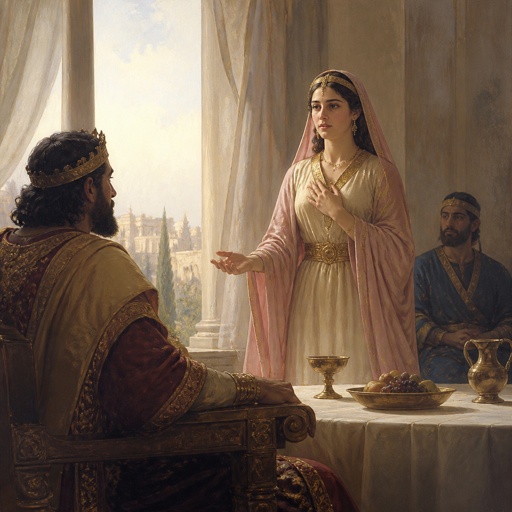
"Then answered Esther, and said, My petition and my request is;" - Esther 5:7

Esther 4:13 - "Then Mordecai commanded to answer Esther, Think not with thyself that thou shalt escape in the king's house, more than all the Jews."

Esther 7:5 - "¶ Then the king Ahasuerus answered and said unto Esther the queen, Who is he, and where is he, that durst presume in his heart to do so?"

Esther 5:4 - "And Esther answered, If it seem good unto the king, let the king and Haman come this day unto the banquet that I have prepared for him."

"Then the king held out the golden sceptre toward Esther. So Esther arose, and stood before the king," - Esther 8:4

Esther 4:5 - "Then called Esther for Hatach, one of the king's chamberlains, whom he had appointed to attend upon her, and gave him a commandment to Mordecai, to know what it was, and why it was."

"And Parshandatha, and Dalphon, and Aspatha," - Esther 9:7

"¶ Again Esther spake unto Hatach, and gave him commandment unto Mordecai;" - Esther 4:10
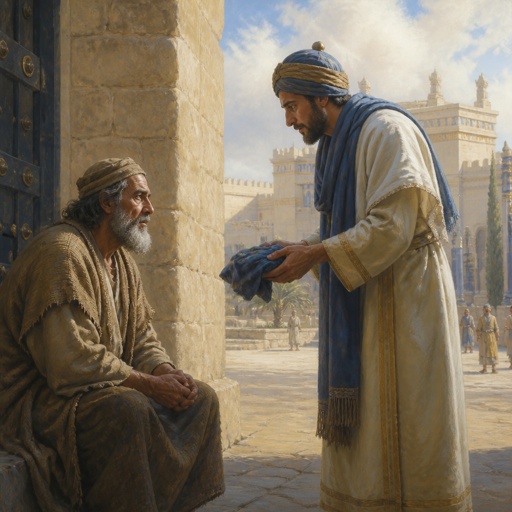
"And they told to Mordecai Esther's words." - Esther 4:12

Esther 6:7 - "And Haman answered the king, For the man whom the king delighteth to honour,"