What does Esther 4:7 mean?
“And Mordecai told him of all that had happened unto him, and of the sum of the money that Haman had promised to pay to the king’s treasuries for the Jews, to destroy them.” — Esther 4:7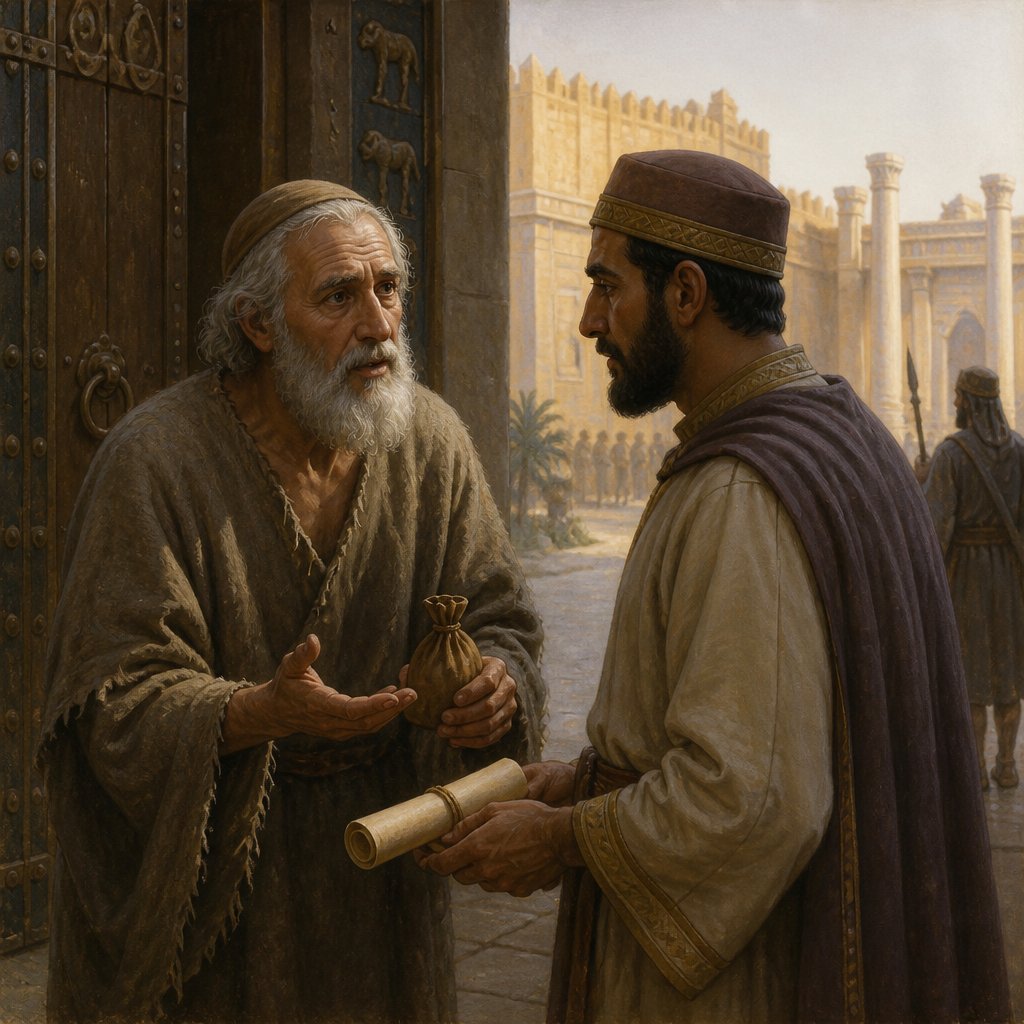
Esther 4:7 in the King James Version of the Bible reads, "And Mordecai told him of all that had happened unto him, and of the sum of the money that Haman had promised to pay to the king's treasuries for the Jews, to destroy them." This verse is a key moment in the biblical book of Esther, and it holds significant meaning in the larger context of the story.
The book of Esther is set during the reign of King Ahasuerus (often believed to be Xerxes I) in ancient Persia. The story follows the Jewish orphan Esther, who becomes queen and uses her position to save her people from genocide at the hands of the villainous Haman. In this particular verse, Mordecai, a Jewish man and Esther's cousin, is speaking to Hathach, a eunuch who serves the king, to inform him of the genocidal plot orchestrated by Haman and the danger facing the Jewish people.
The verse reveals several important themes and ideas that are woven throughout the book of Esther. One of the central themes of the book is the concept of providence, or God's intervention in human affairs. While the name of God is not explicitly mentioned in the book of Esther, His presence and guidance can be seen in the series of events that unfold. Mordecai's decision to inform Hathach about the plot against the Jews is a crucial step in the chain of events that leads to the salvation of the Jewish people. This verse, therefore, serves as a reminder of God's sovereignty and His ability to work through human actions to bring about His purposes.
Another important theme in this verse is the idea of standing up against injustice and the courage it requires. Mordecai's decision to speak out about the plot against the Jews, despite the risks involved, demonstrates his bravery and commitment to protecting his people. This theme of courage and standing up for what is right is exemplified not only by Mordecai but also by Esther herself, who ultimately risks her own life to appeal to the king on behalf of her people.
Additionally, this verse highlights the significance of communication and the power of information. Mordecai's decision to relay the details of Haman's plot to Hathach is a pivotal moment in the story, leading to the eventual thwarting of Haman's plan. This serves as a reminder of the importance of speaking out against injustice and the impact that sharing information can have in bringing about positive change.
In terms of symbolism, this verse represents the beginning of the turning point in the narrative of Esther. It marks the moment when the threat against the Jewish people is made known and sets in motion the events that will ultimately lead to their deliverance. Mordecai's actions in this verse symbolize the proactive stance that is often necessary in the face of adversity, as well as the importance of taking a stand in defense of others.
Furthermore, the verse also underscores the deceptive and manipulative tactics employed by Haman, who sought to use his wealth and influence to orchestrate the destruction of the Jewish people. This serves as a cautionary example of the dangers of unchecked power and the potential for abuse when it is wielded with malice.
In conclusion, Esther 4:7 is a pivotal verse in the biblical book of Esther, embodying themes of providence, courage, communication, and the struggle against injustice. It serves as a reminder of the power of faith and action in the face of adversity and the importance of standing up for what is right. This verse, like the entire book of Esther, continues to resonate as a timeless and powerful testament to the enduring faith and resilience of the Jewish people.
Get our apps


Artwork for Esther 4:7

Esther 4:7 - "And Mordecai told him of all that had happened unto him, and of the sum of the money that Haman had promised to pay to the king's treasuries for the Jews, to destroy them."
"And Mordecai told him of all that had happened unto him, and of the sum of the money that Haman had promised to pay to the king's treasuries for the Jews, to destroy them." - Esther 4:7

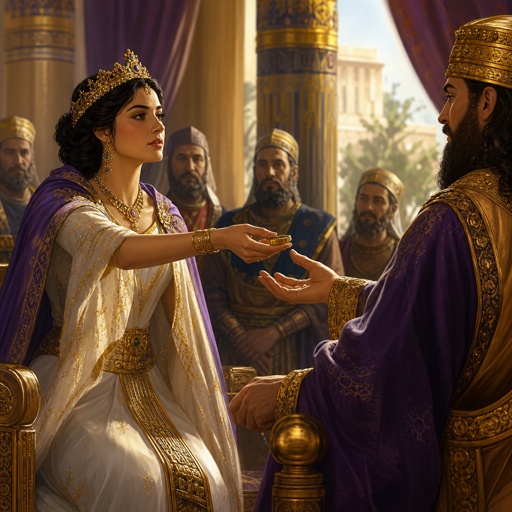
Esther 8:4 - "Then the king held out the golden sceptre toward Esther. So Esther arose, and stood before the king,"

Esther 5:7 - "Then answered Esther, and said, My petition and my request is;"

Esther 7:1 - "So the king and Haman came to banquet with Esther the queen."

Esther 4:15 - "¶ Then Esther bade them return Mordecai this answer,"

Esther 4:9 - "And Hatach came and told Esther the words of Mordecai."

Esther 4:10 - "¶ Again Esther spake unto Hatach, and gave him commandment unto Mordecai;"

Esther 7:6 - "And Esther said, The adversary and enemy is this wicked Haman. Then Haman was afraid before the king and the queen."

Esther 7:4 - "For we are sold, I and my people, to be destroyed, to be slain, and to perish. But if we had been sold for bondmen and bondwomen, I had held my tongue, although the enemy could not countervail the king's damage."

Esther 4:17 - "So Mordecai went his way, and did according to all that Esther had commanded him."

Esther 7:2 - "And the king said again unto Esther on the second day at the banquet of wine, What is thy petition, queen Esther? and it shall be granted thee: and what is thy request? and it shall be performed, even to the half of the kingdom."
Esther 8:4

Esther 7:7 - "¶ And the king arising from the banquet of wine in his wrath went into the palace garden: and Haman stood up to make request for his life to Esther the queen; for he saw that there was evil determined against him by the king."

Esther 9:7 - "And Parshandatha, and Dalphon, and Aspatha,"

"So the king and Haman came to banquet with Esther the queen." - Esther 7:1

Esther 4:12 - "And they told to Mordecai Esther's words."

Esther 8:7 - "¶ Then the king Ahasuerus said unto Esther the queen and to Mordecai the Jew, Behold, I have given Esther the house of Haman, and him they have hanged upon the gallows, because he laid his hand upon the Jews."

"And Hatach came and told Esther the words of Mordecai." - Esther 4:9

"¶ Then Esther bade them return Mordecai this answer," - Esther 4:15
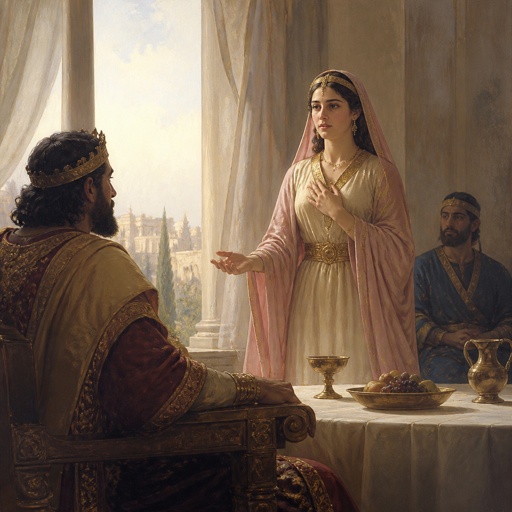
"Then answered Esther, and said, My petition and my request is;" - Esther 5:7

Esther 4:13 - "Then Mordecai commanded to answer Esther, Think not with thyself that thou shalt escape in the king's house, more than all the Jews."

Esther 7:5 - "¶ Then the king Ahasuerus answered and said unto Esther the queen, Who is he, and where is he, that durst presume in his heart to do so?"

Esther 5:4 - "And Esther answered, If it seem good unto the king, let the king and Haman come this day unto the banquet that I have prepared for him."

"Then the king held out the golden sceptre toward Esther. So Esther arose, and stood before the king," - Esther 8:4

Esther 4:5 - "Then called Esther for Hatach, one of the king's chamberlains, whom he had appointed to attend upon her, and gave him a commandment to Mordecai, to know what it was, and why it was."

"And Parshandatha, and Dalphon, and Aspatha," - Esther 9:7
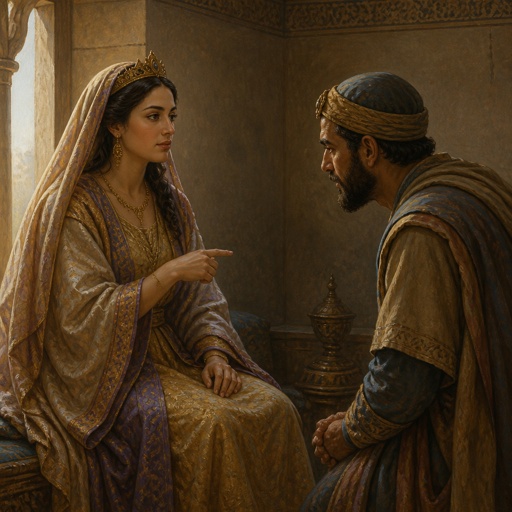
"¶ Again Esther spake unto Hatach, and gave him commandment unto Mordecai;" - Esther 4:10
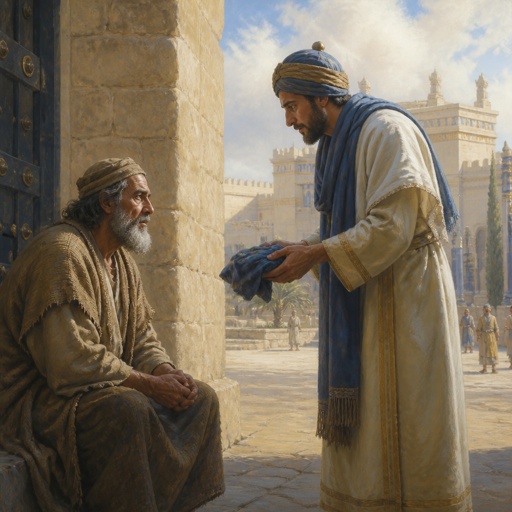
"And they told to Mordecai Esther's words." - Esther 4:12

Esther 6:7 - "And Haman answered the king, For the man whom the king delighteth to honour,"