The Banquet of Boldness: Trusting in Divine Favor
“And the king said unto Esther at the banquet of wine, What is thy petition? and it shall be granted thee: and what is thy request? even to the half of the kingdom it shall be performed.” — Esther 5:6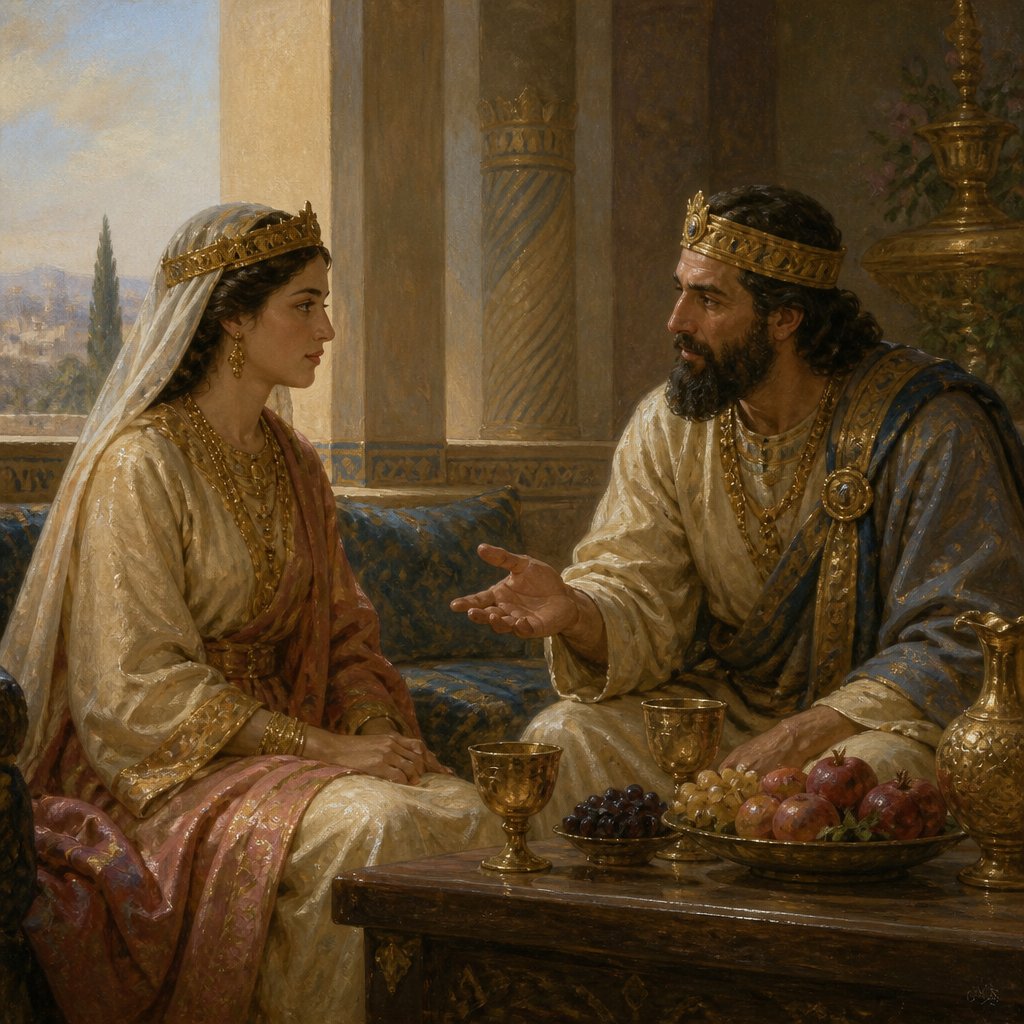
In the book of Esther, we encounter a remarkable narrative of courage, faith, and divine timing. The pivotal verse we will reflect upon today is Esther 5:6, which reads: "And the king said unto Esther at the banquet of wine, What is thy petition? and it shall be granted thee: and what is thy request? even to the half of the kingdom it shall be performed." This verse encapsulates the essence of Esther’s bravery, the king’s generosity, and the unfolding of God’s providential plan.
Esther, a Jewish orphan raised by her cousin Mordecai, became the queen of Persia. However, her people, the Jews, were facing annihilation due to a decree instigated by Haman, an ambitious minister of the king. It was a time of desperation, and Esther was faced with a daunting task: to approach the king uninvited, a serious offense that could lead to her death. Yet, propelled by her love for her people, she fasted, prayed, and entered the king’s court, trusting that God would prepare the way.
The scene in Esther 5 is set at a banquet that Esther had prepared for King Ahasuerus and Haman. It is amid this feast that Esther’s request will unfold. The king, noticing her presence and perhaps sensing her anxiety, asks her about her petition. His inquiry is filled with promise and openness, offering her even up to half the kingdom. Here we see the king's willingness to grant her desires—this is more than mere political courtesy; it is a divine moment orchestrated by God.
In our own lives, we are often confronted with moments when we must step out in faith, much like Esther. We may not be facing the literal threat of death, but we all encounter situations where standing up for what is right or advocating for ourselves or others demands courage. Esther’s plight teaches us a vital lesson about the power of humility combined with boldness. She did not rush in with demands or accusations; instead, she hosted a banquet, creating a space for dialogue and connection. This is a profound reminder that sometimes, the slow and humble approach is far more effective than direct confrontation.
As the king queries her about her request, we can perceive a deeper significance. Esther’s petition represents a confrontation with truth. She needed both bravery and wisdom to navigate this delicate situation. This reflects the heart of prayer and petition in our relationship with God. When we approach Him, we must do so with a sense of reverence and trust, knowing that He is the King of Kings and possesses the authority to grant our requests. Esther had faith that the king would respond favorably, and her faith was rewarded.
One of the most striking aspects of this account is the promise offered by the king, emphasizing his willingness to grant Esther not just a small favor but a significant request, even to half the kingdom. This illustrates the boundless grace and favor that can be found in the presence of authority; it parallels our access to God through Christ, who invites us to make our requests known with the same assurance of willingness to answer.
As we dive into this passage, let us consider the petitions we bring before God. Are we approaching Him with boldness, aware that our King is not only able but eager to grant our requests? Do we have the courage to step into the uncomfortable spaces of our lives, just as Esther did? God may not always grant us what we desire, but He will always give us what we need.
In conclusion, Esther's story is a powerful testament to courage, faith, and divine timing. When the king asked Esther, "What is thy petition?" he opened the door not only for a pivotal moment in history but for a demonstration of unconditional trust in God’s overarching plan. Let us come boldly before the throne of grace, just as Esther approached the king, confident in God’s ability to turn our trials into triumphs.
Get our apps


Artwork for Esther 5:6

Esther 5:6 - "¶ And the king said unto Esther at the banquet of wine, What is thy petition? and it shall be granted thee: and what is thy request? even to the half of the kingdom it shall be performed."
"¶ And the king said unto Esther at the banquet of wine, What is thy petition? and it shall be granted thee: and what is thy request? even to the half of the kingdom it shall be performed." - Esther 5:6

Esther 6:5 - "And the king's servants said unto him, Behold, Haman standeth in the court. And the king said, Let him come in."

Esther 5:5 - "Then the king said, Cause Haman to make haste, that he may do as Esther hath said. So the king and Haman came to the banquet that Esther had prepared."

Esther 5:7 - "Then answered Esther, and said, My petition and my request is;"

Esther 7:6 - "And Esther said, The adversary and enemy is this wicked Haman. Then Haman was afraid before the king and the queen."

Esther 5:2

Esther 5:2 - "And it was so, when the king saw Esther the queen standing in the court, that she obtained favour in his sight: and the king held out to Esther the golden sceptre that was in his hand. So Esther drew near, and touched the top of the sceptre."

Esther 5:2

Esther 5:2

Esther 1:6

Esther 6:14 - "And while they were yet talking with him, came the king's chamberlains, and hasted to bring Haman unto the banquet that Esther had prepared."

Esther 5:4 - "And Esther answered, If it seem good unto the king, let the king and Haman come this day unto the banquet that I have prepared for him."
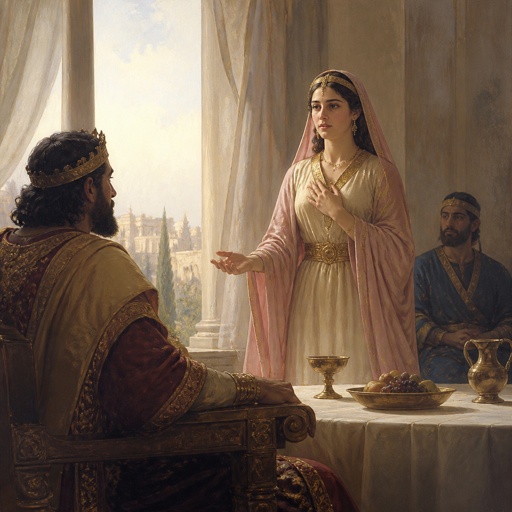
"Then answered Esther, and said, My petition and my request is;" - Esther 5:7

Esther 5:3 - "Then said the king unto her, What wilt thou, queen Esther? and what is thy request? it shall be even given thee to the half of the kingdom."

Esther 7:5 - "¶ Then the king Ahasuerus answered and said unto Esther the queen, Who is he, and where is he, that durst presume in his heart to do so?"

Esther 5:2 - "And it was so, when the king saw Esther the queen standing in the court, that she obtained favour in his sight: and the king held out to Esther the golden sceptre that was in his hand. So Esther drew near, and touched the top of the sceptre."
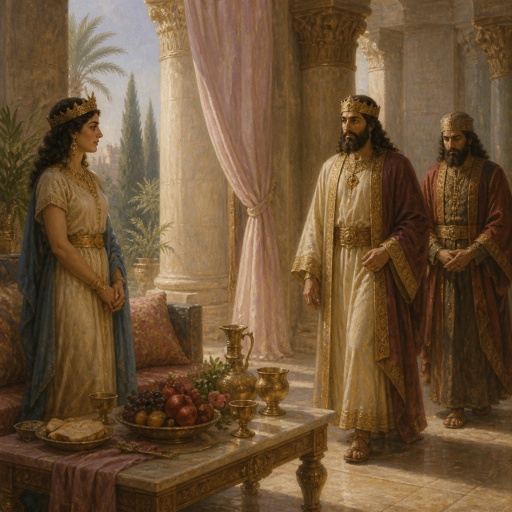
"Then the king said, Cause Haman to make haste, that he may do as Esther hath said. So the king and Haman came to the banquet that Esther had prepared." - Esther 5:5

Esther 4:5 - "Then called Esther for Hatach, one of the king's chamberlains, whom he had appointed to attend upon her, and gave him a commandment to Mordecai, to know what it was, and why it was."
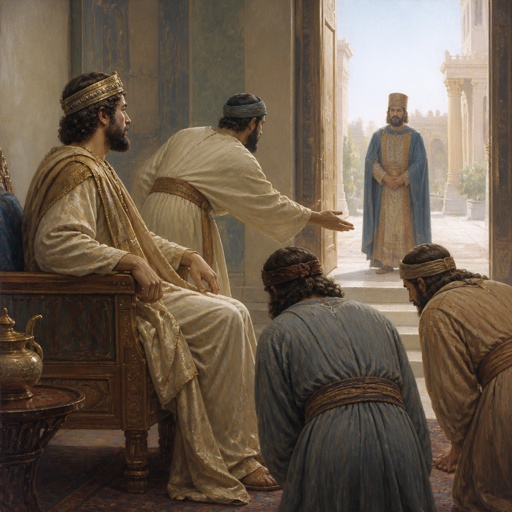
"And the king's servants said unto him, Behold, Haman standeth in the court. And the king said, Let him come in." - Esther 6:5

Esther 6:7 - "And Haman answered the king, For the man whom the king delighteth to honour,"

Esther 9:6 - "And in Shushan the palace the Jews slew and destroyed five hundred men."

"And Esther said, The adversary and enemy is this wicked Haman. Then Haman was afraid before the king and the queen." - Esther 7:6

Esther 5:12 - "Haman said moreover, Yea, Esther the queen did let no man come in with the king unto the banquet that she had prepared but myself; and to morrow am I invited unto her also with the king."

Esther 4:6 - "So Hatach went forth to Mordecai unto the street of the city, which was before the king's gate."

Esther 3:5 - "And when Haman saw that Mordecai bowed not, nor did him reverence, then was Haman full of wrath."

Esther 5:1 - "Now it came to pass on the third day, that Esther put on her royal apparel, and stood in the inner court of the king's house, over against the king's house: and the king sat upon his royal throne in the royal house, over against the gate of the house."
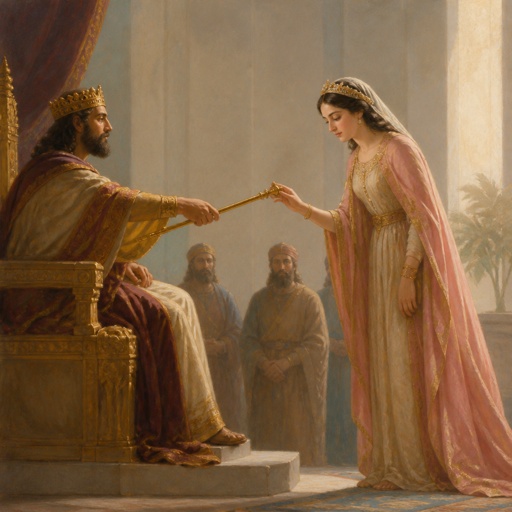
"And it was so, when the king saw Esther the queen standing in the court, that she obtained favour in his sight: and the king held out to Esther the golden sceptre that was in his hand. So Esther drew near, and touched the top of the sceptre." - Esther 5:2

Esther 6:1 - "On that night could not the king sleep, and he commanded to bring the book of records of the chronicles; and they were read before the king."

Esther 6:12 - "¶ And Mordecai came again to the king's gate. But Haman hasted to his house mourning, and having his head covered."