What does Esther 5:6 mean?
“And the king said unto Esther at the banquet of wine, What is thy petition? and it shall be granted thee: and what is thy request? even to the half of the kingdom it shall be performed.” — Esther 5:6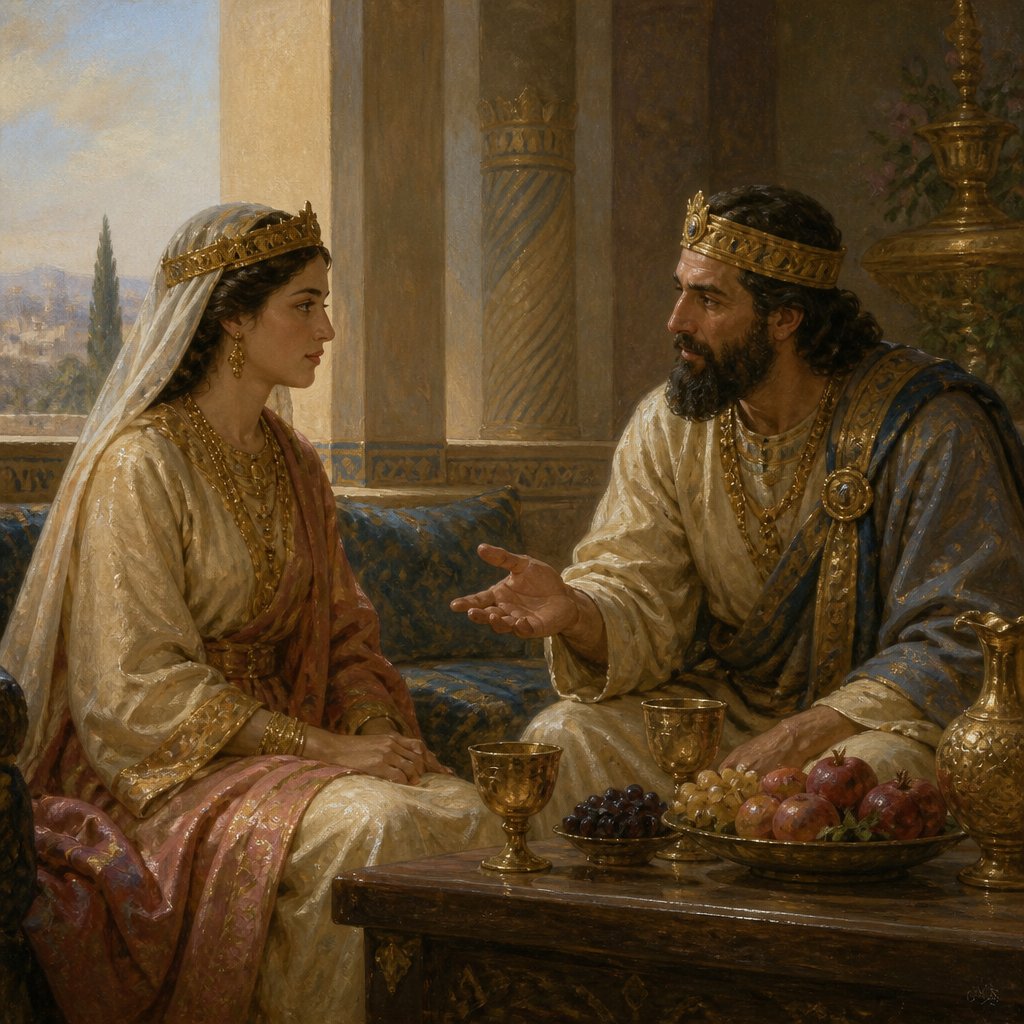
Esther 5:6 (KJV) - "And the king said unto Esther at the banquet of wine, What is thy petition? and it shall be granted thee: and what is thy request? even to the half of the kingdom it shall be performed."
The book of Esther tells the story of a Jewish girl named Esther who becomes the queen of Persia and, with the help of her cousin Mordecai, saves the Jewish people from an evil plot to destroy them. This verse comes at a critical moment in the story, when Esther has risked her life by going before the Persian king uninvited to plead for the lives of her people. This verse captures the tension and drama of the situation, as the king offers Esther anything she desires, up to half of his kingdom.
The themes present in this verse are courage, faith, and the power of prayer. Esther demonstrates great courage by approaching the king without being summoned, a move that could have resulted in her death. Her faith in God is evident as she places her trust in Him while navigating a perilous situation. Additionally, the power of prayer is a recurring theme throughout the book of Esther, as the Jewish people fast and pray for deliverance from their enemies.
The context of this verse is crucial to understanding its significance. Esther, having learned of a plot to exterminate the Jews, is encouraged by Mordecai to use her position as queen to appeal to the king for mercy. However, approaching the king without being summoned was a capital offense in Persia, making Esther's decision to do so incredibly risky. This verse captures the pivotal moment when the king, surprised and pleased by Esther's presence, offers her anything she desires.
Symbolism plays a significant role in this verse, particularly in the phrase "even to the half of the kingdom it shall be performed." This extravagant offer from the king symbolizes the extent of his favor towards Esther, as well as the potential for her request to be granted. It also serves as a reflection of the power and authority of the king, as the offer of half his kingdom highlights his ability to fulfill any request made by Esther.
Moreover, the banquet of wine where this exchange takes place symbolizes the opulence and grandeur of the Persian court, adding to the tension and high stakes of Esther's appeal. The setting of a banquet underscores the seriousness of the situation, as it is within this lavish and indulgent environment that Esther risks everything to save her people.
In a broader sense, Esther's bravery and willingness to risk her life for the sake of others can be seen as a reflection of Christ-like sacrificial love. Her selflessness and willingness to put herself in harm's way for the well-being of her people exemplify the biblical principle of loving others as oneself.
Overall, Esther 5:6 is a pivotal verse in the book of Esther, capturing a moment of high drama and tension as the fate of the Jewish people hangs in the balance. It embodies themes of courage, faith, and the power of prayer, and its symbolism adds depth and meaning to the story. The verse serves as a reminder of the power of standing up for what is right, even in the face of great adversity.
Get our apps


Artwork for Esther 5:6

Esther 5:6 - "¶ And the king said unto Esther at the banquet of wine, What is thy petition? and it shall be granted thee: and what is thy request? even to the half of the kingdom it shall be performed."
"¶ And the king said unto Esther at the banquet of wine, What is thy petition? and it shall be granted thee: and what is thy request? even to the half of the kingdom it shall be performed." - Esther 5:6

Esther 6:5 - "And the king's servants said unto him, Behold, Haman standeth in the court. And the king said, Let him come in."

Esther 5:5 - "Then the king said, Cause Haman to make haste, that he may do as Esther hath said. So the king and Haman came to the banquet that Esther had prepared."

Esther 5:7 - "Then answered Esther, and said, My petition and my request is;"

Esther 7:6 - "And Esther said, The adversary and enemy is this wicked Haman. Then Haman was afraid before the king and the queen."

Esther 5:2

Esther 5:2 - "And it was so, when the king saw Esther the queen standing in the court, that she obtained favour in his sight: and the king held out to Esther the golden sceptre that was in his hand. So Esther drew near, and touched the top of the sceptre."

Esther 5:2

Esther 5:2

Esther 1:6

Esther 6:14 - "And while they were yet talking with him, came the king's chamberlains, and hasted to bring Haman unto the banquet that Esther had prepared."

Esther 5:4 - "And Esther answered, If it seem good unto the king, let the king and Haman come this day unto the banquet that I have prepared for him."
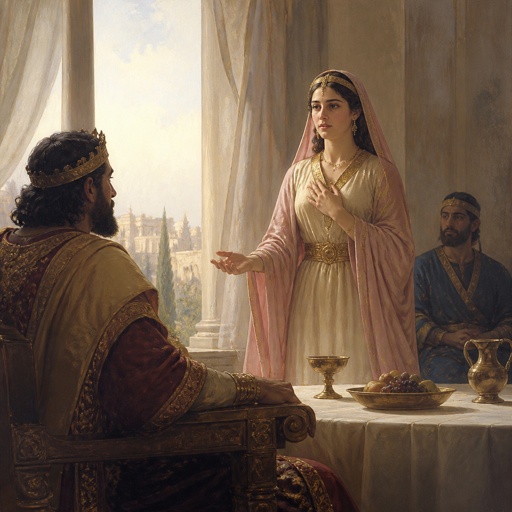
"Then answered Esther, and said, My petition and my request is;" - Esther 5:7

Esther 5:3 - "Then said the king unto her, What wilt thou, queen Esther? and what is thy request? it shall be even given thee to the half of the kingdom."

Esther 7:5 - "¶ Then the king Ahasuerus answered and said unto Esther the queen, Who is he, and where is he, that durst presume in his heart to do so?"

Esther 5:2 - "And it was so, when the king saw Esther the queen standing in the court, that she obtained favour in his sight: and the king held out to Esther the golden sceptre that was in his hand. So Esther drew near, and touched the top of the sceptre."
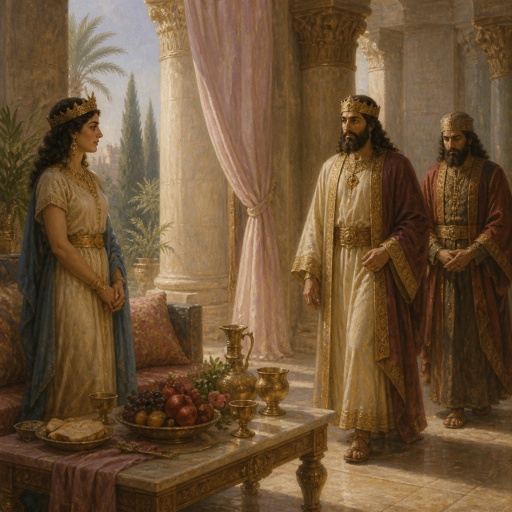
"Then the king said, Cause Haman to make haste, that he may do as Esther hath said. So the king and Haman came to the banquet that Esther had prepared." - Esther 5:5

Esther 4:5 - "Then called Esther for Hatach, one of the king's chamberlains, whom he had appointed to attend upon her, and gave him a commandment to Mordecai, to know what it was, and why it was."
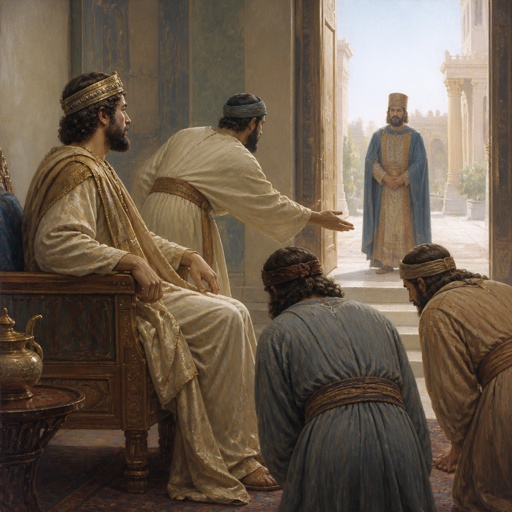
"And the king's servants said unto him, Behold, Haman standeth in the court. And the king said, Let him come in." - Esther 6:5

Esther 6:7 - "And Haman answered the king, For the man whom the king delighteth to honour,"

Esther 9:6 - "And in Shushan the palace the Jews slew and destroyed five hundred men."

"And Esther said, The adversary and enemy is this wicked Haman. Then Haman was afraid before the king and the queen." - Esther 7:6

Esther 5:12 - "Haman said moreover, Yea, Esther the queen did let no man come in with the king unto the banquet that she had prepared but myself; and to morrow am I invited unto her also with the king."

Esther 4:6 - "So Hatach went forth to Mordecai unto the street of the city, which was before the king's gate."

Esther 3:5 - "And when Haman saw that Mordecai bowed not, nor did him reverence, then was Haman full of wrath."

Esther 5:1 - "Now it came to pass on the third day, that Esther put on her royal apparel, and stood in the inner court of the king's house, over against the king's house: and the king sat upon his royal throne in the royal house, over against the gate of the house."
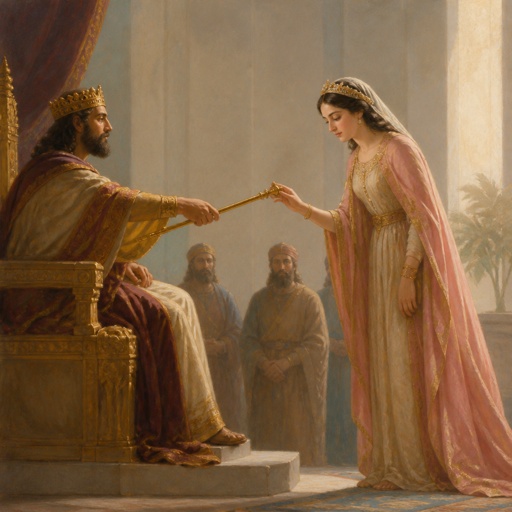
"And it was so, when the king saw Esther the queen standing in the court, that she obtained favour in his sight: and the king held out to Esther the golden sceptre that was in his hand. So Esther drew near, and touched the top of the sceptre." - Esther 5:2

Esther 6:1 - "On that night could not the king sleep, and he commanded to bring the book of records of the chronicles; and they were read before the king."

Esther 6:12 - "¶ And Mordecai came again to the king's gate. But Haman hasted to his house mourning, and having his head covered."