The Divine Reversal: A Lesson in Humility and Honor
“Then took Haman the apparel and the horse, and arrayed Mordecai, and brought him on horseback through the street of the city, and proclaimed before him, Thus shall it be done unto the man whom the king delighteth to honour.” — Esther 6:11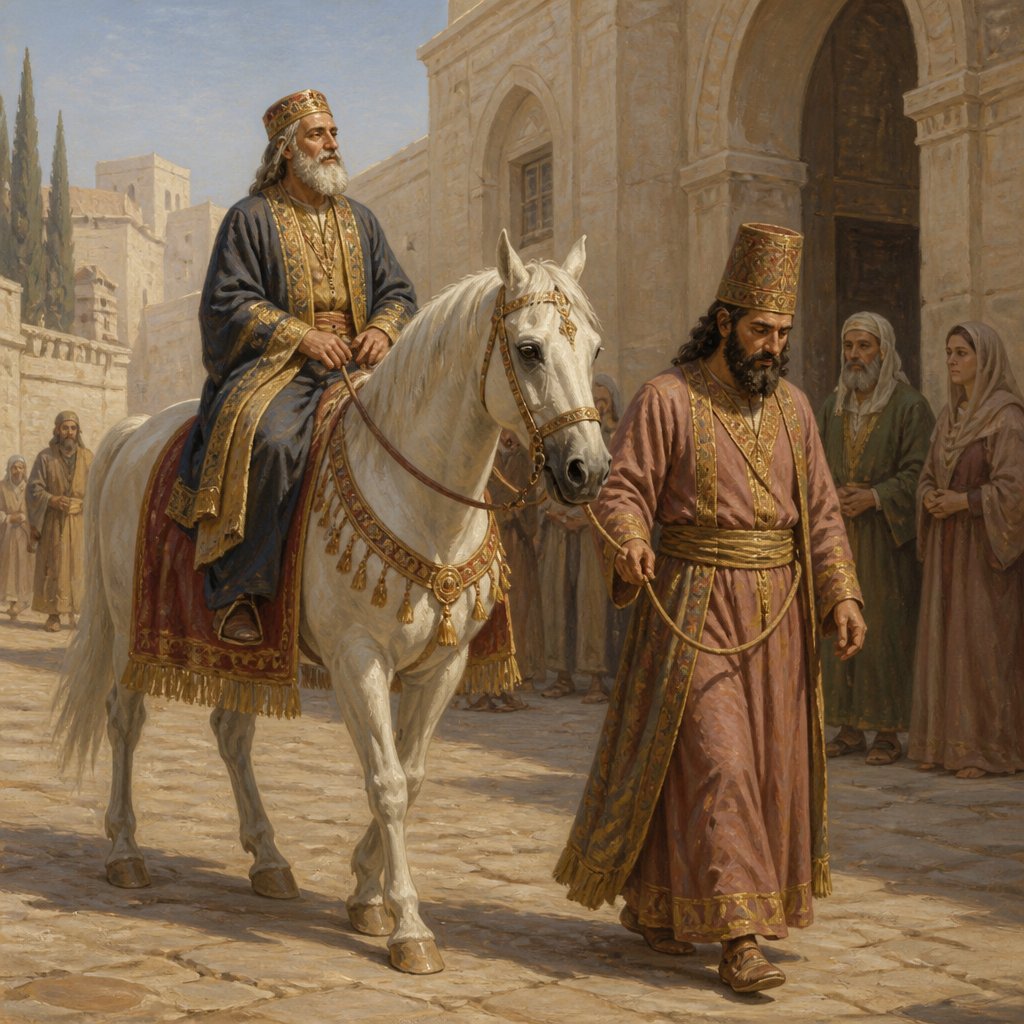
The story of Esther is a remarkable narrative of courage, faith, and divine intervention. In Esther 6:11, we find a pivotal moment that encapsulates the profound themes of honor and humility. The verse states: "Then took Haman the apparel and the horse, and arrayed Mordecai, and brought him on horseback through the street of the city, and proclaimed before him, Thus shall it be done unto the man whom the king delighteth to honour."
This verse might be easily overlooked, lost in the drama of Esther's tale, but it speaks volumes about the workings of God in our lives, especially in times of trial and persecution. Haman, the antagonist of the story, had built his life on pride, aiming to exalt himself and eliminate Mordecai, who stood for righteousness. However, God’s justice is often set against the backdrop of human schemes, and we witness here the principle that God can turn our defeats into victories and our humiliation into honor.
### The Elements of Haman’s Scheme
Haman had been promoted to a high position in King Xerxes’ court and commanded that everyone bow down to him, but Mordecai, a humble Jew, refused. Instead of using his power to honor the righteous, Haman resolved to annihilate Mordecai. His vengeance was fueled by pride, and he sought to implement a brutal decree against the Jewish people. Yet, unbeknownst to him, the very schemer of deceit would be charged with honoring the very man he despised.
Haman’s arrogance blinds him to the impending turnaround. He believes that his status and cunning will secure his desired outcome, but self-promotion often leads to downfall. Haman is tasked, by the king's command, to bestow honor upon Mordecai—the very man he sought to destroy. Here lies the irony: Haman, in all his might, becomes the harbinger of honor for the humble man he scorned.
### Divine Justice and Human Agency
This encounter reveals a crucial truth: God orchestrates events in ways we cannot foresee. Haman’s decision to parade Mordecai through the streets serves as a vivid reminder of the principle that God delights to honor those whom society overlooks. It captivates my heart to consider how, in moments of despair, God can elevate the humble and humble the exalted. The world may view success as power, wealth, and prestige, but God’s economy operates on different principles, primarily rooted in humility and obedience.
Mordecai stands as a symbol of faith against oppression. His refusal to bow to Haman symbolizes standing firm in one's convictions and loyalty to God in the face of societal pressures. In doing so, he becomes a vessel through which God’s providence operates. The king honored him publicly, displaying divine justice in stark contrast to Haman’s initial intentions.
### A Call to Reflect: Where Do We Stand?
As we contemplate this passage, we are called to evaluate our hearts before God. Are we more like Haman, filled with pride and ambition, or do we embody the humility and integrity of Mordecai? God delights in honoring those who fear Him and walk in His ways (Psalm 147:11). We must strive for a heart aligned with God’s, one that seeks to uplift others rather than put them down.
Furthermore, let us hold fast to the belief that God sees and knows every injustice. In our world, where it often appears that the wicked prosper and the righteous suffer, we can have hope that God’s justice will prevail. The story of Esther encourages us to trust in God’s timing and methods. In His divine wisdom, He will bring to light His will for our lives and, at times, reveal it through our adversaries.
### Conclusion: Trust in His Timing
Thus, let Esther 6:11 remind us that God is ever aware of our circumstances, and He holds the power to reverse our fortunes. In our darkest hours, we can look to Mordecai's example of faithfulness and remember that honor comes from God, not from how the world measures success. Let us choose humility, for it is in the ashes that God often rises us into honor, just as He did with Mordecai. Amen.
Get our apps


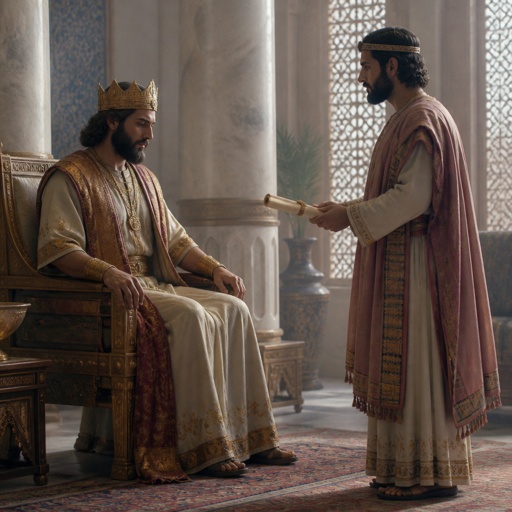
Artwork for Esther 6:11

Esther 6:11 - "Then took Haman the apparel and the horse, and arrayed Mordecai, and brought him on horseback through the street of the city, and proclaimed before him, Thus shall it be done unto the man whom the king delighteth to honour."
"Then took Haman the apparel and the horse, and arrayed Mordecai, and brought him on horseback through the street of the city, and proclaimed before him, Thus shall it be done unto the man whom the king delighteth to honour." - Esther 6:11

Esther 7:6 - "And Esther said, The adversary and enemy is this wicked Haman. Then Haman was afraid before the king and the queen."

Esther 1:6

Esther 2:11 - "And Mordecai walked every day before the court of the women's house, to know how Esther did, and what should become of her."

Esther 6:14 - "And while they were yet talking with him, came the king's chamberlains, and hasted to bring Haman unto the banquet that Esther had prepared."

Esther 5:6 - "¶ And the king said unto Esther at the banquet of wine, What is thy petition? and it shall be granted thee: and what is thy request? even to the half of the kingdom it shall be performed."

Esther 6:7 - "And Haman answered the king, For the man whom the king delighteth to honour,"

Esther 9:6 - "And in Shushan the palace the Jews slew and destroyed five hundred men."

"And Esther said, The adversary and enemy is this wicked Haman. Then Haman was afraid before the king and the queen." - Esther 7:6

Esther 9:11 - "On that day the number of those that were slain in Shushan the palace was brought before the king."

Esther 4:6 - "So Hatach went forth to Mordecai unto the street of the city, which was before the king's gate."

Esther 1:11 - "To bring Vashti the queen before the king with the crown royal, to shew the people and the princes her beauty: for she was fair to look on."

Esther 3:11 - "And the king said unto Haman, The silver is given to thee, the people also, to do with them as it seemeth good to thee."

Esther 6:5 - "And the king's servants said unto him, Behold, Haman standeth in the court. And the king said, Let him come in."

Esther 6:1 - "On that night could not the king sleep, and he commanded to bring the book of records of the chronicles; and they were read before the king."

Esther 6:12 - "¶ And Mordecai came again to the king's gate. But Haman hasted to his house mourning, and having his head covered."
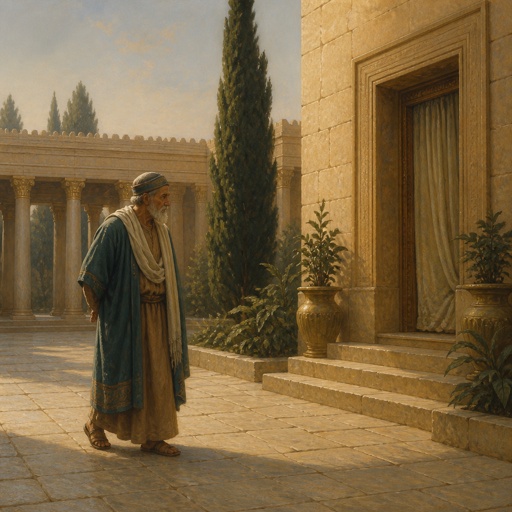
"And Mordecai walked every day before the court of the women's house, to know how Esther did, and what should become of her." - Esther 2:11

"And while they were yet talking with him, came the king's chamberlains, and hasted to bring Haman unto the banquet that Esther had prepared." - Esther 6:14

"And Haman answered the king, For the man whom the king delighteth to honour," - Esther 6:7

"And in Shushan the palace the Jews slew and destroyed five hundred men." - Esther 9:6

Esther 8:6 - "For how can I endure to see the evil that shall come unto my people? or how can I endure to see the destruction of my kindred?"

Esther 6:8 - "Let the royal apparel be brought which the king useth to wear, and the horse that the king rideth upon, and the crown royal which is set upon his head:"

Esther 6:3 - "And the king said, What honour and dignity hath been done to Mordecai for this? Then said the king's servants that ministered unto him, There is nothing done for him."

Esther 6:2 - "And it was found written, that Mordecai had told of Bigthana and Teresh, two of the king's chamberlains, the keepers of the door, who sought to lay hand on the king Ahasuerus."

Esther 6:6 - "So Haman came in. And the king said unto him, What shall be done unto the man whom the king delighteth to honour? Now Haman thought in his heart, To whom would the king delight to do honour more than to myself?"

Esther 6:4 - "¶ And the king said, Who is in the court? Now Haman was come into the outward court of the king's house, to speak unto the king to hang Mordecai on the gallows that he had prepared for him."
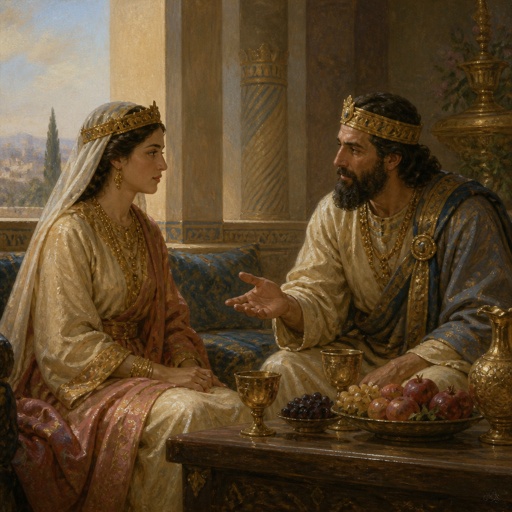
"¶ And the king said unto Esther at the banquet of wine, What is thy petition? and it shall be granted thee: and what is thy request? even to the half of the kingdom it shall be performed." - Esther 5:6
"On that day the number of those that were slain in Shushan the palace was brought before the king." - Esther 9:11

Est 6:10-11 ESV (10) Then the king said to Haman, “Hurry; take the robes and the horse, as you have said, and do so to Mordecai the Jew, who sits at the king's gate. Leave out nothing that you have mentioned.” (11) So Haman took the robes and the horse, and he dressed Mordecai and led him through the square of the city, proclaiming before him, “Thus shall it be done to the man whom the king delights to honor.”