From Shadows to Sovereignty: The Divine Turnaround
“And while they were yet talking with him, came the king’s chamberlains, and hasted to bring Haman unto the banquet that Esther had prepared.” — Esther 6:14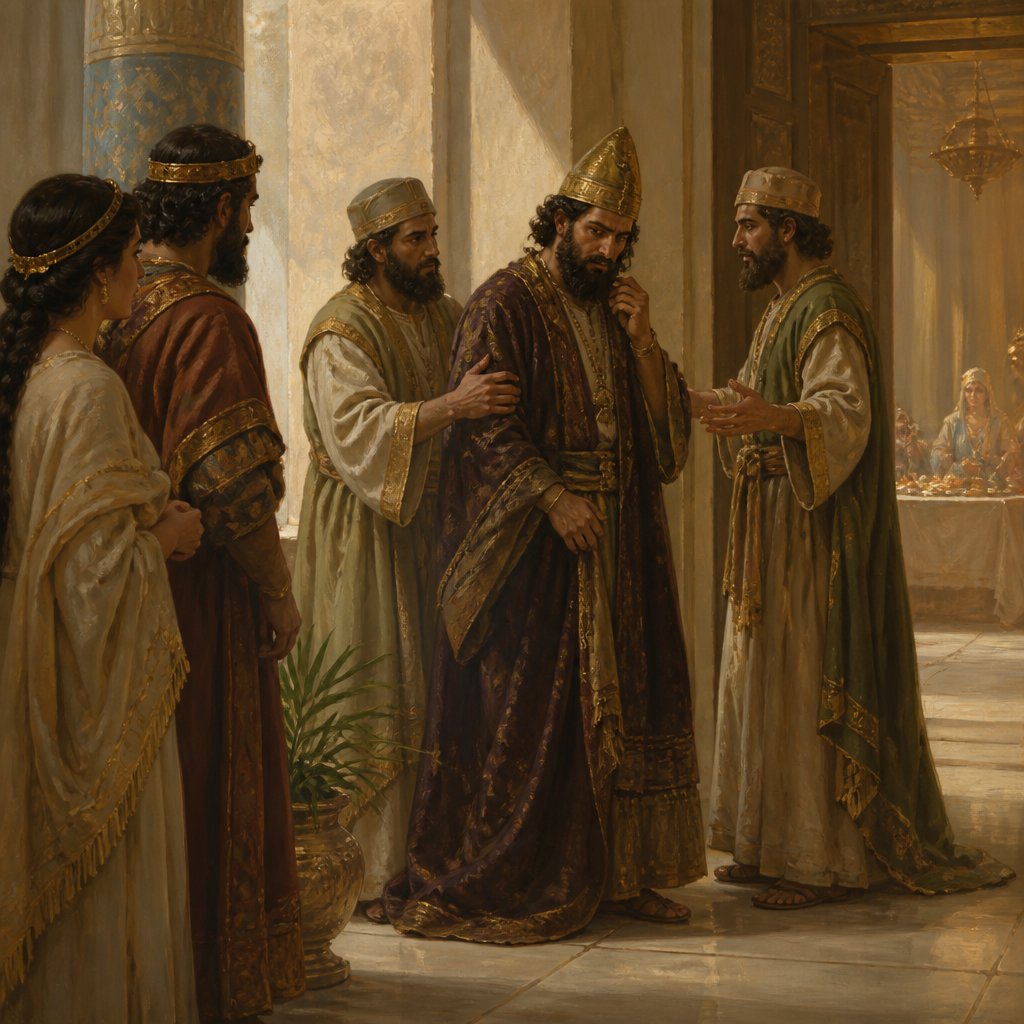
In the grand tapestry of the Book of Esther, Chapter 6 portrays a pivotal moment that illustrates the theme of divine providence and the unexpected turns of fate. The verse, "And while they were yet talking with him, came the king's chamberlains, and hasted to bring Haman unto the banquet that Esther had prepared" (Esther 6:14 KJV), stands at the confluence of tension and revelation, showcasing how God’s orchestration brings justice to the oppressed and judgment upon the proud.
The context of this moment is crucial. Haman, having plotted to annihilate the Jewish people, is a man whose arrogance and ambition have reached their peak. At this juncture, he has just concluded a conversation with his wife and friends, who have advised him to set up a gallows for Mordecai—a man who, out of faithfulness to his God, refused to bow before him. Haman's heart is consumed by malice and an insatiable hunger for recognition. Little does he know, the very plans he has laid to exalt himself are about to be turned against him.
As the scene unfolds, the swift arrival of the king's chamberlains provides a dramatic turnaround. Here is where we begin to notice the overarching sovereignty of God at work. Despite Haman’s seemingly dominant position, we witness the subtle yet powerful hand of God moving behind the scenes. The urgency of the king's officials hasting to bring Haman to Esther's banquet is emblematic of how quickly circumstances can shift when God intervenes.
The banquet itself represents a divine appointment—a moment ordained by God for the truth to be revealed. Esther, fully aware of her precarious position as a Jewish queen, is a woman of courage and wisdom. Her faith, draped in the guise of her beauty and position, holds the key to the fate of her people. In this moment, Esther is not merely an onlooker; she is an agent of God’s will.
The preparations Esther makes reflect her profound understanding of the times. Much like how we prepare our hearts for divine encounters, Esther meticulously prepares her banquet. She knows it is not just a gathering; it is a battlefield where lives and legacies are at stake. Her heart beats with the burdens of her people, and the gravity of her role weighs upon her. She steps into this banquet, shrouded in the power of prayer and purpose, prepared to deliver a message that will change the trajectory of history.
As Haman is brought into the banquet and takes his seat, he is oblivious to the twist of fate approaching him. He believes he is climbing the ladder of success, but in reality, he is stepping toward his own undoing. This scene serves as a profound reminder that we, too, may be blinded by our ambitions, thinking we are in control, only for God to reveal how misled we have become in our pursuits.
As the banquet unfolds, we know what Haman does not: that pride goes before a fall (Proverbs 16:18). The turn of events reminds us that we serve a God who delights in turning the tables on those who oppose Him. When we find ourselves overwhelmed by injustices, let us take heart in knowing that God sees and hears our cries. His timing is always perfect, just as it is in this story, where the climax of Haman's downfall and Esther's rise is nearing.
In our lives, we may find ourselves in situations where it seems like darkness is prevailing, but God is always at work. Like Esther, we are called to hold tight to our faith, trusting that our actions—no matter how small they may seem—are critical in the grand narrative He is weaving.
As you meditate on Esther 6:14, reflect on the moments in your life when you have felt overlooked or when you have faced opposition. Cling to God’s promises, remembering that He is always orchestrating events in ways that align with His divine will. Embrace the truth that when the world seems tumultuous, we can rest assured in the knowledge that God has the final say and the power to bring about justice on our behalf.
Get our apps


Artwork for Esther 6:14

Esther 6:14 - "And while they were yet talking with him, came the king's chamberlains, and hasted to bring Haman unto the banquet that Esther had prepared."

"And while they were yet talking with him, came the king's chamberlains, and hasted to bring Haman unto the banquet that Esther had prepared." - Esther 6:14

Esther 7:6 - "And Esther said, The adversary and enemy is this wicked Haman. Then Haman was afraid before the king and the queen."

Esther 1:6

Esther 5:6 - "¶ And the king said unto Esther at the banquet of wine, What is thy petition? and it shall be granted thee: and what is thy request? even to the half of the kingdom it shall be performed."

Esther 6:7 - "And Haman answered the king, For the man whom the king delighteth to honour,"

Esther 9:6 - "And in Shushan the palace the Jews slew and destroyed five hundred men."

"And Esther said, The adversary and enemy is this wicked Haman. Then Haman was afraid before the king and the queen." - Esther 7:6

Esther 9:14 - "And the king commanded it so to be done: and the decree was given at Shushan; and they hanged Haman's ten sons."

Esther 4:6 - "So Hatach went forth to Mordecai unto the street of the city, which was before the king's gate."

Esther 3:14 - "The copy of the writing for a commandment to be given in every province was published unto all people, that they should be ready against that day."

Esther 6:5 - "And the king's servants said unto him, Behold, Haman standeth in the court. And the king said, Let him come in."

Esther 6:1 - "On that night could not the king sleep, and he commanded to bring the book of records of the chronicles; and they were read before the king."

Esther 6:12 - "¶ And Mordecai came again to the king's gate. But Haman hasted to his house mourning, and having his head covered."

Esther 8:14 - "So the posts that rode upon mules and camels went out, being hastened and pressed on by the king's commandment. And the decree was given at Shushan the palace."

"And Haman answered the king, For the man whom the king delighteth to honour," - Esther 6:7

"And in Shushan the palace the Jews slew and destroyed five hundred men." - Esther 9:6

Esther 8:6 - "For how can I endure to see the evil that shall come unto my people? or how can I endure to see the destruction of my kindred?"

Esther 6:8 - "Let the royal apparel be brought which the king useth to wear, and the horse that the king rideth upon, and the crown royal which is set upon his head:"

Esther 6:3 - "And the king said, What honour and dignity hath been done to Mordecai for this? Then said the king's servants that ministered unto him, There is nothing done for him."

Esther 6:2 - "And it was found written, that Mordecai had told of Bigthana and Teresh, two of the king's chamberlains, the keepers of the door, who sought to lay hand on the king Ahasuerus."

Esther 1:14 - "And the next unto him was Carshena, Shethar, Admatha, Tarshish, Meres, Marsena, and Memucan, the seven princes of Persia and Media, which saw the king's face, and which sat the first in the kingdom;)"

Esther 6:6 - "So Haman came in. And the king said unto him, What shall be done unto the man whom the king delighteth to honour? Now Haman thought in his heart, To whom would the king delight to do honour more than to myself?"

Esther 6:4 - "¶ And the king said, Who is in the court? Now Haman was come into the outward court of the king's house, to speak unto the king to hang Mordecai on the gallows that he had prepared for him."
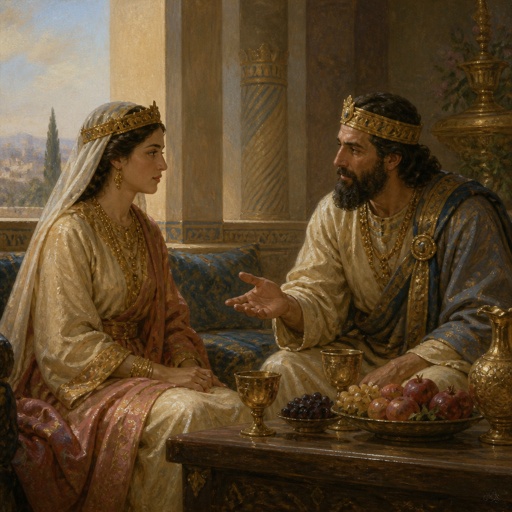
"¶ And the king said unto Esther at the banquet of wine, What is thy petition? and it shall be granted thee: and what is thy request? even to the half of the kingdom it shall be performed." - Esther 5:6
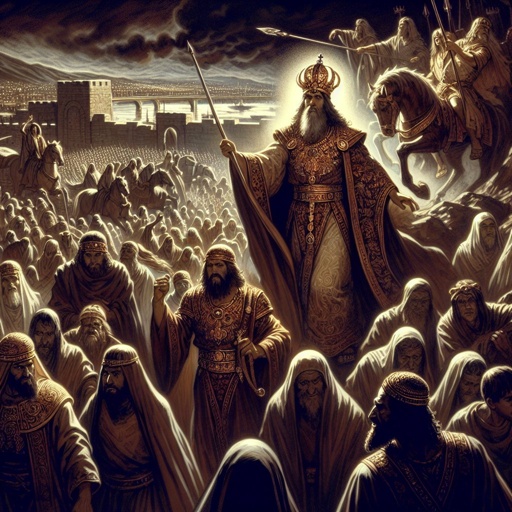
Esther 2:6 - "Who had been carried away from Jerusalem with the captivity which had been carried away with Jeconiah king of Judah, whom Nebuchadnezzar the king of Babylon had carried away."
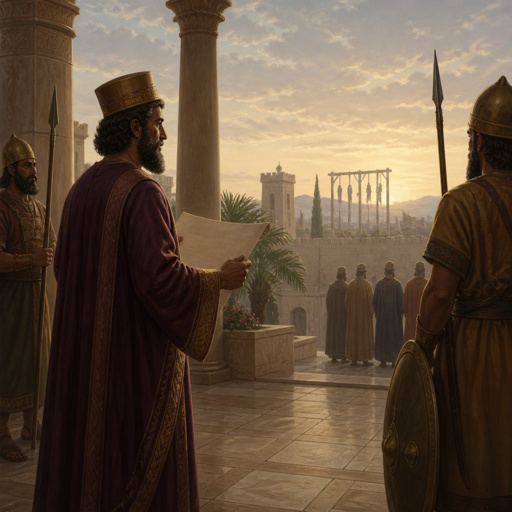
"And the king commanded it so to be done: and the decree was given at Shushan; and they hanged Haman's ten sons." - Esther 9:14

Esther 6:11 - "Then took Haman the apparel and the horse, and arrayed Mordecai, and brought him on horseback through the street of the city, and proclaimed before him, Thus shall it be done unto the man whom the king delighteth to honour."

Esther 6:10 - "Then the king said to Haman, Make haste, and take the apparel and the horse, as thou hast said, and do even so to Mordecai the Jew, that sitteth at the king's gate: let nothing fail of all that thou hast spoken."

Esther 1:6 - "Where were white, green, and blue, hangings, fastened with cords of fine linen and purple to silver rings and pillars of marble: the beds were of gold and silver, upon a pavement of red, and blue, and white, and black, marble."