Divine Timing: The Hidden Rewards of Faithful Service
“And it was found written, that Mordecai had told of Bigthana and Teresh, two of the king’s chamberlains, the keepers of the door, who sought to lay hand on the king Ahasuerus.” — Esther 6:2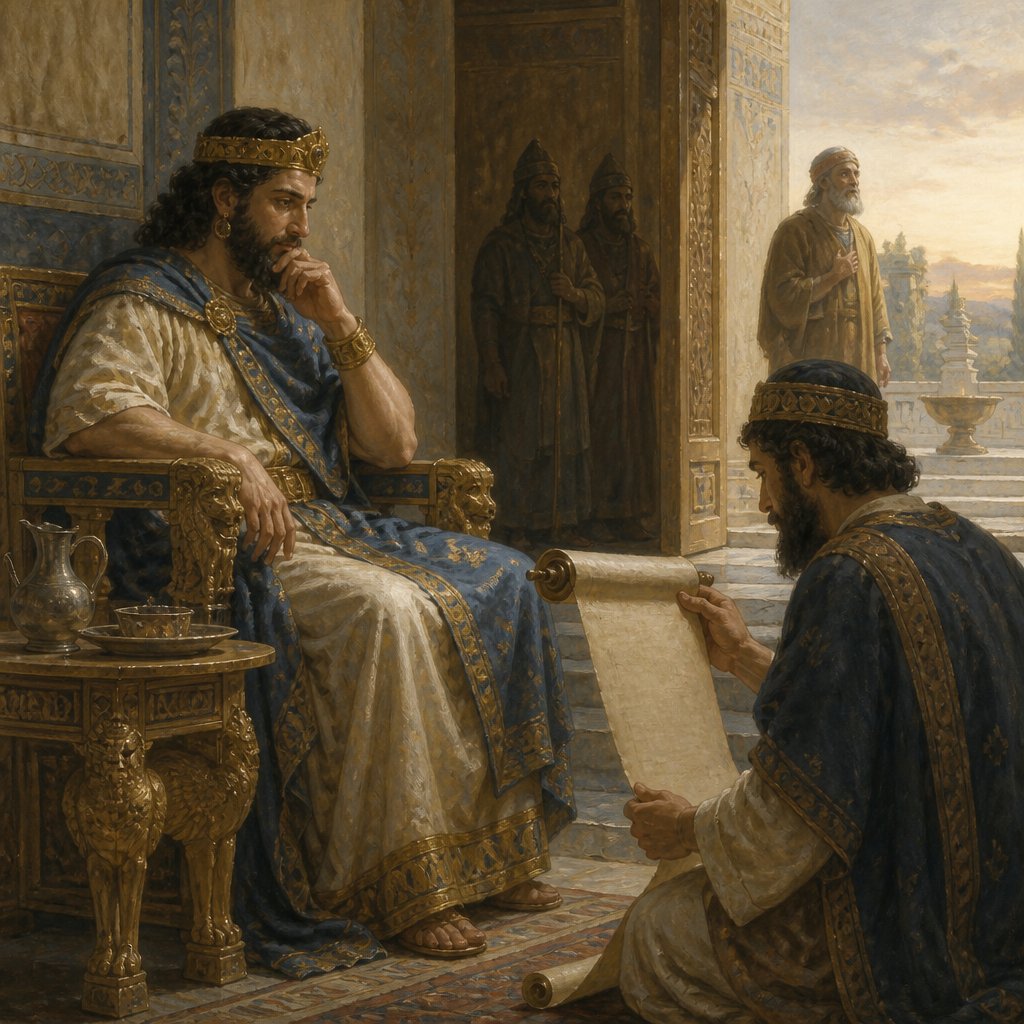
In the book of Esther, we encounter the quiet strength of Mordecai, a man whose acts of faithfulness and loyalty were ultimately pivotal for the preservation of his people. The verse we focus on today, Esther 6:2, states: "And it was found written, that Mordecai had told of Bigthana and Teresh, two of the king's chamberlains, the keepers of the door, who sought to lay hand on the king Ahasuerus." This verse signifies a moment where the unseen and unrecognized acts of Mordecai were brought to light, demonstrating the overarching sovereignty of God in the affairs of humankind.
At first glance, this verse may seem to dwell on the mere documentation of Mordecai’s loyalty. However, when we peel back the layers, we recognize the deeper implications of divine providence and timing in our lives. Mordecai’s alertness to the treachery against King Ahasuerus was not a mere coincidence; it was an act arranged by God himself. In the stillness of the palace and the silence of history, Mordecai’s heroic action was sown quietly into the fabric of the king’s life, preventing potential assassination and sparking a remarkable turn of events.
The act of Mordecai is a reminder that faithfulness often occurs in obscurity. Like many of us, Mordecai had no guarantee that his warning to the king would lead to any recognition or reward. This places us in a continual state of reflection on our actions; do we serve faithfully, believing that God sees and values our efforts? Each moment we choose integrity, we give testimony to the character of God in a world that often seems indifferent or hostile to righteousness.
Mordecai’s story teaches us that our efforts, no matter how small or unnoticed, are important to God. In a world that idolizes instant recognition and public accolades, we must remember that God’s timing is perfect. For Mordecai, it wasn’t until later that the records of his loyalty were reviewed and rewarded in the form of his promotion in the kingdom. How often do we feel overlooked or undervalued? How often do our good deeds seem to fade into the background? Even in those times, we must have confidence that our labor in the Lord is not in vain (1 Corinthians 15:58).
This principle of reaping what we sow is beautifully interwoven into the narrative of Esther. The king’s eventual honor for Mordecai can also be seen as God’s public acknowledgment of a private act of justice. It inspires us to remember that for every act of faithfulness, not recognized in this lifetime, there lies a divine record that is tallied by God. He sees every tear, every quiver of patience amidst trial, and every act of kindness bestowed in anonymity.
Moreover, this incident shapes a crucial turning point in the entire plot of Esther. Mordecai’s faithful service became the precursor to his promotion, leading not only to personal advancement but also ensuring the safety of the Jewish people. This directs our attention to how one person's faithfulness can influence the destinies of many. How vital could our acts of kindness and courage be in the midst of fear? With God’s guidance, our position may influence others for the better.
In closing, let us commit to embodying the spirit of Mordecai in our daily lives. As we navigate through moments of decision or service that appear insignificant, let’s remember that God has the ultimate authority to bring these deeds to light in His perfect timing. May we continue to serve with a humble heart, trusting that our labor will be remembered in eternity, and that the divine tapestry of our lives is being woven with threads of grace, purpose, and redemption.
Get our apps


Artwork for Esther 6:2

Esther 6:2 - "And it was found written, that Mordecai had told of Bigthana and Teresh, two of the king's chamberlains, the keepers of the door, who sought to lay hand on the king Ahasuerus."
"And it was found written, that Mordecai had told of Bigthana and Teresh, two of the king's chamberlains, the keepers of the door, who sought to lay hand on the king Ahasuerus." - Esther 6:2

Esther 7:6 - "And Esther said, The adversary and enemy is this wicked Haman. Then Haman was afraid before the king and the queen."

Esther 1:6

Esther 6:14 - "And while they were yet talking with him, came the king's chamberlains, and hasted to bring Haman unto the banquet that Esther had prepared."

Esther 2:22 - "And the thing was known to Mordecai, who told it unto Esther the queen; and Esther certified the king thereof in Mordecai's name."

Esther 2:6 - "Who had been carried away from Jerusalem with the captivity which had been carried away with Jeconiah king of Judah, whom Nebuchadnezzar the king of Babylon had carried away."

Esther 5:2 - "And it was so, when the king saw Esther the queen standing in the court, that she obtained favour in his sight: and the king held out to Esther the golden sceptre that was in his hand. So Esther drew near, and touched the top of the sceptre."

Esther 5:6 - "¶ And the king said unto Esther at the banquet of wine, What is thy petition? and it shall be granted thee: and what is thy request? even to the half of the kingdom it shall be performed."

Esther 7:2 - "And the king said again unto Esther on the second day at the banquet of wine, What is thy petition, queen Esther? and it shall be granted thee: and what is thy request? and it shall be performed, even to the half of the kingdom."

Esther 2:20 - "Esther had not yet shewed her kindred nor her people; as Mordecai had charged her: for Esther did the commandment of Mordecai, like as when she was brought up with him."

Esther 5:2

Esther 5:2

Esther 5:2

Esther 2:11 - "And Mordecai walked every day before the court of the women's house, to know how Esther did, and what should become of her."

Esther 6:7 - "And Haman answered the king, For the man whom the king delighteth to honour,"

Esther 9:6 - "And in Shushan the palace the Jews slew and destroyed five hundred men."

Esther 2:10 - "Esther had not shewed her people nor her kindred: for Mordecai had charged her that she should not shew it."

"And Esther said, The adversary and enemy is this wicked Haman. Then Haman was afraid before the king and the queen." - Esther 7:6

Esther 5:2 - "And it was so, when the king saw Esther the queen standing in the court, that she obtained favour in his sight: and the king held out to Esther the golden sceptre that was in his hand. So Esther drew near, and touched the top of the sceptre."

"And the thing was known to Mordecai, who told it unto Esther the queen; and Esther certified the king thereof in Mordecai's name." - Esther 2:22

Esther 2:16 - "So Esther was taken unto king Ahasuerus into his house royal in the tenth month, which is the month Tebeth, in the seventh year of his reign."

Esther 8:2 - "And the king took off his ring, which he had taken from Haman, and gave it unto Mordecai. And Esther set Mordecai over the house of Haman."

Esther 4:6 - "So Hatach went forth to Mordecai unto the street of the city, which was before the king's gate."
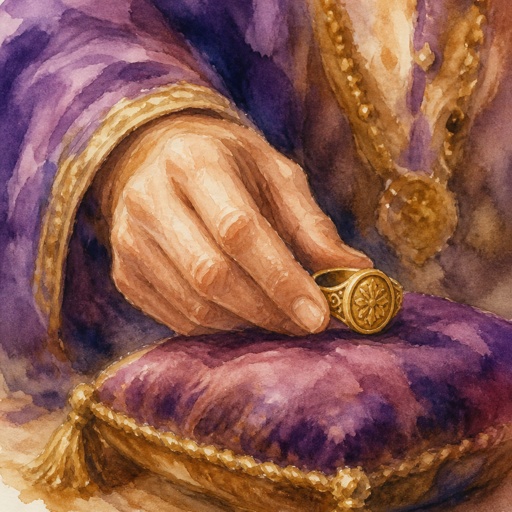
Esther 8:2 focus on the ring

Esther 2:15 - "¶ Now when the turn of Esther, the daughter of Abihail the uncle of Mordecai, who had taken her for his daughter, was come to go in unto the king, she required nothing but what Hegai the king's chamberlain, the keeper of the women, appointed. And Esther obtained favour in the sight of all them that looked upon her."

Esther 6:5 - "And the king's servants said unto him, Behold, Haman standeth in the court. And the king said, Let him come in."

Esther 6:1 - "On that night could not the king sleep, and he commanded to bring the book of records of the chronicles; and they were read before the king."

Esther 6:12 - "¶ And Mordecai came again to the king's gate. But Haman hasted to his house mourning, and having his head covered."

Esther 2:2 - "Then said the king's servants that ministered unto him, Let there be fair young virgins sought for the king:"