Divine Interventions in the Shadows
“And the king said, Who is in the court? Now Haman was come into the outward court of the king’s house, to speak unto the king to hang Mordecai on the gallows that he had prepared for him.” — Esther 6:4
The story of Esther is a remarkable narrative of courage, faith, and divine providence. At the heart of it lies Esther, a woman of extraordinary strength, and Mordecai, her wise and unwavering uncle. Among the various elements in this story, Esther 6:4 offers a pivotal moment filled with tension and irony. The verse, "And the king said, Who is in the court? Now Haman was come into the outward court of the king's house, to speak unto the king to hang Mordecai on the gallows that he had prepared for him," illustrates a critical turning point—an unfolding of God's mysterious ways.
### The Context of Darkness
To fully appreciate the significance of this moment, we must first understand the perilous situation in which Mordecai finds himself. Haman, aggrieved by Mordecai's refusal to bow to him, plots not just for his imprisonment but his execution. The gallows he prepares in advance speaks to Haman's deep-seated hatred and desire for revenge. Here, we find a narrative that resonates with the human experience of facing insurmountable odds. In moments of darkness, we can often feel isolated, much like Mordecai standing on the precipice of death.
### Divine Timing
Yet, in this tension-filled narrative, we see the sovereign hand of God, weaving together circumstances behind the scenes. When the king, who had previously been swayed by Haman’s manipulations, inquires about who is in the outer court, he opens a door for a divine intervention. The timing of God is never coincidental. Just as Haman enters with wicked intentions, the king's question signifies a shift—a check on the plans of the enemy.
As believers, we ought to ponder how often we find ourselves in dire situations where it seems like all is lost. But right when it appears we are in the clutches of despair, God orchestrates a change. His invitation to “Who is in the court?” is a reminder that even in our darkest moments, He is working behind the scenes to turn our circumstances for good.
### The Irony of Haman's Situation
The irony in this verse is palpable. Haman, filled with pride and convinced of his superiority, approaches the king to demand the execution of Mordecai, not knowing that he will soon be the object of the king’s favor. This juxtaposition illustrates how God can use the very schemes of our enemies to elevate us and bring glory to His name. Like Haman, our adversaries may surround us, plotting our downfall, but they are ultimately tools in God's greater plan.
### Our Response to Conflict
In reflecting on Esther 6:4, we should consider our response when we face persecution or opposition. Mordecai neither retaliated nor sought vengeance when Haman plotted against him. Instead, he remained steadfast, trusting in God’s timing and justice. Likewise, we are called to live by faith and hold onto the truth that "vengeance is mine; I will repay, saith the Lord" (Romans 12:19).
### A Call to Courage
Esther's response to this unfolding drama is also of significant importance. Her bravery in approaching King Xerxes on behalf of her people was sparked by the realization of God’s hand in her life. We must summon the courage to advocate for righteousness and justice, even when it costs us dearly.
### Conclusion: Hope in God's Sovereignty
Ultimately, Esther 6:4 encourages us to have hope in God’s sovereignty. Nothing is beyond His control, and nothing escapes His sight. Like the faithful ones before us, we can take solace in knowing that our struggles are not in vain. God is actively writing our stories lovingly and deliberately.
As we meditate on this verse, let us acknowledge that when it appears Haman is at the gate, ready to execute his plans, our King is also inquiring about what is truly happening in His kingdom. Trust in His timing, look for His interventions, and always remain steadfast in faith.
Get our apps


Artwork for Esther 6:4

Esther 6:4 - "¶ And the king said, Who is in the court? Now Haman was come into the outward court of the king's house, to speak unto the king to hang Mordecai on the gallows that he had prepared for him."

"¶ And the king said, Who is in the court? Now Haman was come into the outward court of the king's house, to speak unto the king to hang Mordecai on the gallows that he had prepared for him." - Esther 6:4

Esther 4:6 - "So Hatach went forth to Mordecai unto the street of the city, which was before the king's gate."

Esther 8:4 - "Then the king held out the golden sceptre toward Esther. So Esther arose, and stood before the king,"

Esther 4:15 - "¶ Then Esther bade them return Mordecai this answer,"

Esther 4:9 - "And Hatach came and told Esther the words of Mordecai."

Esther 4:10 - "¶ Again Esther spake unto Hatach, and gave him commandment unto Mordecai;"

Esther 7:6 - "And Esther said, The adversary and enemy is this wicked Haman. Then Haman was afraid before the king and the queen."

Esther 1:6

Esther 4:17 - "So Mordecai went his way, and did according to all that Esther had commanded him."

Esther 8:4

Esther 6:14 - "And while they were yet talking with him, came the king's chamberlains, and hasted to bring Haman unto the banquet that Esther had prepared."

Esther 4:12 - "And they told to Mordecai Esther's words."

"And Hatach came and told Esther the words of Mordecai." - Esther 4:9

"¶ Then Esther bade them return Mordecai this answer," - Esther 4:15

Esther 4:13 - "Then Mordecai commanded to answer Esther, Think not with thyself that thou shalt escape in the king's house, more than all the Jews."
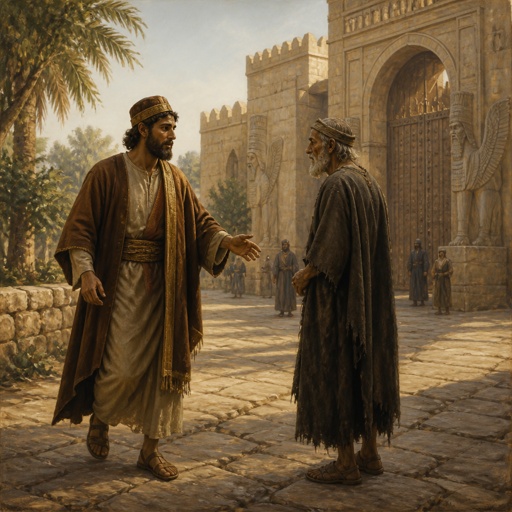
"So Hatach went forth to Mordecai unto the street of the city, which was before the king's gate." - Esther 4:6

Esther 5:4 - "And Esther answered, If it seem good unto the king, let the king and Haman come this day unto the banquet that I have prepared for him."

"Then the king held out the golden sceptre toward Esther. So Esther arose, and stood before the king," - Esther 8:4

Esther 5:6 - "¶ And the king said unto Esther at the banquet of wine, What is thy petition? and it shall be granted thee: and what is thy request? even to the half of the kingdom it shall be performed."

Esther 4:5 - "Then called Esther for Hatach, one of the king's chamberlains, whom he had appointed to attend upon her, and gave him a commandment to Mordecai, to know what it was, and why it was."

"¶ Again Esther spake unto Hatach, and gave him commandment unto Mordecai;" - Esther 4:10
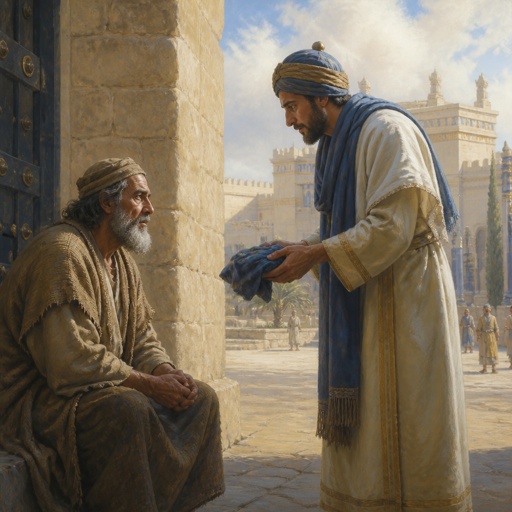
"And they told to Mordecai Esther's words." - Esther 4:12

Esther 6:7 - "And Haman answered the king, For the man whom the king delighteth to honour,"

Esther 9:6 - "And in Shushan the palace the Jews slew and destroyed five hundred men."

"And Esther said, The adversary and enemy is this wicked Haman. Then Haman was afraid before the king and the queen." - Esther 7:6

"So Mordecai went his way, and did according to all that Esther had commanded him." - Esther 4:17
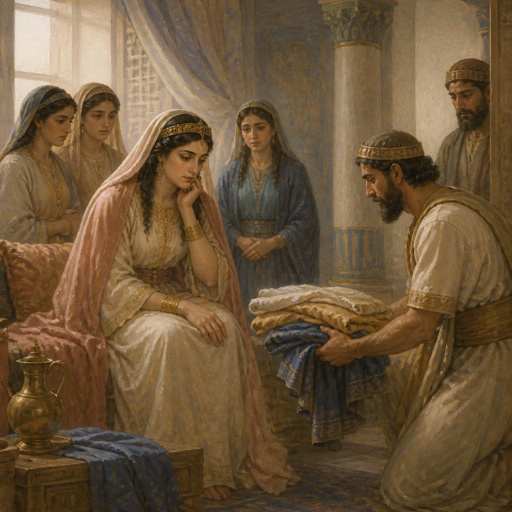
"¶ So Esther's maids and her chamberlains came and told it her. Then was the queen exceedingly grieved; and she sent raiment to clothe Mordecai, and to take away his sackcloth from him: but he received it not." - Esther 4:4

Esther 6:5 - "And the king's servants said unto him, Behold, Haman standeth in the court. And the king said, Let him come in."

Esther 6:1 - "On that night could not the king sleep, and he commanded to bring the book of records of the chronicles; and they were read before the king."