What does Esther 6:4 mean?
“And the king said, Who is in the court? Now Haman was come into the outward court of the king’s house, to speak unto the king to hang Mordecai on the gallows that he had prepared for him.” — Esther 6:4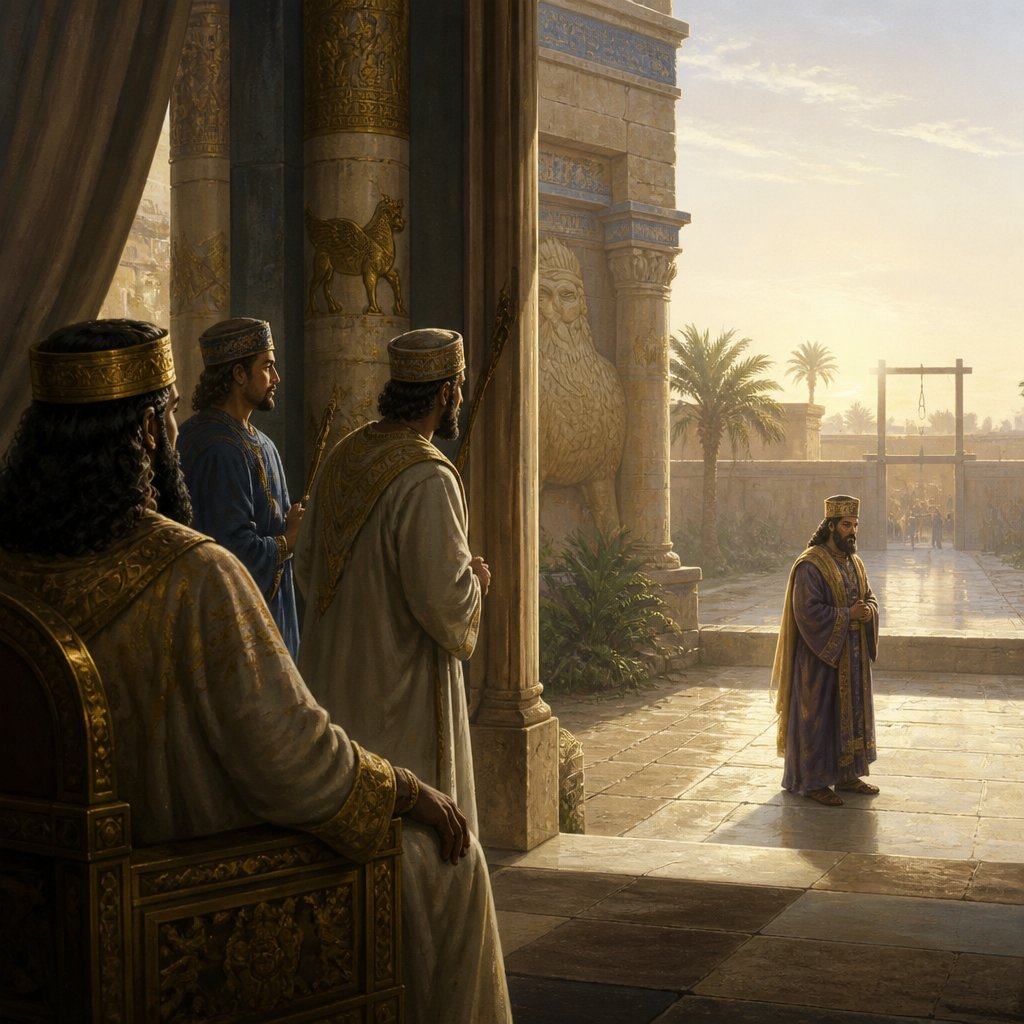
The Bible verse Esther 6:4 in the King James Version reads: "And the king said, Who is in the court? Now Haman was come into the outward court of the king's house, to speak unto the king to hang Mordecai on the gallows that he had prepared for him."
This verse comes from the Book of Esther in the Old Testament, and it is part of the story of how Queen Esther, a Jewish woman, saved her people from the plot of a high-ranking official named Haman. The Book of Esther is unique among the books of the Bible in that it never explicitly mentions God, but it is understood as a story of God's providence and deliverance of His people.
The context of Esther 6:4 is significant in understanding the broader narrative of the Book of Esther. In the preceding chapters, we learn that Mordecai, a Jewish man who had raised Esther as his own daughter, had angered Haman, the king's most trusted advisor. In his anger, Haman plotted to have Mordecai killed, and he even built gallows upon which to hang him. However, unknown to Haman, Mordecai's life is spared through a series of events orchestrated by God.
In chapter 6, King Ahasuerus, the Persian king, finds himself unable to sleep one night and requests that records of his reign be read to him. In reviewing these records, the king learns that Mordecai had once uncovered a plot to assassinate him, but his actions had gone unrewarded. It is at this moment, when the king is seeking to honor someone for their service, that Haman enters the scene.
Esther 6:4 captures the dramatic irony of the situation. As Haman enters the court with the intention of asking the king for permission to hang Mordecai, the king is already considering how to honor Mordecai. This sets the stage for the eventual downfall of Haman and the salvation of the Jewish people.
The themes present in Esther 6:4 are numerous and rich. One overarching theme in the Book of Esther is the sovereignty and providence of God. Despite never being explicitly mentioned, the hand of God is evident throughout the story. Even in the seemingly random events, such as the king's sleepless night, God is working to bring about His purposes and to protect His people.
Another theme in this verse is the idea of divine reversal. Haman, in his pride and arrogance, sought to destroy Mordecai and the Jewish people. Yet, through a series of unexpected events orchestrated by God, it is Haman who ultimately meets his end on the very gallows he had prepared for Mordecai. This theme is seen throughout the Bible, as God often turns the plans of the wicked against them and brings about justice for His people.
The symbolism in Esther 6:4 is also significant. The contrast between Haman and Mordecai is symbolic of the larger conflict between good and evil, righteousness and wickedness. Haman, in his pride and desire for power, represents the forces of darkness and opposition to God's people. On the other hand, Mordecai, through his faithfulness and humility, represents God's chosen people and the ultimate triumph of righteousness.
In conclusion, Esther 6:4 is a pivotal verse in the story of Esther, capturing the tension and irony of the moment when the king is seeking to honor Mordecai while Haman is seeking his destruction. This verse is rich in themes of God's providence, divine reversal, and the symbolism of the larger spiritual conflict between good and evil. It also serves as a powerful reminder of God's faithfulness to His people and His ability to bring about justice in unexpected ways.
Get our apps


Artwork for Esther 6:4

Esther 6:4 - "¶ And the king said, Who is in the court? Now Haman was come into the outward court of the king's house, to speak unto the king to hang Mordecai on the gallows that he had prepared for him."
"¶ And the king said, Who is in the court? Now Haman was come into the outward court of the king's house, to speak unto the king to hang Mordecai on the gallows that he had prepared for him." - Esther 6:4

Esther 4:6 - "So Hatach went forth to Mordecai unto the street of the city, which was before the king's gate."

Esther 8:4 - "Then the king held out the golden sceptre toward Esther. So Esther arose, and stood before the king,"

Esther 4:15 - "¶ Then Esther bade them return Mordecai this answer,"

Esther 4:9 - "And Hatach came and told Esther the words of Mordecai."

Esther 4:10 - "¶ Again Esther spake unto Hatach, and gave him commandment unto Mordecai;"

Esther 7:6 - "And Esther said, The adversary and enemy is this wicked Haman. Then Haman was afraid before the king and the queen."

Esther 1:6

Esther 4:17 - "So Mordecai went his way, and did according to all that Esther had commanded him."
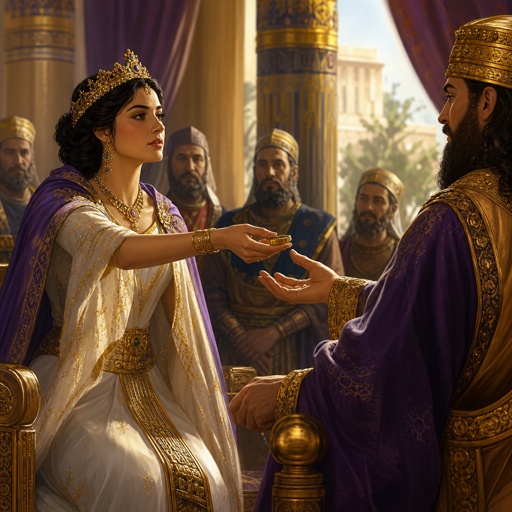
Esther 8:4

Esther 6:14 - "And while they were yet talking with him, came the king's chamberlains, and hasted to bring Haman unto the banquet that Esther had prepared."

Esther 4:12 - "And they told to Mordecai Esther's words."

"And Hatach came and told Esther the words of Mordecai." - Esther 4:9

"¶ Then Esther bade them return Mordecai this answer," - Esther 4:15

Esther 4:13 - "Then Mordecai commanded to answer Esther, Think not with thyself that thou shalt escape in the king's house, more than all the Jews."
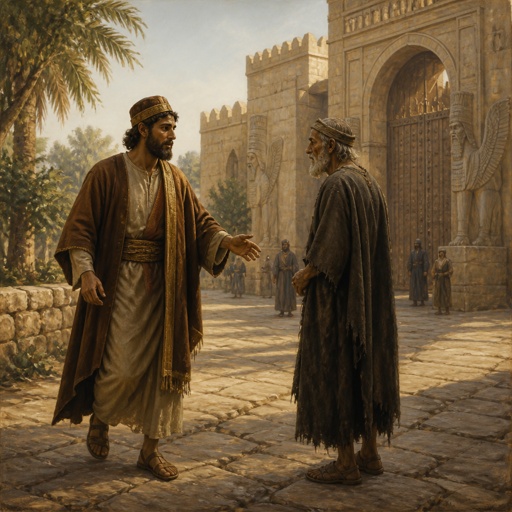
"So Hatach went forth to Mordecai unto the street of the city, which was before the king's gate." - Esther 4:6

Esther 5:4 - "And Esther answered, If it seem good unto the king, let the king and Haman come this day unto the banquet that I have prepared for him."

"Then the king held out the golden sceptre toward Esther. So Esther arose, and stood before the king," - Esther 8:4

Esther 5:6 - "¶ And the king said unto Esther at the banquet of wine, What is thy petition? and it shall be granted thee: and what is thy request? even to the half of the kingdom it shall be performed."

Esther 4:5 - "Then called Esther for Hatach, one of the king's chamberlains, whom he had appointed to attend upon her, and gave him a commandment to Mordecai, to know what it was, and why it was."
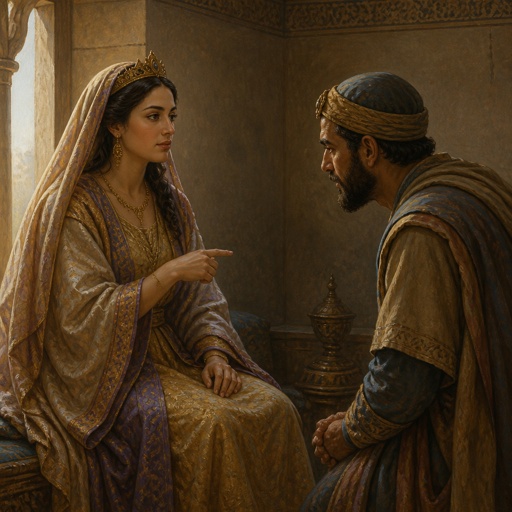
"¶ Again Esther spake unto Hatach, and gave him commandment unto Mordecai;" - Esther 4:10
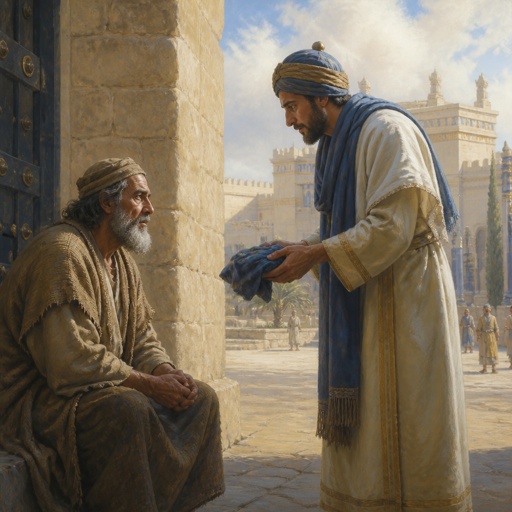
"And they told to Mordecai Esther's words." - Esther 4:12

Esther 6:7 - "And Haman answered the king, For the man whom the king delighteth to honour,"

Esther 9:6 - "And in Shushan the palace the Jews slew and destroyed five hundred men."

"And Esther said, The adversary and enemy is this wicked Haman. Then Haman was afraid before the king and the queen." - Esther 7:6
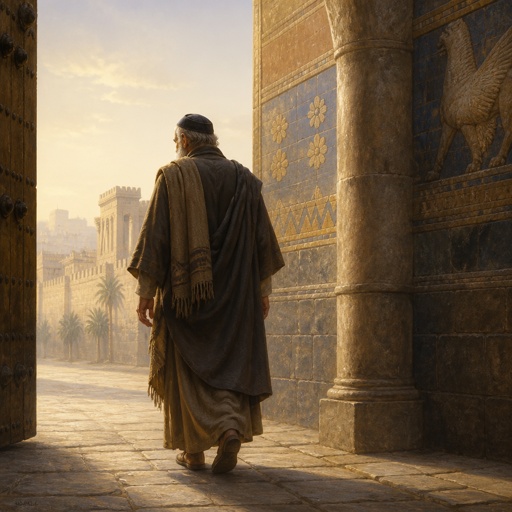
"So Mordecai went his way, and did according to all that Esther had commanded him." - Esther 4:17
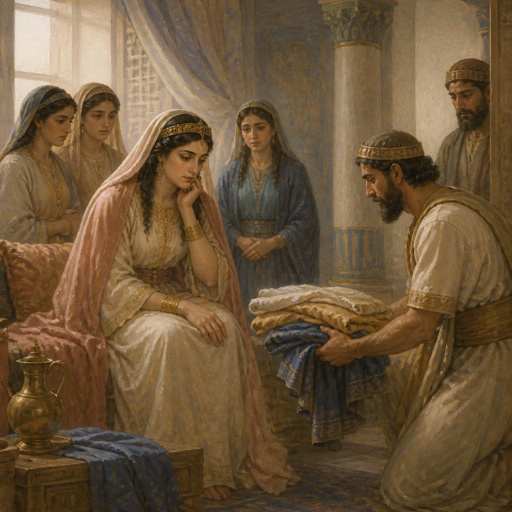
"¶ So Esther's maids and her chamberlains came and told it her. Then was the queen exceedingly grieved; and she sent raiment to clothe Mordecai, and to take away his sackcloth from him: but he received it not." - Esther 4:4

Esther 6:5 - "And the king's servants said unto him, Behold, Haman standeth in the court. And the king said, Let him come in."

Esther 6:1 - "On that night could not the king sleep, and he commanded to bring the book of records of the chronicles; and they were read before the king."