Divine Favor and Human Honor
“And Haman answered the king, For the man whom the king delighteth to honour,” — Esther 6:7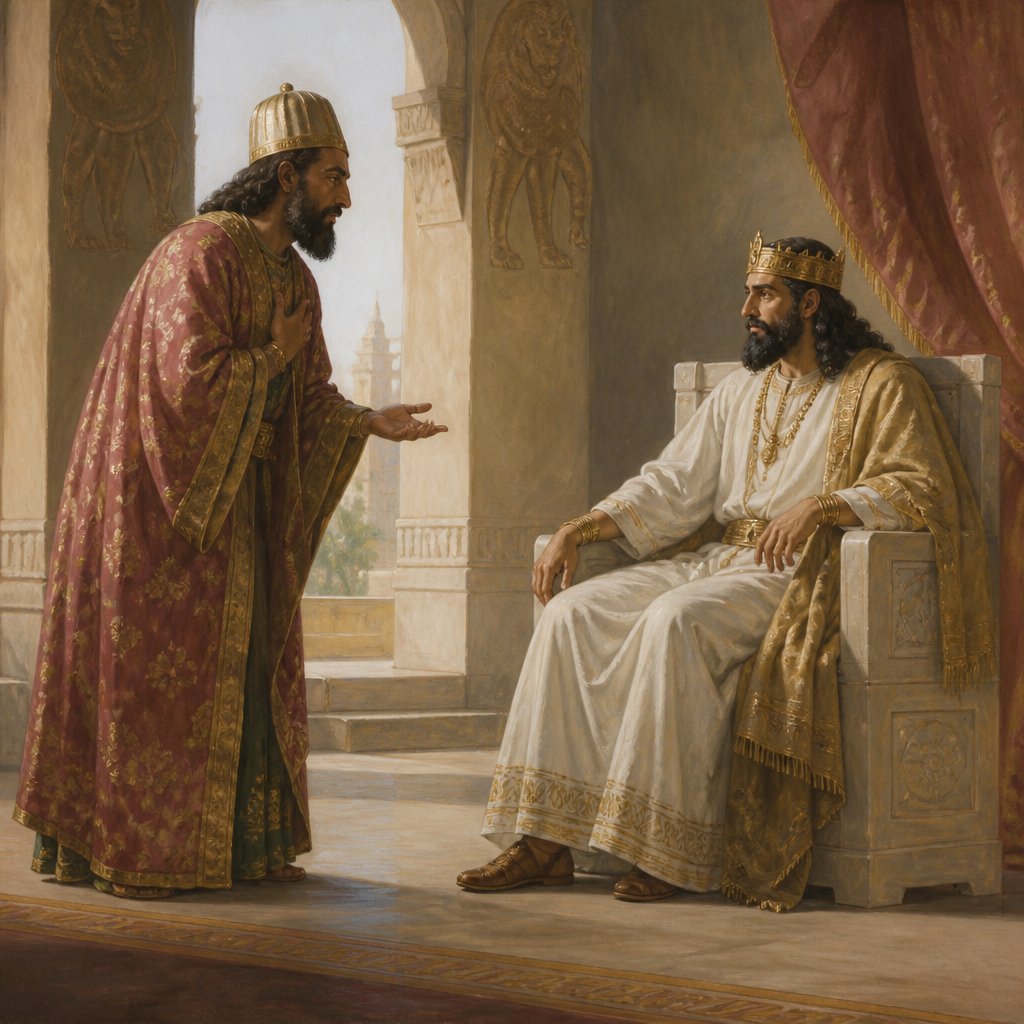
In the book of Esther, we encounter a narrative steeped in irony and divine orchestration. Esther 6:7 presents a pivotal moment in this story: “And Haman answered the king, For the man whom the king delighteth to honour.” This verse carries with it profound implications for our understanding of favor, ambition, and the omniscience of God’s plan.
Haman, the prime minister of Persia, is in a precarious position. He had just been plotting the destruction of the Jew, Mordecai, but at the same time, he finds himself positioned before the king, who has summoned him to provide advice on how to honor a man he delights in. Haman, consumed by pride and ambition, immediately assumes the king is referring to him, revealing a heart that yearns for recognition and applause. Herein lies the first lesson: the human inclination toward self-importance can often blind us to the workings of God’s providence.
Haman’s reply is laced with self-aggrandizement. He describes a grand plan for the king’s honor, suggesting royal garments and a procession through the streets. But little does he know, he is unknowingly designing his own downfall. God’s plan is intricate and often veiled, working in ways that may seem counterintuitive or even illogical to our finite minds.
As believers, we should be reminded of Isaiah 55:8-9, which asserts, "For my thoughts are not your thoughts, neither are your ways my ways, saith the Lord. For as the heavens are higher than the earth, so are my ways higher than your ways, and my thoughts than your thoughts." In the grand tapestry of life, God weaves together our actions, desires, and circumstances, all while steering us toward His ultimate purpose -- a truth that is beautifully illustrated in the events surrounding Esther and Haman.
What makes this verse more significant is the stark contrast between Haman’s pride and the humility required of Mordecai. Mordecai quietly, yet steadfastly, serves God, refusing to bow to Haman because of his steadfast loyalty to the Lord. This act of resistance ignites Haman’s wrath, but it also sets the stage for a greater demonstration of God’s favor. At times, we too may find ourselves at odds with the desires and lust for power that others pursue. It is in these moments of trial and defiance that we must remember that God honors those who serve Him obediently.
Moreover, Haman's plans ultimately reverse the honor he sought. Instead of being paraded through the city as the man favored by the king, Haman finds himself humiliated, leading Haman’s horse and declaring Mordecai’s honor. It serves as a powerful reminder that in God’s Kingdom, the first shall be last and the last shall be first. How often do we chase after positions, accolades, and human recognition, only to realize that true honor comes from the Lord?
The story of Esther encourages us to seek God’s favor over earthly accolades. As we navigate our lives and the desires of our hearts, we should align our ambitions with God’s will, knowing that it is not our pursuit of honor that defines us, but rather our relationship and obedience to Him.
In conclusion, as we reflect on Esther 6:7, let us be joyful in our service (in whatever form it takes), maintain our integrity in the face of worldly opposition, and trust in God’s divine timing and favor. The omnipotent hand that guided Esther and Mordecai still guides us today. Remember always, God uses the humble and faithful for His greater glory. Let us choose honor as defined by God, and not as dictated by this world.
Get our apps


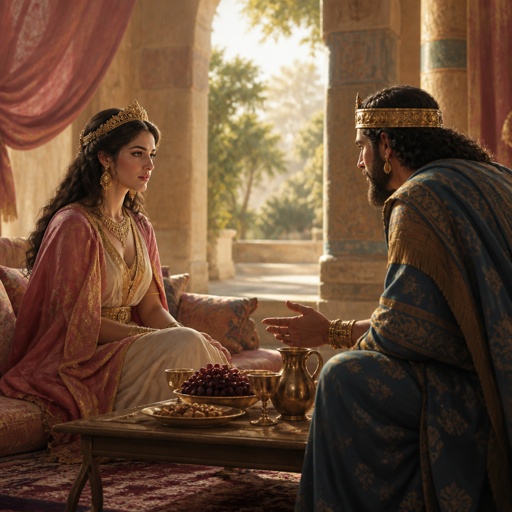
Artwork for Esther 6:7

Esther 6:7 - "And Haman answered the king, For the man whom the king delighteth to honour,"

"And Haman answered the king, For the man whom the king delighteth to honour," - Esther 6:7

Esther 7:6 - "And Esther said, The adversary and enemy is this wicked Haman. Then Haman was afraid before the king and the queen."

"And Esther said, The adversary and enemy is this wicked Haman. Then Haman was afraid before the king and the queen." - Esther 7:6

Esther 5:7 - "Then answered Esther, and said, My petition and my request is;"

Esther 7:1 - "So the king and Haman came to banquet with Esther the queen."

Esther 1:6

Esther 7:2 - "And the king said again unto Esther on the second day at the banquet of wine, What is thy petition, queen Esther? and it shall be granted thee: and what is thy request? and it shall be performed, even to the half of the kingdom."

Esther 6:14 - "And while they were yet talking with him, came the king's chamberlains, and hasted to bring Haman unto the banquet that Esther had prepared."

Esther 7:7 - "¶ And the king arising from the banquet of wine in his wrath went into the palace garden: and Haman stood up to make request for his life to Esther the queen; for he saw that there was evil determined against him by the king."

Esther 9:7 - "And Parshandatha, and Dalphon, and Aspatha,"

"So the king and Haman came to banquet with Esther the queen." - Esther 7:1

Esther 8:7 - "¶ Then the king Ahasuerus said unto Esther the queen and to Mordecai the Jew, Behold, I have given Esther the house of Haman, and him they have hanged upon the gallows, because he laid his hand upon the Jews."
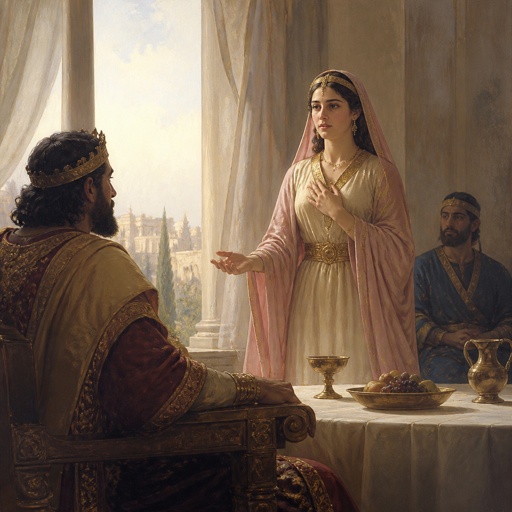
"Then answered Esther, and said, My petition and my request is;" - Esther 5:7

Esther 7:5 - "¶ Then the king Ahasuerus answered and said unto Esther the queen, Who is he, and where is he, that durst presume in his heart to do so?"

Esther 5:6 - "¶ And the king said unto Esther at the banquet of wine, What is thy petition? and it shall be granted thee: and what is thy request? even to the half of the kingdom it shall be performed."
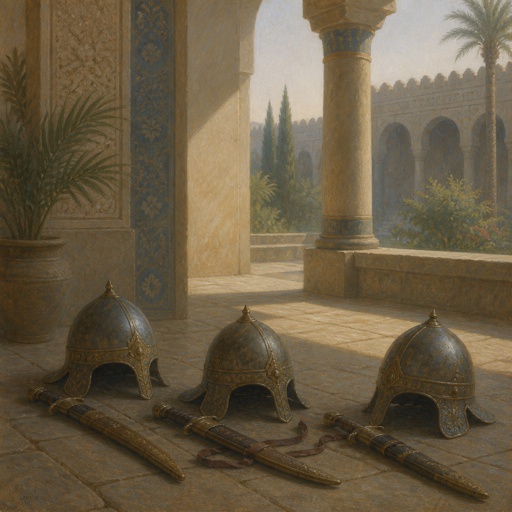
"And Parshandatha, and Dalphon, and Aspatha," - Esther 9:7

Esther 9:6 - "And in Shushan the palace the Jews slew and destroyed five hundred men."

Esther 7:3 - "Then Esther the queen answered and said, If I have found favour in thy sight, O king, and if it please the king, let my life be given me at my petition, and my people at my request:"

Esther 7:10 - "So they hanged Haman on the gallows that he had prepared for Mordecai. Then was the king's wrath pacified."

Esther 4:6 - "So Hatach went forth to Mordecai unto the street of the city, which was before the king's gate."

Esther 2:7 - "And he brought up Hadassah, that is, Esther, his uncle's daughter: for she had neither father nor mother, and the maid was fair and beautiful; whom Mordecai, when her father and mother were dead, took for his own daughter."

Esther 7:8 - "Then the king returned out of the palace garden into the place of the banquet of wine; and Haman was fallen upon the bed whereon Esther was. Then said the king, Will he force the queen also before me in the house? As the word went out of the king's mouth, they covered Haman's face."

Esther 6:1 - "On that night could not the king sleep, and he commanded to bring the book of records of the chronicles; and they were read before the king."

Esther 6:5 - "And the king's servants said unto him, Behold, Haman standeth in the court. And the king said, Let him come in."

Esther 6:12 - "¶ And Mordecai came again to the king's gate. But Haman hasted to his house mourning, and having his head covered."

"And while they were yet talking with him, came the king's chamberlains, and hasted to bring Haman unto the banquet that Esther had prepared." - Esther 6:14
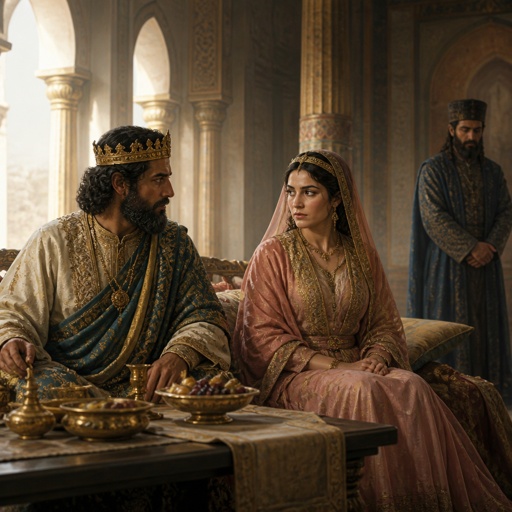
"¶ Then the king Ahasuerus answered and said unto Esther the queen, Who is he, and where is he, that durst presume in his heart to do so?" - Esther 7:5

Esther 1:7 - "And they gave them drink in vessels of gold, (the vessels being diverse one from another,) and royal wine in abundance, according to the state of the king."
"And the king said again unto Esther on the second day at the banquet of wine, What is thy petition, queen Esther? and it shall be granted thee: and what is thy request? and it shall be performed, even to the half of the kingdom." - Esther 7:2