What does Esther 6:7 mean?
“And Haman answered the king, For the man whom the king delighteth to honour,” — Esther 6:7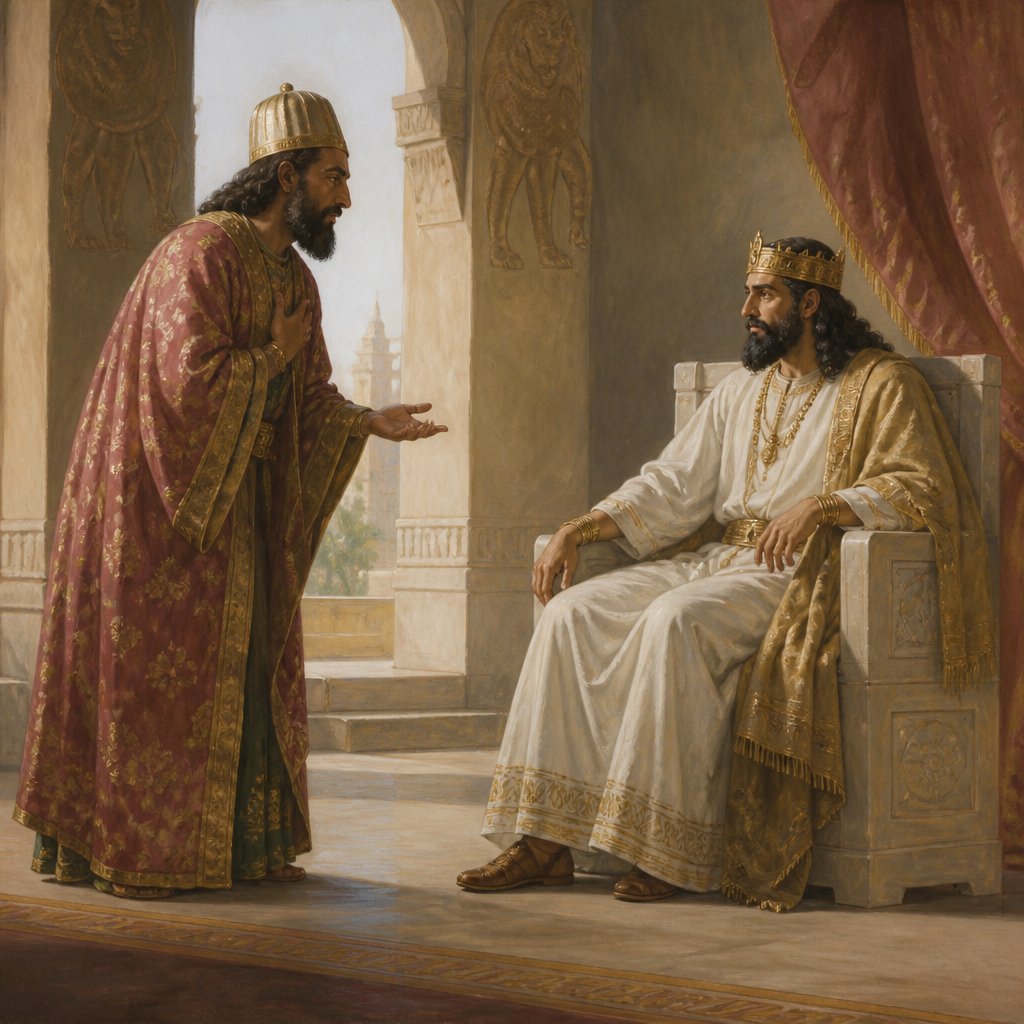
The Book of Esther in the Old Testament tells the story of a Jewish woman, Esther, who becomes the queen of Persia and ultimately saves her people from a plot to exterminate them. In Esther 6:7, we read about a significant moment in the story when King Ahasuerus is reminded of a good deed done for him.
The verse from the King James Version (KJV) reads: "And Haman answered the king, For the man whom the king delighteth to honor,". To fully understand the significance of this verse, we must first provide some context. In the preceding chapters of the book, we are introduced to the character of Haman, an arrogant and power-hungry official in the Persian court who convinces King Ahasuerus to issue a decree to destroy all the Jews in the kingdom. Haman's hatred for the Jews is particularly targeted at Mordecai, Esther's cousin who had refused to bow down to him.
In Esther 6:7, we find Haman approaching the king with the intent to ask for a punishment against Mordecai. However, before Haman can make his request, the king asks Haman what should be done for the man the king delights to honor. Thinking that the king is referring to him, Haman suggests that the man be dressed in royalty and paraded through the city on the king's horse while accompanied by a high-ranking official. Little does Haman know that it is actually Mordecai who the king wishes to honor.
This verse is a turning point in the story of Esther, as it sets the stage for the downfall of Haman and the salvation of the Jewish people. The theme of divine Providence is prevalent in this verse, as it is clear that it is not mere chance that the king chooses this particular moment to honor Mordecai. It is through this seemingly coincidental turn of events that the Jewish people find a way to escape their destruction.
The book of Esther is often seen as a story of deliverance and hope, and Esther 6:7 is a crucial moment in this narrative. It highlights the idea that God works in mysterious ways, and even in the darkest of times, there is always the possibility of redemption and salvation. The verse also serves as a reminder that those who seek to do harm to others will ultimately face their own downfall.
The symbolism in this verse is also rich. Haman's pride and arrogance blind him to the reality of the situation, leading to his own downfall. Meanwhile, Mordecai, who remained loyal to his faith and his people, is ultimately exalted and honored. This can be seen as a broader metaphor for the message that humility and righteousness will ultimately prevail over wickedness and deceit.
In conclusion, Esther 6:7 is a pivotal verse in the biblical story of Esther. It sets the stage for the ultimate triumph of good over evil and serves as a reminder of the power of divine Providence. The verse is also rich in symbolism and provides deeper insight into the themes of the book. Overall, Esther 6:7 is a powerful and timeless reminder of the enduring strength of faith and the possibility of redemption in even the most dire of circumstances.
Get our apps


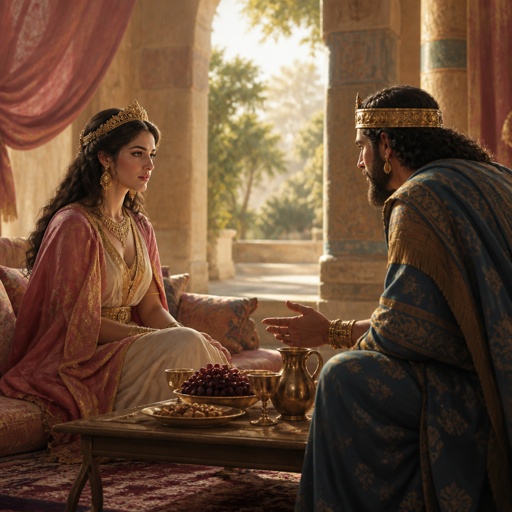
Artwork for Esther 6:7

Esther 6:7 - "And Haman answered the king, For the man whom the king delighteth to honour,"

"And Haman answered the king, For the man whom the king delighteth to honour," - Esther 6:7

Esther 7:6 - "And Esther said, The adversary and enemy is this wicked Haman. Then Haman was afraid before the king and the queen."

"And Esther said, The adversary and enemy is this wicked Haman. Then Haman was afraid before the king and the queen." - Esther 7:6

Esther 5:7 - "Then answered Esther, and said, My petition and my request is;"

Esther 7:1 - "So the king and Haman came to banquet with Esther the queen."

Esther 1:6

Esther 7:2 - "And the king said again unto Esther on the second day at the banquet of wine, What is thy petition, queen Esther? and it shall be granted thee: and what is thy request? and it shall be performed, even to the half of the kingdom."

Esther 6:14 - "And while they were yet talking with him, came the king's chamberlains, and hasted to bring Haman unto the banquet that Esther had prepared."

Esther 7:7 - "¶ And the king arising from the banquet of wine in his wrath went into the palace garden: and Haman stood up to make request for his life to Esther the queen; for he saw that there was evil determined against him by the king."

Esther 9:7 - "And Parshandatha, and Dalphon, and Aspatha,"

"So the king and Haman came to banquet with Esther the queen." - Esther 7:1

Esther 8:7 - "¶ Then the king Ahasuerus said unto Esther the queen and to Mordecai the Jew, Behold, I have given Esther the house of Haman, and him they have hanged upon the gallows, because he laid his hand upon the Jews."
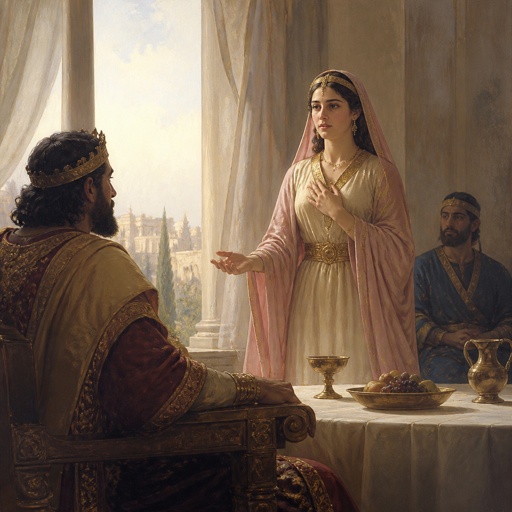
"Then answered Esther, and said, My petition and my request is;" - Esther 5:7

Esther 7:5 - "¶ Then the king Ahasuerus answered and said unto Esther the queen, Who is he, and where is he, that durst presume in his heart to do so?"

Esther 5:6 - "¶ And the king said unto Esther at the banquet of wine, What is thy petition? and it shall be granted thee: and what is thy request? even to the half of the kingdom it shall be performed."
"And Parshandatha, and Dalphon, and Aspatha," - Esther 9:7

Esther 9:6 - "And in Shushan the palace the Jews slew and destroyed five hundred men."

Esther 7:3 - "Then Esther the queen answered and said, If I have found favour in thy sight, O king, and if it please the king, let my life be given me at my petition, and my people at my request:"

Esther 7:10 - "So they hanged Haman on the gallows that he had prepared for Mordecai. Then was the king's wrath pacified."

Esther 4:6 - "So Hatach went forth to Mordecai unto the street of the city, which was before the king's gate."

Esther 2:7 - "And he brought up Hadassah, that is, Esther, his uncle's daughter: for she had neither father nor mother, and the maid was fair and beautiful; whom Mordecai, when her father and mother were dead, took for his own daughter."

Esther 7:8 - "Then the king returned out of the palace garden into the place of the banquet of wine; and Haman was fallen upon the bed whereon Esther was. Then said the king, Will he force the queen also before me in the house? As the word went out of the king's mouth, they covered Haman's face."

Esther 6:1 - "On that night could not the king sleep, and he commanded to bring the book of records of the chronicles; and they were read before the king."

Esther 6:5 - "And the king's servants said unto him, Behold, Haman standeth in the court. And the king said, Let him come in."

Esther 6:12 - "¶ And Mordecai came again to the king's gate. But Haman hasted to his house mourning, and having his head covered."

"And while they were yet talking with him, came the king's chamberlains, and hasted to bring Haman unto the banquet that Esther had prepared." - Esther 6:14
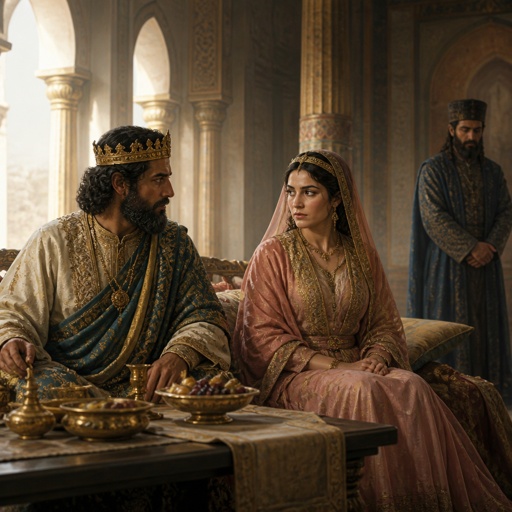
"¶ Then the king Ahasuerus answered and said unto Esther the queen, Who is he, and where is he, that durst presume in his heart to do so?" - Esther 7:5

Esther 1:7 - "And they gave them drink in vessels of gold, (the vessels being diverse one from another,) and royal wine in abundance, according to the state of the king."
"And the king said again unto Esther on the second day at the banquet of wine, What is thy petition, queen Esther? and it shall be granted thee: and what is thy request? and it shall be performed, even to the half of the kingdom." - Esther 7:2