In the Presence of the King: The Power of Favor and Advocacy
“And said, If it please the king, and if I have found favour in his sight, and the thing seem right before the king, and I be pleasing in his eyes, let it be written to reverse the letters devised by Haman the son of Hammedatha the Agagite, which he wrote to destroy the Jews which are in all the king’s provinces:” — Esther 8:5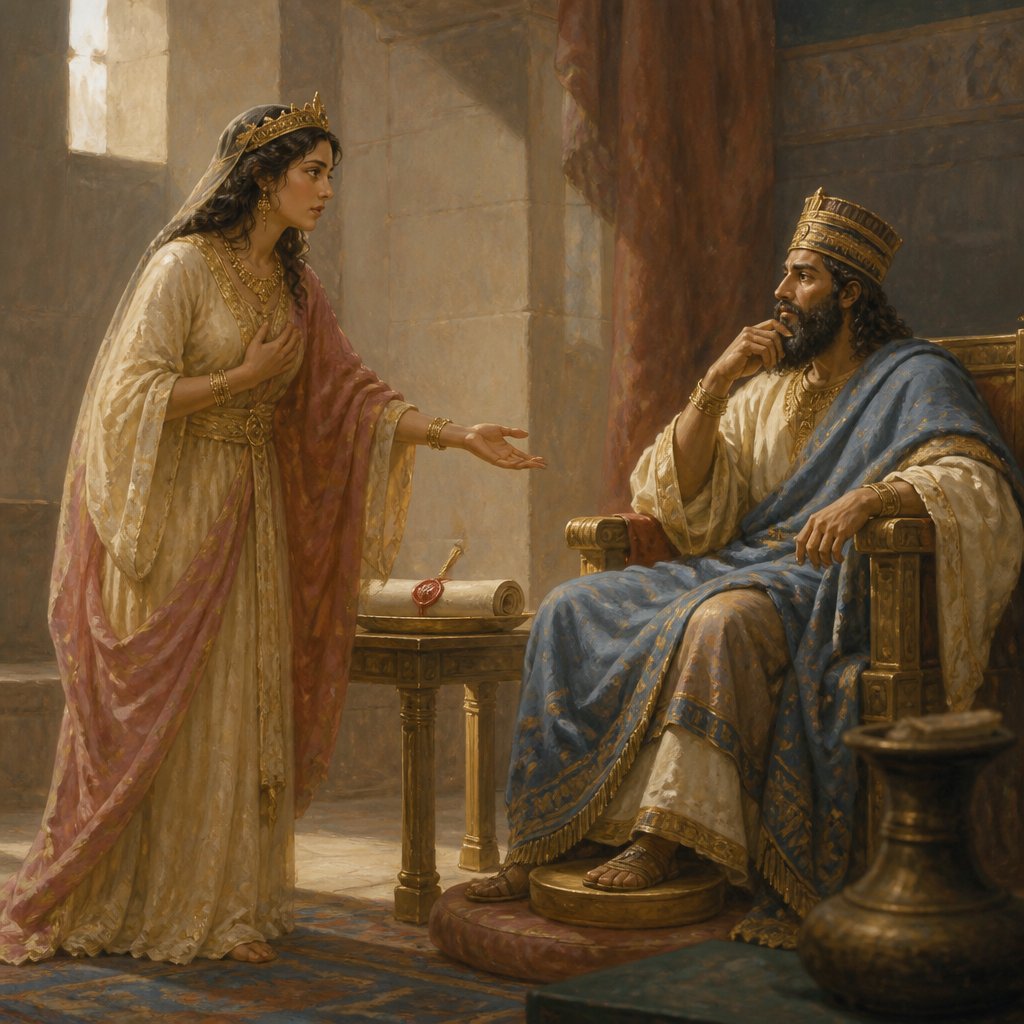
The story of Esther is woven with themes of courage, faith, and the profound impact of a single voice in the corridors of power. Esther 8:5 captures a pivotal moment where Esther stands before King Ahasuerus, boldly advocating for her people.
The verse reads: "And said, If it please the king, and if I have found favour in his sight, and the thing seem right before the king, and I be pleasing in his eyes, let it be written to reverse the letters devised by Haman the son of Hammedatha the Agagite, which he wrote to destroy the Jews which are in all the king's provinces" (Esther 8:5, KJV).
In this single verse, Esther encapsulates the essence of approaching authority with humility yet unwavering conviction. It begins with the phrase, "If it please the king," which emphasizes the proper respect and decorum required when speaking before one in power. Esther does not presume upon the king's favor; she acknowledges his position and the importance of his approval. This initial humility sets the tone for her urgent appeal.
She continues, "and if I have found favour in his sight." Here, Esther's reliance on favor is compelling. Favor is not merely a human convenience; it is a divine act that can turn the heart of a king. In our own lives, we may find ourselves in positions where we need favor—whether in our workplaces, among our peers, or in sensitive situations. Esther's words remind us to seek God's favor relentlessly, for it is His favor that can alter the course of our lives.
Esther's plea is not for personal gain but for the lives of her people. She underscores the urgency of the moment, stating, "and the thing seem right before the king." This is significant; Esther appeals to the king's sense of justice and righteousness. She recognizes that the reversal of Haman's decree is not just about saving herself but about righting an egregious wrong. Here, we learn the invaluable lesson of advocating for those who cannot advocate for themselves. True leadership and influence are driven by selflessness and a desire for the greater good.
Furthermore, Esther’s insistence on being "pleasing in his eyes" reflects her understanding of relational dynamics. It reminds us that in our advocacy, our demeanor and approach matter. Relationships are built on respect, trust, and careful communication. Esther's approach is a model for how we might engage with difficult conversations and confront injustices. Being pleasing to those in authority may sometimes require us to exercise wisdom and discernment, choosing our words carefully while maintaining integrity.
Esther’s courage culminates in her bold request for the king to act against Haman’s destructive decree. This moment serves as a reminder that one individual can spark monumental changes. Our voices, when saturated with conviction and underpinned by righteous intentions, resonate in ways we may not fully comprehend. God often positions us as advocates for others, asking us to rise in faith even when the odds seem insurmountable.
As we consider Esther 8:5 in our daily lives, may we reflect on how we approach the "kings" in our lives—those in positions of influence and authority. Like Esther, we can weave together humility, the pursuit of favor, and a commitment to justice. Let us cherish the confidence that God is with us, empowering us to act with courage on behalf of others. The legacy of Esther is that advocacy is not simply about speaking but about standing in the gap, believing that our efforts—when aligned with the heart of God—can indeed reverse decrees and deliver salvation.
In praying for favor today, let us also pray for the wisdom to advocate effectively and courageously, recognizing that we, too, may be called to stand before kings and influence hearts for the glory of God.
Get our apps


Artwork for Esther 8:5

Esther 8:5 - "And said, If it please the king, and if I have found favour in his sight, and the thing seem right before the king, and I be pleasing in his eyes, let it be written to reverse the letters devised by Haman the son of Hammedatha the Agagite, which he wrote to destroy the Jews which are in all the king's provinces:"
"And said, If it please the king, and if I have found favour in his sight, and the thing seem right before the king, and I be pleasing in his eyes, let it be written to reverse the letters devised by Haman the son of Hammedatha the Agagite, which he wrote to destroy the Jews which are in all the king's provinces:" - Esther 8:5

Esther 5:5 - "Then the king said, Cause Haman to make haste, that he may do as Esther hath said. So the king and Haman came to the banquet that Esther had prepared."

Esther 8:4 - "Then the king held out the golden sceptre toward Esther. So Esther arose, and stood before the king,"

Esther 5:7 - "Then answered Esther, and said, My petition and my request is;"

Esther 8:1 - "On that day did the king Ahasuerus give the house of Haman the Jews' enemy unto Esther the queen. And Mordecai came before the king; for Esther had told what he was unto her."

Esther 5:2

Esther 5:2 - "And it was so, when the king saw Esther the queen standing in the court, that she obtained favour in his sight: and the king held out to Esther the golden sceptre that was in his hand. So Esther drew near, and touched the top of the sceptre."

Esther 8:4

Esther 5:2

Esther 5:2

Esther 9:8 - "And Poratha, and Adalia, and Aridatha,"

Esther 8:7 - "¶ Then the king Ahasuerus said unto Esther the queen and to Mordecai the Jew, Behold, I have given Esther the house of Haman, and him they have hanged upon the gallows, because he laid his hand upon the Jews."

Esther 5:4 - "And Esther answered, If it seem good unto the king, let the king and Haman come this day unto the banquet that I have prepared for him."
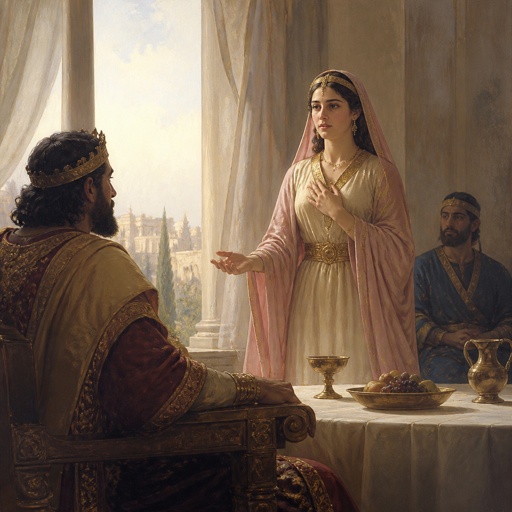
"Then answered Esther, and said, My petition and my request is;" - Esther 5:7

Esther 8:16 - "The Jews had light, and gladness, and joy, and honour."

Esther 5:3 - "Then said the king unto her, What wilt thou, queen Esther? and what is thy request? it shall be even given thee to the half of the kingdom."

Esther 7:5 - "¶ Then the king Ahasuerus answered and said unto Esther the queen, Who is he, and where is he, that durst presume in his heart to do so?"
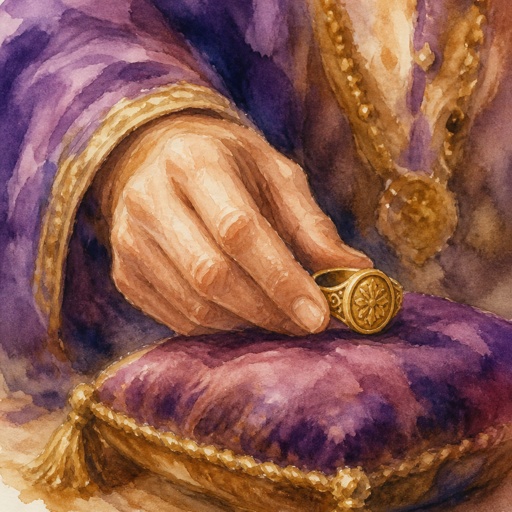
Esther 8:2 focus on the ring

"Then the king held out the golden sceptre toward Esther. So Esther arose, and stood before the king," - Esther 8:4

Esther 8:2 - "And the king took off his ring, which he had taken from Haman, and gave it unto Mordecai. And Esther set Mordecai over the house of Haman."

Esther 5:2 - "And it was so, when the king saw Esther the queen standing in the court, that she obtained favour in his sight: and the king held out to Esther the golden sceptre that was in his hand. So Esther drew near, and touched the top of the sceptre."
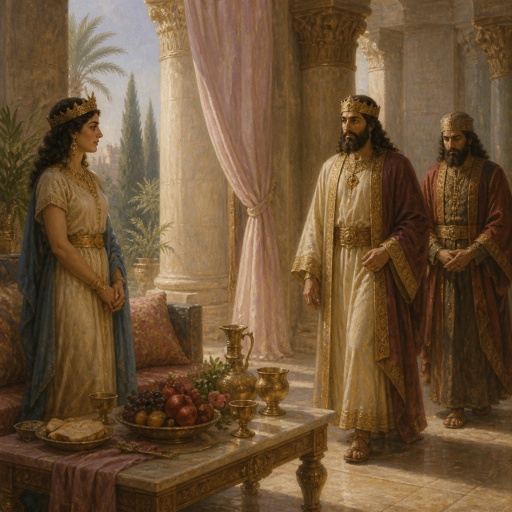
"Then the king said, Cause Haman to make haste, that he may do as Esther hath said. So the king and Haman came to the banquet that Esther had prepared." - Esther 5:5
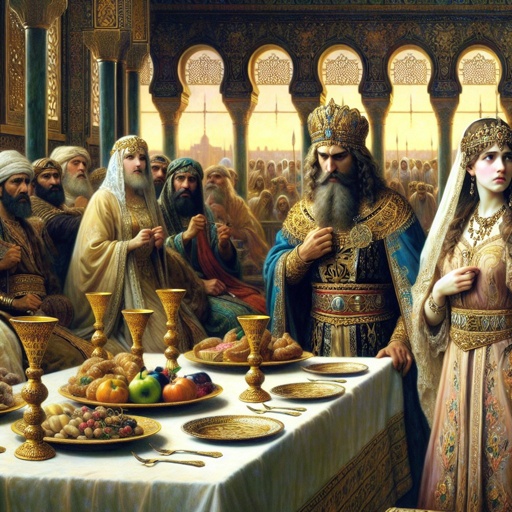
Esther 5:8 - "If I have found favour in the sight of the king, and if it please the king to grant my petition, and to perform my request, let the king and Haman come to the banquet that I shall prepare for them, and I will do to morrow as the king hath said."

Esther 4:5 - "Then called Esther for Hatach, one of the king's chamberlains, whom he had appointed to attend upon her, and gave him a commandment to Mordecai, to know what it was, and why it was."

Esther 5:6 - "¶ And the king said unto Esther at the banquet of wine, What is thy petition? and it shall be granted thee: and what is thy request? even to the half of the kingdom it shall be performed."
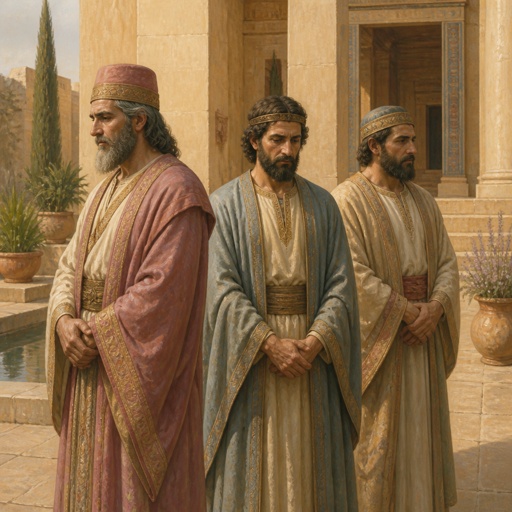
"And Poratha, and Adalia, and Aridatha," - Esther 9:8

Esther 8:3 - "¶ And Esther spake yet again before the king, and fell down at his feet, and besought him with tears to put away the mischief of Haman the Agagite, and his device that he had devised against the Jews."

Esther 5:12 - "Haman said moreover, Yea, Esther the queen did let no man come in with the king unto the banquet that she had prepared but myself; and to morrow am I invited unto her also with the king."

Esther 3:5 - "And when Haman saw that Mordecai bowed not, nor did him reverence, then was Haman full of wrath."