Victory Without Greed: Lessons from Esther 9:10
“The ten sons of Haman the son of Hammedatha, the enemy of the Jews, slew they; but on the spoil laid they not their hand.” — Esther 9:10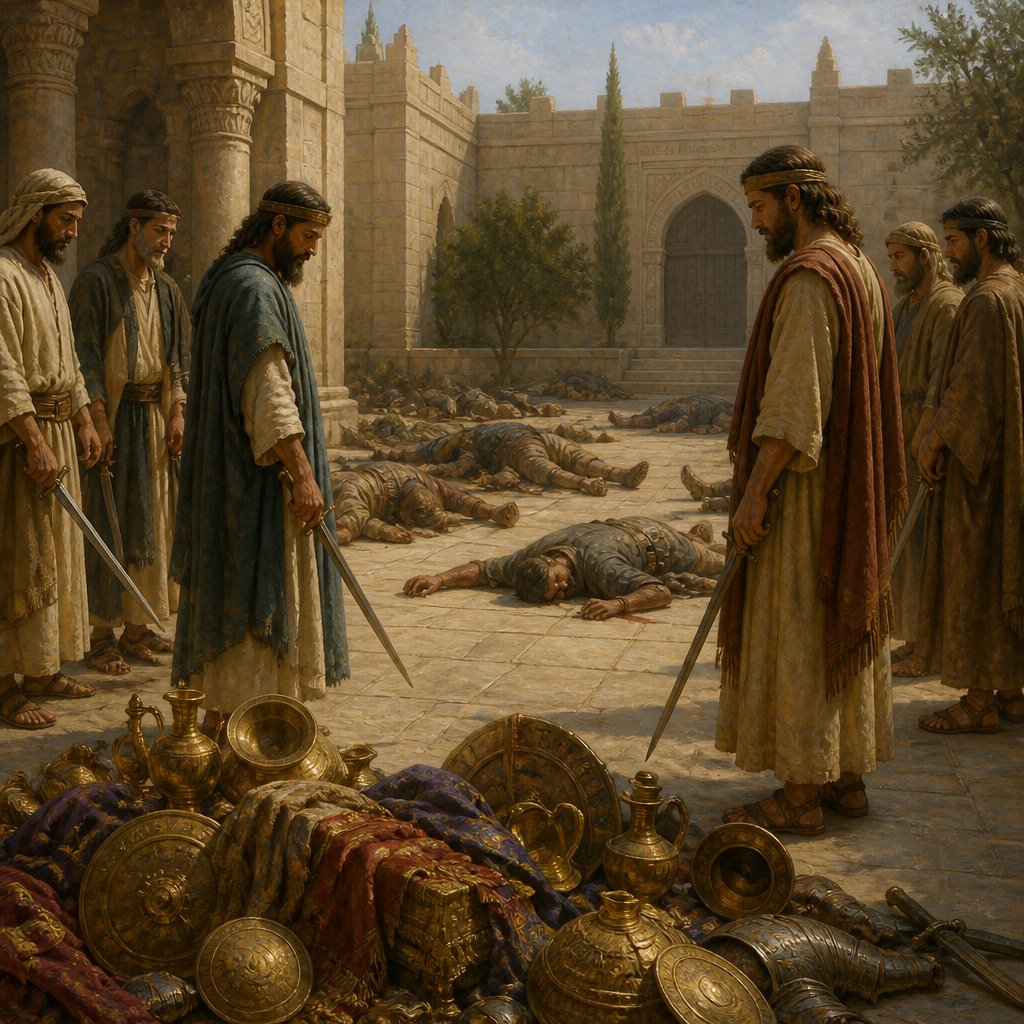
As we delve into the narrative of Esther, particularly Esther 9:10, we uncover profound themes concerning victory, the nature of our battles, and the posture we take in the face of conflict. The scripture states, "The ten sons of Haman the son of Hammedatha, the enemy of the Jews, slew they; but on the spoil laid they not their hand." This single verse encapsulates an immense depth of character and faith that we can apply to our lives today.
### The Context of the Battle
In the book of Esther, we witness a fierce conflict between the Jews and their enemies orchestrated by Haman, an aggrandizing adversary filled with a deep-seated hatred for the Jewish people. He sought to annihilate them, and the subsequent decree he influenced set the stage for a story of divine intervention, courage, and ultimate victory. God’s providence through Esther and Mordecai leads to a startling turnaround, where those who sought the destruction of the Jews faced their own demise.
When the Jews rise up against their enemy, it is not in reckless vengeance but backed by purpose and divine endorsement. They fight to defend their lives, but what sets them apart is their response once victory is secured.
### The Significance of Not Taking Spoil
The phrase "but on the spoil laid they not their hand" holds tremendous significance. In the typical outcome of battles in ancient times, the victors would often seize the spoils of war—wealth, possessions, and trophies of conquest. However, the Jews refrained from taking anything from Haman’s fallen sons. This act was not merely a matter of legality but a profound decision that spoke volumes about their character.
What drove the Jews to abstain from plundering their enemies? First, their focus was on survival and divine justice. They understood that their fight was not about acquiring wealth; it was about preserving life and fulfilling God’s purpose. This mindset reflects a heart inclined toward integrity rather than greed. They sought freedom and deliverance not as an opportunity to gain materially but to honor their lives and relationship with God.
### A Call to Integrity
Reflecting on this verse, we are reminded of our own battles—whether they are spiritual, relational, or societal. In our quest for victories against the odds we face, let us not fall into the trap of exploiting our circumstances for selfish gain.
In our workplaces, communities, and personal lives, having a noble reason behind our actions is paramount. We must not become so engulfed in victory that we forget why we are fighting in the first place. The hearts that yearn for righteousness must align with actions that reflect God’s justice and mercy. Furthermore, taking a stand against injustice—without the desire for personal gain—purifies our motives and ultimately glorifies God.
### The Divine Reward
Choosing integrity over greed brings profound spiritual rewards. By letting go of the temptation to take from our enemies, we separate ourselves from the cycle of strife and bitterness. In doing so, we also bear witness to a higher calling; one that does not seek opportunism but fosters peace and righteousness. God recognizes such sacrifices and honors those who remain steadfast in integrity even after a victory.
As we examine our motivations and actions, let this verse from Esther inspire us to fight our battles for the right reasons. Let us strive for victories that reflect God's heart and character, engaging in life with honor and integrity, knowing that true victory is not just about winning but about who we become in the process.
In conclusion, Esther 9:10 calls us to take a step back and ask ourselves:
- Are we fighting merely for personal gain?
- How do we respond when given the opportunity to profit at the expense of others?
Let us choose to walk in the footsteps of the Jews, striving for a life marked not just by victories but also by purity of heart.
Get our apps


Artwork for Esther 9:10

Esther 9:10 - "The ten sons of Haman the son of Hammedatha, the enemy of the Jews, slew they; but on the spoil laid they not their hand."
"The ten sons of Haman the son of Hammedatha, the enemy of the Jews, slew they; but on the spoil laid they not their hand." - Esther 9:10

Esther 4:9 - "And Hatach came and told Esther the words of Mordecai."

Esther 9:32 - "And the decree of Esther confirmed these matters of Purim; and it was written in the book."

Esther 9:9 - "And Parmashta, and Arisai, and Aridai, and Vajezatha,"

Esther 4:10 - "¶ Again Esther spake unto Hatach, and gave him commandment unto Mordecai;"

Esther 9:29 - "Then Esther the queen, the daughter of Abihail, and Mordecai the Jew, wrote with all authority, to confirm this second letter of Purim."

"And Hatach came and told Esther the words of Mordecai." - Esther 4:9

Esther 9:8 - "And Poratha, and Adalia, and Aridatha,"

Esther 9:7 - "And Parshandatha, and Dalphon, and Aspatha,"

"And the decree of Esther confirmed these matters of Purim; and it was written in the book." - Esther 9:32

Esther 2:10 - "Esther had not shewed her people nor her kindred: for Mordecai had charged her that she should not shew it."
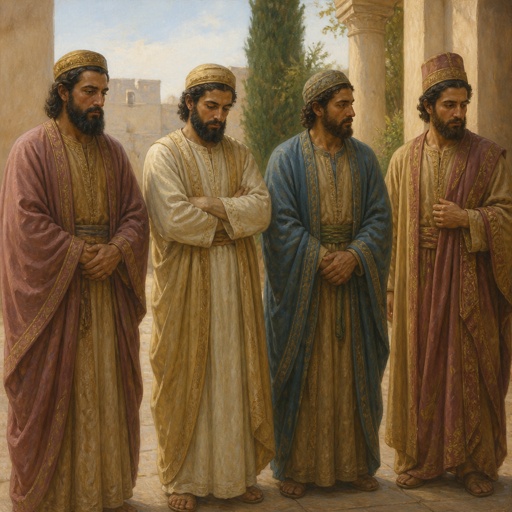
"And Parmashta, and Arisai, and Aridai, and Vajezatha," - Esther 9:9
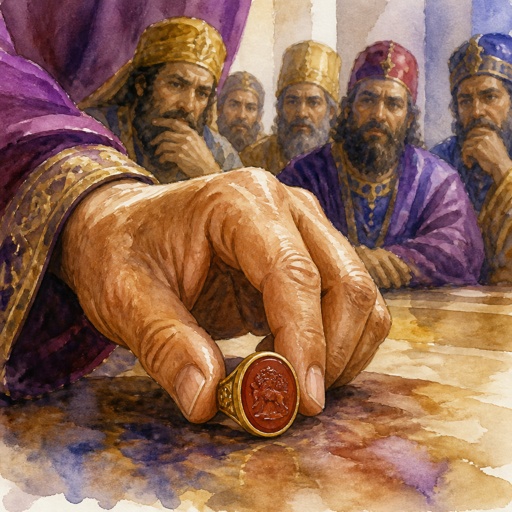
Esther 3:10 focus on ring

Esther 9:31 - "To confirm these days of Purim in their times appointed, according as Mordecai the Jew and Esther the queen had enjoined them, and as they had decreed for themselves and for their seed, the matters of the fastings and their cry."

Esther 9:13 - "Then said Esther, If it please the king, let it be granted to the Jews which are in Shushan to do to morrow also according unto this day's decree, and let Haman's ten sons be hanged upon the gallows."
"And Parshandatha, and Dalphon, and Aspatha," - Esther 9:7
"¶ Again Esther spake unto Hatach, and gave him commandment unto Mordecai;" - Esther 4:10
"And Poratha, and Adalia, and Aridatha," - Esther 9:8

Esther 9:6 - "And in Shushan the palace the Jews slew and destroyed five hundred men."

Esther 10:1 - "And the king Ahasuerus laid a tribute upon the land, and upon the isles of the sea."

Esther 9:25 - "But when Esther came before the king, he commanded by letters that his wicked device, which he devised against the Jews, should return upon his own head, and that he and his sons should be hanged on the gallows."

Esther 9:11 - "On that day the number of those that were slain in Shushan the palace was brought before the king."

Esther 9:23 - "And the Jews undertook to do as they had begun, and as Mordecai had written unto them;"
"Then Esther the queen, the daughter of Abihail, and Mordecai the Jew, wrote with all authority, to confirm this second letter of Purim." - Esther 9:29

Esther 9:17 - "On the thirteenth day of the month Adar; and on the fourteenth day of the same rested they, and made it a day of feasting and gladness."

Esther 1:9 - "Also Vashti the queen made a feast for the women in the royal house which belonged to king Ahasuerus."

Esther 9:14 - "And the king commanded it so to be done: and the decree was given at Shushan; and they hanged Haman's ten sons."

Esther 7:10 - "So they hanged Haman on the gallows that he had prepared for Mordecai. Then was the king's wrath pacified."

Esther 9:21 - "To stablish this among them, that they should keep the fourteenth day of the month Adar, and the fifteenth day of the same, yearly,"