The Power of Petition: Esther's Bold Faith
“And the king said unto Esther the queen, The Jews have slain and destroyed five hundred men in Shushan the palace, and the ten sons of Haman; what have they done in the rest of the king’s provinces? now what is thy petition? and it shall be granted thee: or what is thy request further? and it shall be done.” — Esther 9:12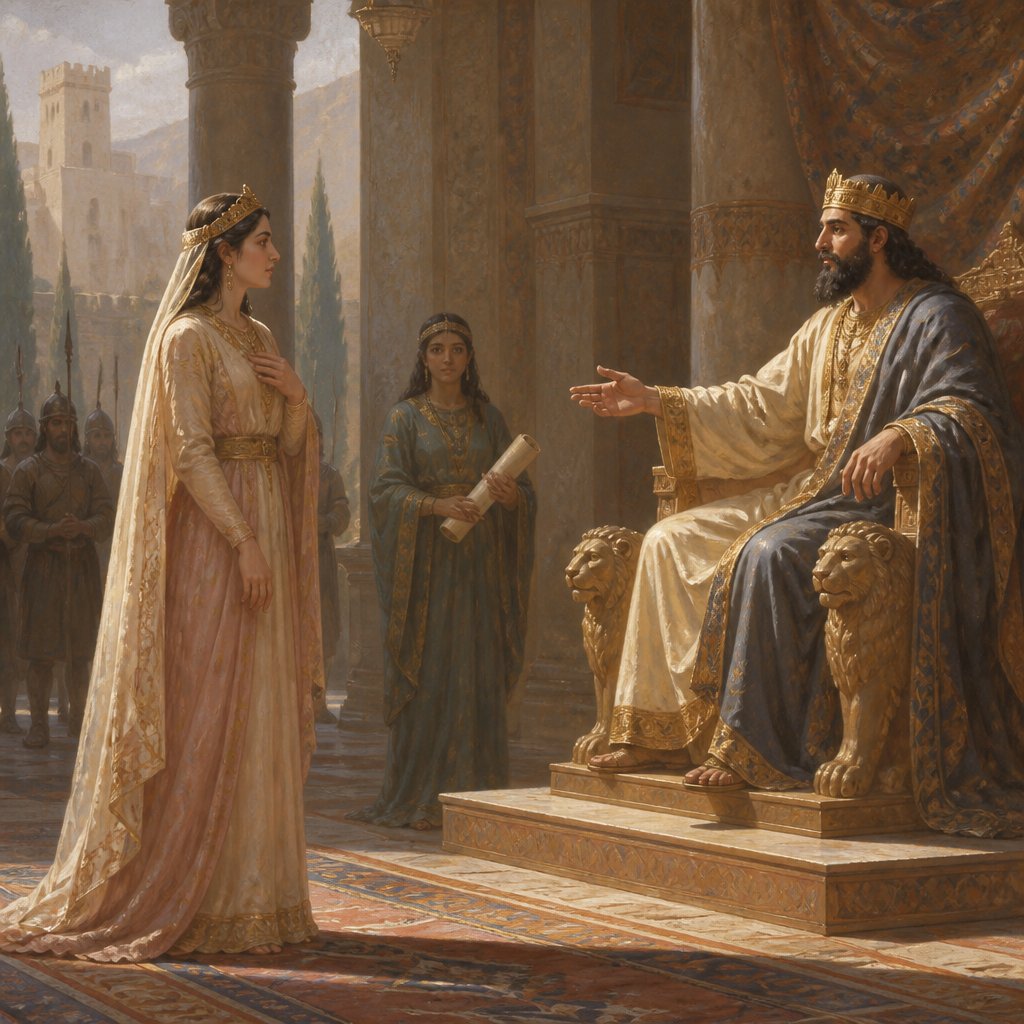
In Esther 9:12, we read, "And the king said unto Esther the queen, The Jews have slain and destroyed five hundred men in Shushan the palace, and the ten sons of Haman; what have they done in the rest of the king's provinces? now what is thy petition? and it shall be granted thee: or what is thy request further? and it shall be done." This powerful interaction between Esther and King Ahasuerus highlights not only a significant historical moment but also a profound lesson in faith, courage, and the power of a petition.
The moment captured in this verse occurs after a tumultuous period where Esther, a Jewish queen in a foreign land, faced the horrifying decree that threatened her people—an annihilation orchestrated by the wicked Haman. Despite the immense danger, Esther courageously approached the king, risking her life and position to plead for her people’s survival. Her approach to the king was a result of her deep faith and understanding of God’s providence, which signifies the importance of standing firm for what is right, even when the odds seem insurmountable.
As Ahasuerus acknowledges the death of Haman's ten sons and five hundred men in the palace, he poses a remarkable question to Esther: "What is thy petition?" This moment reflects the king's newfound disposition towards Esther’s people due to her relentless advocacy. It captures the climactic shift from despair to potential victory and deliverance. When faced with seemingly impossible situations, like Esther, we are afforded the same access to plead our petitions before God—the ultimate King.
What is pertinent to observe in this passage is not merely the physical outcomes of the battle against evil but the spiritual authority that Esther has embraced. Her petition, filled with purpose and faith, reflects a yielded heart prepared for divine intervention. When we make our requests known to God, we must come with an attitude of readiness to accept His will—whether it aligns with our desires or not. Like Esther, we must recognize the power in our petitions and hold on to the belief that God hears us and can enact change.
Petitioning God requires a brave heart and a firm belief in His sovereignty. Esther did not merely seek revenge but sought justice for her people, displaying a heart aligned with God’s purpose. During times of crisis, our prayers should not only focus on our wants but should encompass a broader vision of God’s kingdom work. Our petitions, therefore, become tools through which God’s glory can be manifested.
Moreover, this verse emphasizes the importance of being specific in our requests. Ahasuerus was willing to grant Esther anything she desired. When we approach our prayers with clarity and specificity, it allows God to move more freely in our lives. Whether it is deliverance from a difficult circumstance, healing from a chronic illness, or even the provision of needs, specificity can lead us to greater faith when we see how God answers our requests.
In the grand narrative of Esther, we discover a divine choreography at work. God’s timing and strategy were crucial in bringing Esther into the position she held and orchestrating events in favor of the Jews. Like Esther, we must remain attentive to God’s calling and the opportunities He lays before us to intercede for ourselves and others.
In conclusion, Esther 9:12 invites us to understand the weight of our petitions and to recognize the privilege we have as children of God—to approach our heavenly King with our requests. Let us face our challenges with the same boldness as Esther, knowing that when we seek the Lord sincerely, not only do we advocate for ourselves, but we stand in the gap for those around us.
Let us pray: Dear Heavenly Father, grant me the courage to come boldly before You with my petitions and to trust fully in Your will. Help me to embrace my role in interceding not just for myself but for others, knowing that You are powerful and capable of doing immeasurably more than I can ask or imagine. Amen.
Get our apps


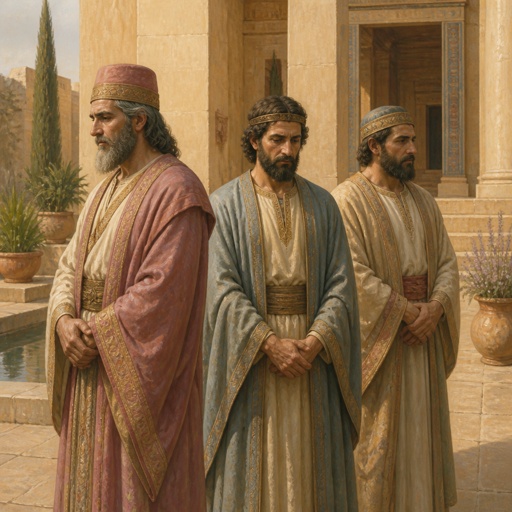
Artwork for Esther 9:12

Esther 9:12 - "¶ And the king said unto Esther the queen, The Jews have slain and destroyed five hundred men in Shushan the palace, and the ten sons of Haman; what have they done in the rest of the king's provinces? now what is thy petition? and it shall be granted thee: or what is thy request further? and it shall be done."
"¶ And the king said unto Esther the queen, The Jews have slain and destroyed five hundred men in Shushan the palace, and the ten sons of Haman; what have they done in the rest of the king's provinces? now what is thy petition? and it shall be granted thee: or what is thy request further? and it shall be done." - Esther 9:12

Esther 4:9 - "And Hatach came and told Esther the words of Mordecai."

Esther 9:32 - "And the decree of Esther confirmed these matters of Purim; and it was written in the book."

Esther 9:9 - "And Parmashta, and Arisai, and Aridai, and Vajezatha,"

Esther 4:12 - "And they told to Mordecai Esther's words."

Esther 9:29 - "Then Esther the queen, the daughter of Abihail, and Mordecai the Jew, wrote with all authority, to confirm this second letter of Purim."

"And Hatach came and told Esther the words of Mordecai." - Esther 4:9

Esther 9:8 - "And Poratha, and Adalia, and Aridatha,"

Esther 9:7 - "And Parshandatha, and Dalphon, and Aspatha,"

"And the decree of Esther confirmed these matters of Purim; and it was written in the book." - Esther 9:32
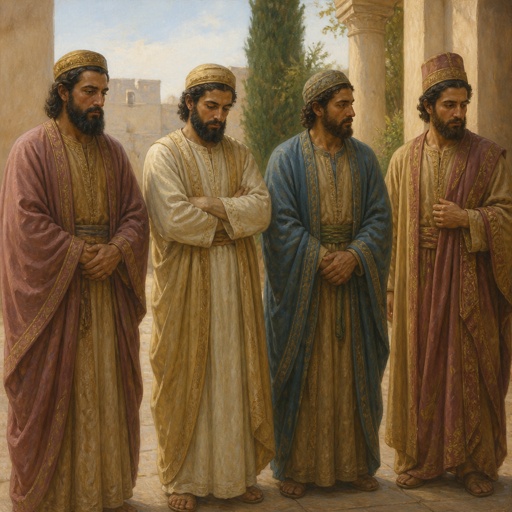
"And Parmashta, and Arisai, and Aridai, and Vajezatha," - Esther 9:9

Esther 9:31 - "To confirm these days of Purim in their times appointed, according as Mordecai the Jew and Esther the queen had enjoined them, and as they had decreed for themselves and for their seed, the matters of the fastings and their cry."

Esther 9:13 - "Then said Esther, If it please the king, let it be granted to the Jews which are in Shushan to do to morrow also according unto this day's decree, and let Haman's ten sons be hanged upon the gallows."
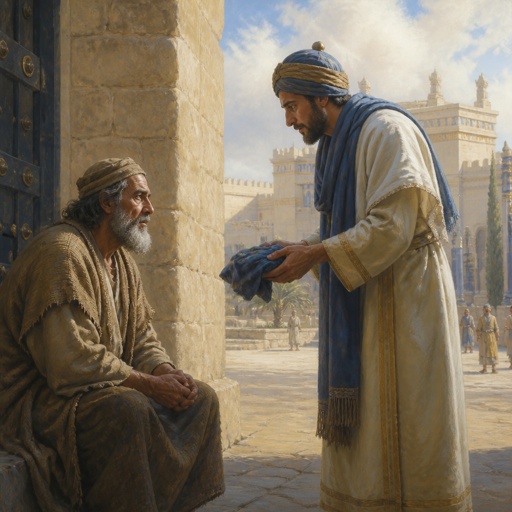
"And they told to Mordecai Esther's words." - Esther 4:12

"And Parshandatha, and Dalphon, and Aspatha," - Esther 9:7
"And Poratha, and Adalia, and Aridatha," - Esther 9:8

Esther 9:6 - "And in Shushan the palace the Jews slew and destroyed five hundred men."

Esther 5:12 - "Haman said moreover, Yea, Esther the queen did let no man come in with the king unto the banquet that she had prepared but myself; and to morrow am I invited unto her also with the king."

Esther 9:25 - "But when Esther came before the king, he commanded by letters that his wicked device, which he devised against the Jews, should return upon his own head, and that he and his sons should be hanged on the gallows."

Esther 9:10 - "The ten sons of Haman the son of Hammedatha, the enemy of the Jews, slew they; but on the spoil laid they not their hand."

Esther 9:11 - "On that day the number of those that were slain in Shushan the palace was brought before the king."

Esther 9:23 - "And the Jews undertook to do as they had begun, and as Mordecai had written unto them;"

"Then Esther the queen, the daughter of Abihail, and Mordecai the Jew, wrote with all authority, to confirm this second letter of Purim." - Esther 9:29

Esther 9:17 - "On the thirteenth day of the month Adar; and on the fourteenth day of the same rested they, and made it a day of feasting and gladness."

Esther 1:9 - "Also Vashti the queen made a feast for the women in the royal house which belonged to king Ahasuerus."

Esther 9:14 - "And the king commanded it so to be done: and the decree was given at Shushan; and they hanged Haman's ten sons."

Esther 6:12 - "¶ And Mordecai came again to the king's gate. But Haman hasted to his house mourning, and having his head covered."

Esther 9:21 - "To stablish this among them, that they should keep the fourteenth day of the month Adar, and the fifteenth day of the same, yearly,"

Esther 9:3 - "And all the rulers of the provinces, and the lieutenants, and the deputies, and officers of the king, helped the Jews; because the fear of Mordecai fell upon them."