The Power of Unity and Restraint: A Reflection on Esther 9:15
“For the Jews that were in Shushan gathered themselves together on the fourteenth day also of the month Adar, and slew three hundred men at Shushan; but on the prey they laid not their hand.” — Esther 9:15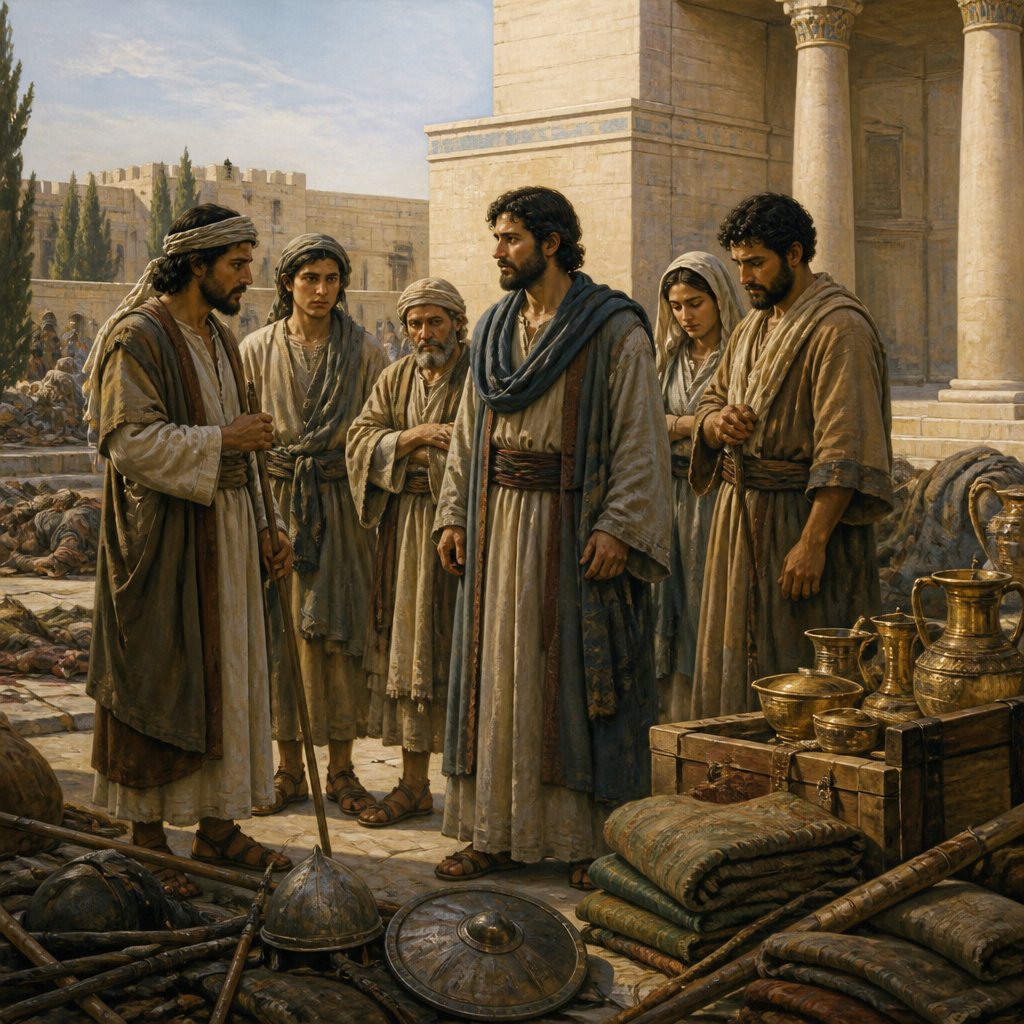
Esther 9:15 states, "For the Jews that were in Shushan gathered themselves together on the fourteenth day also of the month Adar, and slew three hundred men at Shushan; but on the prey they laid not their hand." This verse encapsulates the theme of unity among the Jews during a time of great peril and the complex interplay between justice and restraint.
To fully appreciate this verse, we must consider the context in which it is set. The Jewish people were facing annihilation at the hands of Haman, a man whose hatred burned so fiercely that he sought the destruction of an entire race. Esther, a Jewess hidden within the Persian court, became the unlikely heroine facilitated by God’s providence. Her resolve and bravery ultimately turned the tide, leading not just to her people's survival, but to their empowerment against their enemies.
The gathering of the Jews in Shushan on the fourteenth day of Adar reflects a unified stance against oppression. It’s notable that they did not merely react with fear but came together to confront their adversaries. This speaks directly to the power of community. In moments of crisis, isolation can be a tool of despair, whereas unity breeds strength, courage, and purpose. The Jews, despite their dire circumstances, chose to come together, illustrating a profound truth: there is strength in numbers, and when individuals unite for a common purpose, there is potential for extraordinary outcomes.
The fact that they killed three hundred men in Shushan yet "laid not their hand" on the prey reveals a critical aspect of their actions—restraint. This restraint is significant. It demonstrates that their fight was purely one of self-defense and not one of greed or vengeance. They set a clear boundary between survival and the desire to take what wasn’t theirs. In a world where retaliation can often spiral into cycles of violence and moral decay, the Jews upheld their integrity even in victory. They chose to preserve not only their lives but also their ethical standards in the face of overwhelming adversity.
Today, this lesson resonates in various aspects of our lives. How often do we confront challenges similar to those faced by Esther's people? Perhaps it’s not individuals seeking our destruction in the physical sense, but rather damaging relationships, toxic environments, or societal injustices that seek to dehumanize or diminish us.
Let us reflect on the importance of gathering together—whether in prayer, fellowship, or solidarity—to face our adversities, just like the Jews in Shushan. In our community, we have the potential to support one another, providing strength and nurturing faith. Just as they did, we must remember to channel our energy toward overcoming challenges rather than plotting revenge or seeking to lash out in anger.
Additionally, this passage encourages us to consider the implications of our actions and the heart behind them. In moments of conflict, we are stuck with choices. Do we act with vengeance, or do we operate from a place of integrity? The Jews chose the latter—protecting their lives without compromising their moral compass. We too are called to thoughtful action; our responses should be rooted in our faith rather than fleeting emotions.
As we meditate on Esther 9:15, let us pray for courage to unite with others in facing our challenges, and for the wisdom to exercise restraint in our actions for the glory of God. Let us commit to supporting one another, remembering that the fight is not against flesh and blood, but against the spiritual forces of darkness. Together, in faith and unity, we can conquer what stands against us, just as the Jews conquered their foes in Shushan—through courage, integrity, and community.
Get our apps


Artwork for Esther 9:15

Esther 9:15 - "For the Jews that were in Shushan gathered themselves together on the fourteenth day also of the month Adar, and slew three hundred men at Shushan; but on the prey they laid not their hand."
"For the Jews that were in Shushan gathered themselves together on the fourteenth day also of the month Adar, and slew three hundred men at Shushan; but on the prey they laid not their hand." - Esther 9:15

Esther 4:15 - "¶ Then Esther bade them return Mordecai this answer,"

Esther 4:9 - "And Hatach came and told Esther the words of Mordecai."

Esther 9:32 - "And the decree of Esther confirmed these matters of Purim; and it was written in the book."

Esther 9:9 - "And Parmashta, and Arisai, and Aridai, and Vajezatha,"

"¶ Then Esther bade them return Mordecai this answer," - Esther 4:15

Esther 9:29 - "Then Esther the queen, the daughter of Abihail, and Mordecai the Jew, wrote with all authority, to confirm this second letter of Purim."

"And Hatach came and told Esther the words of Mordecai." - Esther 4:9

Esther 9:8 - "And Poratha, and Adalia, and Aridatha,"

Esther 9:7 - "And Parshandatha, and Dalphon, and Aspatha,"

"And the decree of Esther confirmed these matters of Purim; and it was written in the book." - Esther 9:32
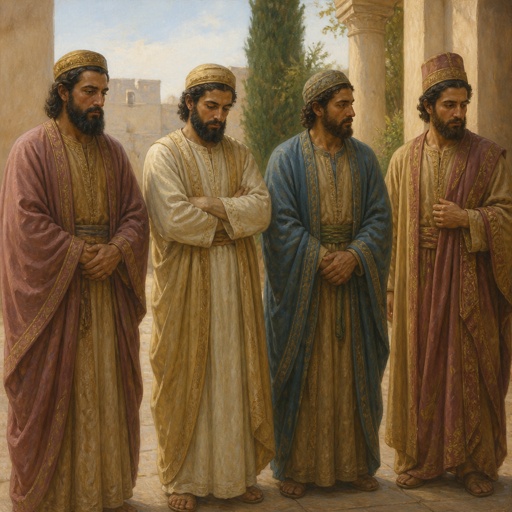
"And Parmashta, and Arisai, and Aridai, and Vajezatha," - Esther 9:9

Esther 9:31 - "To confirm these days of Purim in their times appointed, according as Mordecai the Jew and Esther the queen had enjoined them, and as they had decreed for themselves and for their seed, the matters of the fastings and their cry."

Esther 9:13 - "Then said Esther, If it please the king, let it be granted to the Jews which are in Shushan to do to morrow also according unto this day's decree, and let Haman's ten sons be hanged upon the gallows."

"And Parshandatha, and Dalphon, and Aspatha," - Esther 9:7

Esther 2:15 - "¶ Now when the turn of Esther, the daughter of Abihail the uncle of Mordecai, who had taken her for his daughter, was come to go in unto the king, she required nothing but what Hegai the king's chamberlain, the keeper of the women, appointed. And Esther obtained favour in the sight of all them that looked upon her."
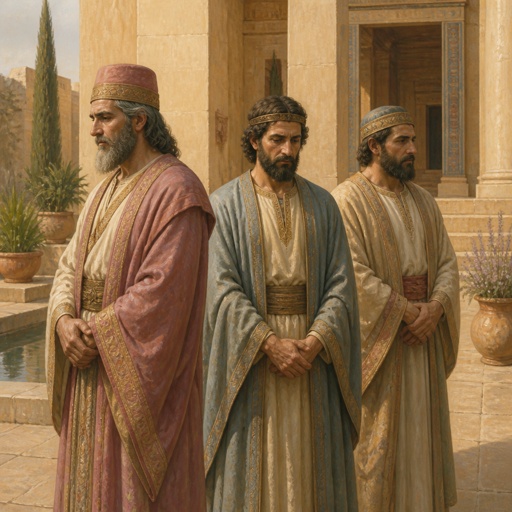
"And Poratha, and Adalia, and Aridatha," - Esther 9:8

Esther 9:6 - "And in Shushan the palace the Jews slew and destroyed five hundred men."

Esther 9:25 - "But when Esther came before the king, he commanded by letters that his wicked device, which he devised against the Jews, should return upon his own head, and that he and his sons should be hanged on the gallows."

Esther 9:10 - "The ten sons of Haman the son of Hammedatha, the enemy of the Jews, slew they; but on the spoil laid they not their hand."

Esther 9:11 - "On that day the number of those that were slain in Shushan the palace was brought before the king."

Esther 9:23 - "And the Jews undertook to do as they had begun, and as Mordecai had written unto them;"

"Then Esther the queen, the daughter of Abihail, and Mordecai the Jew, wrote with all authority, to confirm this second letter of Purim." - Esther 9:29

Esther 9:17 - "On the thirteenth day of the month Adar; and on the fourteenth day of the same rested they, and made it a day of feasting and gladness."

Esther 1:9 - "Also Vashti the queen made a feast for the women in the royal house which belonged to king Ahasuerus."

Esther 9:14 - "And the king commanded it so to be done: and the decree was given at Shushan; and they hanged Haman's ten sons."

Esther 9:21 - "To stablish this among them, that they should keep the fourteenth day of the month Adar, and the fifteenth day of the same, yearly,"

Esther 9:3 - "And all the rulers of the provinces, and the lieutenants, and the deputies, and officers of the king, helped the Jews; because the fear of Mordecai fell upon them."

Esther 9:30 - "And he sent the letters unto all the Jews, to the hundred twenty and seven provinces of the kingdom of Ahasuerus, with words of peace and truth,"