Embracing Joy and Generosity: The Feast of Purim
“Therefore the Jews of the villages, that dwelt in the unwalled towns, made the fourteenth day of the month Adar a day of gladness and feasting, and a good day, and of sending portions one to another.” — Esther 9:19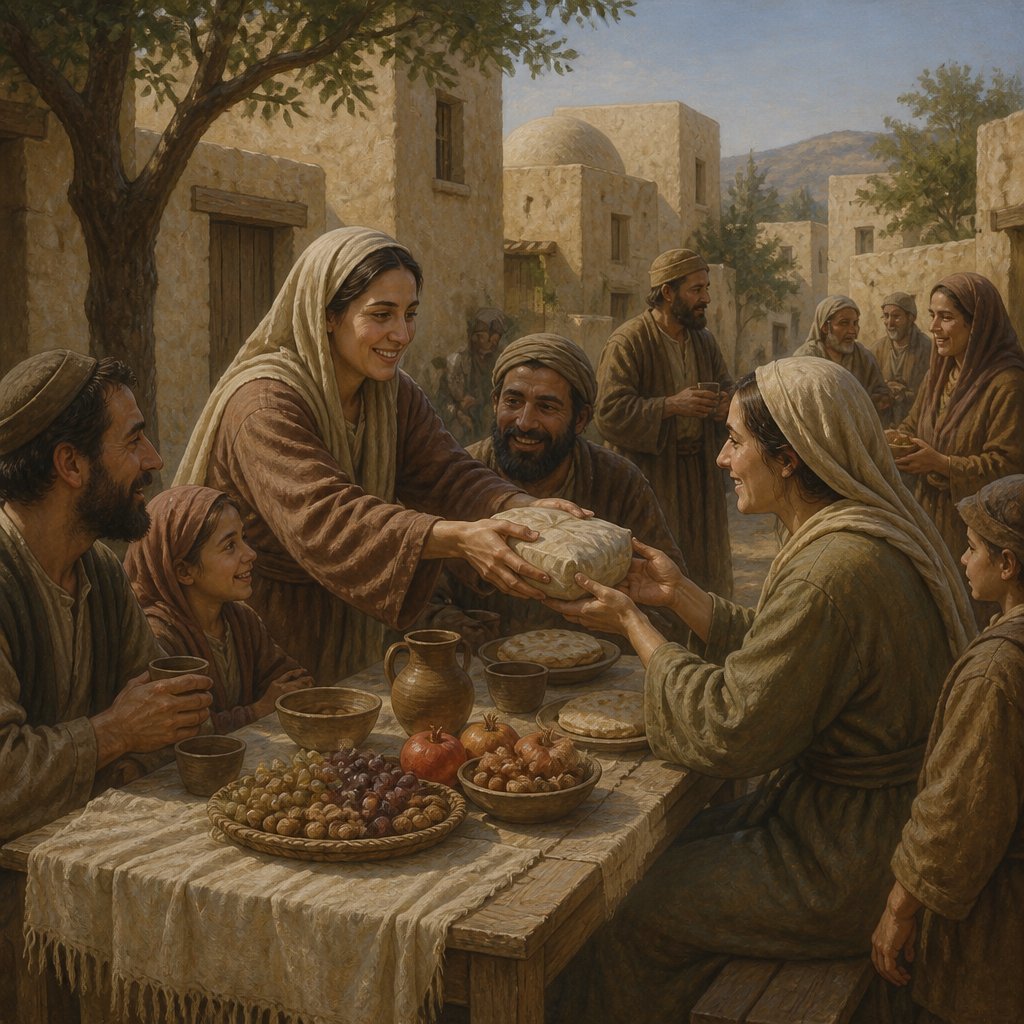
The book of Esther concludes with a poignant reminder of the importance of celebrating deliverance, community, and generosity. In Esther 9:19 (KJV), we find, "Therefore the Jews of the villages, that dwelt in the unwalled towns, made the fourteenth day of the month Adar a day of gladness and feasting, and a good day, and of sending portions one to another." This verse encapsulates the essence of what it means to live in the light of God's faithfulness.
### The Context of Celebration
To fully understand the significance of this celebration, we must revisit the narrative that has unfolded throughout the book of Esther. A plot to annihilate the Jews was foiled through divine intervention, with Esther's bravery and Mordecai's clever strategies playing pivotal roles. God’s providence was manifest in the events leading to the Jews’ salvation from destruction. Thus, the Jews celebrated, not just a victory over their enemies, but a profound and intimate connection with a God who saved them from impending doom.
### A Day of Gladness
The fourteenth day of Adar becomes a pivotal point for the Jewish people—a moment of joy and gratitude. It is essential to note that this joy is not circumstantial; rather, it is deeply rooted in their faith. The act of feasting, a symbol of communal joy, invites us to reflect on our communities today. How often do we gather to celebrate not just personal victories, but the collective triumphs that bring us together?
In our own lives, we are called to recognize and commemorate the times God has intervened, providing deliverance or comfort amidst trials. Just as the Jews took a day to express their gladness, we too should carve out moments to rejoice in God’s goodness and faithfulness. The practice of gratitude can transform our spirits, reminding us that joy is an active choice, a discipline that requires attention.
### Community and Sharing
Moreover, Esther 9:19 emphasizes the communal aspect of this celebration with the phrase “sending portions one to another.” This act of sharing signifies an important principle: that true joy overflows into acts of generosity. The Jews were not merely celebrating for themselves; they were including others in their joy, demonstrating that their deliverance had collective resonance.
In our Christian walks, we are called to embody this spirit of generosity. When we reflect on the blessings we've received—be it salvation, provision, or community—we should feel compelled to share these blessings with those around us. This is a sacred echo of the love we have experienced from Christ, who gave Himself wholly for us.
Sharing can take many forms: it might involve the giving of our time, resources, or even our presence to those in need. In Acts 20:35, Paul reminds us that “It is more blessed to give than to receive.” Our joy is magnified when we share it with others; it serves as a reminder that we are interconnected and responsible for one another's well-being.
### A Call to Action
The joyful celebration of the Feast of Purim calls us to reflect on how we commemorate God’s interventions in our lives. As we consider this verse, let us ask ourselves: how can we make gladness and feasting a more integral part of our community practices? What portions of our lives are we holding back from others in times of celebrated joy?
Let us commit to honoring God by recognizing His continual work around us and look for ways to express that by bringing joy to others. May our lives become a tapestry of blessings shared, reflecting the divine goodness that has so richly been bestowed upon us.
In conclusion, Esther 9:19 challenges us to embrace joy and practice generosity as markers of our faith. Let us be inspired by the Jews of Adar, celebrating not only our deliverance but also the privilege of sharing that joy with our neighbors, thereby glorifying the God who saves.
Get our apps


Artwork for Esther 9:19

Esther 9:19 - "Therefore the Jews of the villages, that dwelt in the unwalled towns, made the fourteenth day of the month Adar a day of gladness and feasting, and a good day, and of sending portions one to another."
"Therefore the Jews of the villages, that dwelt in the unwalled towns, made the fourteenth day of the month Adar a day of gladness and feasting, and a good day, and of sending portions one to another." - Esther 9:19

Esther 4:9 - "And Hatach came and told Esther the words of Mordecai."

Esther 9:32 - "And the decree of Esther confirmed these matters of Purim; and it was written in the book."

Esther 9:9 - "And Parmashta, and Arisai, and Aridai, and Vajezatha,"

Esther 9:29 - "Then Esther the queen, the daughter of Abihail, and Mordecai the Jew, wrote with all authority, to confirm this second letter of Purim."

"And Hatach came and told Esther the words of Mordecai." - Esther 4:9

Esther 9:8 - "And Poratha, and Adalia, and Aridatha,"

Esther 9:7 - "And Parshandatha, and Dalphon, and Aspatha,"

"And the decree of Esther confirmed these matters of Purim; and it was written in the book." - Esther 9:32
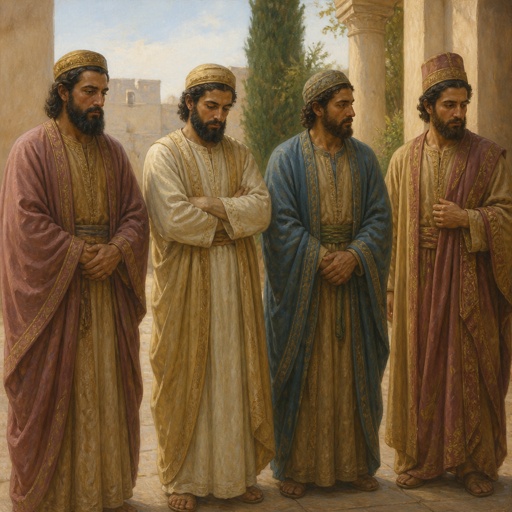
"And Parmashta, and Arisai, and Aridai, and Vajezatha," - Esther 9:9

Esther 9:31 - "To confirm these days of Purim in their times appointed, according as Mordecai the Jew and Esther the queen had enjoined them, and as they had decreed for themselves and for their seed, the matters of the fastings and their cry."

Esther 9:13 - "Then said Esther, If it please the king, let it be granted to the Jews which are in Shushan to do to morrow also according unto this day's decree, and let Haman's ten sons be hanged upon the gallows."

"And Parshandatha, and Dalphon, and Aspatha," - Esther 9:7
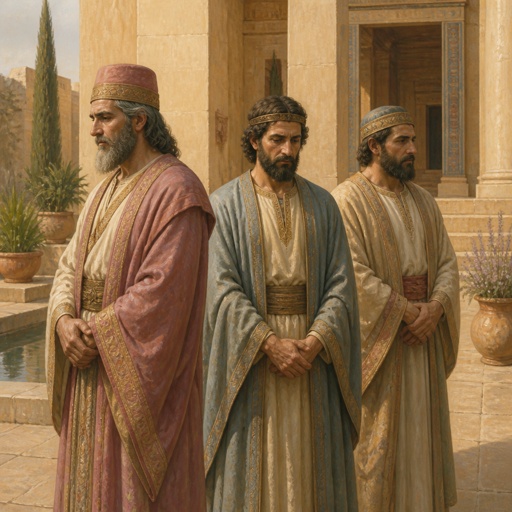
"And Poratha, and Adalia, and Aridatha," - Esther 9:8

Esther 2:19 - "And when the virgins were gathered together the second time, then Mordecai sat in the king's gate."

Esther 9:6 - "And in Shushan the palace the Jews slew and destroyed five hundred men."

Esther 9:25 - "But when Esther came before the king, he commanded by letters that his wicked device, which he devised against the Jews, should return upon his own head, and that he and his sons should be hanged on the gallows."

Esther 9:10 - "The ten sons of Haman the son of Hammedatha, the enemy of the Jews, slew they; but on the spoil laid they not their hand."

Esther 9:11 - "On that day the number of those that were slain in Shushan the palace was brought before the king."

Esther 9:23 - "And the Jews undertook to do as they had begun, and as Mordecai had written unto them;"

"Then Esther the queen, the daughter of Abihail, and Mordecai the Jew, wrote with all authority, to confirm this second letter of Purim." - Esther 9:29

Esther 9:17 - "On the thirteenth day of the month Adar; and on the fourteenth day of the same rested they, and made it a day of feasting and gladness."

Esther 1:9 - "Also Vashti the queen made a feast for the women in the royal house which belonged to king Ahasuerus."

Esther 9:14 - "And the king commanded it so to be done: and the decree was given at Shushan; and they hanged Haman's ten sons."

Esther 9:21 - "To stablish this among them, that they should keep the fourteenth day of the month Adar, and the fifteenth day of the same, yearly,"

Esther 9:3 - "And all the rulers of the provinces, and the lieutenants, and the deputies, and officers of the king, helped the Jews; because the fear of Mordecai fell upon them."

Esther 9:30 - "And he sent the letters unto all the Jews, to the hundred twenty and seven provinces of the kingdom of Ahasuerus, with words of peace and truth,"

Esther 9:12 - "¶ And the king said unto Esther the queen, The Jews have slain and destroyed five hundred men in Shushan the palace, and the ten sons of Haman; what have they done in the rest of the king's provinces? now what is thy petition? and it shall be granted thee: or what is thy request further? and it shall be done."

Esther 9:4 - "For Mordecai was great in the king's house, and his fame went out throughout all the provinces: for this man Mordecai waxed greater and greater."