The Power of Remembrance: Esther’s Legacy in Our Lives
“Then Esther the queen, the daughter of Abihail, and Mordecai the Jew, wrote with all authority, to confirm this second letter of Purim.” — Esther 9:29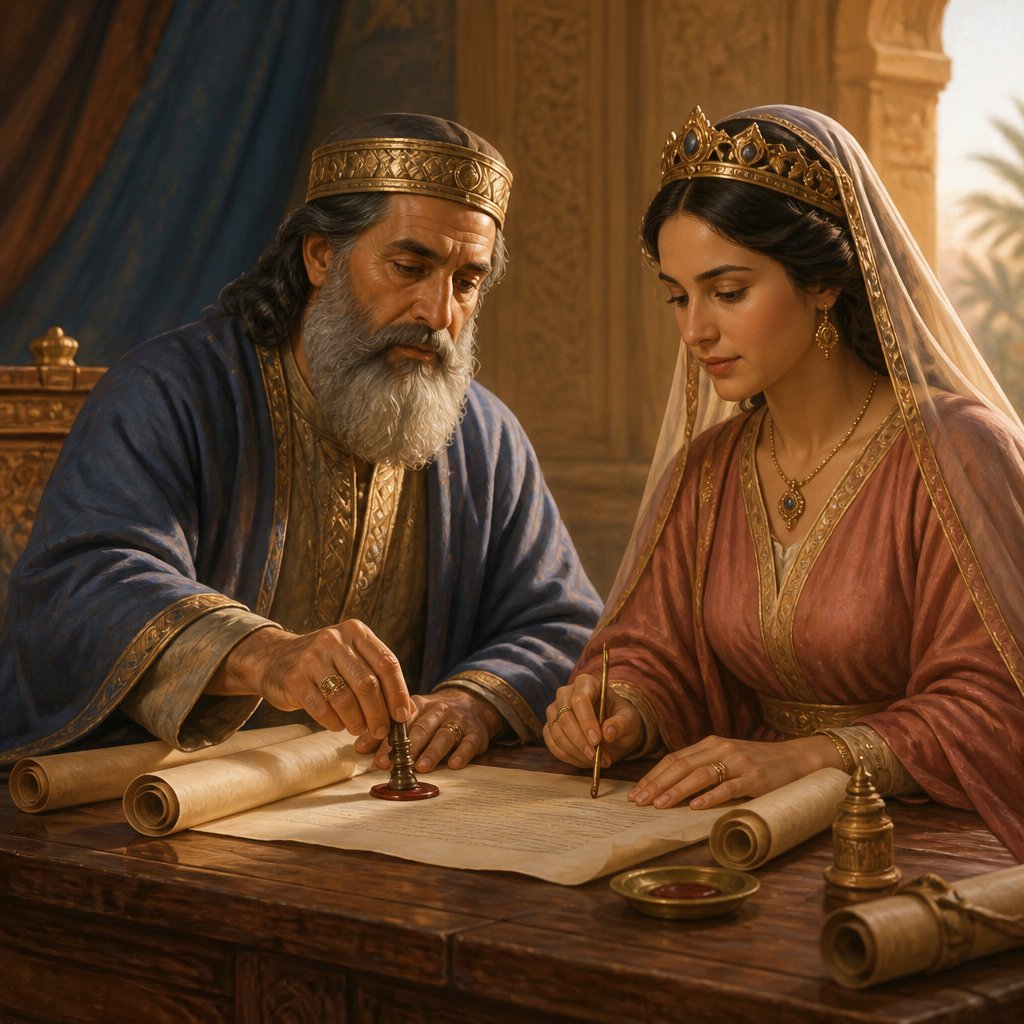
In the book of Esther, we encounter a profound and transformative moment within the Jewish tradition: the celebration of Purim. It is a time marked by joy, feasting, and remembrance, as the Jewish people commemorate their deliverance from the plans of Haman. In Esther 9:29, we read, "Then Esther the queen, the daughter of Abihail, and Mordecai the Jew, wrote with all authority, to confirm this second letter of Purim." As we delve into this verse, let us explore its implications for our lives today, the significance of authority in proclamation, and the importance of remembering the acts of God in our lives.
Initially, we notice that Esther and Mordecai, both pivotal figures in the salvation story of the Jews, affirm the necessity of remembrance. Esther, now the queen, steps confidently into her role, armed not only with her royal position but with the wisdom acquired through her trials. The authority she wields is not merely that of a queen, but of one who has witnessed the miraculous hand of God in her circumstances. This duality reminds us that true authority serves a higher purpose—it is meant for advancing God’s kingdom and ensuring the survival of His people.
The act of writing a letter to confirm the second celebration of Purim speaks volumes about the need to establish traditions that honor God’s faithfulness. Esther and Mordecai understood that for the Jewish people to thrive, they must not only survive but also remember and celebrate their deliverance. In light of this, how often do we take time to reflect upon and commemorate the moments in our own lives where we have experienced God’s intervention? Do we, like Esther, recognize the importance of this act and its impact on the generations to come?
In our contemporary society, where distractions abound, the discipline of remembrance can easily slip through our fingers. The story of Esther speaks an enduring truth: the practice of remembrance is a powerful tool to combat despair and encourage hope. When we intentionally look back at our lives or at the collective history of our faith, we find that God's hand has been at work, shaping our lives in ways we may never have noticed. The act of remembering fortifies our faith; it can inspire courage in the present and hope for the future.
We also come to consider the relational dynamics between Esther and Mordecai. Their mutual support illustrates a beautiful partnership in fulfilling God's purpose. Both characters, although different in their roles, share a common mission: to protect and preserve their people. In the body of Christ, each one of us has been gifted and called for specific purposes. We must work together, as Esther and Mordecai did, to ensure that God’s will is accomplished in our communities. Collaboration in faith amplifies our voices and strengthens our resolve; together, we can create lasting impacts on those around us.
As we engage with Esther 9:29, let us also reflect on our own authority—given to us by God. Each believer is empowered to share the stories of God’s faithfulness in their life. Perhaps this means writing letters to friends and family, sharing testimonies in community gatherings, or participating in church events that celebrate God’s goodness. We should be bold in proclaiming the wonder of God’s deliverance and grace in our lives.
Finally, as we draw this meditation to a close, let us ask ourselves: What reminders do we need to institute in our lives that will keep us anchored in God’s faithfulness? What practices can we adopt that will reinforce our community's understanding of who God is and what He has done? Just as Esther and Mordecai established the second letter of Purim to ensure their people remembered their deliverance, may we be inspired to cultivate a legacy of remembrance that honors God and encourages future generations.
Get our apps


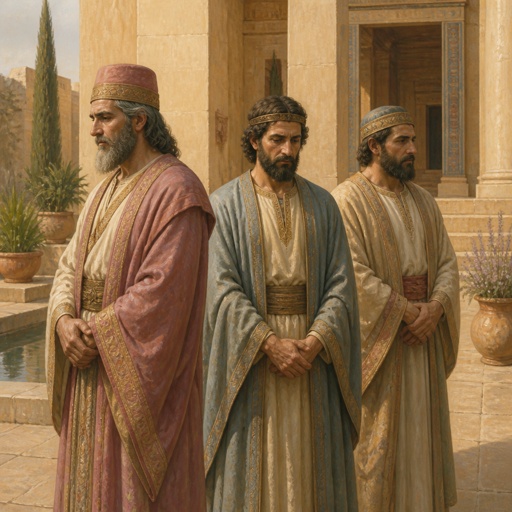
Artwork for Esther 9:29

Esther 9:29 - "Then Esther the queen, the daughter of Abihail, and Mordecai the Jew, wrote with all authority, to confirm this second letter of Purim."
"Then Esther the queen, the daughter of Abihail, and Mordecai the Jew, wrote with all authority, to confirm this second letter of Purim." - Esther 9:29

Esther 4:9 - "And Hatach came and told Esther the words of Mordecai."

Esther 9:32 - "And the decree of Esther confirmed these matters of Purim; and it was written in the book."

Esther 9:9 - "And Parmashta, and Arisai, and Aridai, and Vajezatha,"

"And Hatach came and told Esther the words of Mordecai." - Esther 4:9

Esther 9:8 - "And Poratha, and Adalia, and Aridatha,"

Esther 9:7 - "And Parshandatha, and Dalphon, and Aspatha,"

"And the decree of Esther confirmed these matters of Purim; and it was written in the book." - Esther 9:32
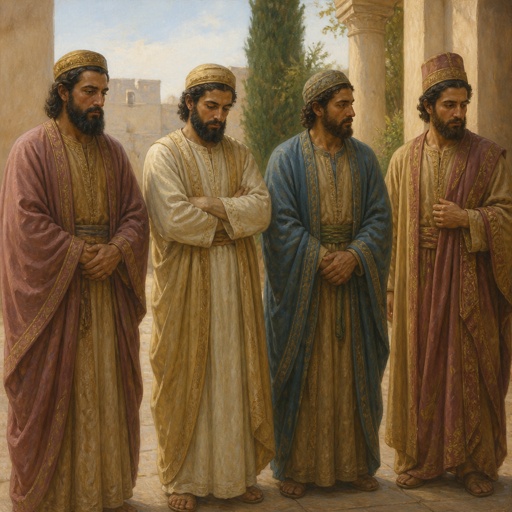
"And Parmashta, and Arisai, and Aridai, and Vajezatha," - Esther 9:9

Esther 9:31 - "To confirm these days of Purim in their times appointed, according as Mordecai the Jew and Esther the queen had enjoined them, and as they had decreed for themselves and for their seed, the matters of the fastings and their cry."

Esther 9:13 - "Then said Esther, If it please the king, let it be granted to the Jews which are in Shushan to do to morrow also according unto this day's decree, and let Haman's ten sons be hanged upon the gallows."
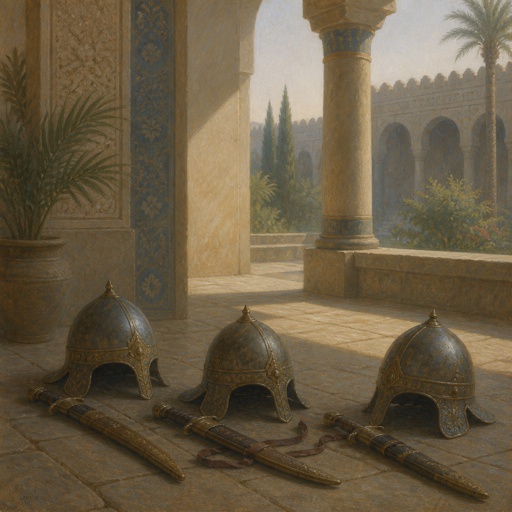
"And Parshandatha, and Dalphon, and Aspatha," - Esther 9:7
"And Poratha, and Adalia, and Aridatha," - Esther 9:8

Esther 9:6 - "And in Shushan the palace the Jews slew and destroyed five hundred men."

Esther 9:25 - "But when Esther came before the king, he commanded by letters that his wicked device, which he devised against the Jews, should return upon his own head, and that he and his sons should be hanged on the gallows."

Esther 9:10 - "The ten sons of Haman the son of Hammedatha, the enemy of the Jews, slew they; but on the spoil laid they not their hand."

Esther 9:11 - "On that day the number of those that were slain in Shushan the palace was brought before the king."

Esther 9:23 - "And the Jews undertook to do as they had begun, and as Mordecai had written unto them;"

Esther 9:17 - "On the thirteenth day of the month Adar; and on the fourteenth day of the same rested they, and made it a day of feasting and gladness."

Esther 1:9 - "Also Vashti the queen made a feast for the women in the royal house which belonged to king Ahasuerus."

Esther 9:14 - "And the king commanded it so to be done: and the decree was given at Shushan; and they hanged Haman's ten sons."

Esther 9:21 - "To stablish this among them, that they should keep the fourteenth day of the month Adar, and the fifteenth day of the same, yearly,"

Esther 9:3 - "And all the rulers of the provinces, and the lieutenants, and the deputies, and officers of the king, helped the Jews; because the fear of Mordecai fell upon them."

Esther 9:30 - "And he sent the letters unto all the Jews, to the hundred twenty and seven provinces of the kingdom of Ahasuerus, with words of peace and truth,"

Esther 9:12 - "¶ And the king said unto Esther the queen, The Jews have slain and destroyed five hundred men in Shushan the palace, and the ten sons of Haman; what have they done in the rest of the king's provinces? now what is thy petition? and it shall be granted thee: or what is thy request further? and it shall be done."

Esther 9:4 - "For Mordecai was great in the king's house, and his fame went out throughout all the provinces: for this man Mordecai waxed greater and greater."

Esther 9:5 - "Thus the Jews smote all their enemies with the stroke of the sword, and slaughter, and destruction, and did what they would unto those that hated them."

Esther 9:20 - "¶ And Mordecai wrote these things, and sent letters unto all the Jews that were in all the provinces of the king Ahasuerus, both nigh and far,"

"And in Shushan the palace the Jews slew and destroyed five hundred men." - Esther 9:6