Letters of Peace: A Journey Through Esther 9:30
“And he sent the letters unto all the Jews, to the hundred twenty and seven provinces of the kingdom of Ahasuerus, with words of peace and truth,” — Esther 9:30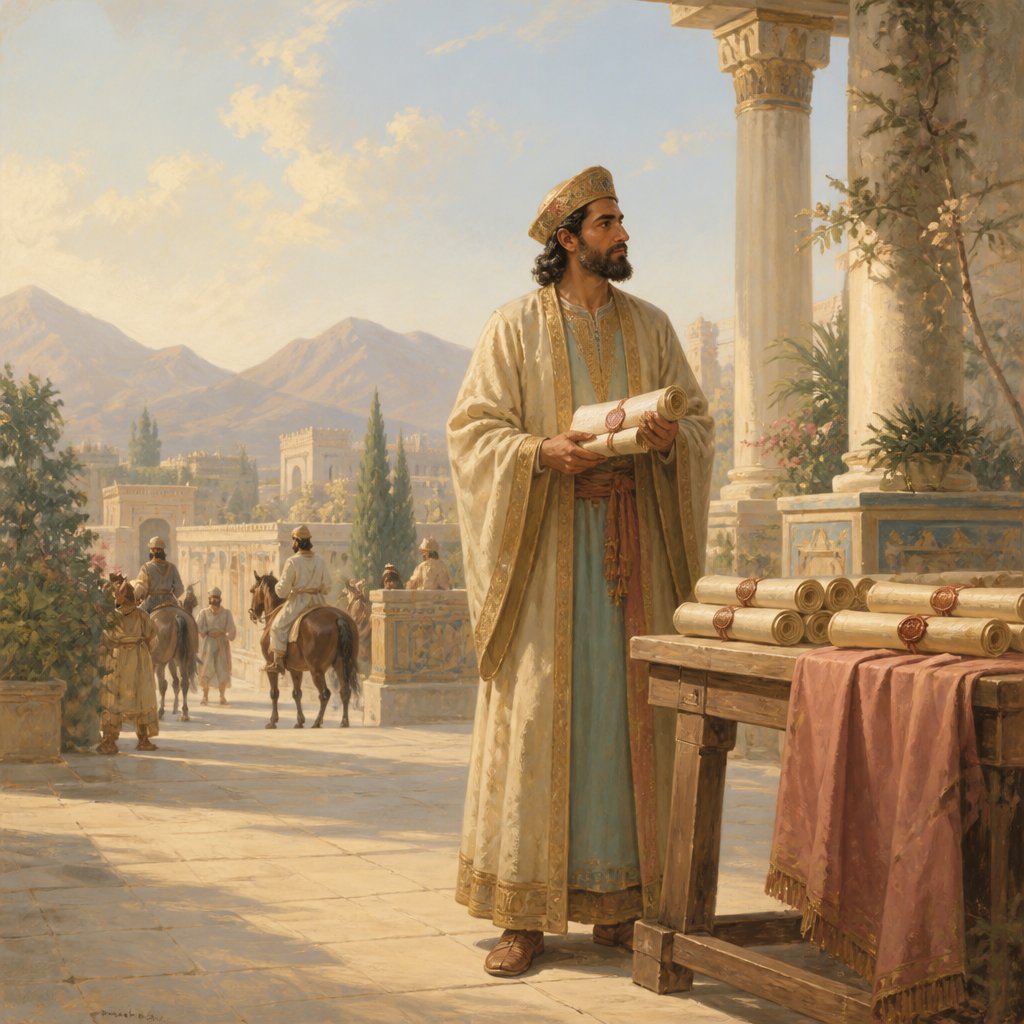
The book of Esther profoundly showcases the providence of God in the lives of His people, and within its pages, we find a multitude of lessons that resonate beyond the historical context. Specifically, Esther 9:30 presents a powerful moment of communication that bears significant weight not only for the Jews of that time but also for us today: "And he sent the letters unto all the Jews, to the hundred twenty and seven provinces of the kingdom of Ahasuerus, with words of peace and truth."
In understanding this verse, we need to appreciate the circumstances surrounding it. The Jews were on the brink of annihilation, threatened by Haman’s wicked decree. Yet, through Esther's courageous actions and Mordecai’s wisdom, they were delivered. In the aftermath of this deliverance, the sending of letters to the Jews across the expansive territory of Ahasuerus' kingdom was emblematic of hope, assurance, and the settling of hearts that had been filled with fear and uncertainty.
### The Power of Communication
When we think about communication, especially in our modern context of instant messaging and social media, we often overlook the power a letter holds. A letter, in the time of Esther, was not merely a piece of written paper; it was a vessel of words that could change hearts and minds. Mordecai chose his words carefully, and those words brought peace to a people who had experienced the anguish of impending doom.
Mordecai's letters were marked by "peace and truth." This duality is vital in our personal communications as well. The pursuit of peace is universal; however, true peace cannot be achieved without first grounding our words in truth. In a world plagued by misinformation and deceit, Christians are called to be ambassadors of truth, speaking authentically and lovingly in every interaction.
### A Message for All
The outreach of Mordecai's letters to "all the Jews" signifies inclusivity and the importance of unity among God’s people. Our faith calls us to extend words of peace not only to those who are like-minded but to all, particularly during tumultuous times. Just as the letters were sent across 127 provinces, God urges us to transcend our immediate circles of influence and reach out far and wide. How can we embody this practice in our community today? It could be through encouraging words, acts of service, or even letters of our own, letting others know about the peace found in Christ.
### Celebrating Deliverance and Identity
The letters also served as a reminder of their newfound identity, blessed by divine intervention. Following their deliverance, the Jewish people instituted Purim, a celebration of their salvation. They honored this event through sending gifts and showing gratitude. When we reflect on how God has delivered us from our own trials—be it sin, fear, or doubt—we are called to celebrate His goodness and share that joy with others. How often do we express thankfulness for God’s provisions and grace? How can we actively celebrate and promote the goodness of God in our lives today?
### Living Out Peace and Truth
In a world that often seems chaotic, we can take active steps to echo the essence of Mordecai's letters. As followers of Christ, we are called to reflect the peace that surpasses all understanding (Philippians 4:7) and to bear witness to the truth of God’s word (John 8:32). Let us be diligent in our prayers, intentional in our communications, and unwavering in our commitment to both peace and truth.
In closing, Esther 9:30 reminds us that even in the face of adversity, God provides ways for His people to find hope and unity. Let us be messengers of peace, shrouded in truth, spreading the legacy of Christ’s love in our words and actions—effectively bridging our communities and influencing those in distant places.
Get our apps


Artwork for Esther 9:30

Esther 9:30 - "And he sent the letters unto all the Jews, to the hundred twenty and seven provinces of the kingdom of Ahasuerus, with words of peace and truth,"
"And he sent the letters unto all the Jews, to the hundred twenty and seven provinces of the kingdom of Ahasuerus, with words of peace and truth," - Esther 9:30

Esther 4:9 - "And Hatach came and told Esther the words of Mordecai."

Esther 9:32 - "And the decree of Esther confirmed these matters of Purim; and it was written in the book."

Esther 9:9 - "And Parmashta, and Arisai, and Aridai, and Vajezatha,"

Esther 9:29 - "Then Esther the queen, the daughter of Abihail, and Mordecai the Jew, wrote with all authority, to confirm this second letter of Purim."

"And Hatach came and told Esther the words of Mordecai." - Esther 4:9

Esther 9:8 - "And Poratha, and Adalia, and Aridatha,"

Esther 9:7 - "And Parshandatha, and Dalphon, and Aspatha,"

"And the decree of Esther confirmed these matters of Purim; and it was written in the book." - Esther 9:32
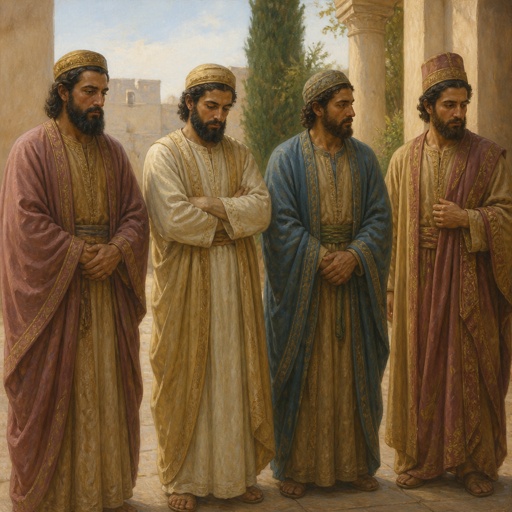
"And Parmashta, and Arisai, and Aridai, and Vajezatha," - Esther 9:9

Esther 9:31 - "To confirm these days of Purim in their times appointed, according as Mordecai the Jew and Esther the queen had enjoined them, and as they had decreed for themselves and for their seed, the matters of the fastings and their cry."

Esther 9:13 - "Then said Esther, If it please the king, let it be granted to the Jews which are in Shushan to do to morrow also according unto this day's decree, and let Haman's ten sons be hanged upon the gallows."

"And Parshandatha, and Dalphon, and Aspatha," - Esther 9:7
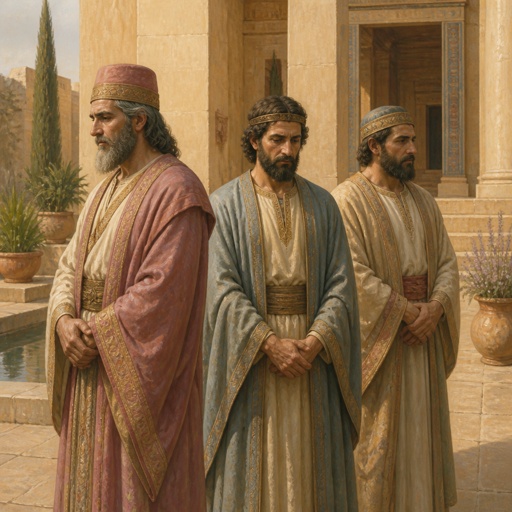
"And Poratha, and Adalia, and Aridatha," - Esther 9:8

Esther 9:6 - "And in Shushan the palace the Jews slew and destroyed five hundred men."

Esther 9:25 - "But when Esther came before the king, he commanded by letters that his wicked device, which he devised against the Jews, should return upon his own head, and that he and his sons should be hanged on the gallows."

Esther 9:10 - "The ten sons of Haman the son of Hammedatha, the enemy of the Jews, slew they; but on the spoil laid they not their hand."

Esther 9:11 - "On that day the number of those that were slain in Shushan the palace was brought before the king."

Esther 9:23 - "And the Jews undertook to do as they had begun, and as Mordecai had written unto them;"
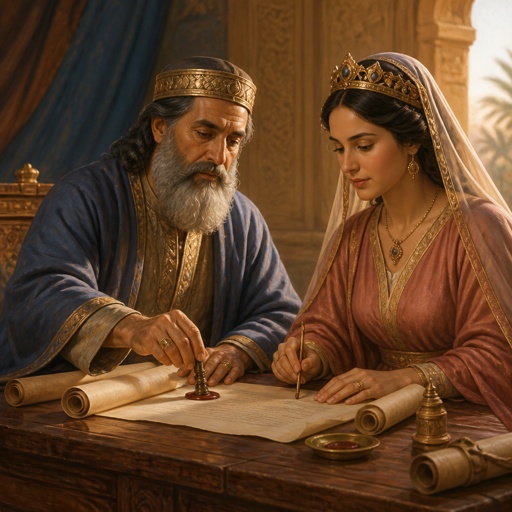
"Then Esther the queen, the daughter of Abihail, and Mordecai the Jew, wrote with all authority, to confirm this second letter of Purim." - Esther 9:29

Esther 9:17 - "On the thirteenth day of the month Adar; and on the fourteenth day of the same rested they, and made it a day of feasting and gladness."

Esther 1:9 - "Also Vashti the queen made a feast for the women in the royal house which belonged to king Ahasuerus."

Esther 9:14 - "And the king commanded it so to be done: and the decree was given at Shushan; and they hanged Haman's ten sons."

Esther 9:21 - "To stablish this among them, that they should keep the fourteenth day of the month Adar, and the fifteenth day of the same, yearly,"

Esther 9:3 - "And all the rulers of the provinces, and the lieutenants, and the deputies, and officers of the king, helped the Jews; because the fear of Mordecai fell upon them."

Esther 9:12 - "¶ And the king said unto Esther the queen, The Jews have slain and destroyed five hundred men in Shushan the palace, and the ten sons of Haman; what have they done in the rest of the king's provinces? now what is thy petition? and it shall be granted thee: or what is thy request further? and it shall be done."

Esther 9:4 - "For Mordecai was great in the king's house, and his fame went out throughout all the provinces: for this man Mordecai waxed greater and greater."

Esther 9:5 - "Thus the Jews smote all their enemies with the stroke of the sword, and slaughter, and destruction, and did what they would unto those that hated them."

Esther 9:20 - "¶ And Mordecai wrote these things, and sent letters unto all the Jews that were in all the provinces of the king Ahasuerus, both nigh and far,"