Victory Through Faith: Understanding Esther 9:5
“Thus the Jews smote all their enemies with the stroke of the sword, and slaughter, and destruction, and did what they would unto those that hated them.” — Esther 9:5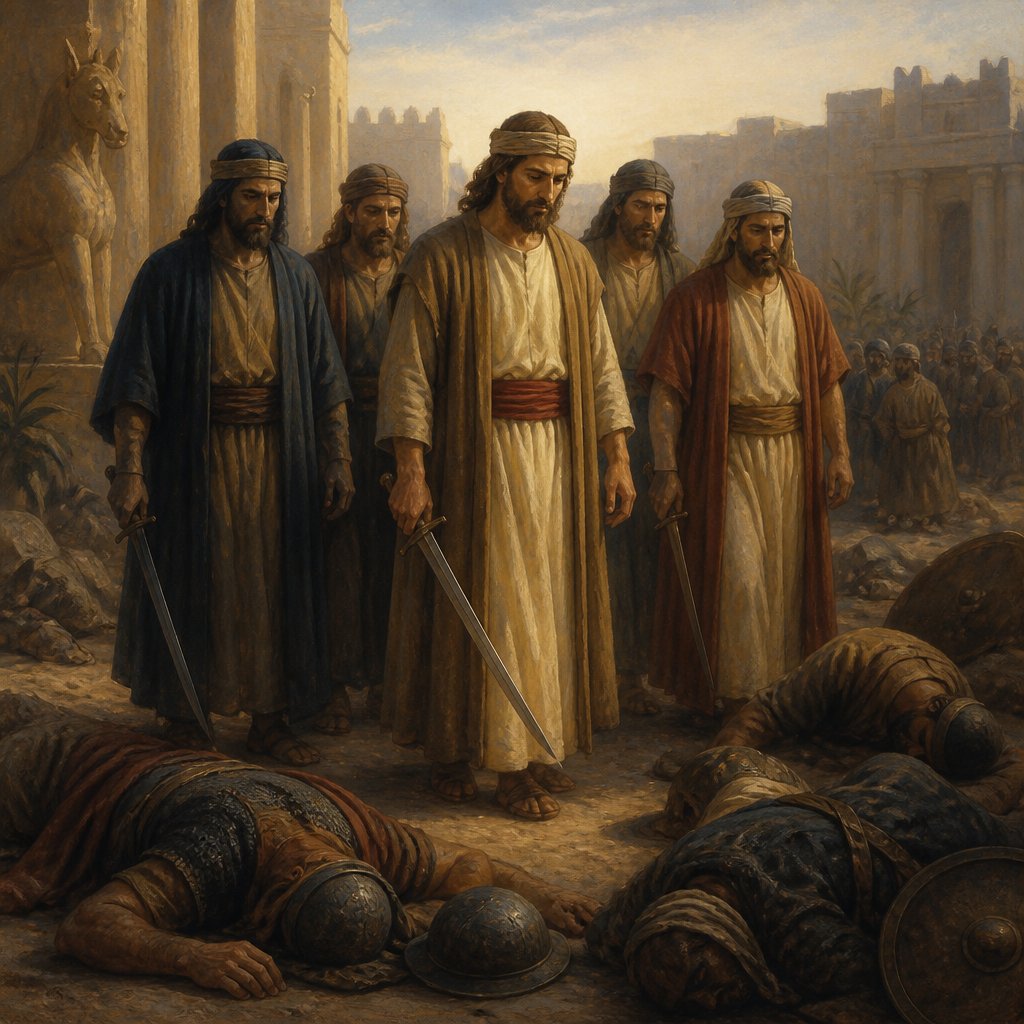
In the book of Esther, we encounter a profound moment of triumph for the Jewish people, encapsulated succinctly in the verse, "Thus the Jews smote all their enemies with the stroke of the sword, and slaughter, and destruction, and did what they would unto those that hated them" (Esther 9:5, KJV). This passage echoes the themes of deliverance, justice, and the sovereignty of God amid dire circumstances. As we meditate on this verse, we are led to explore the significance of divine intervention and the fervent faith displayed by Esther and her people.
The narrative of Esther unfolds against a backdrop of impending doom, where the Jewish people faced extermination at the hands of Haman, a powerful official in the Persian Empire. Esther, a Jewish queen, displayed unprecedented courage as she bravely approached King Ahasuerus to plead for her people’s lives. This moment of advocacy is crucial because it shows us that God often uses ordinary people in extraordinary circumstances to fulfill His will. Esther's willingness to act, despite the risk to her own life, exemplifies faith that believes in God's providential care and timing.
In Esther 9:5, the words "smote," "slaughter," and "destruction" evoke a visceral imagery of battle. But this confrontation is not merely a physical one; it is also a spiritual triumph. Throughout Scripture, we see that battles often serve as metaphors for spiritual warfare. In Esther’s case, her people were not just fighting against flesh and blood, but against the forces of evil that manifested through Haman's conspiracy. The victory they achieved in their physical struggle reflects a deeper truth: that God stands with His people in their fight for justice and life, guided by His laws and righteousness.
As believers, we might find ourselves grappling with ‘enemies’ in our spiritual journey—be it fear, doubt, temptation, or even external adversities that threaten our peace. In times of distress, we can draw inspiration from Esther's resolve and strategic prayer. Prayer was pivotal; Esther gathered her courage and sought divine intervention through fasting and supplication. It reminds us that our battles are fought not solely through physical means but through deep spiritual engagement with the Lord. Philippians 4:6-7 encourages us not to be anxious but to present our requests to God through prayer, promising us peace that surpasses all understanding.
Also, Esther's account teaches us about God's justice; the downfall of Haman is a testimony that those who plot evil will ultimately face the consequences of their actions—echoing the timeless truth in Proverbs 16:7: "When a man's ways please the Lord, he maketh even his enemies to be at peace with him" (KJV). The Jewish people's victory over their enemies does not glorify violence but underscores the importance God places on justice and righteousness. They acted not in a spirit of vengeance but through divine providence, which bolstered their resolve and empowered their hands.
As we reflect upon Esther 9:5, we must also be mindful of our identities as God’s chosen people, called to stand firm and resist the forces of darkness. We are reminded that our battles may look different but the call to be bold, to seek justice, and to strive for the deliverance of those under oppression is timeless. Just as Esther rose to the challenge, so too are we called to be advocates for truth, righteousness, and freedom.
In conclusion, Esther 9:5 should inspire us to boldly confront the 'enemies' in our lives through prayer, action, and righteous living. As we wield the sword of the Spirit (Ephesians 6:17), let us remember that God fights alongside us, guiding our steps and ensuring that justice prevails in His perfect timing. Let us hold fast to the promise that nothing can stand against His purpose for us, and take heart in His assurance that in Him, we are more than conquerors.
Get our apps


Artwork for Esther 9:5

Esther 9:5 - "Thus the Jews smote all their enemies with the stroke of the sword, and slaughter, and destruction, and did what they would unto those that hated them."
"Thus the Jews smote all their enemies with the stroke of the sword, and slaughter, and destruction, and did what they would unto those that hated them." - Esther 9:5

Esther 5:5 - "Then the king said, Cause Haman to make haste, that he may do as Esther hath said. So the king and Haman came to the banquet that Esther had prepared."

Esther 4:9 - "And Hatach came and told Esther the words of Mordecai."

Esther 9:32 - "And the decree of Esther confirmed these matters of Purim; and it was written in the book."

Esther 5:7 - "Then answered Esther, and said, My petition and my request is;"

Esther 9:9 - "And Parmashta, and Arisai, and Aridai, and Vajezatha,"

Esther 5:2

Esther 5:2 - "And it was so, when the king saw Esther the queen standing in the court, that she obtained favour in his sight: and the king held out to Esther the golden sceptre that was in his hand. So Esther drew near, and touched the top of the sceptre."

Esther 9:29 - "Then Esther the queen, the daughter of Abihail, and Mordecai the Jew, wrote with all authority, to confirm this second letter of Purim."

Esther 5:9 - "¶ Then went Haman forth that day joyful and with a glad heart: but when Haman saw Mordecai in the king's gate, that he stood not up, nor moved for him, he was full of indignation against Mordecai."

Esther 5:2

Esther 5:2

"And Hatach came and told Esther the words of Mordecai." - Esther 4:9

Esther 9:8 - "And Poratha, and Adalia, and Aridatha,"

Esther 9:7 - "And Parshandatha, and Dalphon, and Aspatha,"

"And the decree of Esther confirmed these matters of Purim; and it was written in the book." - Esther 9:32
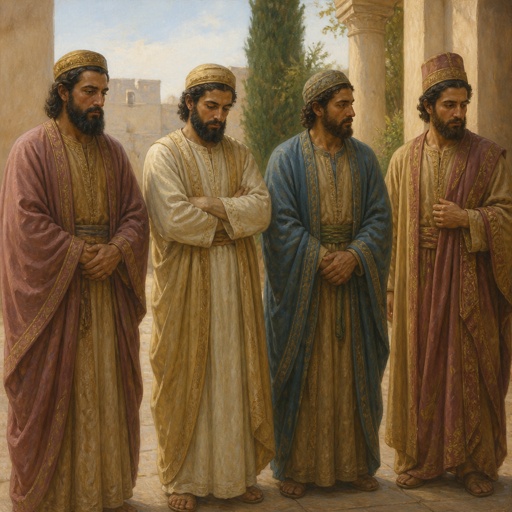
"And Parmashta, and Arisai, and Aridai, and Vajezatha," - Esther 9:9

Esther 5:4 - "And Esther answered, If it seem good unto the king, let the king and Haman come this day unto the banquet that I have prepared for him."
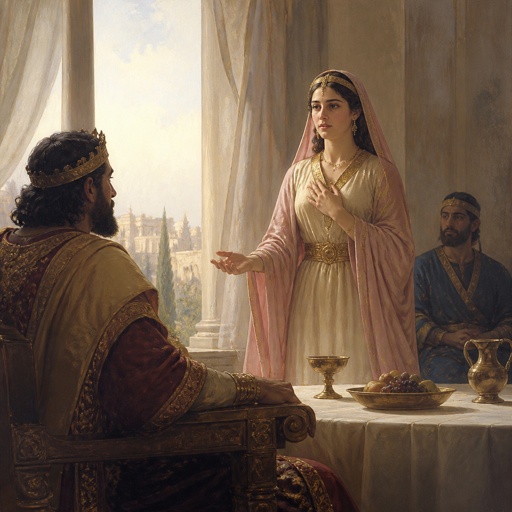
"Then answered Esther, and said, My petition and my request is;" - Esther 5:7

Esther 5:3 - "Then said the king unto her, What wilt thou, queen Esther? and what is thy request? it shall be even given thee to the half of the kingdom."

Esther 7:5 - "¶ Then the king Ahasuerus answered and said unto Esther the queen, Who is he, and where is he, that durst presume in his heart to do so?"

Esther 5:9-13 - "Esther 5:9-13: Then Haman went out that day joyful and with a glad heart; but when Haman saw Mordecai in the king’s gate, and that he did not stand or tremble before him, he was filled with indignation against Mordecai. Nevertheless Haman restrained himself and went home, and he sent and called for his friends and his wife Zeresh. Then Haman told them of his great riches, the multitude of his children, everything in which the king had promoted him, and how he had advanced him above the officials and servants of the king. Moreover Haman said, “Besides, Queen Esther invited no one but me to come in with the king to the banquet that she prepared; and tomorrow I am again invited by her, along with the king. Yet all this avails me nothing, so long as I see Mordecai the Jew sitting at the king’s gate.”"

Esther 5:2 - "And it was so, when the king saw Esther the queen standing in the court, that she obtained favour in his sight: and the king held out to Esther the golden sceptre that was in his hand. So Esther drew near, and touched the top of the sceptre."
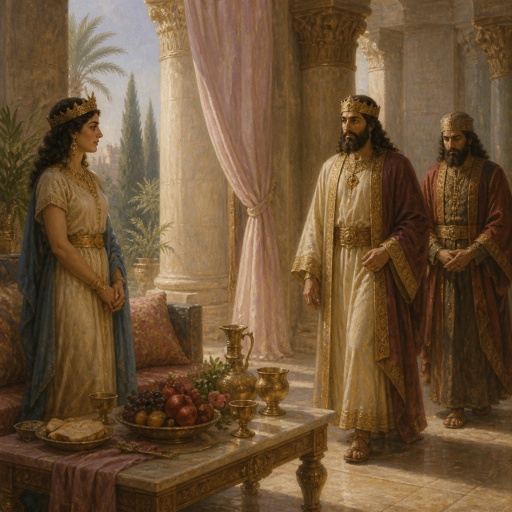
"Then the king said, Cause Haman to make haste, that he may do as Esther hath said. So the king and Haman came to the banquet that Esther had prepared." - Esther 5:5

Esther 4:5 - "Then called Esther for Hatach, one of the king's chamberlains, whom he had appointed to attend upon her, and gave him a commandment to Mordecai, to know what it was, and why it was."

Esther 9:31 - "To confirm these days of Purim in their times appointed, according as Mordecai the Jew and Esther the queen had enjoined them, and as they had decreed for themselves and for their seed, the matters of the fastings and their cry."

Esther 9:13 - "Then said Esther, If it please the king, let it be granted to the Jews which are in Shushan to do to morrow also according unto this day's decree, and let Haman's ten sons be hanged upon the gallows."

Esther 5:6 - "¶ And the king said unto Esther at the banquet of wine, What is thy petition? and it shall be granted thee: and what is thy request? even to the half of the kingdom it shall be performed."
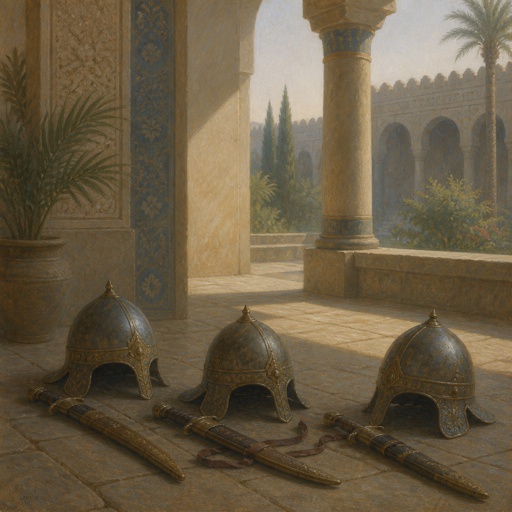
"And Parshandatha, and Dalphon, and Aspatha," - Esther 9:7