The Hand of God: A Study on Divine Authority and Judgment
“And the LORD said unto Moses, Stretch out thine hand over the land of Egypt for the locusts, that they may come up upon the land of Egypt, and eat every herb of the land, even all that the hail hath left.” — Exodus 10:12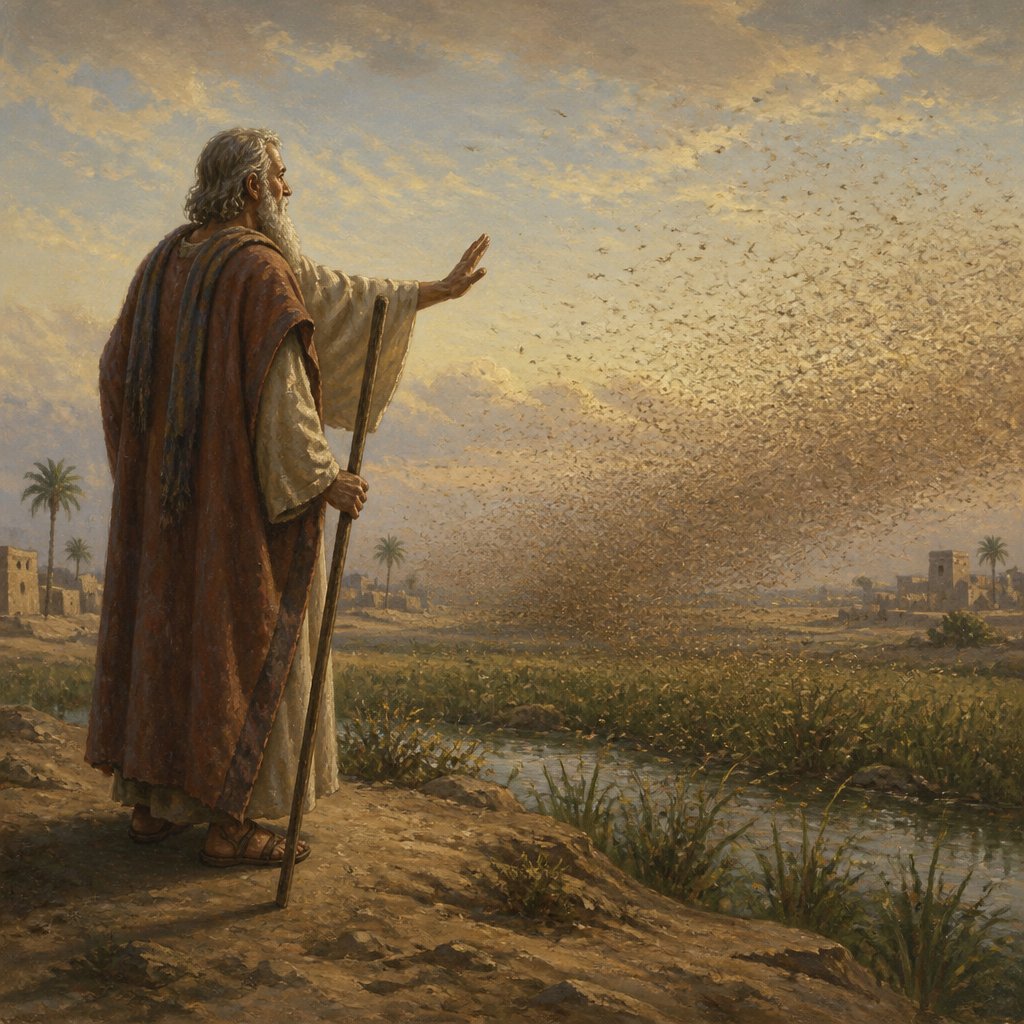
As we delve into the rich tapestry of the Book of Exodus, we encounter profound themes of obedience, divine judgment, and God’s sovereignty over creation. The verse Exodus 10:12 states, "And the LORD said unto Moses, Stretch out thine hand over the land of Egypt for the locusts, that they may come up upon the land of Egypt, and eat every herb of the land, even all that the hail hath left." This moment in scripture serves as a pivotal point in the narrative of the plagues, each a demonstration of God's power and a call to the hearts of His people.
To reflect upon the verse, we must first consider the context in which it is set. The Israelites, enslaved in Egypt, were at the mercy of Pharaoh, a ruler whose heart was hardened against God’s command to let His people go. The plagues that God sent were not just acts of destruction but were also significant warnings and calls to repentance for Egypt, as well as profound assurances of God’s providence and protection for the Israelites.
The act of Moses stretching out his hand is symbolic of authority and obedience. In scripture, hands are often regarded as instruments of action. When God commands Moses to stretch out his hand, it signifies trust and reliance on God's direction. Moses’ actions were not merely physical; they encompassed spiritual obedience to fulfill God’s will on Earth. In our lives, God calls us to action, often requiring us to stretch out our hands—whether to serve, to love, or to proclaim the gospel, all while trusting that we are under divine authority, just like Moses.
The locusts, sent as a result of Moses' obedience, symbolize a consuming force of judgment. Locusts in ancient times were feared for their ability to devastate crops and reduce once fertile fields into barren land. This illustrates the dire consequences of rebellion against God. Each herb consumed represented a potential for sustenance lost because of disobedience, not solely for the Egyptians but as a reflection of the consequences of sin in our own lives. God’s desires for His people are for them to flourish, but disobedience leads to spiritual famine.
In verses prior, we read of the devastation wrought by hail, a previous plague designed to demonstrate God’s might. Now, God uses locusts to ensure nothing remains. It serves as a reminder of how sin can compound, leaving us with nothing after its devastation. When God allows judgment in our own lives, it is not arbitrary but rather a divine opportunity for reflection, repentance, and restoration.
The imagery of nature responding to the command of God is awe-inspiring. The locusts act as agents of God’s will, swarming in obedience to the commanded stretch of Moses’ hand. How often do we see nature executing God’s commands to its fullest? This instance highlights the sovereignty of God over creation; nothing is beyond his control, from the small insects to the vast seas. It beckons us to remember that our God is not distant but actively orchestrates the events of our lives in His divine narrative.
As we consider what it means to stretch out our hands in faith, let us remind ourselves of the power behind that act. Just as Moses’ stretched-out hand signified obedience and facilitated God’s judgment, so too can our actions manifest God’s glory on Earth. We are called to stand as faithful servants, presenting ourselves ready to respond to His call, even when the purpose may seem beyond our understanding.
In plush and verdant lands where blessings overflow, let us not become complacent or forgetful of the God who provides. Likewise, in barrenness or hardship, let us always remember that God's hand is still upon us, shaping our paths for His glory. As we learn from Moses, may we too stretch forth our hands, trusting in God's perfect will—knowing that through our obedience, even the darkest moments can be transformed into instruments of His divine purpose.
Get our apps


Artwork for Exodus 10:12

Exodus 10:12

Exodus 10:12

Exodus 10:12

Exodus 10:12 - "¶ And the LORD said unto Moses, Stretch out thine hand over the land of Egypt for the locusts, that they may come up upon the land of Egypt, and eat every herb of the land, even all that the hail hath left."
"¶ And the LORD said unto Moses, Stretch out thine hand over the land of Egypt for the locusts, that they may come up upon the land of Egypt, and eat every herb of the land, even all that the hail hath left." - Exodus 10:12

Exodus 12:10 - "And ye shall let nothing of it remain until the morning; and that which remaineth of it until the morning ye shall burn with fire."

Exodus 12:12

Exodus 3:12

Exodus 3:12

Exodus 3:12

Exodus 3:12

Exodus 3:12

Exodus 12:33

Exodus 12:7
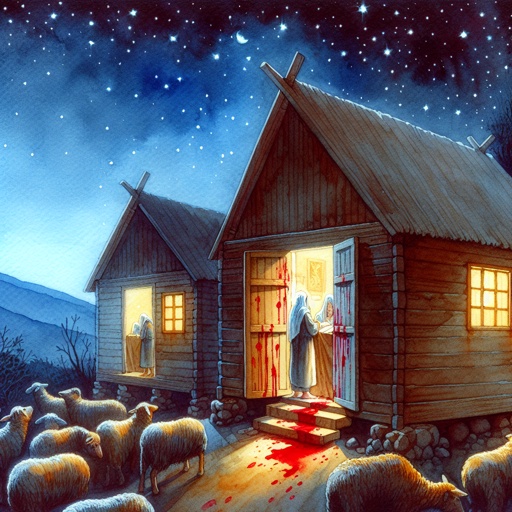
Exodus 12:13

Exodus 3:12

Exodus 3:12

Exodus 12:7

Exodus 7:10

Exodus 7:10
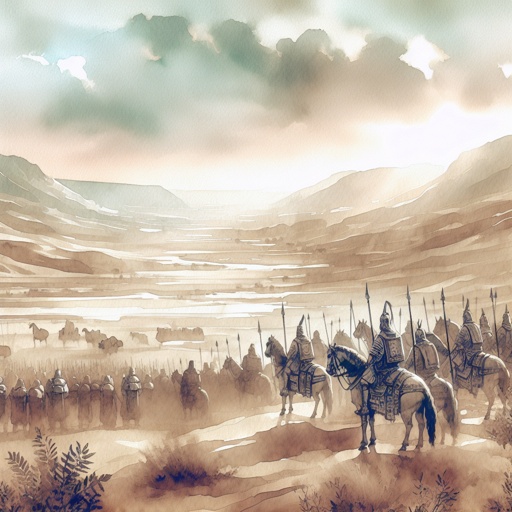
Exodus 17:10

Exodus 7:10-12 KJV (10) And Moses and Aaron went in unto Pharaoh, and they did so as the LORD had commanded: and Aaron cast down his rod before Pharaoh, and before his servants, and it became a serpent. (11) Then Pharaoh also called the wise men and the sorcerers: now the magicians of Egypt, they also did in like manner with their enchantments. (12) For they cast down every man his rod, and they became serpents: but Aaron's rod swallowed up their rods.
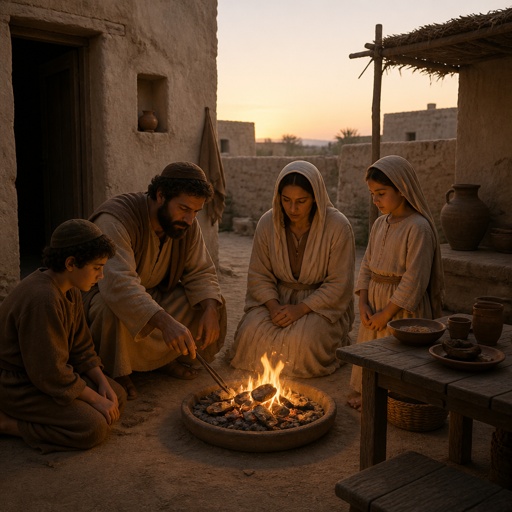
"And ye shall let nothing of it remain until the morning; and that which remaineth of it until the morning ye shall burn with fire." - Exodus 12:10

Exodus 12:1-19

Exodus 25:10-22

Ezra 10:10-12

Exodus 39:12 - "And the third row, a ligure, an agate, and an amethyst."

Exodus 31:12 - "¶ And the LORD spake unto Moses, saying,"

Exodus 12:47 - "All the congregation of Israel shall keep it."

Exodus 6:10 - "And the LORD spake unto Moses, saying,"