In the Desert of Despair: Learning from Moses’ Cry
“And Moses cried unto the LORD, saying, What shall I do unto this people? they be almost ready to stone me.” — Exodus 17:4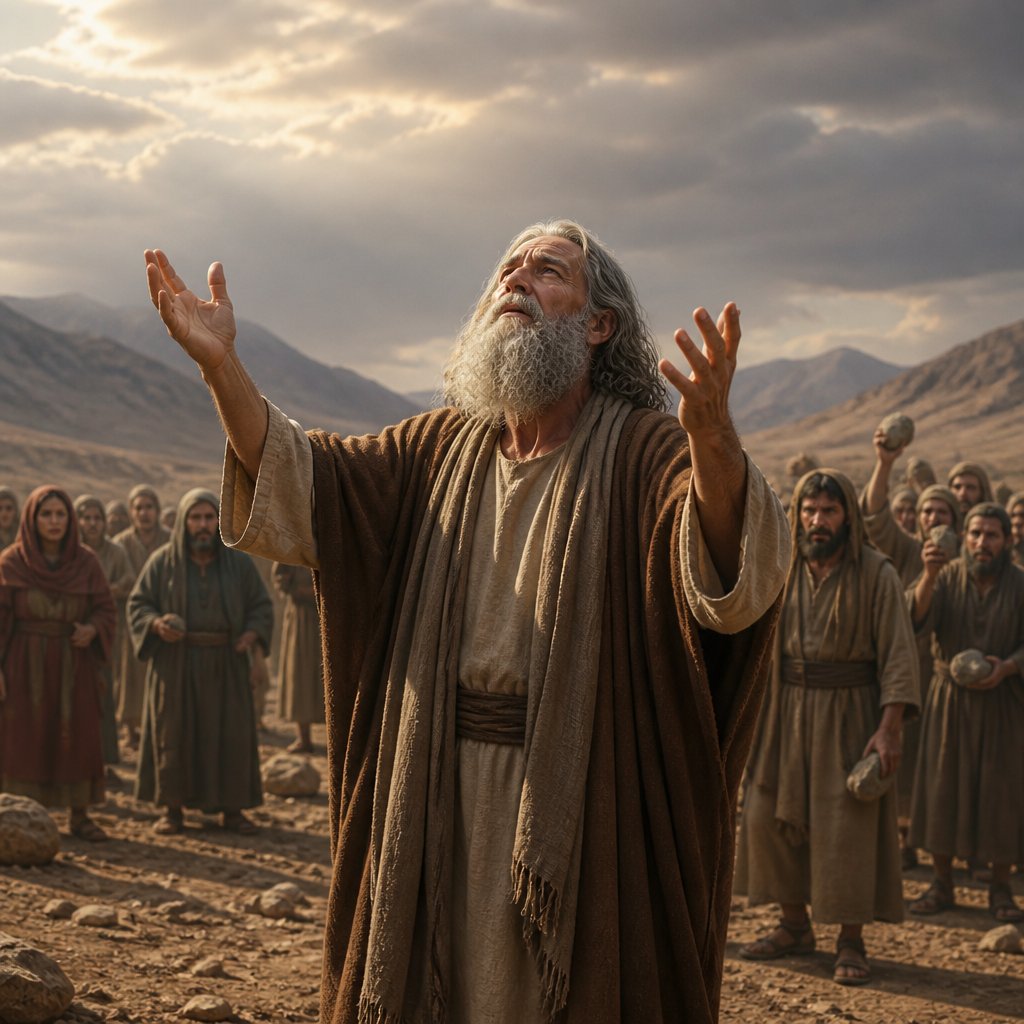
The story of Moses in Exodus 17:4, where he pleads with God, saying, "What shall I do unto this people? they be almost ready to stone me," offers profound insights into the pressure of leadership and the feeling of being overwhelmed in times of crisis. In this passage, we find Moses at a pivotal moment, stricken with the weight of his people's dissatisfaction and despair. This narrative provides a timely reflection on our own struggles, the challenges of expectation, and the necessity of turning to God in prayer amid turmoil.
Moses is leading the Israelites through the desert, a path filled with uncertainty and hardship. Their lack of faith manifests in their questioning of his leadership and their discontent with their circumstances. They cry out for water—basic sustenance, yet they forget the miracles they have witnessed: the plagues in Egypt, the parting of the Red Sea, and the provision of manna from Heaven. Their memory is short, and their faith is fleeting. In their desperation, they threaten harm to their leader, Moses, who, though chosen by God, feels the weight of their collective frustration.
In our own journeys, we may find ourselves in similar desolate places. Perhaps we are leading our families, teams, or communities and feel the strain of responsibility. The pressures of life can weigh heavily upon us, leading to feelings of isolation, frustration, and helplessness—even leading to desperate cries like Moses's. We may face accusations or mistrust, whether from those we lead or from our own inner doubts about our abilities. It is in these moments of despair that we must learn from Moses's example: he did not succumb to hopelessness. Instead, he cried out to God.
Moses' cry to the LORD represents a fundamental truth about the nature of leadership and reliance upon divine provision. While he is surrounded by dissent and angry voices, he recognizes the need for divine intervention. Moses does not try to reason with the people or rely solely on his own wisdom and capabilities; instead, he turns to God, who is the ultimate source of strength and guidance. This act of seeking God in prayer serves as a reminder to us that in our most desperate times, our first response should be to reach out to the One who understands our pain, who is capable of transforming our challenges into opportunities.
The beauty of this passage lies in the divine response that follows Moses' cry. The Lord tells Moses to take his rod and go before the people, assuring him that He will stand before him upon the rock in Horeb. Here, we see the assurance that God provides not only a solution to the immediate problem but also acts as a reminder that He is always present with us. He does not leave us alone in our struggles, nor does He send us out without equipping us for what lies ahead.
As we reflect on Exodus 17:4, we are called to consider how we respond to pressure and adversity. Are we quick to speak of our troubles to others, or do we first seek the Lord in prayer? Like Moses, we must remember that God listens. He cares deeply about our burdens and has the power to change our circumstances. Furthermore, we can learn to see the hard moments in our lives not just as tests of our leadership or endurance, but as opportunities for deeper faith and reliance upon Him.
This passage encourages reflection on our faith, our willingness to turn our concerns into prayers, and our readiness to listen to God’s guidance. In our own deserts, may we raise our voices to God in our hour of need, trusting that He will provide the water we thirst for, the wisdom we seek, and the support we desperately need. Let us embrace His presence, confident that with Him, we are never alone.
Get our apps


Artwork for Exodus 17:4

Exodus 17:4 - "And Moses cried unto the LORD, saying, What shall I do unto this people? they be almost ready to stone me."
"And Moses cried unto the LORD, saying, What shall I do unto this people? they be almost ready to stone me." - Exodus 17:4

Exodus 4:17 - "And thou shalt take this rod in thine hand, wherewith thou shalt do signs."

"And thou shalt take this rod in thine hand, wherewith thou shalt do signs." - Exodus 4:17
Exodus 17:10

Exodus 17:11

Exodus 17:6

Exodus 17:3

Exodus 17:3

Exodus 17:6

Exodus 17:6

Exodus 24:17

Exodus 17:6

Exodus 30:17 - "¶ And the LORD spake unto Moses, saying,"

Exodus 17:8 - "¶ Then came Amalek, and fought with Israel in Rephidim."

Exodus 13:17-14:29

Exodus 6:17 - "The sons of Gershon; Libni, and Shimi, according to their families."

Exodus 34:17 - "Thou shalt make thee no molten gods."

Exodus 17:15 - "And Moses built an altar, and called the name of it Jehovah-nissi:"

Exodus 17:13 - "And Joshua discomfited Amalek and his people with the edge of the sword."

Exodus 23:4

Exodus 28:4

Exodus 28:4

Exodus 35:17 - "The hangings of the court, his pillars, and their sockets, and the hanging for the door of the court,"

Exodus 28:4

Exodus 28:4

Exodus 24:4

Exodus 23:4

Exodus 16:17 - "And the children of Israel did so, and gathered, some more, some less."

Exodus 39:17 - "And they put the two wreathen chains of gold in the two rings on the ends of the breastplate."