The Call to Peacemaking: A Reflection on Exodus 2:13
“And when he went out the second day, behold, two men of the Hebrews strove together: and he said to him that did the wrong, Wherefore smitest thou thy fellow?” — Exodus 2:13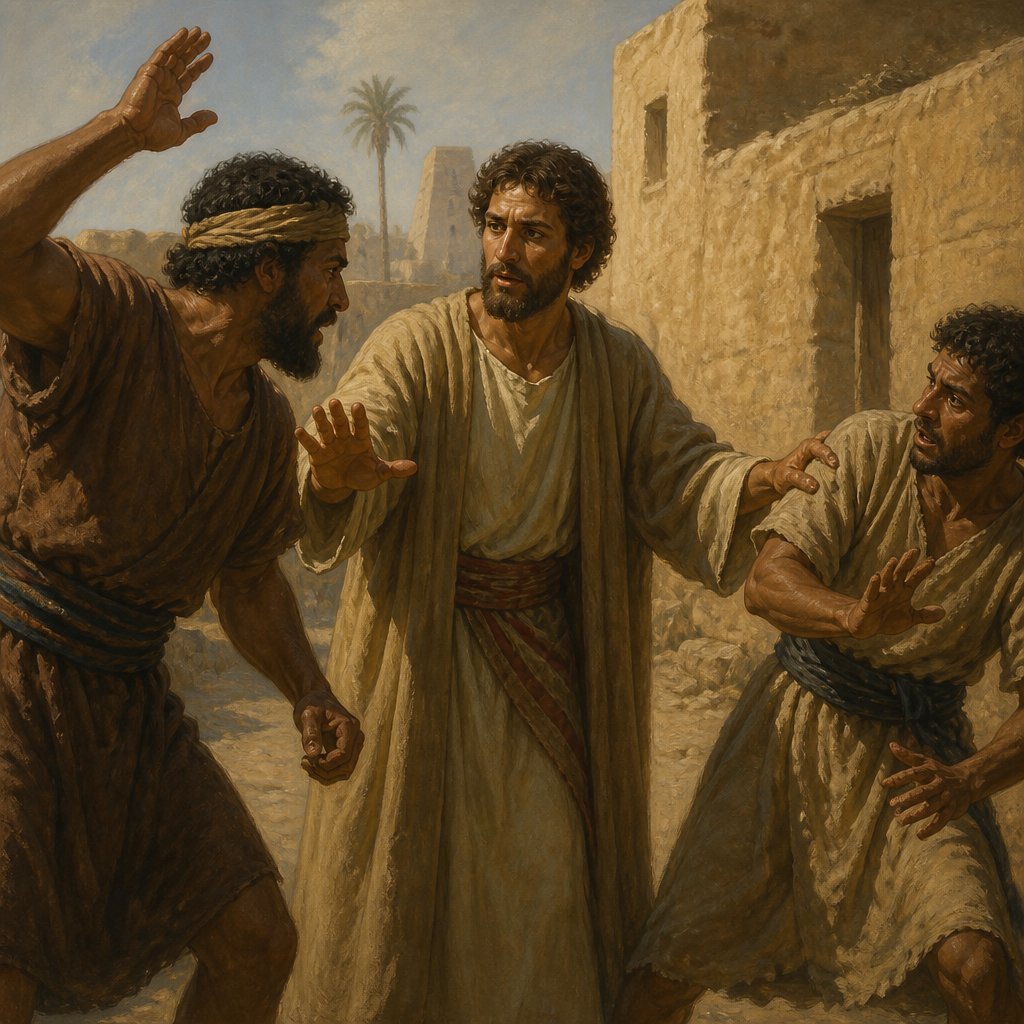
In the grand narrative of the Bible, there are moments when the human experience is encapsulated in a few vivid words. Exodus 2:13 is one such moment: "And when he went out the second day, behold, two men of the Hebrews strove together: and he said to him that did the wrong, Wherefore smitest thou thy fellow?" Here, we glimpse not only a moment of conflict but also a burgeoning awareness of justice, community, and the call to be a peacemaker.
To truly understand this verse, we must consider the context. These words come from the life of Moses, who was raised in the palace of Pharaoh but had a heart for his Hebrew brethren, enslaved and suffering under oppression. His decision to intervene when he saw an Egyptian beating a Hebrew man (Exodus 2:11-12) was driven by compassion, but it also illustrates the tension between his dual identity. As he steps outside his privileged life in Pharaoh’s house, he encounters the harsh realities faced by his people. In his second encounter, the scene shifts to two Hebrews fighting among themselves, highlighting a profound irony: in the face of external oppression, internal strife can also plague communities.
The term "smites" implies violence but speaks to a deeper relational breakdown. Moses’ question, “Wherefore smitest thou thy fellow?” is a rhetorical plea. He is asking not just about physical violence but also about the deeper issues related to their brotherhood, unity, and shared destiny. The Hebrew word for "fellow" is interesting too—indicating a fellow countryman, a kinship formed not just by blood but by shared experience and struggle. Moses calls them to remember their common bond in the face of their oppression, challenging the cycle of violence that can arise when one loses sight of kinship.
This raises questions for us today: How often do we find ourselves caught in conflicts that arise from misunderstandings or unmet needs within our communities? Like the two Hebrews, we may engage in disagreement with those we are called to support and love. Moses’ inquiry encourages us to reflect on our relationships and conflicts and ask ourselves if we are perpetuating division, even in smaller aspects of life. In this culturally and spiritually diverse world, are we smiting our fellows—through words, judgments, or actions—when we ought to be uniting in love?
Furthermore, Moses’ intervention serves as a reminder of the importance of standing up against wrongdoing—an act that requires not only courage but also a commitment to justice. To be peacemakers, we must be willing to confront the evils that threaten the fabric of our communities while upholding the dignity of every person involved. Moses does not ignore the wrongdoing; he addresses it directly, illustrating that peacemaking sometimes demands us to confront uncomfortable truths.
While Exodus 2:13 inspires us to remember the call to peacemaking, it also hints at Moses’ ongoing journey toward his greater purpose. His foray into advocacy for his kin ultimately leads him to a life of leadership and deliverance as God’s appointed messenger to free His people from bondage. God uses our small acts of justice and mercy to prepare us for the larger missions He has in store. Perhaps each moment we spend smoothing the rifts in our community—or even within ourselves—holds the potential to lead us to our divine calls.
As we meditate on this verse, let us pray for the courage to confront division, the wisdom to promote understanding, and the grace to be vessels of peace in a world characterized by strife. May we consistently ask ourselves: How do we respond to conflict? Are we advocates for harmony or agents of discord? In knowing our God-given roles, we can journey alongside one another in unity, echoing Moses' heartfelt call and remembering that we are, all of us, fellow travelers under His watchful care.
Get our apps


Artwork for Exodus 2:13

Exodus 2:13 - "And when he went out the second day, behold, two men of the Hebrews strove together: and he said to him that did the wrong, Wherefore smitest thou thy fellow?"
"And when he went out the second day, behold, two men of the Hebrews strove together: and he said to him that did the wrong, Wherefore smitest thou thy fellow?" - Exodus 2:13

Exodus 13:2 - "Sanctify unto me all the firstborn, whatsoever openeth the womb among the children of Israel, both of man and of beast: it is mine."

Exodus 14:13

Exodus 14:13

Exodus 14:13

Exodus 14:13

Exodus 14:13

Exodus 14:13

Exodus 14:13
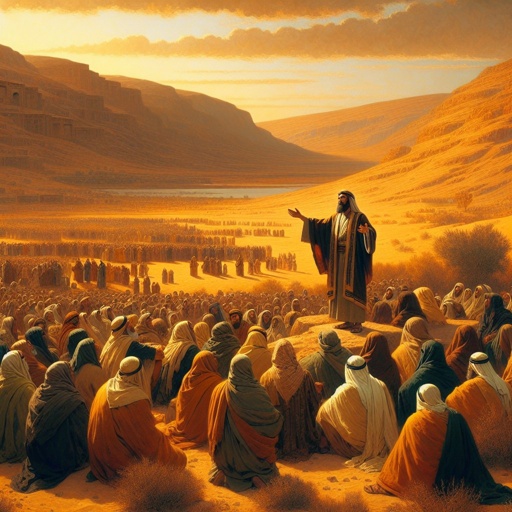
Exodus 14:13

Exodus 14:13

Exodus 14:13

Exodus 14:13

Exodus 14:13

Exodus 14:13

Exodus 14:13

Exodus 14:13

Exodus 14:13

Exodus 14:13

Exodus 14:13

Exodus 14:13

Exodus 12:13

Exodus 14:13

Exodus 14:13

Exodus 14:13

Exodus 14:13

Exodus 14:13

Exodus 14:13

Exodus 14:13