The Heart of Divine Commitment
“And if the servant shall plainly say, I love my master, my wife, and my children; I will not go out free:” — Exodus 21:5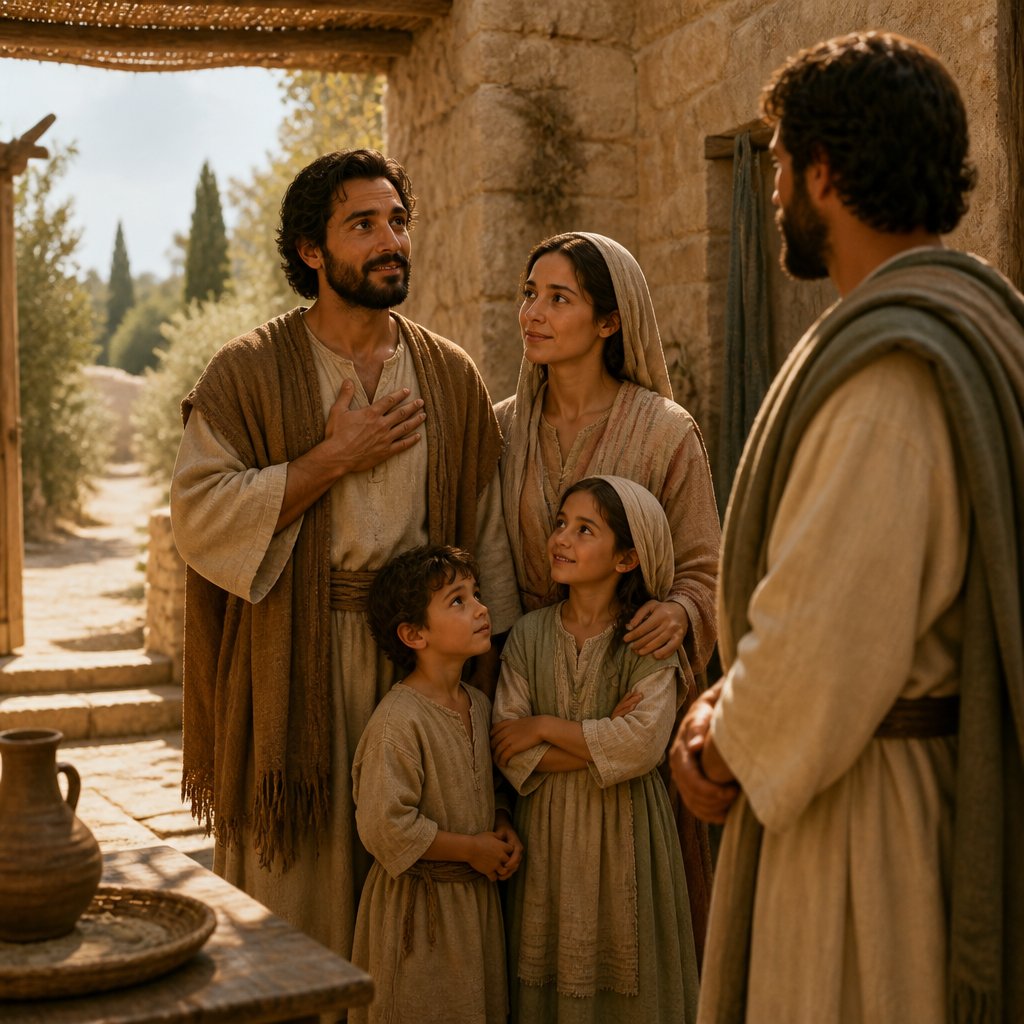
Exodus 21:5 states, "And if the servant shall plainly say, I love my master, my wife, and my children; I will not go out free:". In this verse, we are invited into the profound dynamics of servitude, love, and commitment, revealing layers of spiritual and relational truth that resonate deeply within our journey of faith.
In ancient Israel, the idea of servitude took on a different form than our modern understanding, often revolving around community, family, and mutual support. Moreover, the servant's declaration of love for his master speaks to a transformative relationship that goes beyond mere duty or obligation. It introduces the concept of a covenantal love, one rooted in loyalty and a deep sense of belonging.
To love one's master in the Old Testament context implies that there was a genuine bond built over years of service. This servant understands the value he has found under the care and protection of his master. Similarly, the love for his wife and children is a profound expression of commitment to his family, reflecting the intertwining of personal and communal identity. In this declaration, the servant recognizes that his freedom comes with a cost. His willingness to forgo his freedom for love is a powerful statement. It prompts us to explore what it means to be bound, not by chains, but by the ties of loyalty that spring forth from the heart.
The Hebrew culture celebrated loyalty and commitment, and this servant's choice heralds a deeper understanding of freedom. Freedom is not merely the absence of servitude but also includes the presence of deeply rooted relationships. In our contemporary society, we often view freedom through the lens of individualism and autonomy, yet God calls us to understand freedom as being intricately tied to love, commitment, and service to one another. This embodies the essence of Christ’s love for the church, willing to lay down His life for His people.
Jesus beautifully embodies this idea when he states in John 15:13, "Greater love hath no man than this, that a man lay down his life for his friends." The servant’s declaration mirrors the sacrificial love that Christ showed us. In choosing to remain with his master rather than pursue personal freedom, the servant embodies a holistic view of life centered around relationships and love.
As believers, we often face societal pressures to prioritize personal autonomy above all else. The world teaches us that freedom is king, often at the expense of deep, meaningful relationships. Yet, Exodus 21:5 challenges us to reconsider our understanding of loyalty and love. Are we willing to commit ourselves wholly to those we love, even when it requires sacrifice?
Furthermore, the deeper call of this verse is not just about our earthly relationships, but it invites us to examine our relationship with God. Do we love our Master—the Lord God—so much that we want to serve Him and His purposes? When we truly find our identity and purpose in Christ, there arises a desire to walk in His ways, even if it sometimes means laying aside our own desires and freedoms.
The servant’s choice to love and to remain is akin to our calling as Christians to embrace servanthood and submission to God’s will. It leads us to a place where we can echo the Apostle Paul’s words in Romans 12:1, offering ourselves as living sacrifices.
Therefore, let us reflect on our commitments today: to our families, our communities, and most importantly, to our God. Are we willing to express our love through service, prioritizing relationships over personal gain? In a world that often champions individualism, may we be a people who echo this servant's commitment—a commitment that enhances our experiences, enriches our relationships, and brings glory to our Creator. May we always say, 'I love my Master, my family, my community; I will not go out free, for to serve is to truly live.'
Get our apps


Artwork for Exodus 21:5

Exodus 21:5 - "And if the servant shall plainly say, I love my master, my wife, and my children; I will not go out free:"
"And if the servant shall plainly say, I love my master, my wife, and my children; I will not go out free:" - Exodus 21:5
Exodus 5:21 - "And they said unto them, The LORD look upon you, and judge; because ye have made our savour to be abhorred in the eyes of Pharaoh, and in the eyes of his servants, to put a sword in their hand to slay us."

Exodus 14: 21

Exodus 14: 21

Exodus 15:21

Exodus 21:21 - "Notwithstanding, if he continue a day or two, he shall not be punished: for he is his money."

Exodus 27:19-21

Exodus 6:21 - "¶ And the sons of Izhar; Korah, and Nepheg, and Zichri."

Exodus 21:25 - "Burning for burning, wound for wound, stripe for stripe."

Exodus 15:5

Isaiah 5:21

Isaiah 5:21

The Plague of Darkness - Exodus 10:21-29

The Plague of Darkness - Exodus 10:21-29

The Plague of Darkness - Exodus 10:21-29

The Plague of Darkness - Exodus 10:21-29

The Plague of Darkness - Exodus 10:21-29

Exodus 22:5

Exodus 22:5

Exodus 22:5

The Plague of Darkness - Exodus 10:21-29

The Plague of Darkness - Exodus 10:21-29

Exodus 21:24 - "Eye for eye, tooth for tooth, hand for hand, foot for foot,"

Exodus 21:1 - "Now these are the judgments which thou shalt set before them."

The Plague of Darkness - Exodus 10:21-29

The Plague of Darkness - Exodus 10:21-29

The Plague of Darkness - Exodus 10:21-29

Exodus 21:23 - "And if any mischief follow, then thou shalt give life for life,"

Revelation 21:5