Acknowledging Our Sinfulness: Pharaoh’s Confession and the Call to Repentance
“And Pharaoh sent, and called for Moses and Aaron, and said unto them, I have sinned this time: the LORD is righteous, and I and my people are wicked.” — Exodus 9:27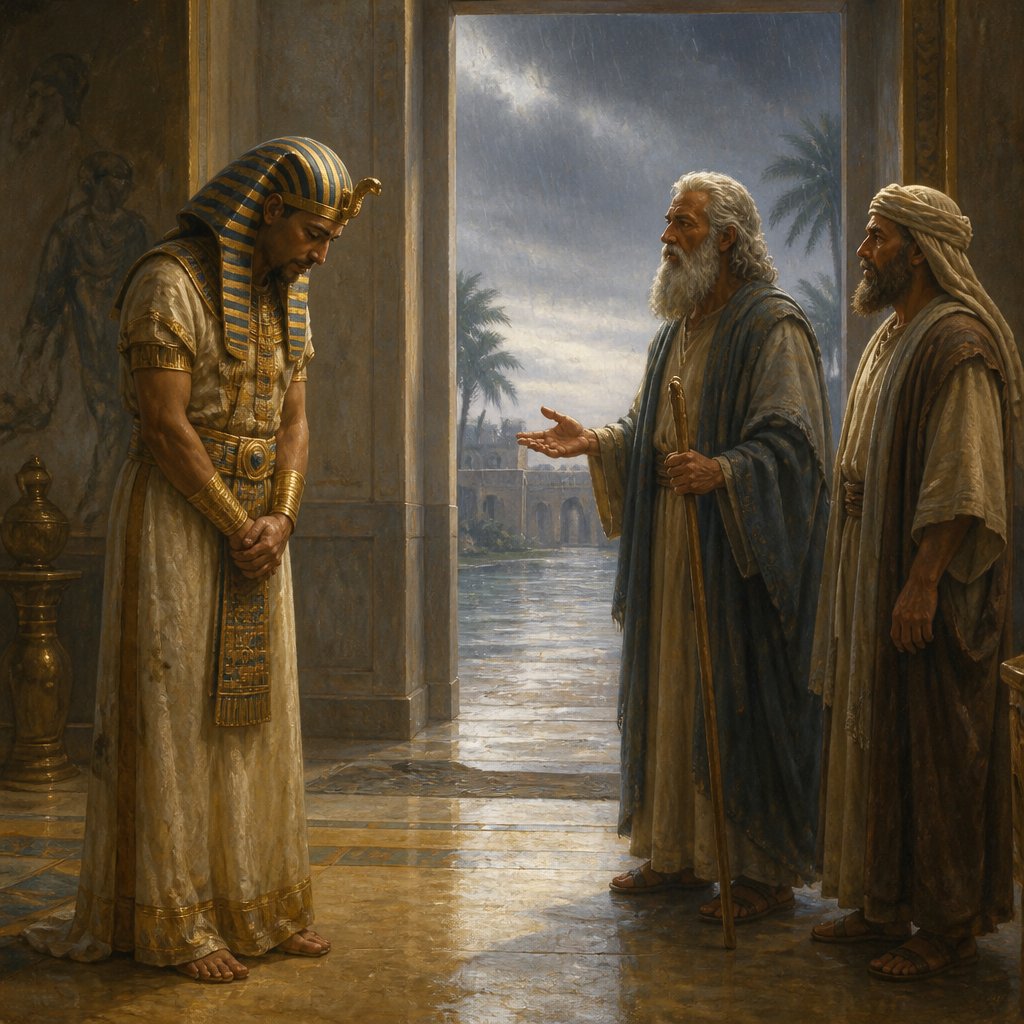
In Exodus 9:27, we encounter a poignant moment in the saga of Moses and Pharaoh, encapsulated in Pharaoh’s admission,
"And Pharaoh sent, and called for Moses and Aaron, and said unto them, I have sinned this time: the LORD is righteous, and I and my people are wicked." This statement reverberates with profound theological implications, revealing the complex interaction between divine sovereignty, human responsibility, and the nature of repentance.
At this juncture in the narrative, Pharaoh has been the perennial antagonist, resisting the commands of God and hardening his heart against the Israelites’ pleas for liberation. Each plague is not merely a demonstration of God’s power, but a divine challenge intended to elicit a confession—one that acknowledges the supremacy of the LORD and the inhumanity of Pharaoh’s rule. As the plagues escalate, Pharaoh's resolve appears unyielding, yet here he declares, “I have sinned.”
This admission is monumental. It demonstrates the first step towards genuine repentance—acknowledging wrongdoings. In the context of our spiritual lives, confessing our sins is not always an easy task. It requires humility and vulnerability, admitting our failings before God and others. Pharaoh’s recognition of sin is a direct confrontation with his pride; however, it’s crucial to notice that true repentance is more than just verbal acknowledgment. Scripture calls us to a deeper transformation.
The phrase, "the LORD is righteous," encapsulates the essence of God’s character in stark contrast to humanity’s depravity. Pharaoh, in one breath, recognizes the justice of God while simultaneously confessing the wickedness of his own heart. This highlights a profound truth in the Christian walk—when we confront our sins, we also open our hearts to the righteousness of God. It is imperative to understand that God’s righteousness stands as a beacon of hope; His just character assures us that our confessions are met with mercy and grace.
Reflecting on Pharaoh’s acknowledgment, we can see how often we too may fall into a similar pattern. We may navigate life with an air of self-justification, ignoring the promptings of the Holy Spirit, or we may too quickly distance ourselves from our failures, hiding behind the “that was unintentional” shield. Yet God calls us to more! He desires a relationship characterized by honesty and integrity, which begins when we are willing to confront our sinfulness with the same gravity Pharaoh eventually does.
Interestingly, despite his admission, Pharaoh’s heart remains hardened (as subsequent chapters reveal). This serves as a stark reminder that momentary feelings of remorse or regret do not equate to true repentance. The New Testament reinforces this in 2 Corinthians 7:10, which states, "For godly sorrow worketh repentance to salvation not to be repented of: but the sorrow of the world worketh death." This distinction is crucial; true repentance leads to a transformational faith that seeks to turn away from sin and pursue righteousness actively.
In our personal spiritual journey, we must wrestle with the daily opportunities we have to admit our faults and seek the forgiveness offered so freely by Christ. Pharaoh’s declaration may serve as a catalyst for introspection: Are we willing to confess our sins genuinely? Do we recognize the righteousness of God and allow it to shape our lives?
As we meditate on Exodus 9:27, we are invited to revisit our own hearts and carefully page through the chapters of our lives. Let’s not fall into the Pharaoh pattern of half-hearted acknowledgment. Instead, let us stand boldly before the LORD, saying, "I have sinned," embracing the offer of forgiveness and the call to transformation.
May our response to this passage lead us to authentic repentance, fostering a deeper relationship with our righteous Creator, who is ever ready to forgive and cleanse us from unrighteousness.
Get our apps


Artwork for Exodus 9:27

Exodus 9:27 - "¶ And Pharaoh sent, and called for Moses and Aaron, and said unto them, I have sinned this time: the LORD is righteous, and I and my people are wicked."
"¶ And Pharaoh sent, and called for Moses and Aaron, and said unto them, I have sinned this time: the LORD is righteous, and I and my people are wicked." - Exodus 9:27

Exodus 27:9 - "¶ And thou shalt make the court of the tabernacle: for the south side southward there shall be hangings for the court of fine twined linen of an hundred cubits long for one side:"

Exodus 27:20

Exodus 27:20

Exodus 27:20

Exodus 27:19-20

Exodus 27:1-8

Exodus 23:27-28

exodus 27:3 forks

Exodus 27:19-21

Exodus 27:20 the lamp is made of brass

1 Corinthians 9:25-27

1 Corinthians 9:25-27

Exodus 36:27 - "And for the sides of the tabernacle westward he made six boards."

Exodus 35:27 - "And the rulers brought onyx stones, and stones to be set, for the ephod, and for the breastplate;"

Exodus 27:13 - "And the breadth of the court on the east side eastward shall be fifty cubits."

1 Corinthians 9:25-27

1 Corinthians 9:25-27

Exodus 40:27 - "And he burnt sweet incense thereon; as the LORD commanded Moses."

Exodus 25:27 - "Over against the border shall the rings be for places of the staves to bear the table."

Exodus 30:27 - "And the table and all his vessels, and the candlestick and his vessels, and the altar of incense,"

Exodus 10:27 - "¶ But the LORD hardened Pharaoh's heart, and he would not let them go."

Exodus 39:27 - "¶ And they made coats of fine linen of woven work for Aaron, and for his sons,"

Exodus 27:15 - "And on the other side shall be hangings fifteen cubits: their pillars three, and their sockets three."

Exodus 40:9
Exodus 2:9

Exodus 2:9

Exodus 27:7 - "And the staves shall be put into the rings, and the staves shall be upon the two sides of the altar, to bear it."

Exodus 16:27 - "¶ And it came to pass, that there went out some of the people on the seventh day for to gather, and they found none."