What does Exodus 9:27 mean?
“And Pharaoh sent, and called for Moses and Aaron, and said unto them, I have sinned this time: the LORD is righteous, and I and my people are wicked.” — Exodus 9:27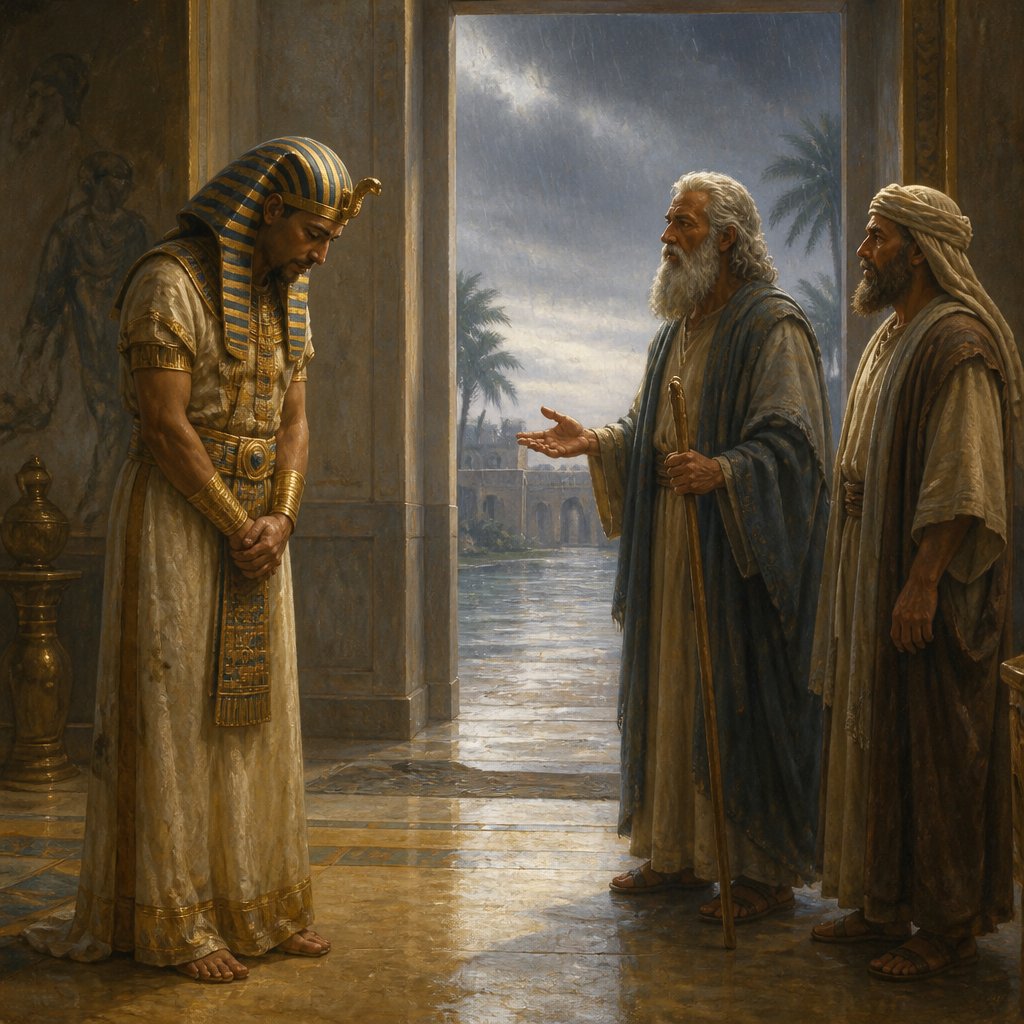
Exodus 9:27 in the King James Version of the Bible states, "And Pharaoh sent, and called for Moses and Aaron, and said unto them, I have sinned this time: the LORD is righteous, and I and my people are wicked." This verse comes from the story in the Book of Exodus when God sends ten plagues upon Egypt to persuade Pharaoh to release the Israelites from slavery.
The context of Exodus 9:27 is important to understand the significance of Pharaoh's words. Prior to this, God had sent a series of plagues upon Egypt as a means of demonstrating His power and demanding the release of the Israelites. After each plague, Pharaoh hardened his heart and refused to comply with God's command. However, by the time we reach Exodus 9:27, the fifth plague of livestock disease has just ravaged Egypt. And it is in this context that Pharaoh finally acknowledges his wrongdoing and the righteousness of the Lord.
Pharaoh's confession of sin is a pivotal moment in the story of the Exodus. It marks the first time that he admits to his error and the first time that he acknowledges the power and authority of the God of Israel. Pharaoh's words reveal a shift in his mindset and a recognition of the consequences of his defiance. This admission of guilt sets the stage for the final five plagues and the eventual release of the Israelites from bondage.
One of the key themes in this verse is the idea of repentance and the recognition of God's righteousness. Pharaoh's confession is a demonstration of repentance, as he acknowledges his sin and the justice of God's actions. It serves as a reminder that regardless of our sinfulness, God is always righteous and just. Pharaoh's words also highlight the consequences of disobedience and the importance of recognizing and repenting from our wrongdoing.
Another important theme in Exodus 9:27 is the sovereignty of God. Pharaoh's admission of guilt is a recognition of God's authority and power. It emphasizes the idea that God is in control of all things and is ultimately the one who brings about justice and righteousness. This theme is consistent throughout the Book of Exodus and serves as a reminder to the reader of the omnipotence of God and His ability to bring about His purposes.
There is also a theme of moral accountability in this verse. Pharaoh's acknowledgment of sin extends not only to himself but to his people as well. He recognizes that both he and his subjects are guilty and deserving of the consequences of their actions. This theme emphasizes the idea that all individuals are accountable for their choices and actions, and must be willing to acknowledge and repent from their wrongdoing.
Symbolism in Exodus 9:27 can be seen in Pharaoh's confession itself. His words signify a turning point in the story, marking a shift from stubbornness and defiance to humility and repentance. Pharaoh's acknowledgment of sin symbolizes the beginning of the end of his rule and the liberation of the Israelites from slavery. It symbolizes the triumph of God's righteousness over human pride and arrogance.
In conclusion, Exodus 9:27 is a verse that holds significant meaning and themes within the broader context of the Book of Exodus. Pharaoh's confession of sin and acknowledgment of God's righteousness serve as a pivotal moment in the story, emphasizing themes of repentance, God's sovereignty, moral accountability, and symbolizing the eventual liberation of the Israelites. It reminds us of the importance of recognizing and repenting from our sins, and the ultimate righteousness and justice of God.
Get our apps


Artwork for Exodus 9:27

Exodus 9:27 - "¶ And Pharaoh sent, and called for Moses and Aaron, and said unto them, I have sinned this time: the LORD is righteous, and I and my people are wicked."
"¶ And Pharaoh sent, and called for Moses and Aaron, and said unto them, I have sinned this time: the LORD is righteous, and I and my people are wicked." - Exodus 9:27

Exodus 27:9 - "¶ And thou shalt make the court of the tabernacle: for the south side southward there shall be hangings for the court of fine twined linen of an hundred cubits long for one side:"

Exodus 27:20

Exodus 27:20

Exodus 27:20

Exodus 27:19-20

Exodus 27:1-8

Exodus 23:27-28

exodus 27:3 forks

Exodus 27:19-21

Exodus 27:20 the lamp is made of brass

1 Corinthians 9:25-27

1 Corinthians 9:25-27

Exodus 36:27 - "And for the sides of the tabernacle westward he made six boards."

Exodus 35:27 - "And the rulers brought onyx stones, and stones to be set, for the ephod, and for the breastplate;"

Exodus 27:13 - "And the breadth of the court on the east side eastward shall be fifty cubits."

1 Corinthians 9:25-27

1 Corinthians 9:25-27

Exodus 40:27 - "And he burnt sweet incense thereon; as the LORD commanded Moses."

Exodus 25:27 - "Over against the border shall the rings be for places of the staves to bear the table."

Exodus 30:27 - "And the table and all his vessels, and the candlestick and his vessels, and the altar of incense,"

Exodus 10:27 - "¶ But the LORD hardened Pharaoh's heart, and he would not let them go."

Exodus 39:27 - "¶ And they made coats of fine linen of woven work for Aaron, and for his sons,"

Exodus 27:15 - "And on the other side shall be hangings fifteen cubits: their pillars three, and their sockets three."

Exodus 40:9
Exodus 2:9

Exodus 2:9

Exodus 27:7 - "And the staves shall be put into the rings, and the staves shall be upon the two sides of the altar, to bear it."

Exodus 16:27 - "¶ And it came to pass, that there went out some of the people on the seventh day for to gather, and they found none."