The Departing Glory: A Call to Reflection and Restoration
“And the glory of the LORD went up from the midst of the city, and stood upon the mountain which is on the east side of the city.” — Ezekiel 11:23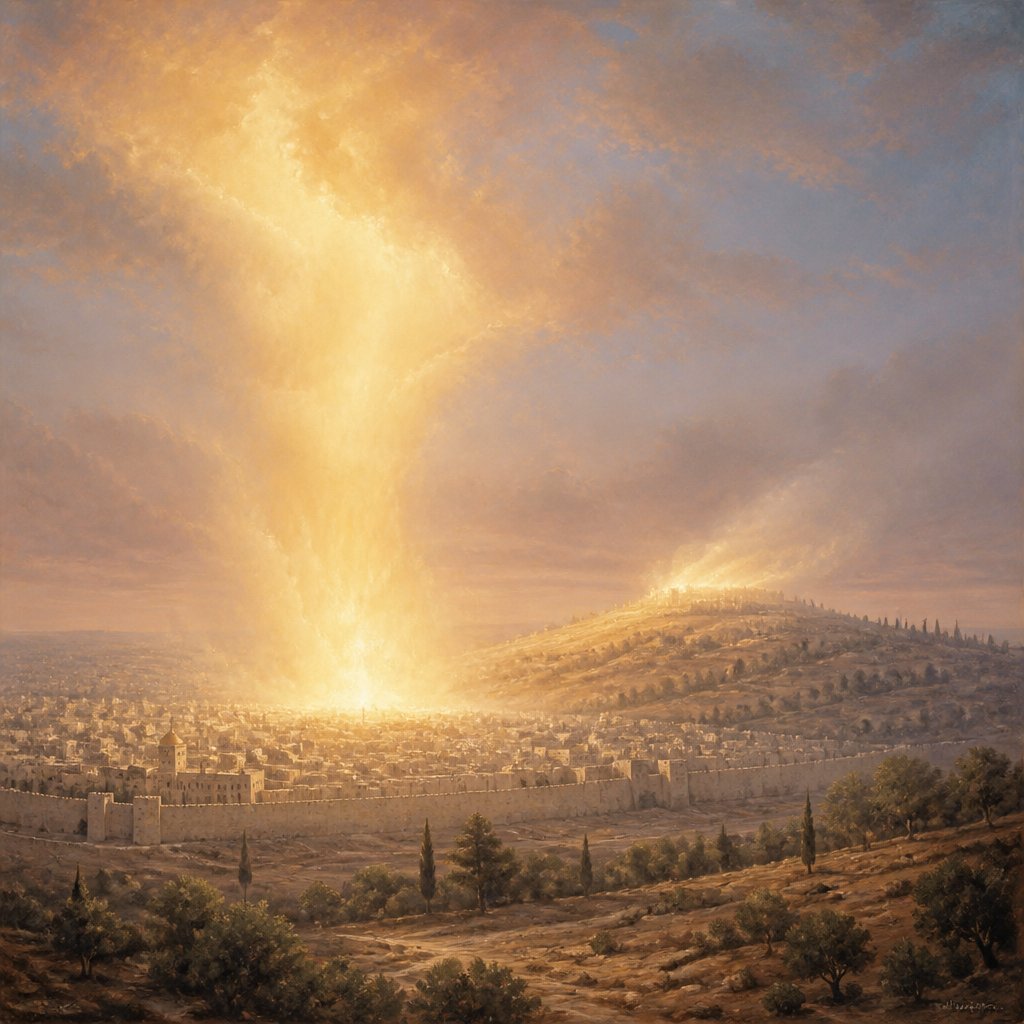
In Ezekiel 11:23, we find a poignant moment in the prophetic narrative: "And the glory of the LORD went up from the midst of the city, and stood upon the mountain which is on the east side of the city." This verse occurs during a critical time in Israel's history, shortly before the destruction of Jerusalem and the temple, symbolizing God's departure from a people who had turned away from Him.
To understand the weight of this moment, we must delve into the context surrounding Ezekiel’s prophecy. The Israelites were entrenched in idolatry, moral decay, and rebellion against God’s commands. Despite repeated warnings from prophets, the people chose to ignore their covenant relationship with the Almighty, ultimately leading to a divine departure. The glory of the Lord, once dwelling in the midst of His people, withdrew, a powerful indication of His judgment and presence's removal due to persistent disobedience.
This imagery of God’s glory leaving is a profound lesson for us today. The Hebrew word for glory, "kabod," embodies weightiness and significance. The departure of God’s glory symbolizes not only His absence but also a vacuum left behind, a void where divine presence once resided. It raises critical questions about how we regard the presence of God in our lives. Are we cultivating a heart that welcomes the divine or one that inadvertently drives Him away?
As we dissect the implications of God’s glory leaving, we must recognize that it is often a gradual process. Sin does not typically manifest overnight; it creeps in through small allowances. Perhaps it starts with complacency in our spiritual practices or the slow erosion of our foundational beliefs. Ezekiel’s vision serves as a somber reminder of the consequences of turning away from God, and it invites us to take stock of our spiritual health.
When we allow distractions to overshadow our relationship with God—whether they manifest as busyness, materialism, or unrepentant sin—we risk experiencing a similar departure of divine presence in our own lives. As believers, we are called to reflect on our spiritual state, asking ourselves: Is God’s glory evident in my life? Am I fostering a relationship that seeks His face or merely occupying a space?
The verse concludes with the glory standing upon the mountain east of the city. This position is significant in biblical geography and theology. Mountains often represent places of revelation and encounters with God. The east is traditionally seen as a place of new beginnings and resurrection. Though God’s glory had departed, He remained present, waiting for the time and condition to return to His people.
This leads us to a moment of hope amidst the dire situation. God does not abandon us forever; His desire is for our restoration. The glory’s temporary departure opens a pathway to reconciliation. For those who truly seek the Lord, like the Israelites in their exile, the promise of His return remains. Scripture consistently reveals a theme of restoration that permeates the prophetic voice—God longs for His people to return to Him. In Joel 2:12-13, we read, "Yet even now, saith the LORD, turn ye even to me with all your heart, and with fasting, and with weeping, and with mourning: And rend your heart, and not your garments, and turn unto the LORD your God: for He is gracious and merciful, slow to anger, and of great kindness, and repenteth Him of the evil."
In conclusion, Ezekiel 11:23 invites us to reflect on our lives and the state of our relationship with God. Are we living in a way that invites His glory to dwell among us? Are we seeking Him with all our hearts? Let us take this moment to repent, turn back to Him, and seek restoration. As we do, we may find that His glory will not just return but will fill us anew, lighting our paths in ways we cannot even fathom.
Get our apps


Artwork for Ezekiel 11:23

Ezekiel 11:23 - "And the glory of the LORD went up from the midst of the city, and stood upon the mountain which is on the east side of the city."
"And the glory of the LORD went up from the midst of the city, and stood upon the mountain which is on the east side of the city." - Ezekiel 11:23

Ezekiel 23:11 - "And when her sister Aholibah saw this, she was more corrupt in her inordinate love than she, and in her whoredoms more than her sister in her whoredoms."

Ezekiel 28:11-19

Ezekiel 28:11-19

Ezekiel 28:11-19

Ezekiel 28:11-19

Ezekiel 41:23 - "And the temple and the sanctuary had two doors."

Ezekiel 28:11-19

Ezekiel 28:11-19

Ezekiel 39:11

Ezekiel 22:23 - "¶ And the word of the LORD came unto me, saying,"

Ezekiel 33:23 - "Then the word of the LORD came unto me, saying,"

Ezekiel 39:11

Ezekiel 23:1 - "The word of the LORD came again unto me, saying,"

Genesis 23:11

luke 11:23

Ezekiel 23:2 - "Son of man, there were two women, the daughters of one mother:"

Ezekiel 23:13 - "Then I saw that she was defiled, that they took both one way,"

luke 11:23

Deuteronomy 11:23

luke 11:23

luke 11:23

Ezekiel 30:23 - "And I will scatter the Egyptians among the nations, and will disperse them through the countries."

Ezekiel 7:23 - "¶ Make a chain: for the land is full of bloody crimes, and the city is full of violence."

Ezekiel 1:10-11

Ezekiel 27:23 - "Haran, and Canneh, and Eden, the merchants of Sheba, Asshur, and Chilmad, were thy merchants."

Song of Solomon 2:3

Ezekiel 11:11 - "This city shall not be your caldron, neither shall ye be the flesh in the midst thereof; but I will judge you in the border of Israel:"

Ezekiel 23:23 - "The Babylonians, and all the Chaldeans, Pekod, and Shoa, and Koa, and all the Assyrians with them: all of them desirable young men, captains and rulers, great lords and renowned, all of them riding upon horses."