Prophetic Portrayal: Understanding God’s Message Through Ezekiel
“Thou also, son of man, take thee a tile, and lay it before thee, and pourtray upon it the city, even Jerusalem:” — Ezekiel 4:1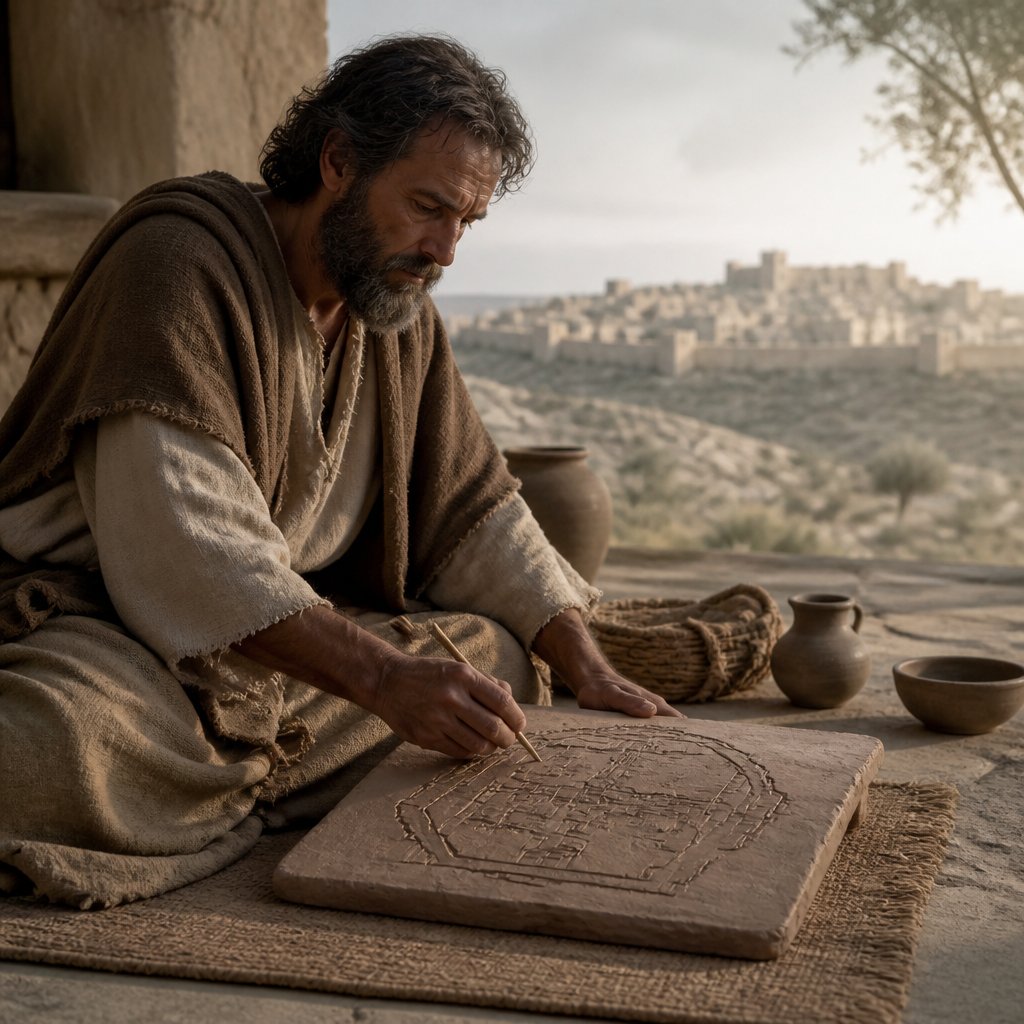
As we delve into the profound imagery presented in Ezekiel 4:1, we encounter a striking command from God to His prophet, Ezekiel. The verse reads, "Thou also, son of man, take thee a tile, and lay it before thee, and pourtray upon it the city, even Jerusalem." At first glance, this directive may seem peculiar or even trivial, yet within it lies a rich tapestry of prophetic significance and divine instruction.
Ezekiel is addressing a people in exile, a community that feels utterly disconnected from the city they loved and the temple they revered. God’s call to Ezekiel to take a tile and "pourtray" Jerusalem signifies not merely a physical act but a spiritual one as well. In essence, God was instructing Ezekiel to visualize the place that symbolized His covenant, His presence, and His glory among His people. The act of portraying Jerusalem was not merely a display; it was an evocative symbol of the heart of God toward His people at that moment. God desired to remind the Israelites of their identity, their history, and ultimately their hope.
The choice of a tile serves as a vital reminder of the fragility of human existence, much like the people of Judah found themselves in despair. Tile, often constructed from clay, is representative of the earthiness of humanity—molded, shaped, but susceptible to cracking and breaking. God’s command does not just seek to communicate judgment but also to encourage reflection on His ongoing relationship with His creation. As Ezekiel lays the tile before him, he is called to engage not only in prophetic proclamation but also in introspection. He is reminded that God has not forgotten Jerusalem, despite the people’s current state of exile, brokenness, and despair.
Reflecting on what it means to portray something means to understand its significance. We may ask ourselves, "What does Jerusalem represent in my spiritual journey?" During a season of life marked by chaos or uncertainty, how can we reconnect with the truths that once brought us comfort? God’s portrayal of Jerusalem through Ezekiel invites us to recognize that every aspect of our lives should reflect our commitment to God’s purpose. By taking the time to lay out our 'tiles,' we can depict our spiritual landscapes, confront our shadows, and identify areas where we need God’s healing touch.
Moreover, the command serves as a reminder that God’s creativity often disrupts our misunderstanding of suffering. Through Ezekiel, He challenges us to consider how God can use physical objects and actions to convey profound spiritual truths. The idea of portraying a city that lies in ruins invites us to acknowledge our brokenness and yield it to God’s transformative work. In our lives, we may also be called to portray aspects of our personal Jerusalem—our relationships, ministries, dreams, and desires—laying them before God in hopes of restoration and renewal.
As followers of Christ today, we are called to similarly portray our lives before Him. To take our struggles, aspirations, and doubts and present them openly. Just like Ezekiel was a vessel of God’s message, we, too, can be vessels of His love and hope to those around us. This portrayal, therefore, is not just for our understanding but for the world's observation—demonstrating that through our challenges, God can still unfold His redemptive narrative.
In conclusion, Ezekiel 4:1 is not just an ancient command but a timeless invitation to reflect deeply on our lives. Let us take our 'tile' and pourtray before the Lord the Jerusalem of our hearts, trusting Him for restoration and revival. As we pourtray, Let it be an act of worship, a declaration of our faith in the God who sees, hears, and ultimately redeems.
Get our apps


Artwork for Ezekiel 4:1

Ezekiel 4:1-3

Ezekiel 4:1 - "Thou also, son of man, take thee a tile, and lay it before thee, and pourtray upon it the city, even Jerusalem:"
"Thou also, son of man, take thee a tile, and lay it before thee, and pourtray upon it the city, even Jerusalem:" - Ezekiel 4:1

Ezekiel 1:4-28

Ezekiel 1:4-28 – The vision of the four living creatures and the wheels.

Ezekiel 1:4-28 – The vision of the four living creatures and the wheels.

Ezekiel 1:4-28 – The vision of the four living creatures and the wheels.

Ezekiel 1:4-28 – The vision of the four living creatures and the wheels.

Ezekiel 1:4-28 – The vision of the four living creatures and the wheels.

Ezekiel 1:4 - "¶ And I looked, and, behold, a whirlwind came out of the north, a great cloud, and a fire infolding itself, and a brightness was about it, and out of the midst thereof as the colour of amber, out of the midst of the fire."

Ezekiel 34:3–4

Ezekiel 13:4 - "O Israel, thy prophets are like the foxes in the deserts."

Ezekiel 11:4 - "¶ Therefore prophesy against them, prophesy, O son of man."

Ezekiel 1:1-28

Ezekiel 1:1-28 I would like to see your vision of what a cherubim is as it is described in EZEKIEL

Ezekiel 1:1-28

Ezekiel 1:1-28

Ezekiel 1:1-28

Ezekiel 1:1-28

Ezekiel 1:1-28

Ezekiel 1:1-28

Ezekiel 8:4 - "And, behold, the glory of the God of Israel was there, according to the vision that I saw in the plain."

Ezekiel 1:1-28

Ezekiel 1:1-28

Ezekiel 4:17 - "That they may want bread and water, and be astonied one with another, and consume away for their iniquity."

Ezekiel 43:4 - "And the glory of the LORD came into the house by the way of the gate whose prospect is toward the east."

Ezekiel 27:4 - "Thy borders are in the midst of the seas, thy builders have perfected thy beauty."

Ezekiel 48:4 - "And by the border of Naphtali, from the east side unto the west side, a portion for Manasseh."

Ezekiel 44 v 1

Ezekiel 44 v 1