A Call to Collective Responsibility
“But the people are many, and it is a time of much rain, and we are not able to stand without, neither is this a work of one day or two: for we are many that have transgressed in this thing.” — Ezra 10:13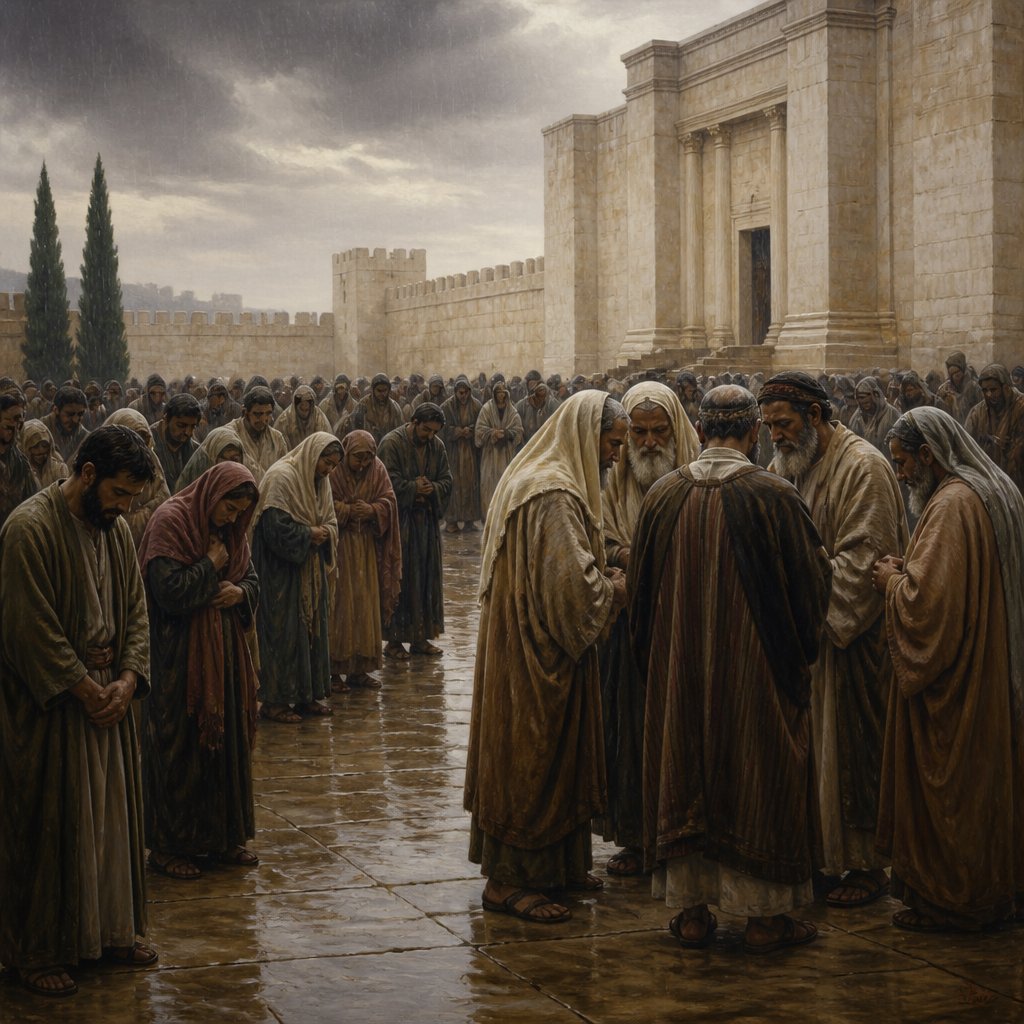
Ezra 10:13 states, "But the people are many, and it is a time of much rain, and we are not able to stand without, neither is this a work of one day or two: for we are many that have transgressed in this thing." This powerful verse recalls a significant moment in Israel’s history and invites us to reflect on the nature of collective sin, accountability, and the work of restoration that God often calls us to undertake together.
The context of Ezra 10 reveals a time of great upheaval and uncertainty for the Israelites. Having returned from exile, the people were faced with the realization that many had intermarried with foreign nations, thus compromising their commitment to God’s covenant. Ezra, the priest and scribe, led the initiative to address this grave matter, understanding that the integrity of God’s people relied on their faithfulness to His commands. But Ezra recognizes the complexities of their situation; their transgression was not merely personal but a communal issue that required a unified response.
As we reflect on the verse, the imagery of “much rain” stands out as a significant metaphor. Rain can symbolize blessing and life but also difficulty and challenge. In this moment, the rain serves as a barrier, a representation of the immediate challenges that hinder the people from engaging in the necessary work of repentance and renewal. How often do we find ourselves in similar circumstances? The weight of our collective transgressions can feel overwhelming, and the trials of our circumstances can leave us feeling paralyzed. Yet, Ezra's acknowledgment of their struggle reminds us that recognizing our reality is the first step towards restoration.
Moreover, Ezra emphasizes that this is not a work of one day or two. Indeed, the restoration of the people’s relationship with God cannot be rushed. It takes time, effort, and a willingness to delve deep into the roots of sin—individually and communally. "We are many that have transgressed in this thing" highlights the shared nature of sin. It is a theological truth that sin, while personal, also has communal ramifications. As members of a broader community, we are called to bear one another’s burdens (Galatians 6:2) and support each other in seeking God’s face for healing and forgiveness.
In these busy days, it is easy to forget that we are part of a collective body—the church, our families, and our communities. When one member falters, the entire body feels the impact. Our modern culture often trains us to see faith as a private endeavor, yet Ezra's message reminds us of the importance of collective responsibility in the face of sin. Are there practices within our churches or communities that compromise our witness? What shared transgressions need addressing?
Ezra invites us into communal repentance and restoration, calling us to gather in prayer and action as a unified body. Just as the Israelites had to come together to address their collective brokenness, we must also recognize the call to unity against the transgressions that threaten our integrity in faith.
As we ponder Ezra 10:13, may we be encouraged to embrace the challenges we face as opportunities for God’s transformative power. Let us approach our struggles together, knowing that God is not deterred by our shortcomings but is eager to work through us. In our times of "much rain," let us not shrink back but, like Ezra, find strength in unity, prayer, and the work of restoration. Together, we can stand firm, acknowledge our collective failings, and seek the mercy of the Lord, trusting that with time and persistence, He can lead us back to a place of faithfulness in His grace.
Get our apps


Artwork for Ezra 10:13
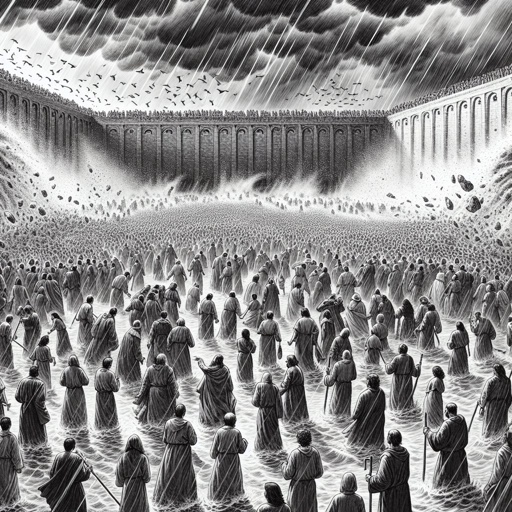
Ezra 10:13 - "But the people are many, and it is a time of much rain, and we are not able to stand without, neither is this a work of one day or two: for we are many that have transgressed in this thing."
"But the people are many, and it is a time of much rain, and we are not able to stand without, neither is this a work of one day or two: for we are many that have transgressed in this thing." - Ezra 10:13

Ezra 10:10-12

Ezra 10:10 - "And Ezra the priest stood up, and said unto them, Ye have transgressed, and have taken strange wives, to increase the trespass of Israel."

Ezra 10:3

Ezra 3:10

Ezra 10:3

Ezra 9:13-15

Ezra 10:5 - "Then arose Ezra, and made the chief priests, the Levites, and all Israel, to swear that they should do according to this word. And they sware."

Ezra 7:10 - "For Ezra had prepared his heart to seek the law of the LORD, and to do it, and to teach in Israel statutes and judgments."

Ezra 10:38 - "And Bani, and Binnui, Shimei,"

Ezra 10:37 - "Mattaniah, Mattenai, and Jaasau,"

Ezra 10:40 - "Machnadebai, Shashai, Sharai,"

Ezra 10:32 - "Benjamin, Malluch, and Shemariah."

Ezra 10:35 - "Benaiah, Bedeiah, Chelluh,"

Ezra 10:41 - "Azareel, and Shelemiah, Shemariah,"

Ezra 10:36 - "Vaniah, Meremoth, Eliashib,"

Ezra 10:42 - "Shallum, Amariah, and Joseph."

Ezra 10:39 - "And Shelemiah, and Nathan, and Adaiah,"

Nehemiah 12:13 - "Of Ezra, Meshullam; of Amariah, Jehohanan;"

Ezra 10:20 - "And of the sons of Immer; Hanani, and Zebadiah."

Ezra 10:34 - "Of the sons of Bani; Maadai, Amram, and Uel,"
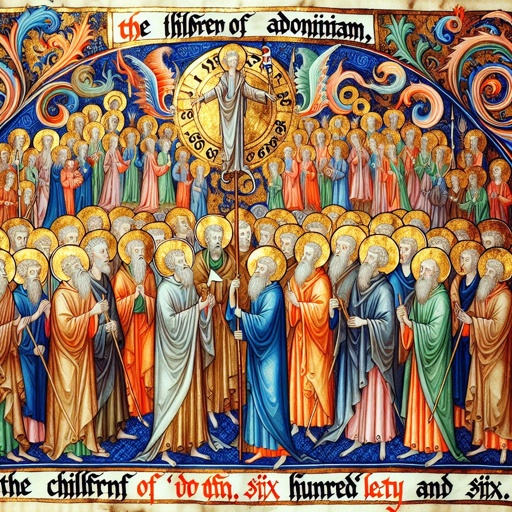
Ezra 2:13 - "The children of Adonikam, six hundred sixty and six."

Ezra 2:10 - "The children of Bani, six hundred forty and two."

Ezra 10:24 - "Of the singers also; Eliashib: and of the porters; Shallum, and Telem, and Uri."

Ezra 10:21 - "And of the sons of Harim; Maaseiah, and Elijah, and Shemaiah, and Jehiel, and Uzziah."

Ezra 10:31 - "And of the sons of Harim; Eliezer, Ishijah, Malchiah, Shemaiah, Shimeon,"

Ezra 10:28 - "Of the sons also of Bebai; Jehohanan, Hananiah, Zabbai, and Athlai."

"Azareel, and Shelemiah, Shemariah," - Ezra 10:41

"And Bani, and Binnui, Shimei," - Ezra 10:38