What does Ezra 10:13 mean?
“But the people are many, and it is a time of much rain, and we are not able to stand without, neither is this a work of one day or two: for we are many that have transgressed in this thing.” — Ezra 10:13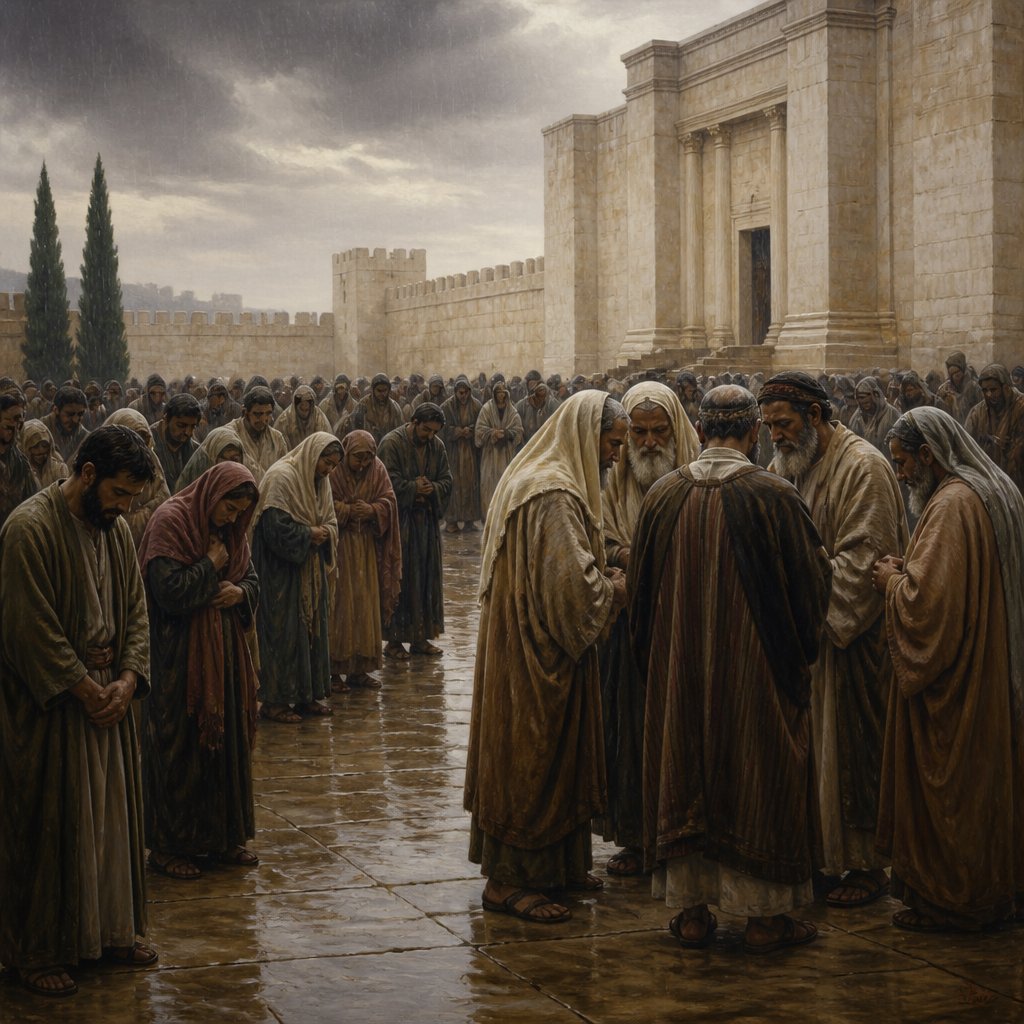
Ezra 10:13 in the King James Version of the Bible reads: "But the people are many, and it is a time of much rain, and we are not able to stand without, neither is this a work of one day or two: for we are many that have transgressed in this thing."
To fully understand the meaning and significance of this verse, it is important to explore the historical and cultural context in which it was written. The book of Ezra is set during a pivotal period in the history of Israel, as the Israelites return from exile in Babylon to rebuild their temple and reestablish their religious and cultural identity. The verse comes at a time when the people of Israel are in the process of repenting for their sins and seeking to reconcile with God.
The verse begins with the acknowledgement that "the people are many," indicating that a large number of individuals have committed transgressions. This highlights the widespread nature of the problem, emphasizing that the issue is not isolated to a few individuals, but rather affects the community as a whole. This recognition of collective responsibility underscores the importance of communal accountability in the process of repentance and reconciliation.
The mention of "much rain" further emphasizes the challenging circumstances facing the people. In ancient Israel, rain was essential for the success of agricultural endeavors, and a period of heavy rain could make it difficult to carry out daily tasks. This reference to challenging weather conditions serves as a metaphor for the difficult and arduous nature of the task at hand, symbolizing the obstacles and hardships that the people must overcome in order to make amends for their sins.
The verse then acknowledges the impossibility of addressing the issue in a short period of time, stating that "we are not able to stand without, neither is this a work of one day or two." This recognition of the complexity and duration of the repentance process highlights the need for patience, perseverance, and long-term commitment in the pursuit of reconciliation with God. It also serves as a reminder that true and lasting change requires sustained effort and dedication.
Ultimately, the verse concludes with a recognition of the widespread nature of the transgressions, stating that "we are many that have transgressed in this thing." This acknowledgement of shared wrongdoing emphasizes the importance of solidarity and unity in the process of repentance and reconciliation. It also underscores the need for communal support and mutual accountability in order to overcome the challenges and obstacles that lie ahead.
In conclusion, Ezra 10:13 holds a deep and profound significance in the context of the book of Ezra and the broader biblical narrative. It serves as a powerful reminder of the importance of communal accountability, patience, perseverance, and solidarity in the process of repentance and reconciliation. Through its rich symbolism and evocative language, the verse offers valuable insights into the challenges and complexities of seeking forgiveness and renewal, and it continues to resonate with readers as a timeless expression of the human experience and the enduring nature of faith.
Get our apps


Artwork for Ezra 10:13
Ezra 10:13 - "But the people are many, and it is a time of much rain, and we are not able to stand without, neither is this a work of one day or two: for we are many that have transgressed in this thing."
"But the people are many, and it is a time of much rain, and we are not able to stand without, neither is this a work of one day or two: for we are many that have transgressed in this thing." - Ezra 10:13

Ezra 10:10-12

Ezra 10:10 - "And Ezra the priest stood up, and said unto them, Ye have transgressed, and have taken strange wives, to increase the trespass of Israel."

Ezra 10:3

Ezra 3:10

Ezra 10:3

Ezra 9:13-15

Ezra 10:5 - "Then arose Ezra, and made the chief priests, the Levites, and all Israel, to swear that they should do according to this word. And they sware."

Ezra 7:10 - "For Ezra had prepared his heart to seek the law of the LORD, and to do it, and to teach in Israel statutes and judgments."

Ezra 10:38 - "And Bani, and Binnui, Shimei,"

Ezra 10:37 - "Mattaniah, Mattenai, and Jaasau,"

Ezra 10:40 - "Machnadebai, Shashai, Sharai,"

Ezra 10:32 - "Benjamin, Malluch, and Shemariah."

Ezra 10:35 - "Benaiah, Bedeiah, Chelluh,"

Ezra 10:41 - "Azareel, and Shelemiah, Shemariah,"

Ezra 10:36 - "Vaniah, Meremoth, Eliashib,"

Ezra 10:42 - "Shallum, Amariah, and Joseph."

Ezra 10:39 - "And Shelemiah, and Nathan, and Adaiah,"

Nehemiah 12:13 - "Of Ezra, Meshullam; of Amariah, Jehohanan;"

Ezra 10:20 - "And of the sons of Immer; Hanani, and Zebadiah."

Ezra 10:34 - "Of the sons of Bani; Maadai, Amram, and Uel,"
Ezra 2:13 - "The children of Adonikam, six hundred sixty and six."

Ezra 2:10 - "The children of Bani, six hundred forty and two."

Ezra 10:24 - "Of the singers also; Eliashib: and of the porters; Shallum, and Telem, and Uri."

Ezra 10:21 - "And of the sons of Harim; Maaseiah, and Elijah, and Shemaiah, and Jehiel, and Uzziah."

Ezra 10:31 - "And of the sons of Harim; Eliezer, Ishijah, Malchiah, Shemaiah, Shimeon,"

Ezra 10:28 - "Of the sons also of Bebai; Jehohanan, Hananiah, Zabbai, and Athlai."

"Azareel, and Shelemiah, Shemariah," - Ezra 10:41

"And Bani, and Binnui, Shimei," - Ezra 10:38