The Legacy of Ater: Rebuilding with Faith and Community
“The children of Ater of Hezekiah, ninety and eight.” — Ezra 2:16
When we examine the genealogy lists found within Scripture, such as Ezra 2:16 which states, "The children of Ater of Hezekiah, ninety and eight," we may be tempted to skim over them as mere numbers or tedious records. However, these lists are rich with meaning and reveal profound spiritual truths about our identity, our heritage, and our commitment to community and faith.
Beneath the monotony of a roll call lies the story of a people who were driven to reclaim their land, identity, and relationship with God after decades of exile. The children of Ater of Hezekiah were part of the restoration process that followed the Babylonian captivity. This entire chapter narrates the return of exiles to Jerusalem, demonstrating God’s faithfulness and their collective resolve to rebuild.
The name "Ater" translates to "crown" or "garland," which beautifully signifies a legacy of honor. Hezekiah, the king associated with this name, was known for his devout relationship with God, his reforms, and his perseverance in the face of adversity. In the context of our lives, how appropriate it is to embrace a legacy marked by faith, much like Ater’s lineage that we find in Ezra. Each of these names, and the associated numbers that may seem irrelevant, are representative of real individuals with stories, dreams, and a yearning to serve God.
When contemplating that Ater contributed ninety-eight individuals to the return, we can glean insights that speak to our modern-day situations. First, we acknowledge the beauty of community. The return of these children signifies that God's restoration is often a collective endeavor. Each family and individual plays a vital role in God’s plan. We are each called to engage actively in the building of His kingdom and community. As Paul writes in 1 Corinthians 12:12-14, "For as the body is one, and hath many members,... so also is Christ." Just as Ater’s children formed part of a larger purpose, a strong community can inspire and empower individuals to work together toward a common goal.
Secondly, we are reminded of the power of remembrance and heritage. These names embody a rich history of faithfulness, resilience, and persistence. For those participating in the return to Jerusalem, their past was woven into their identity, igniting their motivation to rebuild their homeland. Similarly, we must reflect on our spiritual genealogies and hold our wartime experiences as essential in forming the path ahead. Every struggle, every triumph, and every moment of faith recorded in our personal histories can serve as a crown that inspires perseverance.
Moreover, Ater's children exemplify that every contribution counts, no matter how small it may seem. The journey of re-establishing Jerusalem involved significant challenges. Yet, every individual represented in the census was significant. We must understand that even in our small acts of faithfulness—be it prayer, encouragement, or service—we are fulfilling God’s greater narrative.
In a world that often measures success by prominence and achievements, we, too, can find comfort and purpose in the collective effort of our community, just as those gathered with Ater of Hezekiah. No act of obedience is too small; every voice matters, and every heart can serve God’s purposes.
As we meditate on Ezra 2:16, let us carry forward the legacy of Ater, embracing our place among the faithful remnant that seeks to honor God. May we remember that we are called to work together in love and prayer, building a city of hope that honors God and reflects His glory. Let us become 'crown bearers' in our community, encouraging one another as we labor for His Kingdom. Through every act borne out of faith, we contribute to the restoration of God's vision for our lives and our communities, echoing the spirit of Ater's legacy.
Get our apps


Artwork for Ezra 2:16

Ezra 2:16 - "The children of Ater of Hezekiah, ninety and eight."

"The children of Ater of Hezekiah, ninety and eight." - Ezra 2:16

Ezra 6:16

Ezra 6:15-16

Ezra 6:15-16

Ezra 10:16 - "And the children of the captivity did so. And Ezra the priest, with certain chief of the fathers, after the house of their fathers, and all of them by their names, were separated, and sat down in the first day of the tenth month to examine the matter."

Ezra 3:2

Ezra 3:2

Ezra 3:2

Ezra 3:2

Ezra 3:2

Ezra 6:16 - "¶ And the children of Israel, the priests, and the Levites, and the rest of the children of the captivity, kept the dedication of this house of God with joy,"

Ezra 9:1-2

Zerubbabel in Ezra chapter 2

Ezra 2:22 - "The men of Netophah, fifty and six."
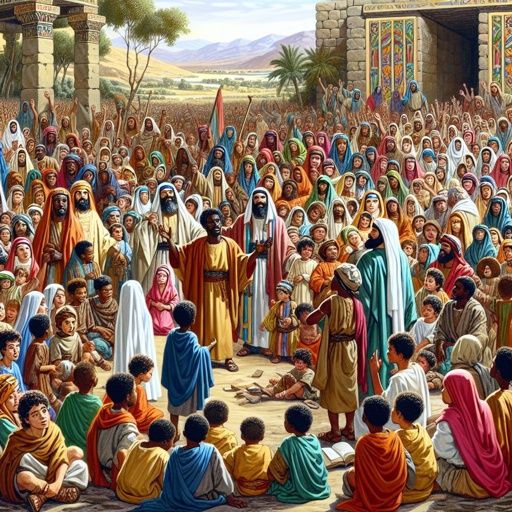
Ezra 2:18 - "The children of Jorah, an hundred and twelve."

Ezra 2:54 - "The children of Neziah, the children of Hatipha."

Ezra 2:20 - "The children of Gibbar, ninety and five."

Ezra 2:24 - "The children of Azmaveth, forty and two."

Ezra 2:39 - "The children of Harim, a thousand and seventeen."

Ezra 9:1-2

Ezra 2:9 - "The children of Zaccai, seven hundred and threescore."

Ezra 2:27 - "The men of Michmas, an hundred twenty and two."

Ezra 2:29 - "The children of Nebo, fifty and two."

Ezra 4:16 - "We certify the king that, if this city be builded again, and the walls thereof set up, by this means thou shalt have no portion on this side the river."

Ezra 2:56 - "The children of Jaalah, the children of Darkon, the children of Giddel,"

Ezra 2:11 - "The children of Bebai, six hundred twenty and three."

Ezra 2:53 - "The children of Barkos, the children of Sisera, the children of Thamah,"

Ezra 2:45 - "The children of Lebanah, the children of Hagabah, the children of Akkub,"

Ezra 2:48 - "The children of Rezin, the children of Nekoda, the children of Gazzam,"