Counting the Remnant: God’s Faithfulness in Our Numbers
“The children of Immer, a thousand fifty and two.” — Ezra 2:37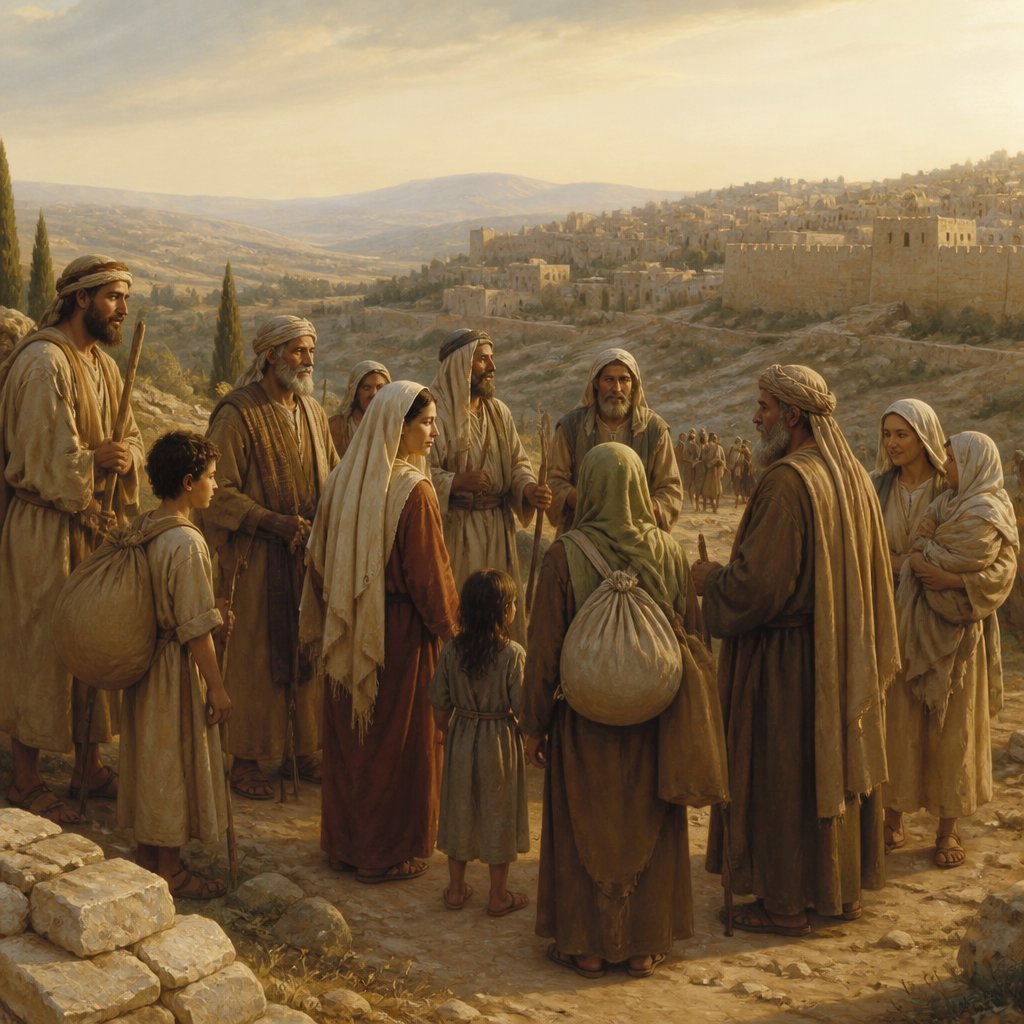
As we turn our attention to Ezra 2:37, which states, "The children of Immer, a thousand fifty and two," we encounter a seemingly simple enumeration that invites us to reflect deeper into the nature of God's faithfulness, the significance of community, and the legacy of obedience.
#### **The Context of Ezra**
The book of Ezra details a pivotal moment in the history of the Israelites—the return from Babylonian captivity. After 70 years of exile, the Jews were given the opportunity to return to their homeland and rebuild the temple. Ezra, a scribe and priest, was among the leaders who played a crucial role in this restoration. The regathering of the exiles is meticulously recorded in this chapter, presenting a vivid account of the number of those who returned.
#### **The Significance of the Numbers**
At first glance, a number may seem trivial, likely dismissed as just another statistic. However, this verse brings to mind the significance behind each number. The mention of "a thousand fifty and two" does not merely indicate the count of the children of Immer; it signifies lives impacted, stories woven together, and families restored. In the Kingdom of God, every person counts. God knows each individual by name, each family by its history, and each heart by its burdens.
In the face of overwhelming challenges, like those faced by the returning exiles, it is easy to feel insignificant. Yet, Scripture reassures us that God values each one of us. This verse is a reminder that in God's Kingdom, every individual contributes to the collective purpose He has ordained. When we reflect on our own lives and the communities we belong to, we are called to recognize that we are not merely statistical figures, but rather unique creations fashioned for His glory.
#### **The Power of Community**
The children of Immer represent more than just their lineage; they reflect the importance of community among the returning exiles. Restoration was not an isolated event for individuals but a collective endeavor. They returned together, reinstating a sense of unity and shared purpose—a powerful testament to what God can accomplish when His people unite in obedience to His calling.
In today’s world, isolation and division often dominate. Yet, God desires for His Church, His body, to be a place of community where each member supports and uplifts the other. The return of the children of Immer is a grand illustration that every part, though diverse in gifts, contributes crucially to the overall mission. Hebrews 10:24-25 reminds us, "And let us consider one another to provoke unto love and to good works: Not forsaking the assembling of ourselves together, as the manner of some is; but exhorting one another: and so much the more, as ye see the day approaching."
#### **A Legacy of Obedience**
Moreover, the return signifies obedience to God's word. It shows a willingness to leave behind comfort for the sake of fulfilling divine purpose. The children of Immer were not merely returning to a physical land; they were obeying God’s promise to restore them and to return them to a place where they could worship freely, a promise articulated through the prophets. This calls us to evaluate our own lives: what are we willing to leave behind in obedience to God’s call?
#### **Final Thoughts**
As we meditate on Ezra 2:37, let us embrace the truth that every number matters to God, every soul is precious, and obedience is the pathway to experiencing His promises. Whether we feel like a 'number' in the grand scheme of things or we stand at the forefront of a mighty work, we must remember that God sees us, knows us, and has called us into a community to fulfill His purposes. So, may we gather courage and strength from one another as we embark on our unique journeys—a journey that God embarks with us, counting each step, each turn, and each soul. May our lives together reflect His glory as we carry out the work He has called us to do.
Get our apps


Artwork for Ezra 2:37

Ezra 2:37 - "The children of Immer, a thousand fifty and two."
"The children of Immer, a thousand fifty and two." - Ezra 2:37

Ezra 10:37 - "Mattaniah, Mattenai, and Jaasau,"

"Mattaniah, Mattenai, and Jaasau," - Ezra 10:37

Ezra 3:2

Ezra 3:2

Ezra 3:2

Ezra 3:2

Ezra 3:2

Ezra 9:1-2

Zerubbabel in Ezra chapter 2

Ezra 2:22 - "The men of Netophah, fifty and six."
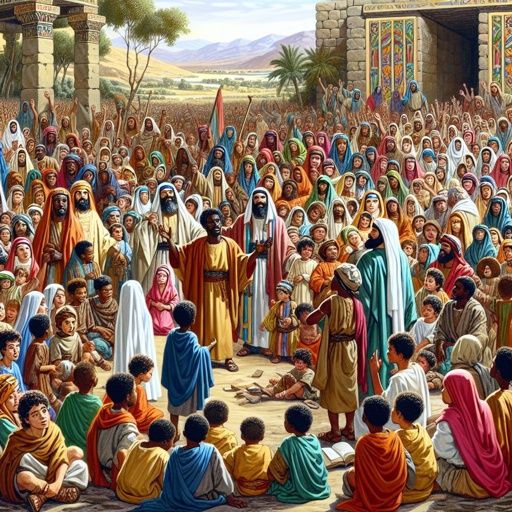
Ezra 2:18 - "The children of Jorah, an hundred and twelve."

Ezra 2:54 - "The children of Neziah, the children of Hatipha."

Ezra 2:20 - "The children of Gibbar, ninety and five."

Ezra 2:24 - "The children of Azmaveth, forty and two."

Ezra 2:39 - "The children of Harim, a thousand and seventeen."

Ezra 9:1-2

Ezra 2:9 - "The children of Zaccai, seven hundred and threescore."

Ezra 2:27 - "The men of Michmas, an hundred twenty and two."

Ezra 2:29 - "The children of Nebo, fifty and two."

Ezra 2:56 - "The children of Jaalah, the children of Darkon, the children of Giddel,"

Ezra 2:11 - "The children of Bebai, six hundred twenty and three."

Ezra 2:53 - "The children of Barkos, the children of Sisera, the children of Thamah,"

Ezra 2:45 - "The children of Lebanah, the children of Hagabah, the children of Akkub,"

Ezra 2:48 - "The children of Rezin, the children of Nekoda, the children of Gazzam,"

Ezra 2:15 - "The children of Adin, four hundred fifty and four."

Ezra 2:21 - "The children of Beth-lehem, an hundred twenty and three."

Ezra 2:51 - "The children of Bakbuk, the children of Hakupha, the children of Harhur,"

Ezra 2:49 - "The children of Uzza, the children of Paseah, the children of Besai,"