Faithful Restoration: A Lesson from Ezra 2:6
“The children of Pahath-moab, of the children of Jeshua and Joab, two thousand eight hundred and twelve.” — Ezra 2:6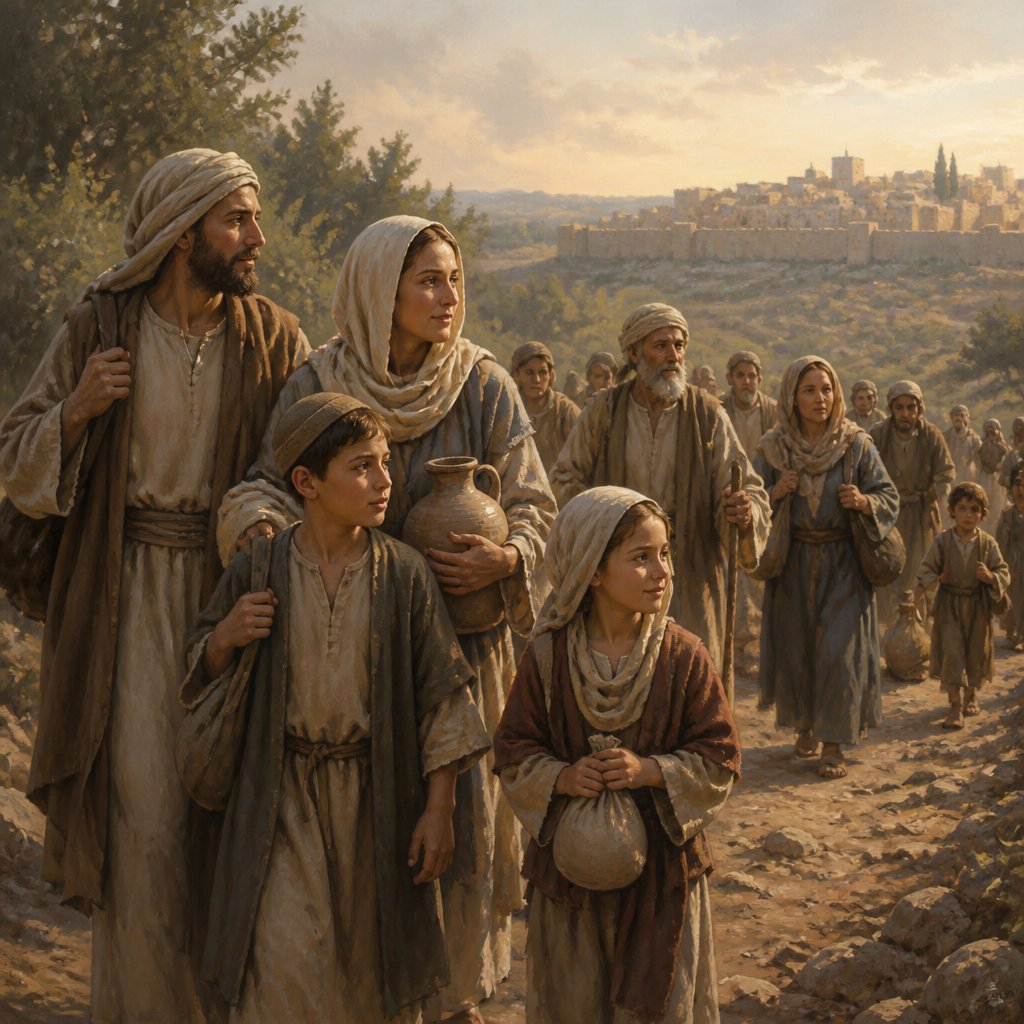
The verse Ezra 2:6 in the King James Version tells us, "The children of Pahath-moab, of the children of Jeshua and Joab, two thousand eight hundred and twelve." This passage may seem perfunctory in the grand narrative of Scripture. Yet, woven within its numbers and names is a profound illustration of God's faithfulness to His people and His enduring work among them.
**Understanding the Context**
The Book of Ezra chronicles a pivotal moment in Jewish history—the aftermath of the Babylonian exile. After decades of captivity, a remnant was called back to Jerusalem to rebuild the temple and restore their identity as a nation chosen by God. The genealogies listed throughout the early chapters of Ezra serve not just as census figures but as a testament to the faithfulness of God in preserving a people for Himself.
Pahath-moab, Jeshua, and Joab represent the lineages restoring the community and its place in God’s unfolding plan. Their names echo a promise: despite the severe trials, the people of Israel were not lost. They were given a second chance, a chance for restoration and redemption.
**The Significance of the Numbers**
In the verse, we note the specific number, 2,812. Numbers in the Bible often have a deeper meaning. They reflect God’s order and purpose. Here, the number signifies a sizeable group, indicating that despite the overwhelming odds they faced, there was a community—a remnant that chose to return and rebuild.
This leads us to ponder our own journeys. How often do we feel as though the odds are stacked against us? Whether in our spiritual walks, relationships, or even our personal aspirations, we may feel like remnants in exile. Yet, Ezra 2:6 serves as a reminder that God does not just count numbers; He counts lives transformed and destiny redesigned.
**Jeshua and Joab: Leadership in Action**
Beyond mere numbers, the mention of Jeshua and Joab exemplifies leadership amidst uncertainty. Jeshua, particularly, is significant as he was the high priest—representing a direct connection to the worship of God, signifying renewal of faith. Joab, likely a military leader, embodies the strength and courage necessary for the daunting task ahead. These two figures silhouette the dual aspects of faith and action—both essential for renewal and restoration.
When we face our unique circumstances, do we operate in faith like Jeshua, bringing our concerns and hopes before God? Do we also embody the spirit of Joab, ready to fight for our families, communities, and churches? This balance is crucial in our call to contribute to the building of God’s kingdom.
**A Call to Rebuild**
The return of Pahath-moab’s children signals a divine calling to all of us. Like these ancient Israelites, we are invited to engage in the work of rebuilding, whether it be our personal lives or within our churches and communities. This rebuilding is not always about constructing physical structures. Often, it involves mending broken relationships, restoring our faith practices, and generating hope in a world craving love.
In Ezra's narrative, we see hope rising from despair, structure arising from chaos, and community rising from isolation. It is a blueprint for us today. God is still in the business of raising up His people. When we face setbacks, we can find comfort in knowing that God sees us—not as a collection of names but as a community poised for restoration.
**Conclusion**
Ezra 2:6 reminds us to look beyond the names and numbers. God knows each one of us personally and intimately. He sees the potential in each of us to contribute to His work of restoration. As we reflect on this verse, let it propel us into a posture of action, a readiness to lead, and a willingness to rebuild—both for ourselves and for the glory of God. Let us embrace our roles in this divine narrative, confident that like the children of Pahath-moab, we too can return from our own exiles and contribute to the kingdom of heaven.
Get our apps


Artwork for Ezra 2:6

Ezra 2:6 - "The children of Pahath-moab, of the children of Jeshua and Joab, two thousand eight hundred and twelve."
"The children of Pahath-moab, of the children of Jeshua and Joab, two thousand eight hundred and twelve." - Ezra 2:6

Ezra 6:2 - "And there was found at Achmetha, in the palace that is in the province of the Medes, a roll, and therein was a record thus written:"

Ezra 9:6

Ezra 6:16

Zerubbabel in Ezra chapter 6

Ezra 6:1-12

Ezra 6:15-16

Ezra 6:15-16
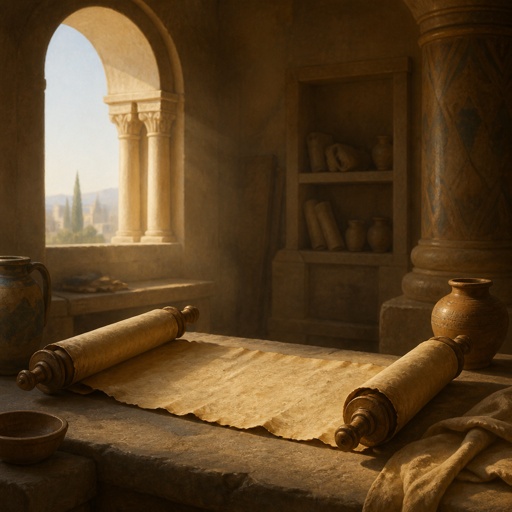
"And there was found at Achmetha, in the palace that is in the province of the Medes, a roll, and therein was a record thus written:" - Ezra 6:2

Ezra 3:2

Ezra 3:2

Ezra 3:2

Ezra 6:19 - "And the children of the captivity kept the passover upon the fourteenth day of the first month."

Ezra 8:6 - "Of the sons also of Adin; Ebed the son of Jonathan, and with him fifty males."

Ezra 3:2

Ezra 3:2

Ezra 6:6 - "Now therefore, Tatnai, governor beyond the river, Shethar-boznai, and your companions the Apharsachites, which are beyond the river, be ye far from thence:"

Ezra 9:1-2

Zerubbabel in Ezra chapter 2

Ezra 2:22 - "The men of Netophah, fifty and six."
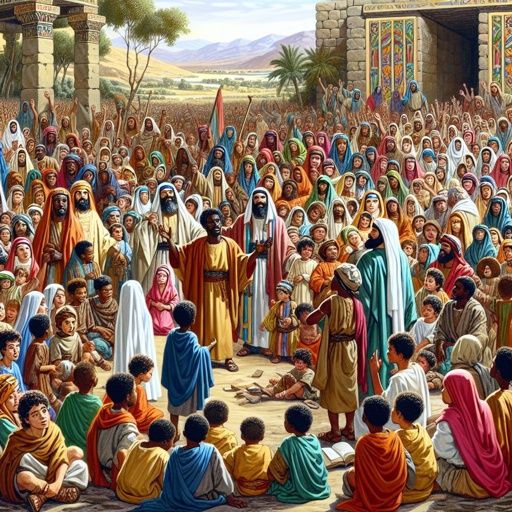
Ezra 2:18 - "The children of Jorah, an hundred and twelve."

Ezra 2:54 - "The children of Neziah, the children of Hatipha."

Ezra 2:20 - "The children of Gibbar, ninety and five."

Ezra 2:24 - "The children of Azmaveth, forty and two."

Ezra 2:39 - "The children of Harim, a thousand and seventeen."

Ezra 7:6 - "This Ezra went up from Babylon; and he was a ready scribe in the law of Moses, which the LORD God of Israel had given: and the king granted him all his request, according to the hand of the LORD his God upon him."

Ezra 9:1-2

Ezra 2:9 - "The children of Zaccai, seven hundred and threescore."

Ezra 2:27 - "The men of Michmas, an hundred twenty and two."