The Weight of Holiness: Understanding the Call to Reverence
“And the Tirshatha said unto them, that they should not eat of the most holy things, till there stood up a priest with Urim and with Thummim.” — Ezra 2:63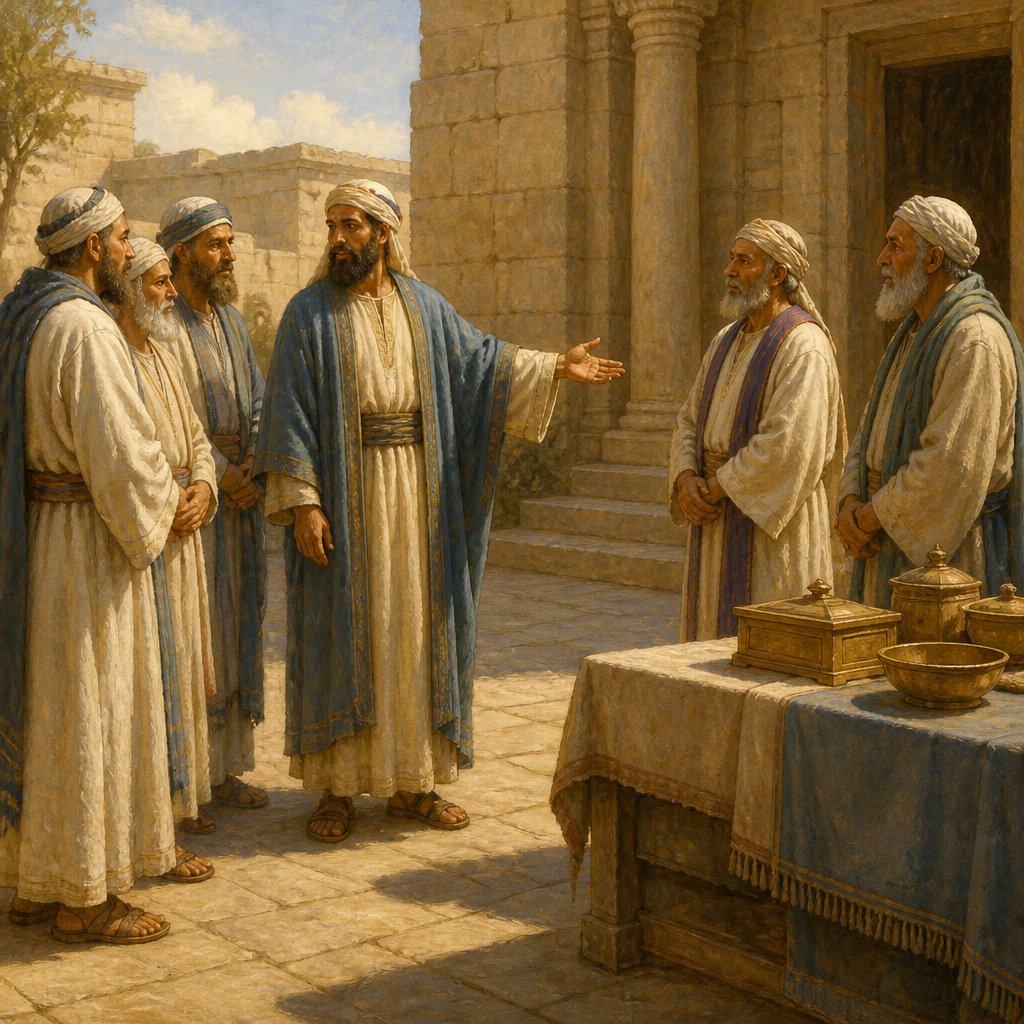
In Ezra 2:63, we read, "And the Tirshatha said unto them, that they should not eat of the most holy things, till there stood up a priest with Urim and with Thummim." This verse, while succinct, encapsulates a profound principle regarding the sanctity of worship and the essentiality of divine order in our spiritual practices.
To fully grasp the weight of this directive, we must consider the context of the Israelites returning from exile and seeking to re-establish their identity and covenantal relationship with God. The Tirshatha, which refers to the governor or leader of the people, was entrusted with the responsibility to guide the community in their spiritual and communal lives. His instruction regarding the consumption of the most holy things draws attention to the importance of proper authority and sanctification in worship.
The most holy things referenced in this verse pertain to the offerings and sacrifices designated for the priests in service to God. Such offerings were not mere food; they represented deep communion with the Almighty. To partake in these offerings without being properly consecrated could lead to a serious misunderstanding of holiness and the nature of God’s covenant. Thus, the Tirshatha's instruction serves as a critical reminder that spiritual practices must be approached with reverence and preparation.
Let us delve deeper into the significance of the Urim and Thummim mentioned in this passage. These were sacred lots used by priests to discern God’s will. The absence of a priest equipped with these tools prevented the people from making hasty or presumptuous decisions regarding the holy things. There is a clear hierarchical structure implied in this scripture, suggesting that the divine order established by God must be honored in the practices of His people.
As modern believers, we are often accustomed to a casual approach to our faith. In an age marked by convenience and immediacy, the depths of spiritual preparation can sometimes be overlooked. Yet, Ezra 2:63 challenges us to pause and reflect on the importance of reverence in our worship. Are we approaching God’s presence with the seriousness it demands? Are we resting in the assurance that our worship requires a conscious acknowledgment of His holiness and the authority imparted to those who minister on His behalf?
Furthermore, the directive speaks volumes about the collective responsibility of the community. The act of not eating from the most holy things until proper order was restored exemplifies how individual actions can have profound implications for the community at large. In a culture that often promotes individualism, we must remember that our spiritual journey is intertwined with that of our brothers and sisters in Christ. Our decisions, our preparations, and our attitudes towards worship have the power to either build up or tear down the community of faith.
As we navigate our spiritual lives today, let us consider what it means to wait—wait for the guidance of God, wait for the appointed leaders, wait for the right season to partake of the holy things. In the act of waiting, we experience a spiritual posture that acknowledges our dependence on God. We affirm that we cannot engage in the divine without His direction and authority.
Finally, remember that while the Urim and Thummim were instruments of discernment, today, we have the Holy Spirit, who resides within us, guiding us into all truth. Therefore, as we approach God and seek to partake of the fullness of His blessings, let us do so with integrity, humility, and an eagerness to engage with the sacred.
In conclusion, let the wisdom from Ezra 2:63 ignite within us a renewed commitment to holy living and worship. May we honor the structures God has put in place while recognizing our shared journey as a community dedicated to glorifying Him. Reflect on how your own approach to worship can cultivate an atmosphere of reverence and holiness, ensuring that we do not take lightly the things of God.
Ultimately, may our hearts yearn for the presence of a priest—our High Priest, Jesus Christ—who has made the way for us to access the Most Holy place. In Him, we find our true connection to holiness, enabling us to partake of the sacred with joy and reverence.
Get our apps


Artwork for Ezra 2:63
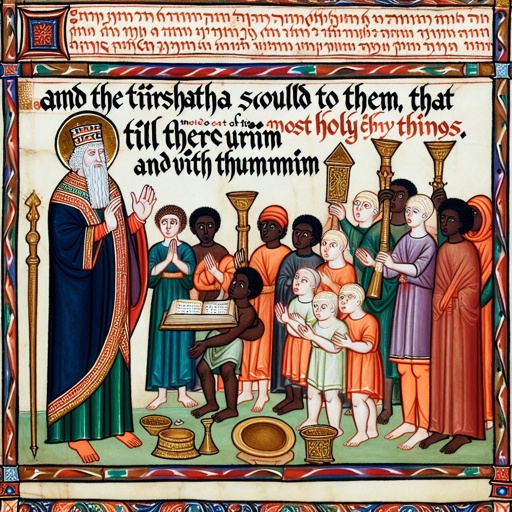
Ezra 2:63 - "And the Tirshatha said unto them, that they should not eat of the most holy things, till there stood up a priest with Urim and with Thummim."

Ezra 2:63 (KJVA) 63 And the Tirshatha said unto them, that they should not eat of the most holy things, till there stood up a priest with Urim and with Thummim.

Ezra 2:63 (KJVA) 63 And the Tirshatha said unto them, that they should not eat of the most holy things, till there stood up a priest with Urim and with Thummim.
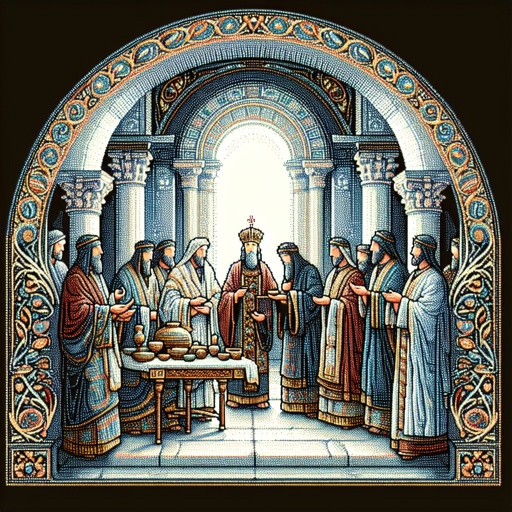
Ezra 2:63 (KJVA) 63 And the Tirshatha said unto them, that they should not eat of the most holy things, till there stood up a priest with Urim and with Thummim.
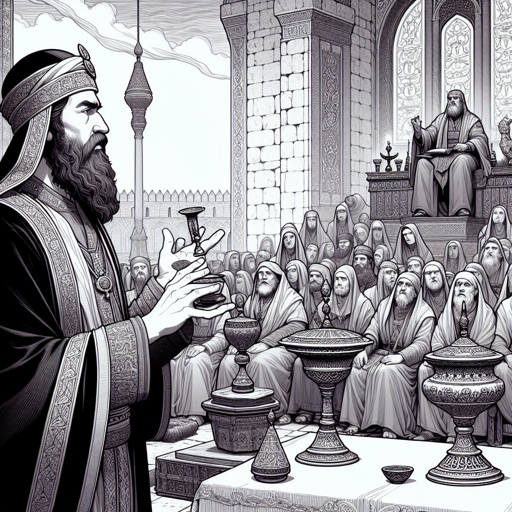
Ezra 2:63 (KJVA) 63 And the Tirshatha said unto them, that they should not eat of the most holy things, till there stood up a priest with Urim and with Thummim.
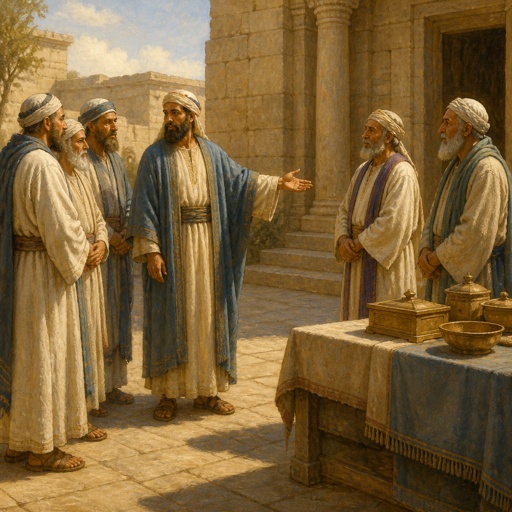
"And the Tirshatha said unto them, that they should not eat of the most holy things, till there stood up a priest with Urim and with Thummim." - Ezra 2:63

Psalms 63:2 - "To see thy power and thy glory, so as I have seen thee in the sanctuary."

Isaiah 63:2 - "Wherefore art thou red in thine apparel, and thy garments like him that treadeth in the winefat?"

Ezra 3:2

Ezra 3:2

Ezra 3:2

Ezra 3:2

Ezra 3:2

Ezra 9:1-2

Zerubbabel in Ezra chapter 2

Ezra 2:22 - "The men of Netophah, fifty and six."
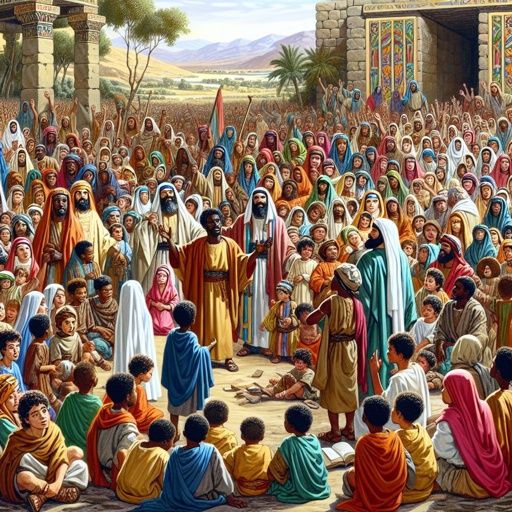
Ezra 2:18 - "The children of Jorah, an hundred and twelve."

Ezra 2:54 - "The children of Neziah, the children of Hatipha."

Ezra 2:20 - "The children of Gibbar, ninety and five."

Ezra 2:24 - "The children of Azmaveth, forty and two."

Ezra 2:39 - "The children of Harim, a thousand and seventeen."

Ezra 9:1-2

Isaiah 63:2 Why is Your apparel red, And Your garments like one who treads in the winepress?

Ezra 2:9 - "The children of Zaccai, seven hundred and threescore."

Ezra 2:27 - "The men of Michmas, an hundred twenty and two."

Ezra 2:29 - "The children of Nebo, fifty and two."

Ezra 2:56 - "The children of Jaalah, the children of Darkon, the children of Giddel,"

Ezra 2:11 - "The children of Bebai, six hundred twenty and three."

Ezra 2:53 - "The children of Barkos, the children of Sisera, the children of Thamah,"

Ezra 2:48 - "The children of Rezin, the children of Nekoda, the children of Gazzam,"