Counting the Chosen: The Legacy of the Children of Zaccai
“The children of Zaccai, seven hundred and threescore.” — Ezra 2:9
Ezra 2:9 states in the King James Version, "The children of Zaccai, seven hundred and threescore." At first glance, this verse may appear as a simple enumeration of numbers from a historical census, but deeper reflection reveals profound truth about identity, legacy, and divine purpose in our lives.
The context of this passage comes from a period of significant restoration in Israel's history. The people of Israel had endured decades of exile in Babylon, separated from their homeland and their temple – the heart of their worship. The return to Jerusalem signified not just a physical relocation but a spiritual renewal. Here we find Ezra, focusing on those who returned, including the children of Zaccai, identified by their familial connection.
What strikes me about this verse is the emphasis on community and lineage. Today, we often measure success through individual accomplishments, forgetting that we are part of a larger tapestry woven by the stories of our ancestors. The children of Zaccai were acknowledged not just as individuals, but as part of a rich heritage, a reminder that our identities are interwoven with those who have walked before us. They represent a family, a tribe; a people chosen and called.
When we consider our own lives, we might ask: who are the figurative ‘Zaccai’ in our families? Who are the influences that shaped our spiritual journeys? Perhaps it was a grandparent who prayed faithfully, a parent who instilled values in you, or a mentor who guided you through tough times. Recognizing our ‘Zaccai’ can ignite within us a sense of gratitude and belonging, reminding us that we are not alone; our lives are surrounded by a divine cloud of witnesses.
The collective number, "seven hundred and threescore," carries weight in biblical numerology. The number 70 is often associated with the concept of fullness or completeness in scripture. By indicating the size of this group, Ezra emphasizes that not only was a significant number of people returning to Jerusalem, but it signified God’s faithfulness towards His people. When we grapple with challenges in our lives, remembering that God sees the whole picture, just as He saw the entirety of His people returning, can reassure us. He has a plan for each of us, woven together in fellowship and purpose.
As we meditate on the idea of belonging to a community, we can reflect on how we contribute to the legacy of faith and purpose within our circles. Are we nurturing those around us? Are we mentoring the next generation? The children of Zaccai remind us of our duty to build up the next generation in faith, to teach them the scriptures, and to share our testimonies of God's faithfulness, ensuring that the legacy continues.
Moreover, consider how God maps out His plans through seemingly insignificant details such as family names. His orchestration of these communal movements was clearly for a greater purpose – the rebuilding of the temple and the restoration of worship in Jerusalem. In our lives, it may sometimes feel like we are just a number, lost in the crowd, but every person and every family matters to God. We are all a part of His divine tapestry.
In conclusion, let the account of the children of Zaccai challenge us to reaffirm our commitment to our families, our communities, and ultimately, to God. Let us acknowledge and celebrate our roots while remembering our role as modern-day Zaccaies, embarking on our journey of faith and purpose, contributing to God’s Kingdom one life at a time. Let us strive to see ourselves as part of a greater movement, understanding that we, like the children of Zaccai, are called and chosen, significant members of the body of Christ, with a legacy that impacts generations to come.
Get our apps


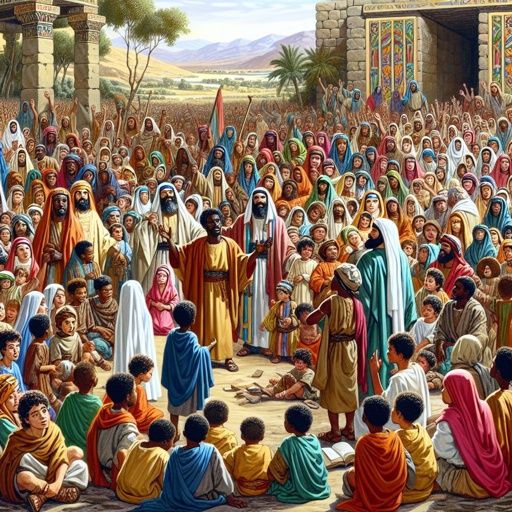
Artwork for Ezra 2:9

Ezra 2:9 - "The children of Zaccai, seven hundred and threescore."

"The children of Zaccai, seven hundred and threescore." - Ezra 2:9

Ezra 9:1-2

Ezra 9:1-2

Ezra 9:6

Ezra 3:9

Ezra 9:3

Ezra 9:1

Ezra 9:1

Ezra 9:1

Ezra 9:13-15

Ezra 9:2 - "For they have taken of their daughters for themselves, and for their sons: so that the holy seed have mingled themselves with the people of those lands: yea, the hand of the princes and rulers hath been chief in this trespass."

Ezra 3:2

Ezra 3:2

Ezra 3:2

Ezra 3:2

Ezra 3:2

Ezra 8:9 - "Of the sons of Joab; Obadiah the son of Jehiel, and with him two hundred and eighteen males."

Zerubbabel in Ezra chapter 2

Ezra 1:9 - "And this is the number of them: thirty chargers of gold, a thousand chargers of silver, nine and twenty knives,"

Ezra 2:22 - "The men of Netophah, fifty and six."
Ezra 2:18 - "The children of Jorah, an hundred and twelve."

Ezra 2:54 - "The children of Neziah, the children of Hatipha."

Ezra 2:20 - "The children of Gibbar, ninety and five."

Ezra 2:24 - "The children of Azmaveth, forty and two."

Ezra 2:39 - "The children of Harim, a thousand and seventeen."

Ezra 2:27 - "The men of Michmas, an hundred twenty and two."

Ezra 2:29 - "The children of Nebo, fifty and two."

Ezra 9:10 - "And now, O our God, what shall we say after this? for we have forsaken thy commandments,"

Ezra 2:56 - "The children of Jaalah, the children of Darkon, the children of Giddel,"